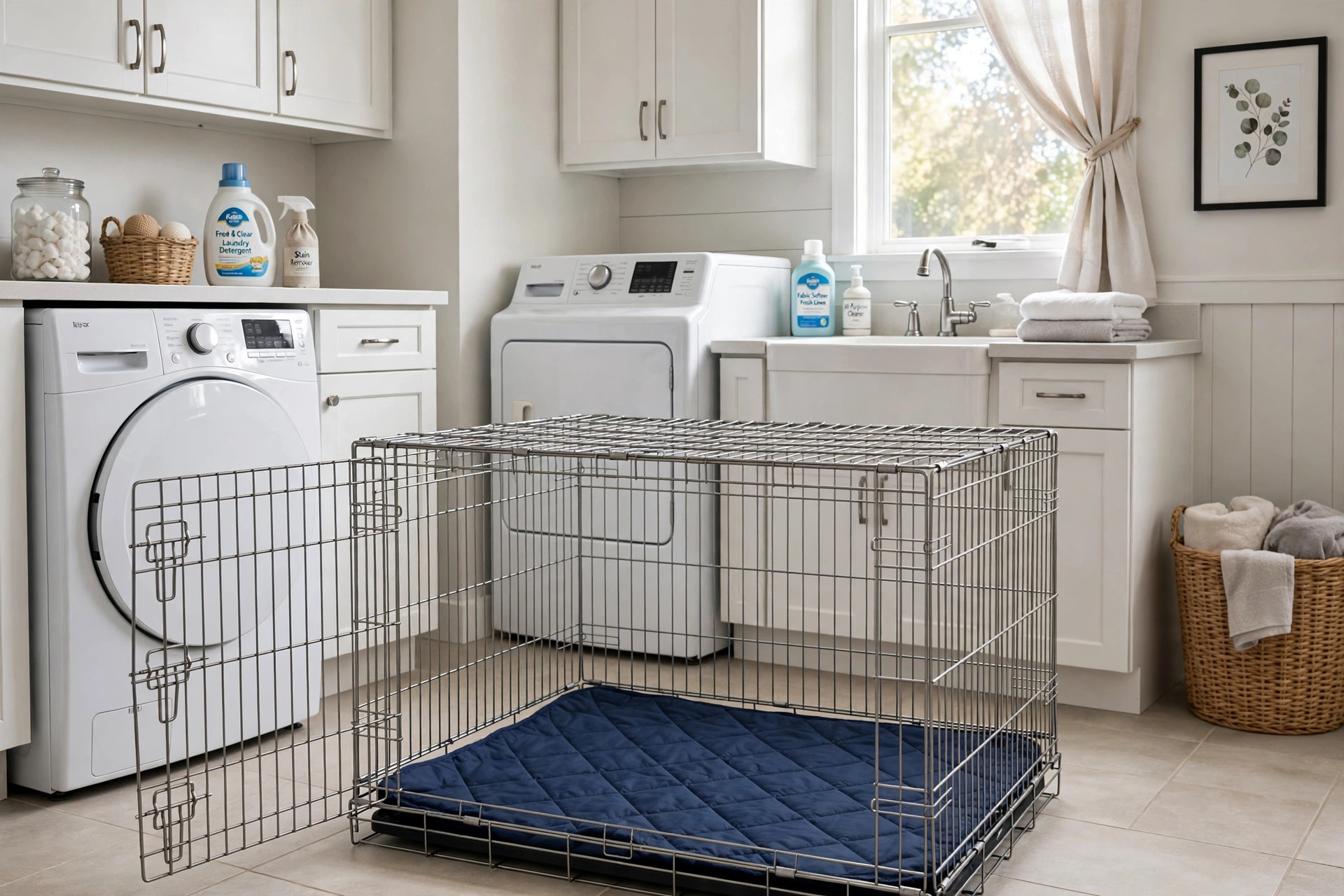

A puppy is a happy storm. It chews, it spills, it has accidents. A dog crate mat waterproof for messy puppies was made for this exact season of life. It sits at the bottom of the crate and keeps the pan dry. When the puppy makes a mess, the mat takes the hit instead of the tray. A quick wipe or a run through the wash, and the crate is ready again.
The first weeks with a young dog bring plenty of cleaning. House training takes time, and puppies drink, spill, and have accidents. Some get carsick on the way home from the vet. A regular cloth bed soaks all of that in and holds the smell. A waterproof crate mat does the opposite. It blocks liquids from reaching the crate floor. That one difference saves hours of scrubbing over the life of the dog.
This guide covers why a waterproof mat matters, how to pick one, what kinds exist, what they cost, and how to keep one clean. It also covers safety, since puppies put everything in their mouths.
Why a Waterproof Crate Mat Matters
A crate is a den, not a bathroom. But a young puppy cannot always hold it. Vets often say a puppy can hold its bladder for about one hour per month of age. A three-month-old puppy needs a break every three hours or so. Accidents will happen. The American Kennel Club and other care groups stress that crate training works best when the crate stays clean and calm. A mat that resists water keeps the surface from turning sour between breaks.
Urine soaks into foam and fabric fast. Once it sets, the crate smells like a toilet to the puppy, which can teach it that the crate is a place to go. A dog crate mat waterproof for messy puppies stops that cycle. The liquid stays on the surface or wicks into a sealed inner layer. The smell never reaches the padding.
Mud is another daily event. Puppies run through rain and dirt and climb straight back into the crate. A wipeable top layer handles mud in seconds. Owners who work full time feel this most, and many book a midday dog walker to break up the long day. With the right mat, the evening cleanup takes minutes.
What to Look For When You Choose One: Dog Crate Mat Waterproof for Messy Puppies
Size and Fit
Measure the inside of the crate before you buy. Mats come in sizes that match common crates: small, medium, large, extra large. The mat should cover the floor without bunching. A small mat leaves bare edges where liquid runs through, and a big one folds up into a corner the puppy can chew.
Measure length and width with a tape measure. Do not guess. Crates from different brands differ by an inch or two even when they share a size name. Many pet supply stores like Petco list inside-crate dimensions on their product pages, which helps you pick the right fit. The right fit makes the mat work.
Waterproofing That Actually Works
Not every mat labeled waterproof is truly waterproof. Some have a water-resistant coating that wears off after a few washes. The best designs use a full waterproof membrane under the top fabric. Liquid cannot pass the membrane at all.
Check the product notes for words like “100 percent waterproof” or “waterproof barrier.” Read buyer reviews for words like “leaked” or “soaked through.” Real use tells the truth. Care guides at The Spruce Pets also walk through how to test bedding at home.
Chew Resistance
Puppies chew. It is how they learn. The best mats use tough fabric on top, like ballistic nylon or a tight ripstop weave.
No mat is truly chew-proof. If a puppy is a heavy chewer, watch the first days of use. Redirect chewing to toys. A mat with minor tooth marks still works. A mat with holes does not.
Comfort and Warmth
A waterproof mat should still be soft, since puppies sleep most of the day. Look for a quilted or padded top over the waterproof layer. The puppy should choose the mat over the cold pan.
Some mats add memory foam or egg-crate foam. Foam adds comfort but holds heat. In summer, a thinner mat may suit the dog better. Watch how the puppy rests. If the dog sleeps off the mat, the mat may be too warm or too rough.
Easy Cleaning
The whole point is easy cleaning. Most quality mats go in the washing machine. Check the label. Some need cold water and air drying. High heat can melt the waterproof layer. Hanging to dry takes longer but saves the seal.
A mat with a smooth top layer can also be wiped clean between washes. Keep cleaning spray and paper towels near the crate. Fast action stops stains from setting.
Types of Waterproof Crate Mats
Quilted Waterproof Pads
These look like thin blankets. They have a soft top, a waterproof middle, and a non-slip bottom. They are the most common choice. They fold for travel and wash well. For light to medium messes, they do the job.
Raised Cot-Style Mats
These are mesh or vinyl stretched over a small frame. Water runs through the mesh instead of pooling. They hose off in seconds but feel less soft. Some owners lay a quilted pad on top for the best of both.
Heavy-Duty Vinyl Mats
These are thick, rubbery, and very tough. They wipe clean with almost no effort. They suit heavy chewers and very messy puppies. They can feel cold and hard. A thin quilted pad on top adds comfort without losing the protection below.
Disposable Pads Under a Mat
Some owners place a washable waterproof mat over disposable training pads. The disposable pad catches the worst of it. The mat stays cleaner longer. This costs more over time but helps during the hardest house-training weeks.
Cost and Price Ranges
A basic quilted waterproof crate mat starts around ten to twenty dollars for small sizes. Medium and large sizes run twenty to forty dollars. Heavy-duty or orthopedic mats cost forty to eighty dollars or more. Extra-large sizes for big breeds cost the most.
Thin single-layer pads cost less and last a season. Multi-layer mats with real membranes cost more and often last years. Buying the better mat once is usually cheaper than buying a cheap one twice.
Watch for sales around big holidays. Large chains such as PetSmart cut prices on bedding several times a year. Online pet retailers like Chewy also bundle a mat with a crate at a lower total price. Compare the final cost with shipping before you buy.
New puppy owners also face vet bills in the first year. Many compare pet insurance plans in the first weeks. The mat itself is a small cost next to food, shots, and training.
Feeding gear adds up too. Many owners shop for a crate mat at the same time as bowls. A slow feeder insert for a dog bowl can calm a puppy that gulps food and makes a mess. Clean water matters as well. A large capacity pet water fountain for dogs keeps fresh water ready and cuts down on spilled bowls near the crate.
How to Use the Mat Day to Day
Place the mat flat in the crate with the soft side up. Leave the crate door open at first and toss a treat on the mat so the puppy learns it is a good place.
Keep the crate routine steady. Young puppies need a break every two to three hours during the day. Take the puppy out first thing in the morning, after meals, after play, and before bed. Praise and a small treat after outdoor success teach faster than scolding after indoor mistakes. Crate-training sheets from the ASPCA repeat this rule in every guide.
When an accident happens, stay calm. Lift the mat out. Rinse the worst off in the tub or with a hose. Wipe the tray. Replace the mat or a dry spare. Having two mats is a simple trick. One is in the wash while the other is in the crate. Puppyhood moves fast, and a spare removes the stress.
At night, keep water outside the crate if the puppy spills. A dry mat at bedtime means a calm night.
Care and Upkeep
Wash the mat on a regular cycle even when it looks clean. Puppy oils and dander build up. They feed smell even without accidents. Once a week is a fair rule during the first six months. After house training, wash as needed.
Use mild detergent with no heavy scent. Skip fabric softener, which coats fibers and can weaken water resistance over time.
Air dry when you can. If you use the dryer, use low heat. Check the waterproof side after drying. If water soaks in where it used to bead, the coating may be wearing. Some owners refresh the surface with a waterproofing spray from a home improvement store. That trick can add months of life.
Inspect the mat every few weeks. Look for thin spots, loose stitching, and torn corners. A puppy that starts pulling at a loose thread will not stop. Fix small damage early or retire the mat. A mat with stuffing poking out is a choking risk. Replace it at once.
Fold the mat and keep it dry. Do not leave a damp mat folded in a closed bin, since mildew grows fast in the dark.
Safety Rules for Puppies and Mats
Never leave a puppy alone with a mat it is destroying. Chewing is normal. Swallowing foam or fabric is not. Pieces of mat can block the gut. If the puppy tears chunks off, remove the mat until the dog is past the heavy-chew stage. A bare tray is safer than a shredded mat.
Check for small parts. Some mats have zippers, tags, or plastic snaps. Cut tags off before use. A curious puppy can bite a snap loose in one evening. Plain mats with no extras are the safest choice.
Watch for skin trouble. A mat that stays damp can irritate the belly and paws. If the puppy scratches or gets red spots, wash the mat more often and dry it fully. Some dogs react to certain fabrics. Switch to a different top material if the problem stays.
Keep the crate the right size: the puppy should be able to stand, turn, and lie down. Use the divider panel that comes with many wire crates to shrink the space while the puppy grows.
Health notes from pet care sources remind owners that puppies need shots on schedule and a vet check early. PetMD publishes clear vaccine timelines for young dogs. A clean crate is part of a healthy start, but it does not replace medical care.
Frequently Asked Questions
Will a waterproof mat stop the crate from smelling?
Yes, in most cases. The waterproof layer blocks urine and water from reaching the padding and the tray. Stop the soak and you stop the smell. Still wash the mat weekly. Oils from the puppy’s skin build up and carry odor even without accidents.
Can I put the mat in the washing machine?
Most are machine washable. Check the care label first. Use cold or warm water and a mild detergent. Skip the softener. Air dry or use low heat.
My puppy chews the mat. What should I do?
Give the puppy better things to chew. Keep a tough chew toy in the crate. A tired puppy chews less, so add a play session before crate time. If the puppy keeps tearing the mat, take the mat out during the day and use it only at night when the dog is calm. Replace any mat with holes or loose stuffing.
Do I need one mat or two?
Two is better. A spare means the crate is never bare on wash day. Buy the same size and rotate them to spread the wear.
Is a waterproof mat enough for a heavy wetter?
For most puppies, yes. For a very young or sick puppy, add a disposable training pad under the mat. The pad catches overflow at the edges. Change the pad often. The mat still protects the tray and adds comfort.
When can I switch to a regular dog bed?
When the puppy is house trained and past heavy chewing, usually around eight to twelve months. Put the new bed in with the waterproof mat under it for a week. If all stays clean, remove the mat and keep it as a spare.
A Short Final Word
A dog crate mat waterproof for messy puppies is one of the smartest buys in the first year of dog ownership. It protects the crate, the floor, and the owner’s patience. It makes house training cleaner and faster. It washes in minutes and lasts through the whole puppy stage when cared for well.
Pick the right size and real waterproofing. Wash the mat often, dry it fully, and keep a spare. With those simple rules, the crate stays a clean den.
For homes with cats too, comfort gear matters for every pet. A raised cat bowl stand for neck comfort can make mealtime easier on an older cat. But for the puppy years, nothing beats a tough waterproof mat in the crate. It is a small price for a dry floor and a calm house.
References
American Kennel Club. (n.d.). Dog care and training resources. https://www.akc.org ASPCA. (n.d.). Pet care and animal welfare resources. https://www.aspca.org Chewy. (n.d.). Pet supplies. https://www.chewy.com Petco. (n.d.). Pet supplies and services. https://www.petco.com PetMD. (n.d.). Pet health information. https://www.petmd.com Pets Best. (n.d.). Pet insurance and pet care resources. https://www.petsbest.com PetSmart. (n.d.). Pet supplies and services. https://www.petsmart.com Rover. (n.d.). Pet sitting and dog walking services. https://www.rover.com The Home Depot. (n.d.). Home improvement products. https://www.homedepot.com The Spruce Pets. (n.d.). Pet care guides and product reviews. https://www.thesprucepets.com
Was this guide helpful?

About James Carter
The My Garden US editorial team writes practical, in-depth home and garden guides for American homeowners — tested advice, no fluff.
You May Also Like
Best Dog Crate Divider for Growing Puppies: A Complete Guide
July 8, 2026 0 views
The Best Cat Litter Box Cabinet for Hiding Litter in Your Home
April 6, 2026 0 views
Heated Outdoor Water Bowl for Winter Pets: A Practical Guide
August 19, 2026 0 views