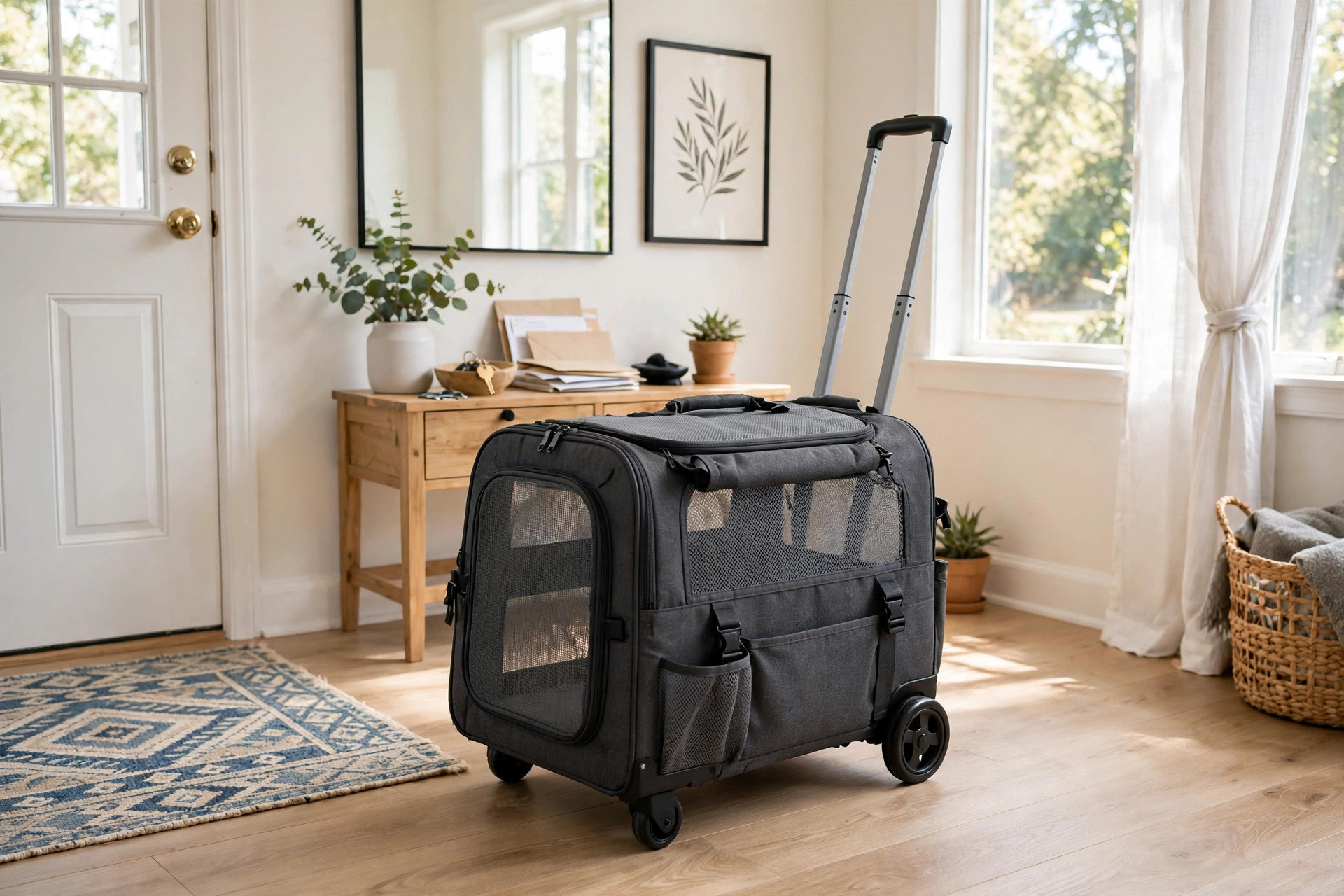

A cat carrier with wheels for travel ease can change the way you move your cat from place to place. Most cats dislike travel. They dislike being picked up, carried, and bounced along in a box. A rolling carrier lets you pull the cat along smoothly instead of lifting and shaking it. This simple change can lower stress for both you and the animal.
Vet visits are the most common reason cats travel. Many cat owners put off these visits because the trip is so hard. With a carrier on wheels, the journey becomes easier. You can roll the cat through parking lots and waiting rooms without strain. This article explains why wheeled carriers help, what to look for, the main types, what they cost, and how to keep one clean and safe.
Why a Wheeled Carrier Matters
Cats are home-loving animals. They mark their rooms and corners with scent. They like routine. Travel breaks that routine. The car ride, the noise, and the strange smells of a vet office all raise a cat’s heart rate. Studies reported by pet health groups show that cats arrive at the vet with high stress signs more often than dogs.
A cat carrier with wheels for travel ease helps in several ways. First, it stays still. When you carry a box in your arms, it sways and tilts. A rolling carrier glides on its wheels. The cat feels less motion. Second, it saves your arms and back. A cat with a carrier can weigh twelve to twenty pounds. Carrying that weight across a parking lot is hard. Rolling it is easy.
Third, the carrier sits at a calm height. In a vet waiting room, you can place the carrier on a bench or chair. The cat looks out at a steady view instead of being swung around at your side. Many owners report that their cats meow less in a rolling carrier. The smooth ride seems to calm them.
Long trips benefit too. If you drive across the state with your cat, you will need to stop. A wheeled carrier lets you move the cat from the car to a rest stop or a hotel room with ease. Some rolling carriers can be pushed like small suitcases. This design is a great help for older owners or anyone with a bad back.
What to Look for in a Rolling Cat Carrier: Cat Carrier with Wheels for Travel Ease
Not all wheeled carriers are equal. A good one should be safe, strong, and easy to use. Here are the main points to check before you buy.
Sturdy Wheels
Look for two or four wheels that roll straight. Rubber wheels are quieter than hard plastic ones. The wheels should be set wide apart so the carrier does not tip. Test it by pushing it across a store floor. It should roll in a straight line without wobbling.
Safe Doors and Latches
The door should lock with a clear snap or latch. It must stay closed if the carrier bumps against something. Top-loading carriers let you place the cat in from above. Many cats accept this better than being pushed through a front door. A best cat tree for large cats sturdy tall is a fine spot for a nervous cat to rest at home, but on the road a solid carrier door is what keeps the cat secure.
Good Air Flow
Mesh panels on the sides give fresh air. They also let the cat see out. Some cats calm down when they can see their owner. Make sure the mesh is strong. A cat with sharp claws can tear weak mesh. Double-stitched mesh lasts longer.
Size and Weight
The cat should be able to stand, turn, and lie down inside. A carrier that is too small adds stress. A carrier that is too large slides around in the car. Measure your cat from nose to tail base. Add four inches. That is the right inside length. The carrier shell should be light. You do not want heavy walls on top of the cat’s weight.
Washable Lining
Accidents happen. Cats may soil the carrier from fear. A lining that slides out and goes into the wash is a big help. The base should be firm so the cat does not sink into a soft dip.
Handle Height
The pull handle should reach your hand without bending. A bent back over a long walk hurts. A handle with several stop positions fits tall and short owners alike.
Types of Cat Carriers With Wheels
There are four main types. Each suits a different kind of travel.
Backpack Carriers With Wheels
These work as a backpack and as a rolling bag. You can wear the cat on your back for short walks. Then you pull out the handle and roll it through airports. They are handy but often small. Large cats may find them tight.
Soft-Sided Rolling Carriers
These look like small duffel bags on wheels. They are light and fold flat for storage. The mesh sides give air and views. They suit car trips and short flights. Their weak point is strength. They can sag if the cat is heavy.
Hard-Sided Rolling Carriers
These have a firm plastic shell with wheels set into the base. They are the safest choice in a car crash. The hard walls block drafts and noise. They are heavier and take up more space. Many vets prefer them because they wipe clean.
Pet Stroller Carriers
These are carriers fixed on a stroller frame. You push them like a baby stroller. They are tall, so the cat rides high off the ground. Some cats like the high view. They are best for walks around the block or slow trips through outdoor areas. For safe outdoor time at home, an outdoor cat enclosure for safe garden roaming gives the cat fresh air without the risk of escape.
Cost and Price Ranges
A cat carrier with wheels for travel ease costs more than a plain box. But the price range is wide. A simple soft-sided roller starts around twenty-five dollars. Mid-range models run from forty to eighty dollars. Hard-sided rollers and stroller models can reach one hundred to two hundred dollars or more.
Price tracks features. Costly models add smooth wheels, better locks, and washable pads. They also tend to last longer. A cheap carrier may need replacement in a year. A good one can last five years or more.
Airline-approved carriers cost more because they meet size rules. If you fly with your cat, check your airline’s size limits first. A carrier that is too tall will not fit under the seat. Buying twice costs more than buying right once.
Think about the cost of vet visits too. If a better carrier means you take the cat in for checkups on time, it pays for itself. Early care is cheaper than late care. The ASPCA notes that regular vet visits are one of the best ways to keep a pet healthy. A carrier you do not dread using helps make those visits happen.
Care and Upkeep
A carrier lasts longer with simple care. After each trip, open the carrier and air it out. Wipe hard sides with a mild soap cloth. Put soft linings in the wash on a gentle cycle. Let all parts dry fully before you store the carrier. Damp fabric can grow mildew.
Check the wheels often. Hair and thread wrap around axles. Pull off any tangles with your fingers or a small brush. A drop of light oil on each axle keeps wheels turning. Check latches and zippers too. If a zipper sticks, rub a pencil tip along the teeth. The graphite helps it slide.
Store the carrier where the cat can see it. Many owners hide the carrier in a closet and bring it out only for vet day. The cat learns to fear it. Instead, leave it open in a quiet corner with a soft pad inside. The cat may nap in it. When travel day comes, the carrier is a known place, not a trap. This one habit does more for calm travel than any feature.
Replace the carrier if the shell cracks or the door latch fails. A weak latch is a real risk. Cats have slipped out in parking lots from broken carriers. If you feed your pet on a set plan, an automatic pet feeder for dogs with camera shows how routine care can be made simple at home; the same idea of steady routine applies to keeping carrier gear in good shape.
Safety Tips for Travel Day
Safety comes first whenever a cat leaves the house. Follow these steps each time you travel.
Line the carrier with a pad that smells like home. A towel from the cat’s bed works well. Spray a cat-calming scent on the pad if your vet approves it. Never give your cat sleep drugs unless the vet prescribes them for that trip.
In the car, set the carrier on the back seat and run the seat belt through the handle. This keeps the carrier from sliding in a sudden stop. Never put the carrier in the trunk. The trunk has poor air and heat can build fast. Keep the car cool in summer and warm in winter.
Never leave a cat alone in a parked car. Inside heat can rise to deadly levels in minutes. Pet safety groups warn against this every summer. If you must stop, take the carrier with you or leave someone in the car with the cat.
At the vet, set the carrier on a raised surface away from dogs. Cover half the carrier with a light cloth. The cover gives the cat a hiding spot. It also blocks the sight of other animals. When the vet needs the cat out, a top-loading door makes the lift gentle.
After the visit, wipe down the carrier. Vet offices carry smells from many animals. Those smells can stress the cat on the next trip. A quick wipe and an airing remove most of them.
FAQ
Will my cat accept a rolling carrier?
Most cats accept one with slow training. Leave the carrier open at home for a week. Put treats inside. Let the cat walk in and out. Then take short practice rolls around the house. Praise calm behavior. Most cats settle within two weeks.
Are wheeled carriers allowed on airplanes?
Some are. Airlines set size limits for under-seat carriers. Measure your carrier and compare it to your airline’s rules. Call the airline before you book. Rules differ between carriers and plane types. Soft-sided rollers fit under seats more often than hard ones.
Can a large cat use a rolling carrier?
Yes, if the carrier is rated for the weight. Check the maker’s weight limit. A large cat needs a firm base and strong wheels. Hard-sided models suit heavy cats best. Measure the cat and compare to the inside size before you buy.
How do I clean urine from the carrier?
Remove the pad and wash it in warm water with pet-safe soap. Wipe hard parts with a mix of water and white vinegar. Let everything dry in the sun if you can. Sunlight helps remove smell. If the smell stays, replace the pad.
Is a stroller carrier safe outdoors?
It is safe for slow walks on smooth paths. Keep the cat leashed to the inside strap as well. Watch for dogs off leash. A stroller is not a cage for a busy street. Use it in parks and quiet streets.
How often should I replace a cat carrier?
Replace it when latches, zippers, or wheels wear out. A carrier in good shape can last five years. Sunlight and heat break down plastic over time. Check the shell each spring. If you see cracks, buy a new one.
A Short Final Word
A cat carrier with wheels for travel ease is a small change that brings real comfort. It spares your back. It gives the cat a smooth ride. It makes vet visits less of a battle. Choose one with strong wheels, a safe door, good air flow, and the right size. Train the cat to see it as a safe spot. Keep it clean. Travel with care in the car. These steps turn a dreaded chore into a calm routine. Your cat will thank you in its quiet way.
For more background, see The Spruce Pets, The Home Depot, and Chewy. Buying guides are also published by PetMD and American Kennel Club. See also Petco and PetSmart for further detail.
References
American Kennel Club. (n.d.). Dog care and training resources. https://www.akc.org ASPCA. (n.d.). Pet care and animal welfare resources. https://www.aspca.org Chewy. (n.d.). Pet supplies. https://www.chewy.com Petco. (n.d.). Pet supplies and services. https://www.petco.com PetMD. (n.d.). Pet health information. https://www.petmd.com PetSmart. (n.d.). Pet supplies and services. https://www.petsmart.com The Home Depot. (n.d.). Home improvement products. https://www.homedepot.com The Spruce Pets. (n.d.). Pet care guides and product reviews. https://www.thesprucepets.com
Was this guide helpful?

About Jennifer Lee
The My Garden US editorial team writes practical, in-depth home and garden guides for American homeowners — tested advice, no fluff.
You May Also Like

Pet Gate Extra Wide for Open Floor Plans: A Complete Guide
September 7, 2026 0 views
The Best Pet Nail Clippers for Large Dog Nails
June 8, 2026 0 views
Best Elevated Cat Bowl Stand for Neck Comfort
September 8, 2026 0 views