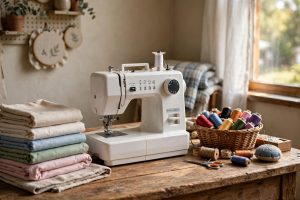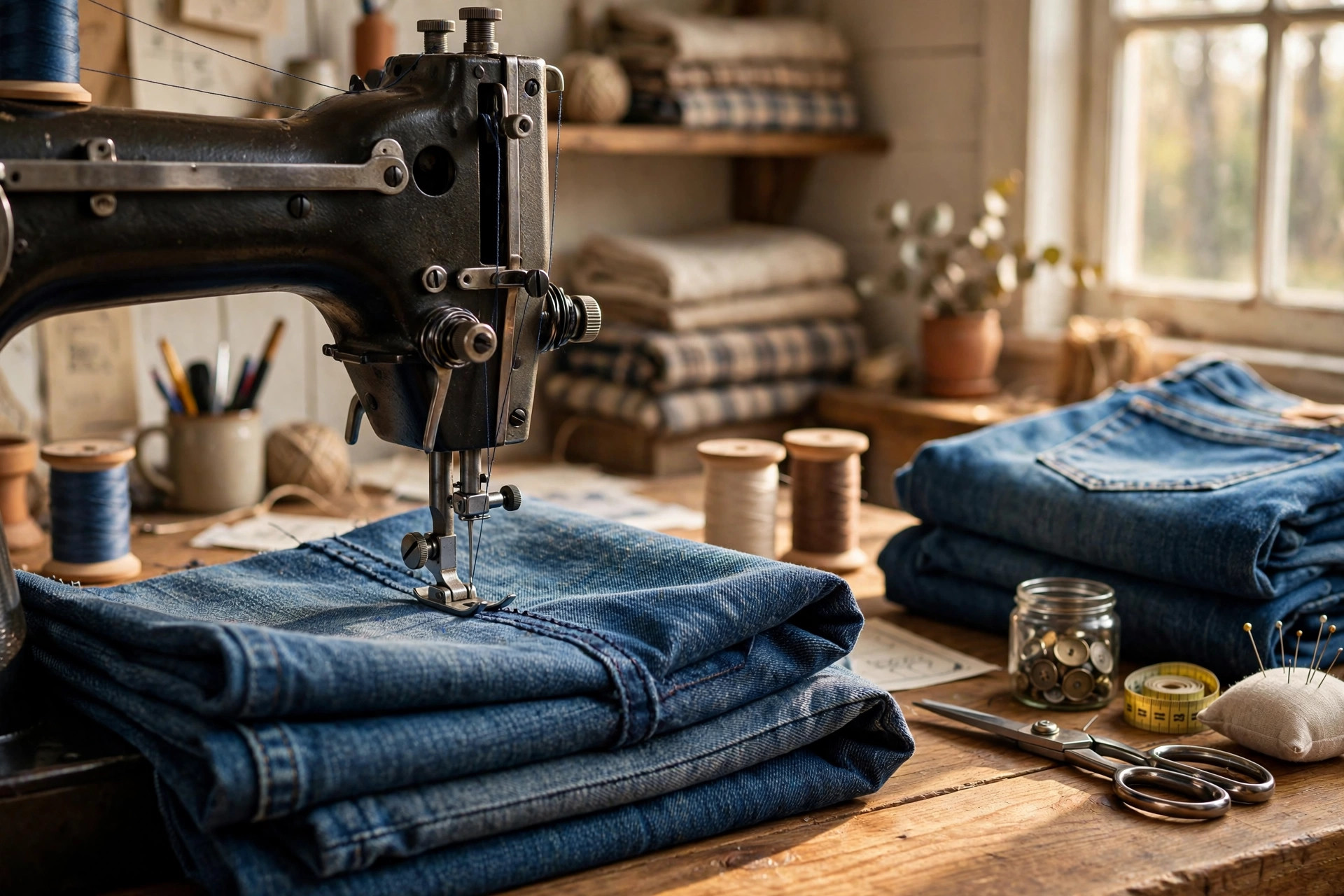

Sewing denim at home is a test of strength. A regular home machine can hem a light shirt in minutes. It will stall, skip stitches, or break a needle when it meets six layers of thick blue jeans. That is why finding the best sewing machine for heavy duty denim usa matters to so many home sewers. A machine built for heavy work saves time, saves thread, and saves the frustration of a jammed bobbin at midnight. This guide walks through what makes a machine strong enough for denim, what features to look for, how much to spend, and how to keep the machine running for years.
Why a Heavy Duty Machine Matters for Denim
Denim is not like other cotton fabric. It is woven with a tight twill that makes it thick and hard. A pair of jeans can have flat-felled seams with four to six layers of cloth stacked at the waistband or the hem. A light machine was never built for that kind of load. Its small motor strains. Its feed dogs slip. Its needle bends or snaps.
A heavy duty sewing machine for jeans solves these problems at the source. It carries a stronger motor, usually rated at 60 watts or more. It uses a metal inner frame instead of plastic. It drives the needle with more force, so the point goes through thick fabric without bending. The result is a clean stitch on every layer. For anyone who plans to repair jeans, make tote bags from old denim, or sew canvas and leather goods, the right machine turns a chore into a pleasure.
Home sewers in the United States also face a wide market. Dozens of brands sell machines labeled “heavy duty.” Some live up to the label. Some do not. Knowing how to read the specifications makes the choice much simpler.
What to Look for in a Denim Sewing Machine: Best Sewing Machine for Heavy Duty Denim Usa
A good machine for thick fabric shares a short list of traits. Each one matters when the needle has to pass through heavy cloth.
Motor Power
The motor is the heart of the machine. Most standard home machines run on 50 to 70 watts, but machines made for heavy work push the needle with a steady, strong drive. Look for a machine that advertises high presser foot pressure and a strong feed system. Power alone is not enough. The machine must also move the fabric under the needle at a steady pace, so the gears and the feed mechanism should be metal.
Needles for Denim
Even the strongest machine fails with the wrong needle. Denim needles have a sharp point and a thicker shaft than universal needles. Sizes 90/14 and 100/16 suit most jeans. For heavy seams, a 110/18 needle cuts through with less strain. Change the needle often. A dull needle is the most common cause of skipped stitches. A sewing machine for thick fabric should accept standard denim and jeans needles without special adapters.
Feed Dogs and Presser Foot
Feed dogs are the small metal teeth under the needle plate that move the fabric forward. On a good denim machine, the feed dogs are tall and sharp. They grip thick cloth and move it evenly. An adjustable presser foot pressure dial is also a plus. More pressure holds thick layers in place. Less pressure suits light cloth. A walking foot attachment is another useful tool. It moves the top layer with the bottom layer, so seams stay even on quilts and layered denim.
Throat Space and Bed Size
The throat is the space between the needle and the arm of the machine. A wider throat makes it easier to roll up a pair of jeans or a large bag project. Most heavy duty home machines offer a standard throat of about six inches. That is enough for hems, repairs, and small goods. Larger projects may call for an extended bed or a flat-bed extension table.
Stitch Options
Denim work needs only a few stitches. A straight stitch does most of the work. A zigzag stitch finishes raw edges and sews buttonholes. A triple straight stitch, sometimes called a stretch straight stitch, sews forward and back over the same line for extra strength. A good industrial strength sewing machine for home use offers these basics and skips the decorative extras that add cost without adding value.
Types of Machines That Handle Heavy Denim
Home sewers can choose from three broad groups.
Mechanical heavy duty machines. These machines use dials and levers instead of screens. They are simple, tough, and easy to fix. Many well-known models in the United States fall in this group. They sew straight and zigzag stitches with strong motors. For pure denim work, a mechanical machine is often the best value.
Computerized machines. These machines use a small screen and electronic stitch control. They offer more stitch choices and precise speed control. Some include needle up and down settings and automatic thread cutters. They cost more. They suit sewers who want one machine for both heavy denim and fine dressmaking.
Semi-industrial machines. These sit between home and factory machines. They sew faster and handle the thickest stacks of fabric. They are larger and louder. They suit a home business that sews denim goods in volume. Most hobby sewers do not need this much machine, but those who sell jeans repairs or canvas bags may find the speed worth the price.
Cost and Price Ranges
Price tracks with power and features. A basic mechanical machine made for heavy cloth often sells between one hundred and two hundred fifty dollars in the United States. These machines handle jeans hems and light canvas well. A mid-range computerized machine costs between two hundred fifty and five hundred dollars. It adds stitch variety and smoother speed control. A semi-industrial model starts near five hundred dollars and can pass one thousand.
Used machines are another path. Older all-metal machines from past decades often sew denim better than new budget models. Pawn shops, estate sales, and online marketplaces carry them at low prices. A used machine should be tested before purchase. Sew a folded stack of denim through it. Listen for strain. Check that the stitches stay even. A short test saves a long regret.
When you compare prices, look beyond the sticker. Add the cost of denim needles, heavy thread, and a walking foot if the machine does not include one. A machine that ships with these parts is often the better deal. Shoppers who want guidance on where to compare models can browse the sewing sections at Michaels and JOANN, which both carry a wide range of home machines and denim supplies. Craft reviewers at The Spruce also publish hands-on tests of popular models.
Care and Upkeep
A machine that sews heavy fabric needs regular care. Denim sheds a large amount of lint. Lint builds up under the needle plate and around the bobbin case. It slows the machine and breaks thread. Clean these areas with a small brush after every large project. Never blow into the machine with your mouth. Moisture from breath can harm metal parts.
Oil the machine as the manual directs. Many modern machines are sealed and need no oil. Older machines need a drop of sewing machine oil at marked points. Use only oil made for sewing machines. Cooking oil and motor oil will gum up the works.
Change needles with each project or after eight hours of sewing. Store the machine under a dust cover. Keep it away from damp basements. A machine that is cleaned and oiled on schedule will sew thick denim for decades.
Good upkeep habits extend to the whole craft room. Sharp tools make every job easier. Many sewers keep a pair of quality fabric shears for sewing and quilting beside the machine, since clean cuts feed through the feed dogs more smoothly. Families who share the craft table may also keep modeling clay for kids crafts at home on hand, and card makers often reach for a stamp set for card making crafts when they finish a denim project with a handmade gift tag.
Safety
A heavy duty machine deserves respect. The needle moves fast and with force. Keep fingers clear of the needle plate. Use the presser foot lifter, not your fingers, to adjust thick seams under the needle. Unplug the machine before changing the needle, the presser foot, or the needle plate. This simple habit prevents most injuries.
Denim needles can snap under strain. When a needle breaks, it can throw a small sharp piece. Safety glasses cost little and protect the eyes during heavy sewing. Keep loose hair and loose sleeves tied back. The United States Consumer Product Safety Commission offers general guidance on home product safety at cpsc.gov. Home improvement guides at This Old House, Family Handyman, and Bob Vila also publish workshop safety tips that apply to a home sewing space. Retailers such as Home Depot sell safety glasses and dust masks in their tool aisles, and art suppliers like Blick carry craft-room organizers that keep sharp tools out of reach. Independent reviews of machine safety features appear at Consumer Reports.
Frequently Asked Questions
Can a regular sewing machine sew denim?
A regular machine can sew a single layer of light denim with a denim needle and slow speed. It will struggle with hems and seams where many layers stack. For steady denim work, a heavy duty model is the better choice.
What needle size is best for heavy denim?
Size 90/14 suits medium denim. Size 100/16 suits heavy jeans. Size 110/18 suits the thickest seams, such as waistbands and layered hems. Always use a needle labeled for denim or jeans.
What thread should I use for jeans?
Use heavy duty polyester thread or thread labeled for jeans. It resists abrasion better than all-purpose thread. Match the thread weight to the needle size. Thick thread needs a larger needle eye.
How do I stop skipped stitches on thick seams?
Use a new denim needle in the right size. Slow down over thick spots. Use a seam jumper or a folded piece of cardboard under the back of the presser foot to keep it level when climbing over a bulky seam. Check that the machine is threaded correctly and the bobbin is clean.
Is a walking foot worth it for denim?
Yes. A walking foot moves the top layer of fabric at the same speed as the bottom layer. It prevents shifting on layered seams and quilts. Many denim sewers call it the most useful attachment they own.
How long does a heavy duty machine last?
With basic cleaning and oiling, a well-made machine lasts twenty years or more. Metal gears outlast plastic ones. Machines that are serviced on schedule keep their stitch quality for decades.
A Final Word
The best sewing machine for heavy duty denim usa is not the one with the most stitches or the largest screen. It is the one with a strong motor, a metal frame, and a steady feed that pushes through thick cloth without complaint. Match the machine to the work you plan to do. A mechanical model serves most home sewers well. A computerized model adds ease for those who sew many fabric types. Test the machine on real denim before you commit. With the right machine, sharp needles, and simple care, heavy denim becomes one of the most satisfying fabrics to sew. Start with small repairs, learn how the machine feels on thick seams, and larger projects will soon follow.
References
Blick Art Materials. (n.d.). Art and craft supplies. https://www.dickblick.com Bob Vila. (n.d.). Home improvement advice. https://www.bobvila.com Consumer Reports. (n.d.). Product reviews and ratings. https://www.consumerreports.org Family Handyman. (n.d.). DIY home repair and maintenance. https://www.familyhandyman.com JOANN. (n.d.). Fabric and craft supplies. https://www.joann.com Michaels. (n.d.). Arts and crafts supplies. https://www.michaels.com The Home Depot. (n.d.). Home improvement products. https://www.homedepot.com The Spruce. (n.d.). Home and garden advice. https://www.thespruce.com This Old House. (n.d.). Home renovation guidance. https://www.thisoldhouse.com U.S. Consumer Product Safety Commission. (n.d.). Product safety information. https://www.cpsc.gov
Was this guide helpful?

About James Carter
The My Garden US editorial team writes practical, in-depth home and garden guides for American homeowners — tested advice, no fluff.
You May Also Like
Best Chalkboard Paint for DIY Home Projects
February 26, 2026 0 views
The Best Yarn for Amigurumi Toys Soft USA Makers Trust
March 27, 2026 0 views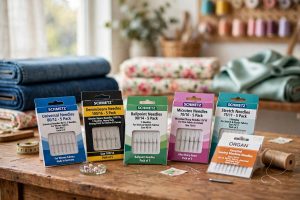
Sewing Machine Needles Assortment for Fabrics USA: A Complete Buyer Guide
April 17, 2026 0 views