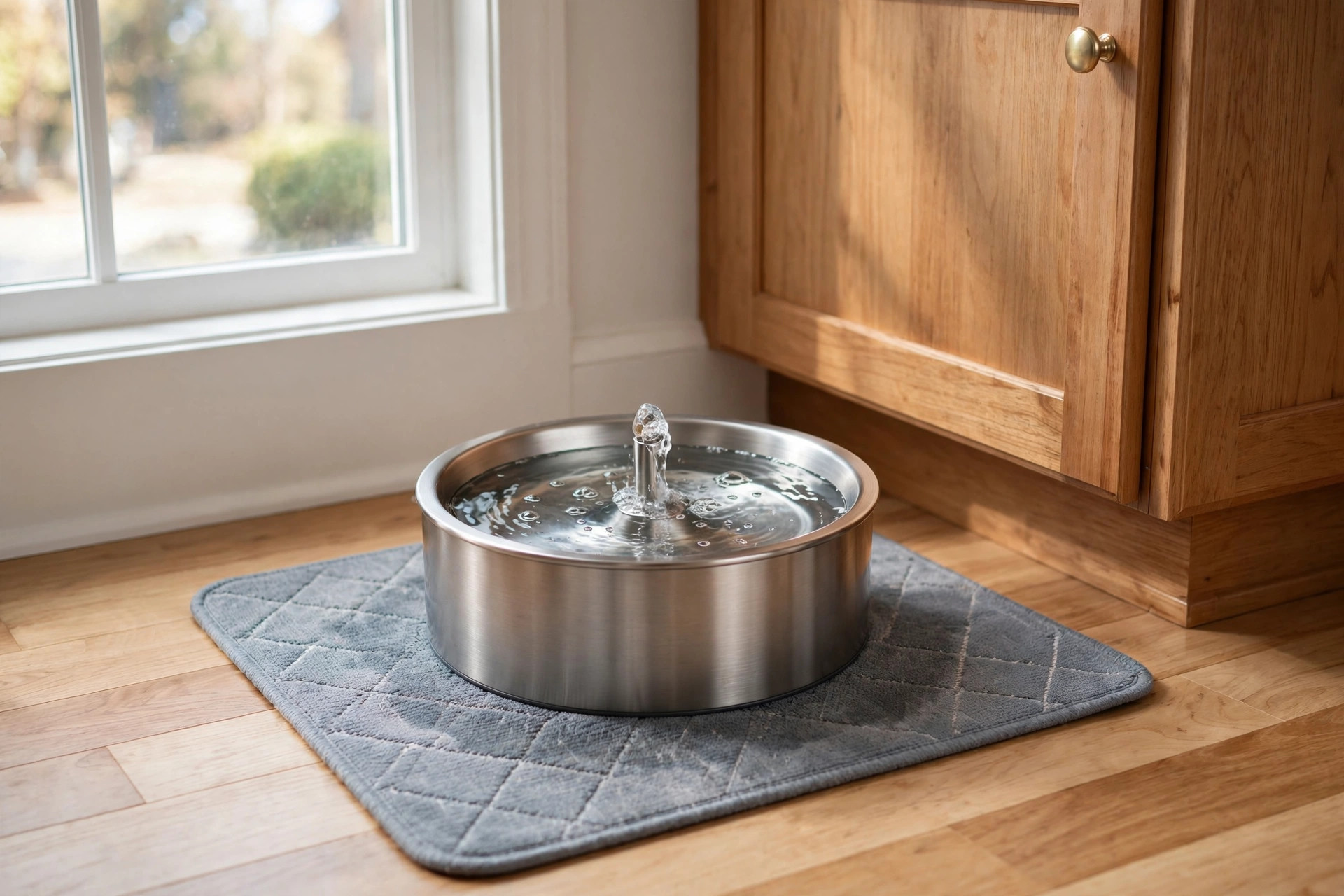

Many cats drink too little water. A dry food diet and a dull bowl of still water do not tempt them. A cat water fountain with a stainless steel bowl and a quiet pump can change that. The moving water catches a cat’s eye. It feels like a small spring. It stays fresh and cool all day. This guide explains why these fountains help, what to look for, and how to keep one running for years.
Why Fresh Water Matters for Cats
Cats are desert animals by nature. Their wild kin get most of their water from prey. House cats eat dry kibble most days. They need a good drink to balance that. A cat water fountain stainless steel quiet pump setup gives them moving water. Moving water feels safer to a cat than still water. It also picks up less dust.
Vets see many cats with urinary troubles. Dry food, low water intake, and stress can all add to the risk. No fountain can cure illness. But a fountain can help a cat drink more each day. Pet owners at PetMD and ASPCA resources often read about hydration as a base for pet health. A steady supply of clean water supports the kidneys and the bladder. It also helps older cats who need soft food and extra care.
The material of the bowl matters too. Plastic bowls can hold smells. They can grow a thin film of germs if left too long. Stainless steel is smooth and hard. It does not hold odors. It cleans up with a quick wash. Many owners switch to steel after their cat gets chin spots from a plastic dish. For more on everyday pet safety and home choices, the guides at The Spruce Pets offer plain advice.
A quiet pump matters more than most buyers think. Cats hear well. A loud hum can scare a shy cat away from the water. A good quiet pump makes only a soft sound. Some are near silent when the water level is right. This keeps the house calm at night. It also helps if the fountain sits in a bedroom or a small flat.
How a Fountain Changes a Cat’s Habits
Cats learn fast. In the first week a cat may sniff the fountain and walk off. Then it may paw at the stream. Then it drinks. Many owners see their cats drink twice as often once the fountain is in place. The moving water seems to draw them back again and again. The fountain becomes part of the home, like the food bowl and the bed.
What to Look for in a Stainless Steel Cat Water Fountain: Cat Water Fountain Stainless Steel Quiet Pump
The Bowl
Pick a bowl made of food-grade stainless steel. The common grades are 304 or 18/8. These resist rust and stand up to daily washing. A wide, low bowl is best. It does not press on the cat’s whiskers. Cats with sensitive whiskers like a shallow dish. Look for a bowl that comes apart with ease. Fewer tight corners means less gunk.
The Pump
The pump is the heart of the fountain. A quiet pump should run under a soft hum. Check the noise rating if the maker lists one. Many good pumps run at 30 to 40 decibels. That is the level of a soft whisper. Some pumps let you change the flow. A gentle stream suits shy cats. A stronger flow suits cats that like to drink from a tap.
Look for a pump that is easy to take apart. You will clean it each week. Small brushes help. A pump with a pre-filter foam piece catches hair before it clogs the motor. Ask whether spare pumps are sold alone. A fountain that lets you buy a spare pump can last for many years.
The Filter
Most fountains use a carbon filter. The carbon takes out bad tastes and smells. Some add an ion resin filter. That softens hard water a little. The filter sits in a small case in the flow path. It needs a swap every two to four weeks. Buy a fountain whose filters are easy to find in stores. Chewy and Home Depot both carry pet fountain parts and filters for many brands.
Size and Capacity
A small fountain holds about one to two liters. That suits one cat. A large fountain holds three to four liters. That suits two or three cats. A bigger tank means fewer refills. But it also means heavier lifting. Pick a size you can carry to the sink with ease. A low water line makes the pump loud. A tall fill line keeps it quiet. Look for a fountain with a clear water window so you can see the level at a glance.
Power and Safety
Most fountains plug into a wall outlet with a low-voltage adapter. A cord that is too short will limit where you put the fountain. Some models have a cord cover to stop chewing. Keep the cord away from walkways. Place the fountain on a washable mat. A small spill now and then is normal.
Types of Cat Water Fountains
Bubbler Style
A bubbler fountain lifts water through a center post. The water bubbles up and falls back into the bowl. This style is calm. It makes little splash. Shy cats often like it. The water stays cool because it moves all the time.
Stream Style
A stream fountain sends water out of a spout in an arc. It lands back in the bowl with a soft splash. Cats that drink from the tap often love this style. It can be a touch louder than a bubbler. A quiet pump keeps the sound low.
Flower Style
Some fountains have a flower cap on top. Water flows out of the petals like small streams. Cats can drink from the top or the bowl. This style gives the cat a choice. It uses the same quiet pump as the other styles.
Multi Cat Towers
Towers hold more water. They may have two or three drinking levels. Big homes with several cats do well with a tower. The pump works harder in a tower. Clean it more often to keep it quiet.
When you shop, brand sites such as PetSafe show the range of styles on the market. Read the parts list before you buy. A simple design with few parts is easier to keep clean than a fancy one.
Cost and Price
A stainless steel cat water fountain with a quiet pump costs more than a plastic one. Expect to pay between thirty and ninety dollars for a good model. Cheap models run loud. They also break sooner. A mid-range model from a known brand is the best value for most homes.
Running costs are small. The pump uses very little power. Filters cost about five to ten dollars for a pack of four to six. Change the filter each month. A set of filters lasts half a year. A spare pump costs ten to twenty dollars. Over a year, most owners spend about thirty to fifty dollars on filters and parts.
Think of it this way. One vet visit for a urinary issue can cost hundreds of dollars. A fountain is a small price next to that. It does not replace vet care. But it is cheap daily help.
Price can shift by store and season. Big sales often come in the spring and near the holidays. Compare prices at Chewy and Home Depot before you buy. Some pet adoption sites like Petfinder also link to gear guides for new pet owners.
Care and Upkeep
A clean fountain keeps cats healthy. Dirty water can make a cat turn away. Follow a simple weekly routine.
Weekly Cleaning
Once a week, take the fountain apart. Wash the steel bowl with warm water and mild dish soap. Scrub the pump with a small brush. Rinse all parts well. Soap left on the parts can put cats off. Refill with fresh water. Tap water is fine in most towns. If your water is very hard, a filter pitcher helps cut the scale.
Filter Changes
Swap the carbon filter every two to four weeks. In homes with more than one cat, change it closer to two weeks. Mark the date on a calendar. A tired filter lets smells build up. The water will taste flat. Fresh filters keep the flow clean and the pump happy.
Deep Clean Each Month
Once a month, soak the parts in a mix of one part white vinegar and three parts water. This breaks down mineral scale. Rinse well after the soak. Check the pump impeller for hair. A strand of hair can make the pump loud or stop it. Dry the cord area before you plug it back in.
Daily Habits
Top up the water each day. A low water line makes the pump work hard and get loud. Keep the fountain away from the food bowl if you can. Cats in the wild do not drink near their kill. Many house cats drink more when the water sits a few feet from the food.
Cats share the home with other pets too. If you also keep a dog, you may like our guide on an outdoor dog kennel with welded wire panels for the yard, or a best dog bed for chewers indestructible usa for the living room. Safe travel gear matters as well; see our notes on a dog seatbelt harness for safe car travel usa.
Safety Tips
Stainless steel is one of the safest bowl materials. Still, use common sense. Keep the fountain on a flat, stable spot where it cannot tip. Do not let the pump run dry. A dry pump can burn out fast and get hot. Unplug the fountain before you take it apart.
Watch the cord. Kittens chew cords. A chewed cord is a shock risk. Use a cord cover or run the cord behind furniture. If the cord is cut or frayed, stop using the fountain at once.
Clean water is safe water. Change it often. If the water looks cloudy or smells odd, dump it and clean the bowl. Do not add drops or scents to the water unless a vet says so. Plain fresh water is best.
Older cats and kittens both do well with fountains. For a kitten, use a low flow setting so the stream does not startle it. For a senior cat, keep the fountain close to its resting spot. The vet groups at AAHA stress routine care and clean gear as part of good pet health.
General pet health reading is easy to find. The library at WebMD Pets covers common cat issues in plain words. The AKC site, while dog-focused, also shares sound pet care habits that apply in any pet home.
FAQ
Is a stainless steel cat water fountain better than a plastic one?
Yes, for most cats. Stainless steel does not hold smells. It is harder for germs to grip. It also stands up to daily washing without wear. Plastic can grow a slimy film and hold odors. Some cats get chin spots from plastic dishes. Steel avoids that problem.
How loud is a quiet pump?
A good quiet pump runs at a soft hum, about as loud as a whisper. You should barely hear it across the room. If your pump gets loud, the water level is likely low. Top up the water first. If it stays loud, clean the pump. Hair on the impeller is the most common cause.
How often should I change the water?
Top up the water each day. Do a full change and wash once a week. Swap the filter every two to four weeks. In a hot summer or a multi-cat home, change the water more often. Fresh water keeps cats coming back.
Can kittens use a water fountain?
Yes. Use the lowest flow setting for a kitten. Place the fountain where the kitten can reach it with ease. Watch the kitten at first to make sure it is not scared. Most kittens learn to drink from a fountain in a few days.
Do cat water fountains use much power?
No. The pump draws only a few watts. It costs pennies a month to run. The low-voltage adapter is safe for home use. Unplug it only when you clean the fountain.
What if my cat will not use the fountain?
Give it time. Leave the old water bowl out for the first week. Put the fountain near the old bowl. Let the cat watch the water move. Some cats need two weeks to trust a new thing. A treat near the fountain can help. If the cat still will not drink, try a different flow setting or a quieter spot.
A Short Final Word
A cat water fountain stainless steel quiet pump is a small change with a big payoff. It gives your cat fresh moving water all day. It cuts down on smells and slime. It runs soft and stays out of the way. Pick a simple steel model with a quiet pump, keep it clean, and your cat will thank you with every drink.
References
American Animal Hospital Association. (n.d.). Pet health resources. https://www.aaha.org American Kennel Club. (n.d.). Dog care and training resources. https://www.akc.org ASPCA. (n.d.). Pet care and animal welfare resources. https://www.aspca.org Chewy. (n.d.). Pet supplies. https://www.chewy.com Petfinder. (n.d.). Pet adoption resources. https://www.petfinder.com PetMD. (n.d.). Pet health information. https://www.petmd.com PetSafe. (n.d.). Pet water fountains and supplies. https://www.petsafe.net The Home Depot. (n.d.). Home improvement products. https://www.homedepot.com The Spruce Pets. (n.d.). Pet care guides and product reviews. https://www.thesprucepets.com WebMD. (n.d.). Pet health information. https://www.webmd.com/pets
Was this guide helpful?

About David Wilson
The My Garden US editorial team writes practical, in-depth home and garden guides for American homeowners — tested advice, no fluff.
You May Also Like
Best Orthopedic Cat Bed for Senior Cats: A Guide to Comfort for Older Felines
January 7, 2026 0 views
Best Pet Gate for Hallway with Door Opening: A Buyer’s Guide
July 29, 2026 0 views
A Dog Life Jacket for Swimming and Boating: How to Choose the Right One
April 9, 2026 0 views