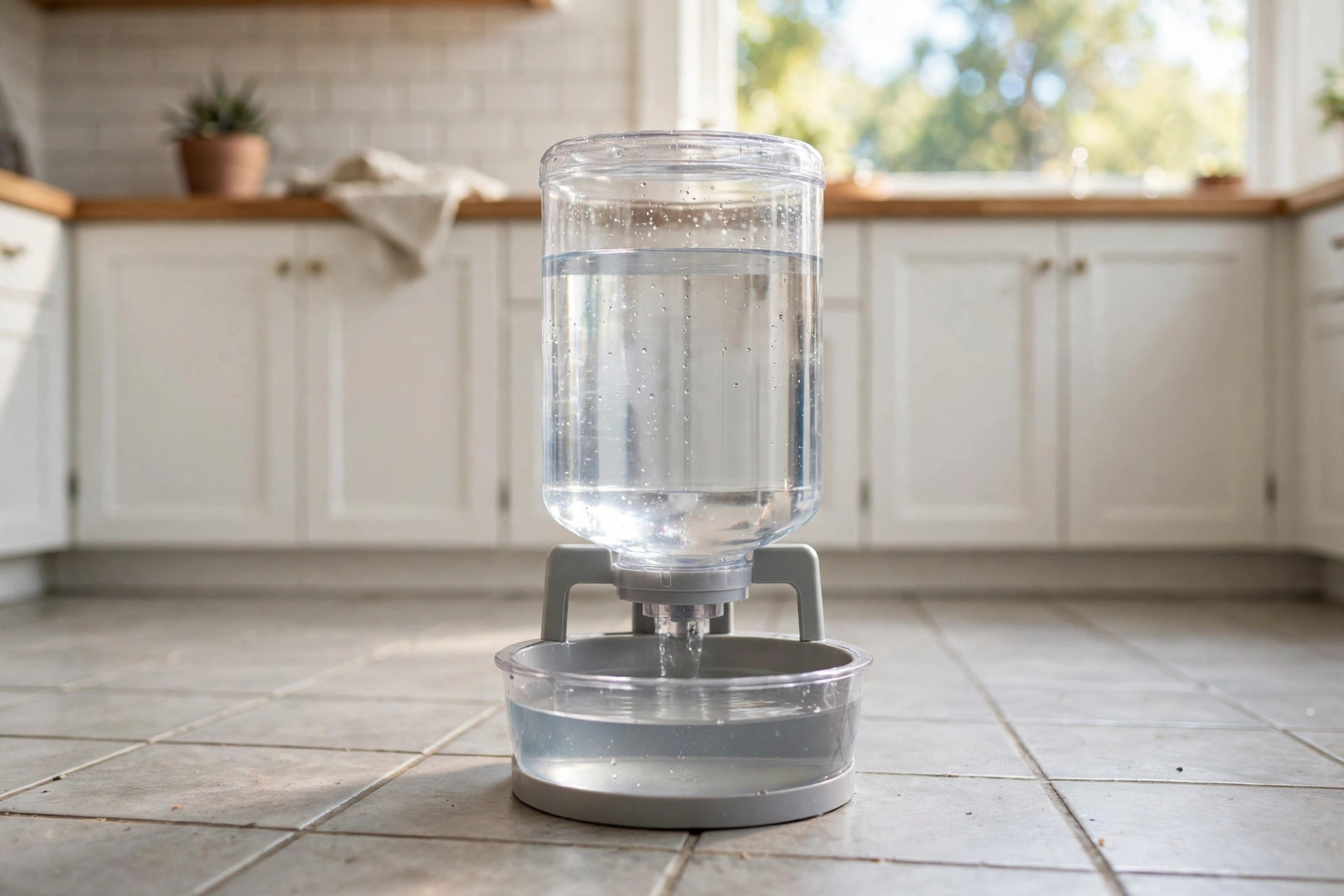

A pet water dispenser gravity fed for dogs is one of the simplest tools a dog owner can buy. It holds a large tank of water above a small drinking bowl. Gravity pulls water down as the dog drinks. The bowl stays full. The owner refills the tank only every few days. This guide explains why these feeders matter, how they work, what to look for, and how to keep them clean and safe.
Why a Gravity Fed Waterer Matters
Dogs need fresh water every hour of the day. A small bowl can run dry. A dog that knocks over a bowl may go hours with nothing to drink. Dehydration can harm a dog fast, above all in warm weather or after play.
A pet water dispenser gravity fed for dogs fixes this problem with no power and no moving parts. The tank may hold one to five gallons. That is enough for one day or for a long weekend. Dogs that drink at will stay calm and hydrated. Owners who work long hours worry less.
Many owners also like the low noise. A gravity fed unit makes no pump sound. It fits in a kitchen corner, a laundry room, or a shaded spot on a porch. It costs far less than a filtered pet water fountain and it needs no outlet.
How a Gravity Fed Dispenser Works: Pet Water Dispenser Gravity Fed for Dogs
The design is old and simple. A sealed tank sits upside down over a shallow dish. Water flows from the tank into the dish. When the water in the dish rises to the tank mouth, air can no longer enter the tank. The flow stops. When the dog drinks, the water level drops. Air enters. Water flows again. This cycle repeats with no help from the owner.
Most models use a plastic bottle or a molded tank that slides into a base. The base has a drinking tray. Some models add a carbon filter at the tank mouth. The filter catches dust and hair before water reaches the tray.
Key Parts to Know
Tank. The tank holds the water reserve. Larger tanks suit large dogs and multi-dog homes. Smaller tanks suit small dogs and apartments.
Base and tray. The base holds the tank steady. The tray is the part the dog drinks from. Wide trays work best for dogs with broad muzzles.
Filter. Not every model has one. A filter keeps the water tasting fresh and cuts debris. It needs replacement every few weeks.
Cap and seal. The cap keeps air out of the tank. A good seal keeps the flow steady and stops leaks.
What to Look for When You Buy
Buyers face many models. Most look alike. A few details separate a good unit from a weak one.
Size and Capacity
Match the tank size to the dog. A small dog drinks about one ounce of water per pound of body weight each day. A 20 pound dog needs around 20 ounces a day. A large dog may drink a gallon a day in summer heat.
A pet water dispenser gravity fed for dogs with a two or three gallon tank suits most single large dogs for two to three days. Multi-dog homes should pick four or five gallons. Larger tanks mean fewer refills but heavier lifting when full. A full three gallon tank weighs about 25 pounds.
Material
Most units are plastic. Look for BPA free plastic. It is the safest common choice. Some brands offer stainless steel trays. Steel resists scratches and holds up to chewing. It also cleans well.
Skip units with soft rubber seals that smell strong when new. A strong chemical smell may fade, but it is a bad sign.
Stability
Big dogs can push a light unit across the floor. A wide base helps. Some units have a low center of gravity that resists tipping. If your dog is a strong paw user, place the unit against a wall or in a corner.
Ease of Cleaning
You will clean this unit every week. Pick one that comes apart with ease. The tray should lift off. The tank mouth should be wide enough for a bottle brush. Dishwasher safe parts save time.
Filter Quality
A simple carbon filter is enough for most dogs. It removes odd tastes and some debris. It does not make unsafe water safe. If your tap water is poor, treat the water first. Change filters on schedule. A spent filter is worse than none, since it can grow germs.
Types of Gravity Fed Dog Waterers
Bottle style. A clear plastic bottle sits in a base. The bottle shows the water level at a glance. These are light and cheap. The bottle may crack over time.
Molded tank style. The tank is shaped like a jug with a handle. It is tougher than a bottle. The handle makes lifting easy. Most premium models use this design.
Stand or elevated style. The unit sits on legs so the tray is at the dog’s chest height. Tall dogs and older dogs with stiff necks drink with more ease. These units cost more and need more space.
Filtered style. A filter cartridge sits in the flow path. It cleans the water as it enters the tray. The water tastes better. The filter adds a small running cost.
For outdoor use, look for UV stable plastic that can stand in the sun. A model with a lid or splash guard keeps leaves out. Pair an outdoor waterer with a waterproof dog bed for the patio to make a full comfort spot outside.
Cost and Price
Prices are kind. Most pet water dispenser gravity fed for dogs units sell for 15 to 60 dollars. Bottle style models sit at the low end. Molded tank models with filters sit at the high end.
Running costs are small. Replacement filters cost a few dollars each and last one to three months. That is all. There is no electric bill and no pump to replace.
Compare that with an electric fountain. Fountains cost 40 to 120 dollars and use power all day. They have pumps that wear out. For owners who want simple and cheap, gravity wins.
Watch for false savings. A very cheap unit with thin plastic may crack in a year. A mid price unit from a known brand often lasts many years. Spend once and spend well.
How to Set One Up
Setup takes five minutes.
1. Wash all parts in warm soapy water. Rinse well. 2. Fill the tank with fresh cold water. Use tap water or filtered water. 3. If the model has a filter, soak it as the instructions say, then place it in the tank mouth. 4. Turn the tank upside down and seat it in the base. Do this over a sink the first time in case of a leak. 5. Set the unit where your dog can reach it with ease. Fill the tray and let the dog sniff it.
Show a shy dog the unit. Tap the water with your finger. Most dogs learn in minutes. Do not force the dog near it.
Care and Upkeep
Clean water keeps dogs healthy. A dirty waterer can grow slime, mold, and germs. Follow this simple routine.
Daily. Rinse the tray. Wipe away food bits and hair. Top up the tank if the level is low.
Weekly. Empty the tank. Wash the tank, tray, and cap with warm water and a mild dish soap. Use a bottle brush on the tank neck. Rinse until no soap stays. Refill with fresh water.
Monthly. Check the filter. Replace it if the maker says to. Look at seals and gaskets for cracks. Check the base for wear.
Seasonal. In winter, do not let water freeze in the unit. Ice can crack the tank. In summer, move an outdoor unit to the shade. Change water more often in heat.
Never use bleach or harsh cleaners unless the maker says it is safe. Soap residue is the main risk. Rinse twice if you are unsure.
Keep a spare travel bowl on hand for trips. A no spill dog water bowl for car travel pairs well with a gravity fed unit at home.
Safety Tips
Gravity fed waterers are safe, but a few rules apply.
Watch the water level. The whole point is constant supply. Check the level each day. A clogged tank mouth can stop the flow while the tank looks full.
Keep it clean. Slime in the tray is a sign of neglect. If you see green or pink film, scrub it off and wash the whole unit.
Place it right. Keep the unit away from stairs and sharp edges. Water on the floor makes slips. Put a washable mat under the unit to catch drips.
Mind the material. Old or cracked plastic can leach chemicals. Replace a tank that looks cloudy or rough inside. BPA free is the standard to demand.
One unit per area. For large homes, place one unit on each floor. Dogs will not walk far for water. Easy access means more drinking.
Keep cats in mind. Many cats will drink from a dog waterer. That is fine, but wash it just as often. For homes with many cats, a dedicated pet water fountain for multiple cats may suit the cats better.
FAQ
How long does the water stay fresh?
In a clean unit, water stays fresh for three to five days. In heat, change it every two days. If the water smells odd or looks cloudy, change it at once.
Will a gravity fed dispenser leak?
A good unit with a sound seal does not leak. Most leaks come from a worn gasket or a cracked tank. Check the seal when you clean. Replace worn parts. Seat the tank with care each time you refill.
Can I use it outdoors?
Yes, with care. Pick a UV stable model made for outdoor use. Keep it in the shade. Clean it more often, since dust and bugs reach the tray. In freezing weather, bring it inside or use a heated model instead.
Is it good for puppies?
Yes. Puppies drink often and spill often. A wide stable unit suits them. Pick a small tank so you lift it with ease. Clean the tray daily, since puppies drop food and toys in the water.
Do I need the filter version?
It is not a must. The filter makes water taste better and traps debris. If your dog is picky about water, a filter may help the dog drink more. It adds a small cost. Try the plain version first and upgrade later if you want.
How is it different from a pet water fountain?
A fountain uses a pump to move water all the time. A gravity fed unit uses no power and has no moving parts. Fountains keep water moving, which some pets like. Gravity units are silent, cheap, and need less care. Many owners keep one of each.
A Short Final Word
A pet water dispenser gravity fed for dogs is a small buy that pays off every day. It keeps water ready, cuts refills, and costs little. Pick a sturdy BPA free unit in the right size. Keep it clean. Your dog will drink well whether you are home or not. For supply ideas and pet care advice, trusted resources such as Chewy (https://www.chewy.com), PetMD (https://www.petmd.com), the American Kennel Club (https://www.akc.org), the ASPCA (https://www.aspca.org), The Spruce Pets (https://www.thesprucepets.com), Home Depot (https://www.homedepot.com), Petco (https://www.petco.com), and Amazon (https://www.amazon.com) all carry useful background on pet water products and dog care.
For more background, see Petco and PetSmart.
References
American Kennel Club. (n.d.). Dog care and training resources. https://www.akc.org ASPCA. (n.d.). Pet care and animal welfare resources. https://www.aspca.org Chewy. (n.d.). Pet supplies. https://www.chewy.com Petco. (n.d.). Pet supplies and services. https://www.petco.com PetMD. (n.d.). Pet health information. https://www.petmd.com PetSmart. (n.d.). Pet supplies and services. https://www.petsmart.com The Home Depot. (n.d.). Home improvement products. https://www.homedepot.com The Spruce Pets. (n.d.). Pet care guides and product reviews. https://www.thesprucepets.com
Was this guide helpful?

About David Wilson
The My Garden US editorial team writes practical, in-depth home and garden guides for American homeowners — tested advice, no fluff.
You May Also Like
Best Outdoor Dog Kennel for Large Breeds USA: A Plain Guide to Choosing Well
July 16, 2026 0 views
Dog Pen for Garage and Basement Containment: A Practical Guide
July 4, 2026 0 views
Pet Playpen with Cover for Outdoor Shade: What to Know Before You Buy
January 9, 2026 0 views