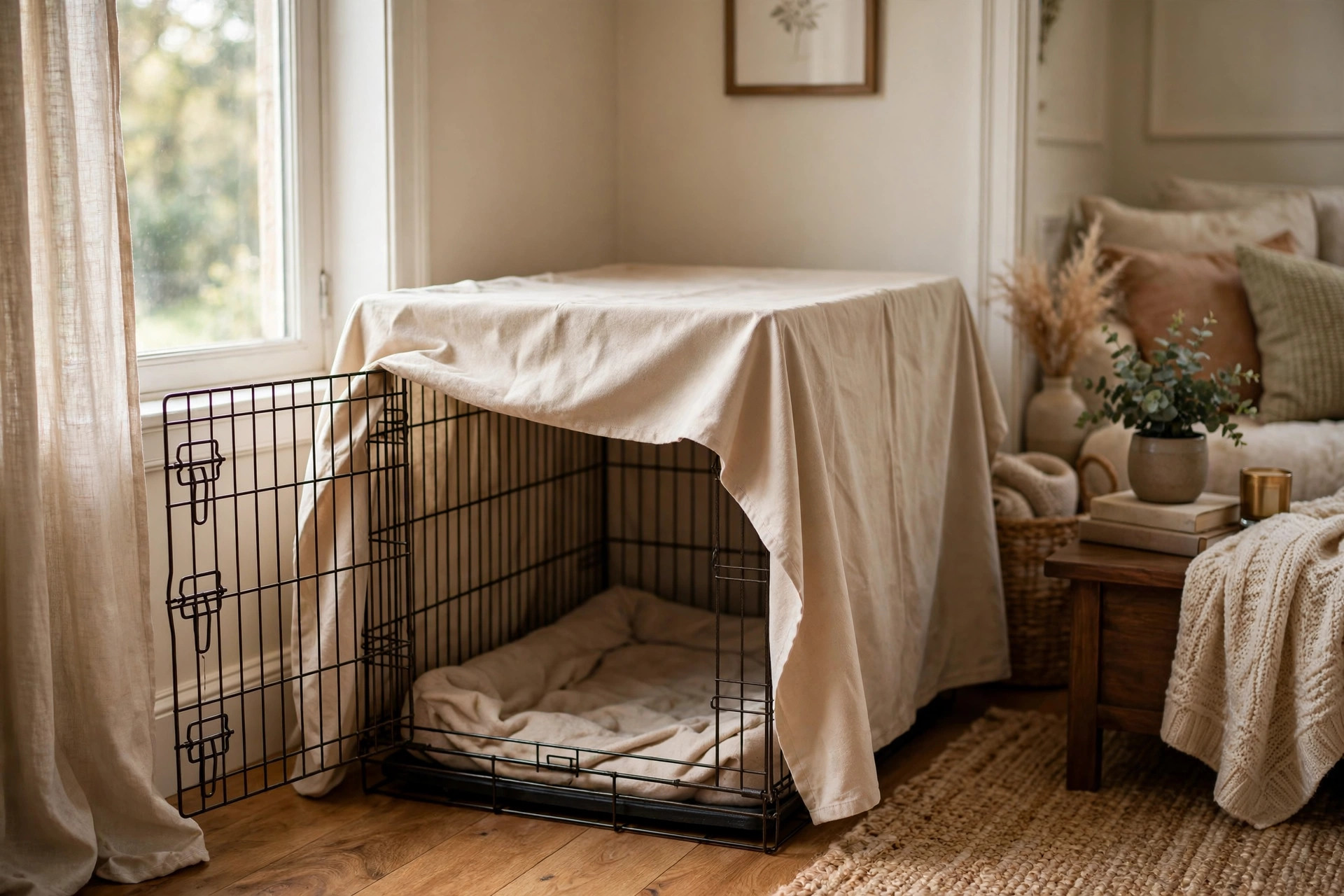

Crate training works best when the crate feels like a den. The best dog kennel cover for crate training privacy turns an open wire box into a calm, dark space. Dogs are den animals. In the wild they rest in small, closed places. A wire crate alone can feel too open. Light and movement pass through it from every side. A cover fixes that. It blocks the light. It cuts down on noise and motion. It gives the dog a sense of shelter.
Many new owners train a puppy with a crate. The first nights can be rough. The pup whines. It scratches at the bars. A good cover will not fix a bad crate plan, but it helps. It makes the crate feel safe and warm. Puppies settle faster in a dim, quiet space. Adult dogs benefit too. A nervous rescue dog may relax once the crate is covered on three sides. An older dog may sleep better with less light in its eyes.
A kennel cover is a simple product. It is a fitted cloth or canvas piece that drapes over a wire crate. Most covers leave the front door open. Some have roll-up panels or flaps. The idea is privacy, not a sealed box. Air must still flow. Let us look at why covers matter, what to look for, and which types fit different dogs and homes.
Why a Cover Matters for Crate Training
A covered crate gives the dog less to react to. When a pup sees people walk past, it wants to follow. When it hears the doorbell or the television, it stays alert. A cover blocks much of this. The pup learns that the crate is a place of rest, not a place to watch the world.
Dogs sleep well in dark places. Bright light keeps them up. A cover dims the light and muffles room noise a little. The pup gets longer, deeper rest. That helps with growth and with house training. A rested pup is easier to train.
Covers also help with barking. A dog that sees a cat run past the window may bark at it. The same dog in a covered crate may not notice. Less stimulation means less noise.
There is also a training angle. When the cover goes down, it is sleep time. The dog learns the signal. This helps with naps during the day and with sleep at night. Keep the routine steady. Dogs love a steady routine.
What to Look For: Best Dog Kennel Cover for Crate Training Privacy
Not all covers are the same. A cheap cover that slips off the crate is worse than no cover. Look for these points before you buy.
Fit. Measure your crate first. Wire crates come in set sizes, such as 24 inch, 30 inch, 36 inch, 42 inch, and 48 inch. The cover must match. A loose cover slides around. A tight cover may block the door. Many brands print a size chart. Check it. Some covers fit only one brand of crate. Others fit most brands in the same size. When in doubt, pick the cover made by the same maker as your crate.
Fabric. Look for a strong, tight weave. Cotton canvas is common and looks good in a living room. Polyester and nylon last longer and wipe clean. Thick fabric blocks more light. Thin fabric breathes better. For most dogs, a medium-weight fabric is right.
Ventilation. The cover must let air move. Most good covers leave the door panel open or half open. Some have mesh windows on the sides. Never cover the crate fully with a thick blanket. A dog in a closed box can overheat. Look for covers with a vent flap or a mesh section.
Access. You need to reach your dog fast. A cover should not block the crate door. Most covers have a flap that rolls up over the door. Check that the flap is easy to lift and that the door latch still works with the cover on.
Washability. Dogs are messy. A cover will collect hair, drool, and dirt. Machine-washable covers save time. Some covers have a water-resistant finish. That can help with house-training accidents. Read the care label before you buy.
Chew resistance. Pups chew. A pup inside the crate may pull the cover through the bars and chew it. No fabric cover is truly chew-proof. If your pup is a heavy chewer, watch it closely for the first week. Take the cover off if the pup starts to tear it. Swallowed fabric is a vet visit waiting to happen.
Types of Kennel Covers
Covers come in a few main styles. Each suits a different dog and a different home.
Fitted fabric covers. These are the most common. They are shaped like a box and slide over the crate, with panels for the door that roll up and tie. They come in many colors, wash easily, and cost little. This is the best choice for most crate trainers.
Blanket-style covers. Some owners use a heavy blanket or quilt instead of a made cover. This works in a pinch and blocks light well. But blankets slide off. If you use a blanket, clip it to the crate with safe clips so it stays put. Do not use a blanket with loose loops or strings that a pup could catch on.
Mesh and vented covers. These use mesh panels on the sides and back. They let air flow through while still giving some privacy. They are a good pick for warm climates and for dogs that run hot. The trade-off is less light blocking. They give shade, not darkness.
Winter or insulated covers. These thick, padded covers hold heat in. They suit dogs that sleep in a cool part of the house in winter. Do not use them in warm rooms. Overheating is a bigger risk than cold for most indoor dogs.
DIY covers. Some owners sew their own covers from canvas or denim. This costs little if you have cloth on hand. Keep seams on the outside and the fit snug so the dog cannot pull it inside. Make sure the door opening is clear.
Cost and Price
Kennel covers are not dear. A basic polyester cover for a small crate may cost ten to twenty dollars. A large canvas cover for a 48-inch crate may cost forty to sixty dollars. Insulated or name-brand covers can reach eighty dollars or more.
Do not buy by price alone. A ten-dollar cover that tears in a month costs more in the end than a thirty-dollar cover that lasts two years. Read reviews from other dog owners. Look for notes about fit and washability. Those are the two points that matter most.
Some owners buy two covers. One stays on the crate. The other is in the wash. This is smart if your pup is still in house training.
Buy the crate for the adult size, with a divider panel for the pup stage. Then buy the cover to match the full crate.
Care and Upkeep
A clean cover lasts longer and smells better. Brush loose hair off once a week. Wash the cover once a month, or more often if it smells. Use a mild soap. Skip the strong scents. Dogs have keen noses. A cover that smells of heavy perfume may bother the dog.
Check the cover each week for wear. Look for thin spots, loose seams, and chewed edges. A small tear can grow fast once a pup finds it. Mend small tears right away or retire the cover. A frayed cover is a choking risk.
Store a spare cover folded in a dry place. Do not leave it on the floor where the dog can drag it off. Keep it with your other dog gear, such as extra leashes and the dog water bowl no spill for car travel you take on trips. Many owners crate their dogs in the car too, and a travel-safe bowl keeps the mess down on long drives.
Safety Rules for Covered Crates
A cover is safe only when used right. Keep these rules in mind every day.
First, never seal the crate shut. The dog must have air. Keep the door panel of the cover open, or use a cover with mesh vents. If you use a blanket, leave at least one full side uncovered. Watch for heavy panting, drool, or restless pacing. Those are signs the crate is too warm.
Second, take the cover off if the dog chews it. Fabric in the gut can block the bowel. That means surgery. If your pup pulls the cover through the bars, try again when the pup is older and calmer. Some dogs never take to a cover. That is fine.
Third, do not cover the crate to punish the dog. The crate must be a happy place. If the dog links the cover with being shut away in anger, crate training will fail. Use the cover as part of a calm sleep routine. Give a treat when the dog walks in. Keep your voice soft.
Fourth, keep the crate in a safe spot. Do not put it near a heater, a stove, or a sunny window. A covered crate traps heat. Place it in a quiet corner of the room where the family spends time. Dogs are pack animals. They want to be near people, even in sleep.
Fifth, size the crate right. The dog should be able to stand, turn, and lie down with ease. A crate that is too small is cruel, cover or not. For a growing pup, use a divider. Move it as the pup grows. The cover stays the same, since it fits the full crate.
Many owners also ask about other pets. Cats and small pets have their own needs. If you share your home with a cat, a quiet grooming routine helps too, such as using the best cat brush for long haired shedding control once a week. For outdoor pets, shelter matters in a different way. A well-built outdoor rabbit hutch for cold weather climates keeps rabbits warm in winter, just as a cover keeps a crated dog calm and dim.
FAQ
Will a kennel cover stop my puppy from crying at night? It helps, but it is not a cure. A cover dims the light and cuts the sights that keep a pup awake. But a pup may still cry for other reasons. It may need the toilet. It may be hungry or cold. Keep night trips short and dull. Most pups settle within a week or two if the routine is steady.
Should I cover the crate during the day too? Yes, for naps. A covered crate tells the pup it is rest time. Use the same routine as at night. But do not cover the crate all day long. The pup needs play, walks, and time with you.
Is it safe to leave the cover on when I am not home? Only if the dog is calm with the cover and cannot pull it inside. Test it first while you are home. Watch for chewing. If the dog leaves the cover alone for a week of naps, it is likely fine for short absences.
What fabric is best for a kennel cover? Medium-weight cotton canvas or polyester is best for most dogs. Cotton looks good and washes well. Polyester lasts longer and dries fast. In warm rooms, pick a thinner fabric or a mesh-vented cover. In cold rooms, a thicker canvas holds warmth. Avoid thin sheets that tear and thick quilts that trap heat.
Can I use a kennel cover for an anxious adult dog? Often yes. Many nervous dogs calm down in a covered crate. The dark, closed space feels like a den. Start slow. Feed meals in the open crate first. Then add the cover for short rests. Never force a scared dog inside. Let the dog choose to walk in. Praise and treats build trust. If fear is deep, talk to your vet or a trainer. The American Society for the Prevention of Cruelty to Animals shares calm training guides for shy dogs, and the American Kennel Club has crate training steps that work for adult dogs too.
Where can I learn more about crate training basics? Good sources help. PetMD explains puppy crate training and common mistakes. The Spruce Pets compares cover types and lists what to look for. Whole Dog Journal writes in-depth pieces on den instincts and rest. For shopping, Chewy, Petco, and PetSmart all carry wide ranges of fitted covers with size charts. Rover offers sitter and training tips for crate routines, and The Home Depot stocks crates and covers for larger dogs.
A Short Final Word
The best dog kennel cover for crate training privacy is the one that fits your crate, lets air move, and washes well. It does not need to be dear. It does not need a fancy pattern. It needs to turn an open wire box into a dim, quiet den. Pair it with a steady routine. Keep the crate a happy place. Be patient in the first weeks. Most dogs learn to love their covered crate. It becomes their own small room, and they will walk in on their own when they are tired.
References
American Kennel Club. (n.d.). Dog care and training resources. https://www.akc.org ASPCA. (n.d.). Pet care and animal welfare resources. https://www.aspca.org Chewy. (n.d.). Pet supplies. https://www.chewy.com Petco. (n.d.). Pet supplies and services. https://www.petco.com PetMD. (n.d.). Pet health information. https://www.petmd.com PetSmart. (n.d.). Pet supplies and services. https://www.petsmart.com Rover. (n.d.). Pet sitting and dog walking services. https://www.rover.com The Home Depot. (n.d.). Home improvement products. https://www.homedepot.com The Spruce Pets. (n.d.). Pet care guides and product reviews. https://www.thesprucepets.com Whole Dog Journal. (n.d.). Dog training and care magazine. https://www.whole-dog-journal.com
Was this guide helpful?

About Lisa Anderson
The My Garden US editorial team writes practical, in-depth home and garden guides for American homeowners — tested advice, no fluff.
You May Also Like
Pet Fence Indoor Freestanding for Living Room: A Complete Guide
September 18, 2026 0 views
Best Pet Vacuum for Dog Hair on Furniture
September 28, 2026 0 views
Pet Water Dispenser Gravity Fed for Dogs: A Simple Guide for Owners
March 18, 2026 0 views