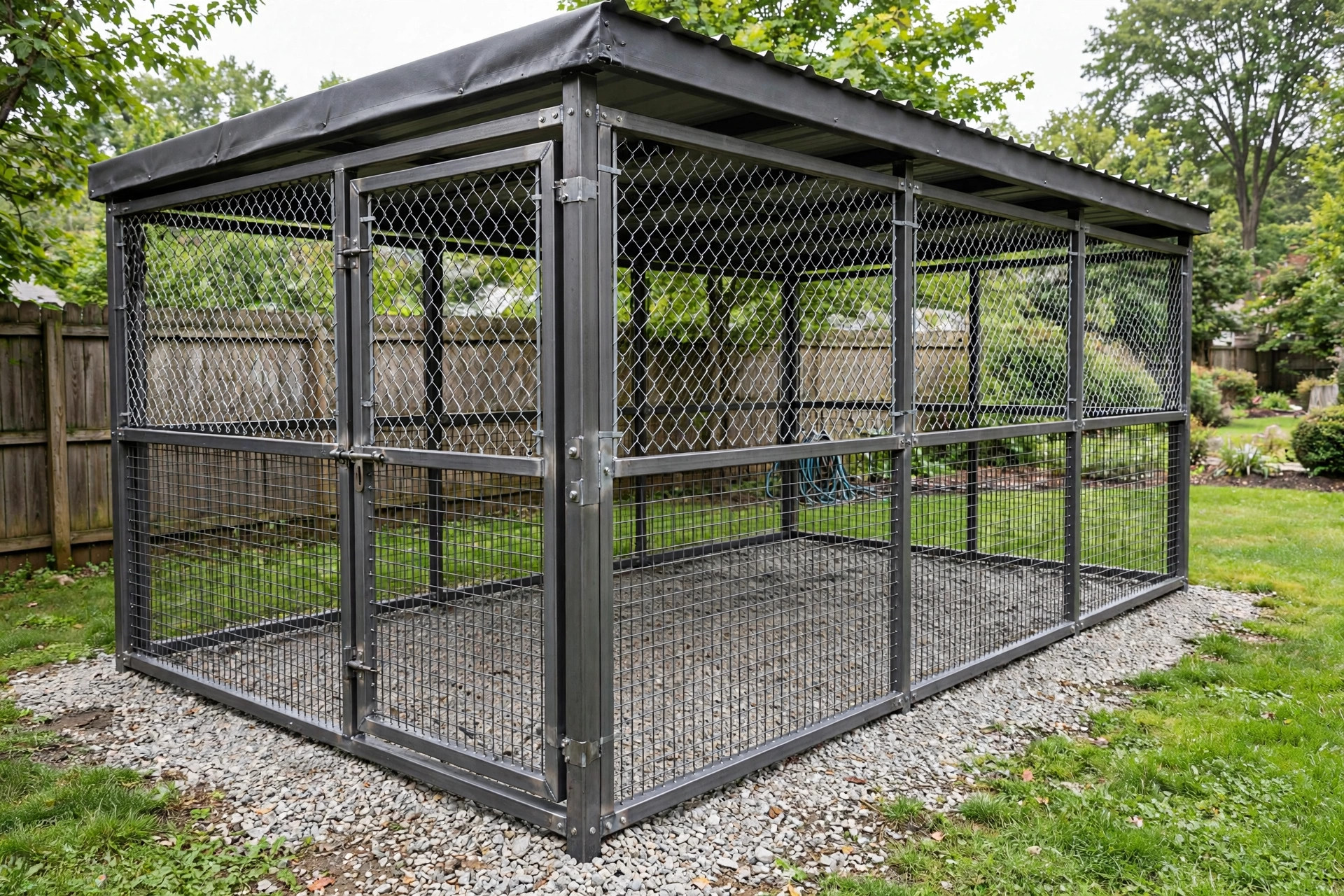

A large dog needs a large space. This seems like a simple fact. Yet many owners shop for the best outdoor dog kennel for large breeds usa stores sell and pick one that is too small, too weak, or too hot. A kennel is not a cage for punishment. It is a home base. It gives a big dog room to move, shade from the sun, and shelter from the rain. When you choose well, the dog is calm, safe, and content. When you choose badly, the dog paces, barks, and digs. This guide walks through the whole job in plain terms: why it matters, what to look for, what the main types cost, how to keep the kennel clean, and how to keep your dog safe in it.
Why It Matters
A big breed is strong. A German shepherd, a Labrador, a boxer, or a Great Pyrenees can pull a weak fence out of the ground. A kennel built for a small dog will not hold them. The best outdoor dog kennel for large breeds usa owners can buy is built with that strength in mind. Heavy posts. Thick wire. Latches a clever dog cannot nose open.
Size matters for the body too. A large dog needs to stand, turn, stretch, and lie flat on its side. The common rule among trainers is simple: the kennel should be at least four times the length of the dog. For a 100-pound dog, that means a run of 10 feet by 10 feet at the low end. Bigger is better. A dog that can move will move less in a bad way. Cramped dogs dig, chew, and bark from stress. Roomy dogs rest.
Then there is the weather. Across the USA, an outdoor kennel must handle real weather. Sun in Texas. Rain in Oregon. Snow in Minnesota. A good kennel has a cover. The ASPCA, in its guidance on humane outdoor care, reminds owners that shelter from sun, wind, and rain is not a luxury. It is a basic need. A kennel without a roof is just a fence. A kennel with a roof, shade cloth, and good drainage is a refuge.
There is also a plain money point. A cheap kennel that rusts in one season is not cheap. You buy it twice. A solid welded kennel with a good finish can serve for ten years. Cost per year is the number that counts. Buy once, buy well, and the dog is safe for a decade.
What to Look For When You Choose: Best Outdoor Dog Kennel for Large Breeds Usa
Size and Height
Measure your dog from nose to tail base. Add room for turning. For most large breeds, a 10 by 10 foot footprint is the starting point. Giant breeds, such as Great Danes or Saint Bernards, need 10 by 15 feet or more. Height should clear the tallest jump your dog can make. Most large kennels are 6 feet tall. Some big males can clear six feet from a running start, so a roof or cover is the answer there. A roofed kennel also stops climbing cats and hawks from dropping in.
Frame and Wire
Three kinds of frame dominate the market. Chain-link panels are the most common. They are strong, and the parts can be replaced one panel at a time. Welded wire mesh, with small square openings, is stiffer and harder to climb. Round tube frames with welded panels are the heaviest duty of all. Look for steel with a galvanized or powder-coated finish. This coating fights rust. In humid states, rust is the number one killer of kennels.
Wire gauge counts. A thin wire bends under a big dog’s teeth. Ask for the gauge number. Lower numbers mean thicker wire. Nine gauge is solid for large breeds. Eleven gauge works for calm dogs but not for chewers. Avoid kennels where the wire is simply twisted. Welded joints hold longer.
Roof and Cover
A solid roof is the single best upgrade you can buy. It blocks sun, rain, and snow. Corrugated metal roofs last long. Tarpaulin covers are cheaper but need replacement every year or two. Shade cloth, stretched tight, cuts sun without trapping heat. In hot states, a roof plus an open side for breeze is the wise setup. Care guides on The Spruce Pets note that shade and water access are the two main guards against heat in outdoor dogs.
Floor and Drainage
What the dog stands on matters as much as the walls. Bare dirt turns to mud. Concrete drains well and is easy to hose down, but it is hard on joints. A good middle path is gravel or pea stone over a packed base, with a raised bed or rubber mats where the dog sleeps. The kennel should sit on ground that drains away from it. Never set a kennel in a low spot where water pools. Mud breeds foot sores and smell.
Gate and Latch
The gate gets used twice a day. It should swing smooth and latch firm. The best latches for big dogs are sliding bolt latches with a place for a clip or lock. A simple thumb latch is an invitation to an escape artist. Double-check the gap at the gate bottom. A gap bigger than two inches lets a determined dog dig under or wedge through.
Types of Outdoor Dog Kennels
Modular Panel Kennels
These are the classic box kennels. Panels of chain link or welded wire bolt together. They come in 5, 10, or 15 foot runs. You can add a second run later by buying more panels. Pet supply retailers such as Chewy carry many panel kits, and you can compare sizes side by side. The great virtue of panels is repair. If one panel rusts, you replace one panel, not the whole kennel.
Heavy-Duty Welded Kennels
These use square steel tube frames with welded mesh. They weigh more and cost more, but they resist bending and chewing far better. They suit power breeds and dogs that test every seam. Farm and ranch stores such as Tractor Supply often stock this class, because working farm dogs demand it.
Kennel with Built-In Shelter
Some kennels come with an attached dog house or a walled shelter box at one end. The dog can step out of wind and driving rain. This is the best choice where winter is real. Pair it with a heated outdoor bed for cold months, and read up on winter shelter in a guide to heated dog houses for winter cold climates. A shelter box does not replace a full roof, but it covers the worst nights.
DIY Fence Kennels
Handy owners build kennels from fence pickets, stock panels, or welded wire on wood posts. This can be the cheapest path for a large yard. It can also be the weakest if corners are cut. If you build it yourself, use pressure-treated posts set in concrete, heavy gate hardware, and welded wire, not thin garden fencing. For ideas on yard barriers that pair well with a kennel, see advice on the best dog fence for large yard no digging options.
Dog Runs with Roofs
A dog run is a long, narrow kennel, often 5 feet wide and 20 feet long. It fits along the side of a house. The roof keeps out sun and rain. Runs give a dog a straight lane to pace and stretch. Many owners find a run easier to fit in a suburban lot than a square box. A helpful walkthrough covers an outdoor dog run with roof for backyard layouts.
Cost and Price
Prices for the best outdoor dog kennel for large breeds usa shoppers will find vary widely by size and build.
Small chain-link panel kits, about 10 by 10 feet, run from 200 to 450 dollars. These suit calm large breeds and mild climates. Expect a shorter life, maybe three to five years, before rust sets in.
Mid-range welded wire kennels, 10 by 10 or 10 by 15 feet, run from 450 to 900 dollars. The finish is better. The wire is thicker. This is the sweet spot for most owners. Ten years of service is a fair hope.
Heavy-duty welded tube kennels run from 900 to 2,000 dollars and up. They are overbuilt on purpose. For a pair of strong dogs, or a dog that has broken out before, this is money well spent.
Roofs add 80 to 300 dollars depending on material. A gravel base adds 50 to 150 dollars in material. A good insulated dog house to place inside runs 100 to 350 dollars. Add a raised waterproof bed. Sleeping comfort is part of the kennel’s job, so a look at the best outdoor dog bed waterproof for patio use is worth your time.
Delivery matters for big kits. Home improvement stores like Lowe’s and Home Depot stock panel kennels and can arrange delivery, and home goods sellers like Wayfair and online marketplaces such as Amazon list many models with buyer reviews. Read the reviews for rust and latch complaints before you buy.
Remember the cost per year. A 700 dollar kennel that lasts ten years costs 70 dollars a year. A 250 dollar kennel that lasts three years costs 83 dollars a year and leaves you with a rusted mess. Buy the better kennel once.
Care and Upkeep
A kennel is an outdoor tool. It needs care like any tool.
Clean the floor every day. Pick up waste with a scoop. Once a week, hose the floor and scrub the sleeping area. In summer, this weekly wash cuts the smell that draws flies. Disinfect the sleeping spot once a month with a pet-safe cleaner. Rinse well. Strong chemical smell bothers a dog’s nose.
Check the fence line every month. Walk the whole kennel. Look for bent wire, loose bolts, and rust spots. A small rust spot today is a hole next year. Treat it with a wire brush and rust-proof paint. Check the latch. Tighten hinges. If the gate drags, fix it before it bends the post.
Check drainage after heavy rain. Water should run away from the kennel, not through it. If a puddle forms inside, add gravel or regrade the base. Mud is not just dirty. It softens paw pads and invites infection between the toes.
In winter, clear snow from the roof. A wet snow load can sag a tarp cover. Check water bowls twice a day in freezing weather. A heated bowl or a bowl you swap at morning and night keeps the dog drinking. The American Kennel Club publishes cold-weather care basics that are worth a read each fall.
In summer, fill the water bowl each morning and check it again at noon. A large dog in heat drinks a lot. Shade cloth over part of the roof drops the inside temperature by real degrees. Never leave a dog in an unshaded kennel through a hot afternoon. Veterinary sources such as PetMD warn that large, thick-coated breeds overheat faster than owners expect.
Flea and tick checks fit the routine. Run your hands over the dog weekly in warm months. Ticks hide behind ears and under collars. Treat the kennel ground with pet-safe products only, and keep the dog off treated ground until it is dry.
Safety
Safety is the whole point of a kennel. A kennel that is not safe is worse than no kennel.
First, the wire. Check for sharp ends where wire was cut or welded. A dog that runs the fence line will find every sharp spot with its nose or tongue. File or cap them.
Second, the gaps. Measure the space between the gate and the post, and under the gate. If a paw fits, a paw will get stuck. Use a filler board or a low threshold plate.
Third, the lock. Use a clip or padlock on the latch. Dogs learn latches. Neighbors’ kids open latches. A simple carabiner clip through the bolt stops both.
Fourth, the location. Set the kennel where you can see it from the house. Do not tuck it behind a shed where a dog can suffer unseen. Keep it away from pools, ponds, and busy roads. Face the shelter opening away from the prevailing wind.
Fifth, the heat. An outdoor kennel is not a place to leave a dog all day in high summer without shade and water. If you work long hours, the dog should be inside during the heat of the day. The kennel is for supervised outdoor time, not all-day storage.
Sixth, the neighbors. A barking dog in a kennel all day ruins a street. If your dog barks in the kennel, the kennel is not the answer. Training and company are the answer. Use the kennel for what it does best: a safe spot for an hour or two of fresh air, play, and rest.
Frequently Asked Questions
How big should an outdoor kennel be for a large breed?
For most large breeds, 10 feet by 10 feet is the floor. A 100-pound dog should be able to walk the length, turn, and lie fully flat. Giant breeds need 10 by 15 feet or more. Height should be at least 6 feet, and the top should be covered if your dog jumps.
Can a large dog live in an outdoor kennel full time?
Dogs are social animals. They do best living with their people. An outdoor kennel is for safe outdoor time, not a full-time home. If a dog must spend long hours outside, the kennel needs a real shelter, constant water, shade, and daily company. The ASPCA advises that dogs kept outside need the same care, shelter, and attention as indoor dogs.
What is the best floor for a dog kennel?
Pea gravel or packed stone over a draining base is the best all-around floor. It drains urine and rain, stays cooler than concrete in summer, and is softer on joints. Put a raised bed or thick rubber mats in the sleeping corner. Avoid bare dirt. It turns to mud and breeds parasites.
How do I keep an outdoor kennel from rusting?
Buy galvanized or powder-coated steel. Wash off mud and urine salts, since salt speeds rust. Touch up any chip or scratch with rust-proof paint the same season it appears. Store the kennel’s tarp cover dry in winter if you use a solid roof. A kennel under a roof lasts years longer than one standing open to rain.
Do I need a permit to put up a dog kennel?
It depends on your town. Many towns allow small kennels without a permit but have rules on setbacks from property lines, noise, and the number of dogs. Some homeowners’ associations ban kennels outright or limit their size. Check your local code and your HOA rules before you buy. A five-minute call to the town office can save a fine.
What keeps a dog from digging out under the fence?
Three things work. First, bury a foot of wire mesh along the fence line, bent outward in an L shape. Second, lay a concrete or paver border around the kennel base. Third, give the dog enough exercise and company that digging loses its appeal. Boredom is the mother of digging. A tired dog sleeps in the kennel instead of mining under it.
A Final Word
The best outdoor dog kennel for large breeds usa buyers can choose is not the fanciest one. It is the one sized to the dog, built of honest steel, roofed against the weather, set on ground that drains, and kept clean week after week. Spend the money once on a solid frame. Spend the time each week on cleaning and checks. The reward is a big dog that trots into its kennel gladly, turns around, and settles down to sleep. That is the whole test. A good kennel is one your dog likes.
For more background, see Petco and PetSmart.
References
American Kennel Club. (n.d.). Dog care and training resources. https://www.akc.org ASPCA. (n.d.). Pet care and animal welfare resources. https://www.aspca.org Chewy. (n.d.). Pet supplies. https://www.chewy.com Petco. (n.d.). Pet supplies and services. https://www.petco.com PetMD. (n.d.). Pet health information. https://www.petmd.com PetSmart. (n.d.). Pet supplies and services. https://www.petsmart.com The Home Depot. (n.d.). Home improvement products. https://www.homedepot.com The Spruce Pets. (n.d.). Pet care guides and product reviews. https://www.thesprucepets.com
Was this guide helpful?

About Sarah Mitchell
The My Garden US editorial team writes practical, in-depth home and garden guides for American homeowners — tested advice, no fluff.
You May Also Like
Best Pet Safe Lawn Fertilizer for Dog Owners
January 27, 2026 0 views
The Best Cat Litter Box Cabinet for Hiding Litter in Your Home
April 6, 2026 0 views
The Best Dog Crate for Anxious Dogs: Escape Proof Choices That Keep Pets Calm and Safe
January 8, 2026 0 views