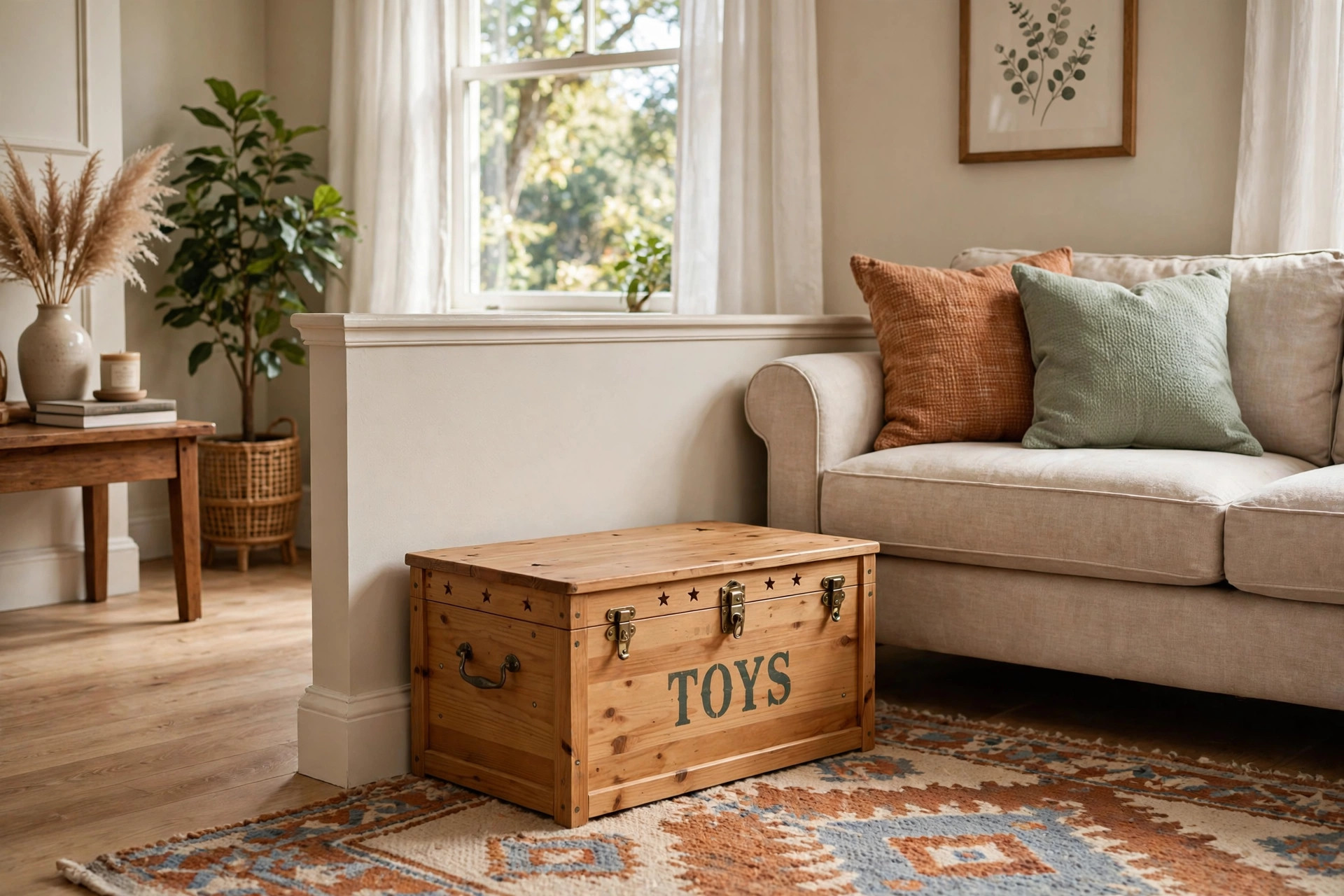

Toys spread through a house faster than almost anything else. A child plays in the morning, and by dinner the blocks, dolls, and crayons have covered the living room floor. Parents need a place to put it all. A kids toy box with lid for living room use answers that need. It hides the mess in seconds, it looks like real furniture, and it teaches children where toys belong. This guide explains how to choose the right one, what types are on the market, what they cost, how to keep them clean, and how to keep them safe.
Why a Lidded Toy Box Belongs in the Living Room
The living room is where most families spend their time. It is also where guests arrive. An open bin of toys looks messy and can be hard on the eyes. A box with a lid changes that. Close the lid and the room looks calm again. The clutter is gone from sight, even though everything is still within reach.
The lid does more than hide clutter. It keeps dust off the toys. It stops small pets from dragging toys away. It gives children a clear signal that playtime is over and cleanup is done. Many boxes double as extra seating or a low side table, so they earn their floor space twice. In a small home, that kind of double duty matters a great deal.
There is also a habit at stake. When children have one clear place for toys, they learn to return things to it. Cleanup takes five minutes instead of twenty. Parents spend less time picking up and more time enjoying the evening. A lidded box turns cleanup into a simple, repeatable routine that even a three-year-old can follow.
What to Look for When You Shop: Kids Toy Box with Lid for Living Room
Not all toy boxes are equal. Some are built for a bedroom corner. Others are made to sit in the main room of the house and look good doing it. The points below help you tell the difference.
Size and Capacity
Measure the spot before you shop. A box that is too large will crowd the room. One that is too small will overflow in a week. A medium box of about 30 to 36 inches wide holds the toys of one or two children. Larger families may need two smaller boxes instead of one giant one. Many parents split toys into groups, such as blocks in one box and art supplies in another. Two modest boxes often work better than one oversized chest.
Height matters too. The box should be low enough that a child can reach inside without climbing. Most children can manage a box that is 18 to 24 inches tall. Taller chests look fine but are hard for small arms to use, so children stop using them.
Materials That Last
Wood is the classic choice for a living room. A solid or engineered-wood chest matches most furniture and stands up to years of use. Painted finishes are easy to wipe clean. Natural wood tones blend with sofas and bookshelves. MDF with a veneer finish is cheaper and looks fine, though it does not survive moisture as well as solid wood.
Plastic boxes are light and cheap. They work well, but they can look out of place in a formal living room. Fabric and canvas bins with lids are soft and safe, yet they sag over time and hide less of the mess. Upholstered boxes add comfort and can serve as a bench, but the fabric needs more cleaning. For a living room, wood or a sturdy engineered material is usually the best balance of looks and strength.
Lid Design and Hinge Safety
The lid is the most important part of the box. A heavy lid that slams shut can hurt small fingers. Look for a lid with a slow-close or soft-close hinge that lowers gently. Spring-loaded lid supports that hold the lid open are another good sign. They stop the lid from falling on a child’s head or hands.
Avoid boxes with latches or locks on the outside. A child can climb inside and become trapped. The best lids are light, simple, and easy for a small child to open and close alone. A small gap or finger groove along the front edge helps little hands lift the lid without pinching. Safety guidance from the U.S. Consumer Product Safety Commission is worth reading before you buy any toy storage.
Shape, Color, and Style
A toy box for the living room should look like it belongs there. Rectangle chests slide neatly against a wall or under a window. Rounded corners are safer for toddlers who are still unsteady on their feet. Neutral colors such as white, gray, or natural wood blend with almost any decor. Some families choose a painted chest in a bold color to make it part of the room’s design. Either way, the box should match the room well enough that it does not draw the eye.
Common Types of Toy Boxes
Toy boxes come in several styles. Each has strengths and limits.
Wooden chests are the most popular choice for living rooms. They are strong, handsome, and long-lasting. Many have a flat top that can hold a lamp or a stack of books. The downside is weight. A full wooden chest is heavy, so it is best left in one place.
Storage benches combine a toy box with a seat. They are perfect in front of a window or along an entry wall. Children can sit on them to read or play. The cushion on top makes them inviting. Make sure the bench is rated to hold an adult’s weight, since adults will sit on it too.
Plastic bins with snap-on lids are the cheapest option. They are easy to carry and easy to clean. They stack well in a closet. In a living room they look plain, so many parents keep them out of sight. For tight budgets, though, they do the job.
Fabric and canvas boxes are soft and light. They suit small toys and dress-up clothes. They fold flat when not in use. They do not protect toys from being crushed, and the lids on many models are floppy. They work best as a second box for light items.
Trunks and vintage-style boxes bring charm to a room. Some families use an old cedar chest or a decorated trunk. These can be beautiful, but older chests often lack safe hinges and ventilation holes. If you use an antique, add a lid support and drill air holes, or have a carpenter check it first. Pairing the box with other smart storage, such as beds with built-in storage drawers or fabric storage cubes for the closet, gives every toy a home.
Cost and Price
Prices vary widely. A simple plastic bin with a lid can cost under twenty dollars. Most families spend between forty and one hundred twenty dollars for a wooden chest that looks good in the living room. Solid wood and name-brand models can reach two hundred dollars or more. Storage benches with cushions often fall in the one hundred to two hundred dollar range.
Price usually reflects material and build quality. Cheap particle board boxes wobble and chip within a year. Mid-range engineered wood holds up well for several years. Solid wood costs more up front but can be passed down to a younger sibling or reused in another room. Before you buy, check prices at major retailers and big-box stores and compare them with what furniture retailers charge for similar pieces. Sales around holidays often cut prices by a quarter or more.
Think about cost per year of use. A one hundred dollar box that lasts six years costs less than seventeen dollars a year. That is a small price for a tidy living room. Buying the cheapest box and replacing it twice costs more in the end.
Care and Upkeep
A toy box needs little care, but a few habits keep it looking new. Dust the top weekly with a dry cloth. Wipe spills at once so moisture does not soak into the wood or fabric. For painted wood, a damp cloth with mild soap is enough. Dry the surface right after wiping.
Empty the box once a month. This is a good time to throw out broken toys and give away ones the children have outgrown. A smaller collection is easier to store and easier for children to enjoy. While the box is empty, vacuum the inside corners where crumbs and sand collect.
Check the hinges twice a year. Tighten loose screws and make sure the lid still closes softly. If the soft-close hinge stops working, replace it. Hinges are cheap and easy to fit, and a working hinge protects small fingers. If the box sits near a heating vent, move it a few inches away. Long exposure to dry heat can crack wood finishes. Home care advice from home improvement guides covers these small repairs in plain detail.
Safety First
Safety deserves its own section because a toy box is used by small children every day. The most important rule is simple: never use a box with a latch, lock, or hasp that a child could close from the inside. Children climb into boxes. A box that locks can trap a child inside.
Ventilation matters too. The box should have air holes or gaps so a child inside can breathe. Many safety groups suggest holes at least a few inches apart along the sides. If your box has none, drill two or three holes in the back panel.
Check for sharp edges and splinters. Run your hand along every edge before the children use the box. Sand down rough spots and touch up the paint. Keep the box away from stairs and hard hearth edges where a climbing child could fall.
Toy safety standards are updated from time to time, and parenting guides and pediatric health experts both remind parents to check storage products for recalls. It takes five minutes to search a model name on the safety commission website. Make it part of your buying routine.
Older children can learn the rules too. Teach them never to climb inside a closed box and never to stand on the lid. A short talk when the box arrives prevents most accidents. Children follow rules they understand, especially when the rule is simple and the reason is clear.
Frequently Asked Questions
What size toy box works best for a living room? A box about 30 to 36 inches wide and 18 to 24 inches tall suits most living rooms. It holds a good amount of toys without taking over the room. Measure your wall space before you shop, and leave a few inches of clearance on each side.
Is a wooden toy box better than a plastic one? For a living room, wood usually looks better and lasts longer. Plastic is cheaper and lighter but shows wear faster and looks plain next to nice furniture. If the budget is tight, a plastic bin works as a temporary fix. For a long-term piece, wood is the better buy.
How do I keep a toy box lid from slamming? Buy a box with a soft-close hinge or a spring-loaded lid support. These parts slow the lid as it falls. If your current box slams, you can buy an aftermarket lid support at a hardware store and fit it in under half an hour. It is a small fix that makes a big difference.
Can a toy box double as seating? Yes, if it is built for it. Storage benches are made to be sat on. A plain wooden chest may also work, but check that the top and legs can hold an adult’s weight. Never let children stand on a lid that is not rated for weight. When in doubt, treat the box as storage only.
How often should I sort through the toys? Once a month is enough for most families. Empty the box, throw out broken items, and set aside toys the children no longer use. Donate or pass along the extras. A smaller, fresher collection keeps children interested and keeps the box from overflowing. Some families pair the box with an indoor play tent with tunnels for active play and keep only calm toys in the box.
Where is the best place to buy one? Start with specialty children’s furniture stores for quality designs, then compare prices with larger outlets. Reviews from independent product testing can help you judge build quality before you spend. Many families find good options during holiday sales.
A Final Word
A kids toy box with lid for living room use is a small purchase that changes daily life. It hides clutter, protects toys, and teaches children to clean up. Choose a box that fits your space, pick safe hinges and a simple latch-free lid, and buy the best material your budget allows. Keep it clean, check the hinges now and then, and sort the toys once a month. Do those simple things, and the box will serve your family well for years. The living room will stay the calm, welcoming heart of the home, even with small children in it.
References
American Academy of Pediatrics. (n.d.). HealthyChildren.org. https://www.healthychildren.org Bob Vila. (n.d.). Home improvement advice. https://www.bobvila.com Consumer Reports. (n.d.). Product reviews and ratings. https://www.consumerreports.org Pottery Barn Kids. (n.d.). Kids furniture and decor. https://www.potterybarnkids.com Target. (n.d.). Retail store. https://www.target.com U.S. Consumer Product Safety Commission. (n.d.). Product safety information. https://www.cpsc.gov Walmart. (n.d.). Everyday low prices. https://www.walmart.com Wayfair. (n.d.). Furniture and home goods. https://www.wayfair.com What to Expect. (n.d.). Pregnancy and parenting guidance. https://www.whattoexpect.com
Was this guide helpful?

About Jennifer Lee
The My Garden US editorial team writes practical, in-depth home and garden guides for American homeowners — tested advice, no fluff.
You May Also Like
Nursery Bookshelf Wall Mounted for Small Space: A Practical Guide
July 19, 2026 0 views
A Nursery Rocking Horse for Toddler Playroom: A Simple Buying Guide
February 7, 2026 0 views
The Right Toddler Table and Chair Set for Playroom Fun and Learning
August 27, 2026 0 views