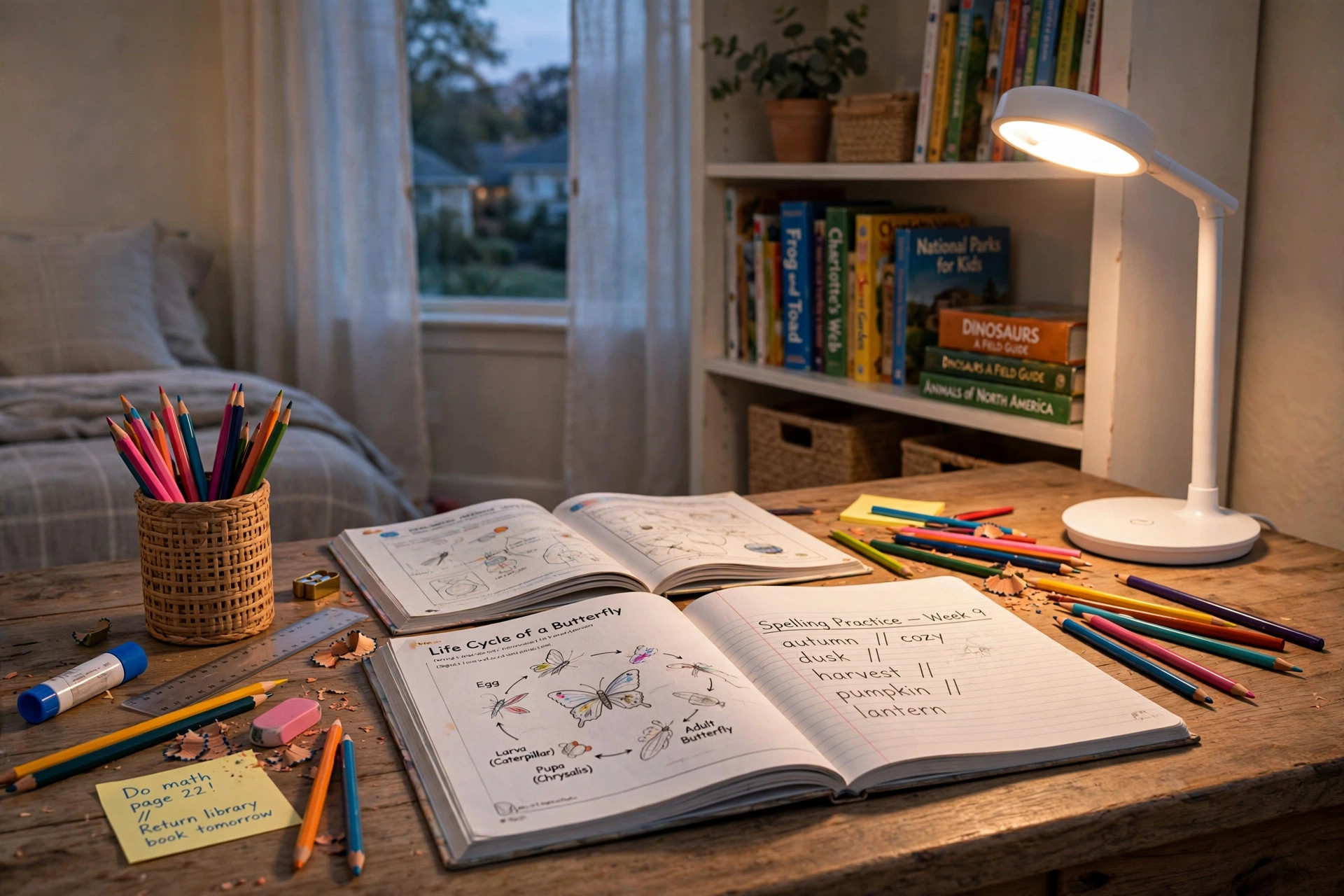

Every school night, millions of children sit down at their desks and open their books. The room may be dark. The ceiling light may be far away. The small desk lamp on the corner of the desk does most of the work. This is why the best kids desk lamp for eye protection matters more than many parents think. Good light keeps a child comfortable. Poor light causes tired eyes, headaches, and bad posture. A lamp is not just a tool for seeing. It is a tool for protecting young eyes while they grow.
Children read and write under their desk lamps for hours each day. Their eyes are still developing. Strong glare, harsh white light, and flicker can strain them. A well chosen lamp gives soft, steady light that falls right where the child needs it. It reduces the need to lean in close. It keeps the room balanced so the eyes do not jump between bright and dark. This guide explains what makes a desk lamp safe for young eyes, which features to look for, and how to pick the best kids desk lamp for eye protection for your home.
Why Eye-Friendly Light Matters for Children
A child’s eyes are not small adult eyes. The lens inside a young eye is clearer. This means more light passes through to the retina. Doctors at healthychildren.org often remind parents that children’s eyes are more sensitive to bright light than adult eyes are. Harsh light at the wrong angle can be uncomfortable for them.
When a child reads under poor light, the eye muscles work harder. The pupil opens wide to gather light. The muscles that focus the eye strain to keep words sharp. After a long homework session, the child may rub the eyes, complain of a sore head, or sit in a poor position to get closer to the page. Over time, bad lighting habits may play a role in the rise of nearsightedness among school children, a concern discussed widely in child health resources.
Good desk lighting does the opposite. It lets the eye relax. The page is clear without effort. The child can sit straight because the light reaches the whole work area. Studies on school lighting have long shown that even, comfortable light supports longer reading times with less fatigue. The best kids desk lamp for eye protection is one that gives this kind of gentle, even light, night after night.
What to Look for When Choosing a Kids Desk Lamp: Best Kids Desk Lamp for Eye Protection
Not every desk lamp is right for a child. A lamp made for an office may be too harsh, too bright, or too hard to adjust. Use the checklist below when you shop.
Flicker-Free Light
Some lamps flicker so fast that the eye cannot see it, but the brain still feels it. This invisible flicker can cause tired eyes and headaches. Look for lamps labeled flicker-free. Quality LED lamps with good drivers do not flicker. Reviews from sites like consumerreports.org can help you compare how different lamps perform in real tests.
Adjustable Brightness
Children do not need the same light level for every task. Drawing calls for more light than reading a picture book. A lamp with three to five brightness levels lets the child match the light to the task. Dimmable models are easy to find and simple for a child to use.
The Right Color Temperature
Color temperature is measured in kelvin. Warm light near 2700K feels like an evening lamp. Cool light near 5000K feels like daylight. For homework, most experts suggest a neutral range of 3000K to 4000K. This is close to natural light but not cold. Some lamps let you switch between warm, neutral, and cool settings. A warm setting is kind to the eyes before bedtime. For bedtime routines, many parents also use a nursery night light with dimmer for feeding or a best kids night light projector for bedroom to keep the room calm.
Even Light Without Glare
The best kids desk lamp for eye protection spreads light evenly across the desk. Watch for harsh hot spots in the center and dark edges. A lamp head with a diffuser or a frosted cover softens the light. The bulb should never be visible to the child’s eyes. Shades that aim light downward, onto the desk and not into the face, are safest.
Flexible Neck and Stable Base
A gooseneck or swing arm lets the child aim light at the page from the side. Light should come from the opposite side of the writing hand to avoid shadows. A heavy base keeps the lamp from tipping when a child bumps the desk. Check that the lamp head stays in place once moved.
Child Safe Design
The lamp should stay cool to the touch. LED lamps are the best choice here, since they make very little heat. Cords should be short enough to keep off the floor but long enough to reach the outlet. Rounded edges and a sturdy build matter in a child’s room. Product safety guidance at cpsc.gov is a useful reference for what makes an electric product safe for home use.
Types of Desk Lamps for Children
LED Desk Lamps
LED lamps are the most common choice today. They use little power, stay cool, and last for years. Many include dimmers and color settings built in. A certified efficient LED model also saves on the power bill; you can learn more about efficient lighting at energystar.gov.
Clip-On Lamps
A clip-on lamp fastens to the edge of the desk or a shelf. It saves space on a small desk. These suit children who share a room or have a compact study corner. Make sure the clip is strong and the head can be aimed away from the eyes.
Desk Lamps with Organizer Bases
Some children’s lamps come with pen holders and small trays in the base. These keep the desk tidy and give the lamp a wider, more stable footprint. A stable base is one of the simplest safety features a lamp can have.
Smart Lamps
A few lamps connect to phones or respond to touch controls. They may include timers that turn the lamp off after the child falls asleep. These are nice extras, but they are not needed for eye protection. Simple controls that a child can use with one touch are often better.
When you set up the study area, pair the lamp with seating that fits the child. A kids desk chair adjustable for growing children helps the child sit at the right height so the light falls where it should.
Cost and Price: What to Expect
Desk lamps for children come in a wide price range. A basic flicker-free LED lamp may cost between fifteen and thirty dollars. These cover the essentials: adjustable brightness, a flexible neck, and a stable base. Home stores like homedepot.com carry a wide selection at these prices, and decor retailers such as ikea.com and wayfair.com offer lamps that fit a child’s room style.
Mid-range lamps, from thirty to sixty dollars, add features such as multiple color temperatures, USB charging ports, and touch controls. Premium lamps above sixty dollars may include automatic brightness that adjusts to the room, or a wider light panel that covers the whole desk evenly.
Price does not always equal eye safety. A thirty-dollar lamp with a diffuser, a dimmer, and flicker-free LEDs can protect eyes just as well as a model that costs three times more. Spend your money on the features that matter: flicker-free light, dimming, adjustable color, and a safe build. Lighting guides at philips.com explain how color temperature and brightness work together, which can help you judge value.
Care and Upkeep
A desk lamp needs little care, but regular checks keep it safe and bright.
Dust the lamp head and shade once a month. Dust on a diffuser blocks light and makes the lamp work harder. A soft dry cloth is enough. Never use water on an electric lamp.
Check the cord twice a year. Look for cracks, frays, or loose plugs. If the cord is damaged, stop using the lamp until it is repaired or replaced. Teach children not to chew on cords or pull the lamp by its wire.
For lamps with replaceable bulbs, change the bulb when it dims. Old bulbs can flicker. If your lamp uses a sealed LED panel, follow the maker’s stated life, often thirty thousand hours or more. Decorating ideas and upkeep tips for children’s rooms appear regularly at thespruce.com, which covers kids’ spaces in depth.
Keep the lamp’s controls clean so buttons and touch pads keep working. If the lamp wobbles, tighten the joints. A lamp that cannot hold its aim may shine into the child’s eyes instead of onto the desk.
Safety Tips for a Child’s Desk Lamp
Safety comes first in any child’s room. Keep these rules in mind.
Place the lamp where the child cannot knock it off the desk. The back corner of the desk is usually best. Keep the lamp away from curtains, bedding, and paper piles. Even cool LED lamps should have clear space around them.
Use a grounded outlet or a surge protector. Do not run the cord under rugs where it can wear through. If the desk is far from the wall, choose a lamp with a cord long enough to reach without stretching.
Teach the child to turn the lamp off when leaving the room. A simple touch lamp makes this easy. For very young children, a lamp with an automatic shutoff timer adds peace of mind. Family focused buying guides at potterybarnkids.com often highlight kid-safe design features worth comparing.
Match the lamp to the child’s age. A toddler’s room needs a lamp kept out of reach. A school-age child can learn to adjust the neck and dimmer. A teen may want a lamp with a wider light field for a larger desk. Parenting resources such as whattoexpect.com offer age-by-age room setup advice that pairs well with these lighting tips.
Frequently Asked Questions
Is LED light safe for children’s eyes?
Yes, quality LED light is safe. Choose a lamp labeled flicker-free with a diffuser over the light source. Avoid staring directly into any bright bulb, LED or not. A lamp that aims light at the desk and keeps the bulb hidden is the safest setup.
What is the best color temperature for a kids desk lamp?
A neutral range of 3000K to 4000K works best for homework and reading. This range is bright enough for clear reading but still gentle. Use a warmer 2700K setting in the evening to help the child wind down before bed.
How bright should the lamp be?
For reading and homework, 400 to 800 lumens on the desk surface is usually right. The key word is adjustable. A dimmer lets the child raise the light for detailed drawing and lower it for relaxed reading. If the child squints or leans in, raise the brightness a step.
Should the desk lamp be the only light in the room?
No. The room should have soft background light as well. A bright desk in a dark room makes the eyes jump between light and dark, which causes strain. Turn on a ceiling light or a soft floor lamp too, and let the desk lamp handle the work area.
At what age can a child adjust the lamp alone?
Most school-age children, around six or seven, can learn to move a gooseneck lamp and use a dimmer. Show them how to aim the light at the page and never into their eyes. Check the setup from time to time until the habit is set.
How often should I replace a kids desk lamp?
A good LED lamp lasts five to ten years. Replace it sooner if the light flickers, the dimmer fails, the joints will not hold, or the cord shows wear. Eye protection depends on steady, reliable light, so retire a lamp that no longer performs.
A Short Final Word
Choosing the best kids desk lamp for eye protection does not need to be hard. Look for flicker-free LED light, adjustable brightness, a neutral color temperature, and a design that aims light at the desk and not at young eyes. Add a stable base, a cool touch surface, and simple controls, and you have a lamp that will serve your child through years of homework. Good light is a quiet gift. It lets children read longer, learn with comfort, and protect the eyes they will use for a lifetime.
References
American Academy of Pediatrics. (n.d.). HealthyChildren.org. https://www.healthychildren.org Consumer Reports. (n.d.). Product reviews and ratings. https://www.consumerreports.org ENERGY STAR. (n.d.). Energy efficient products. https://www.energystar.gov IKEA. (n.d.). Home furnishings. https://www.ikea.com Philips. (n.d.). Lighting products. https://www.philips.com Pottery Barn Kids. (n.d.). Kids furniture and decor. https://www.potterybarnkids.com The Home Depot. (n.d.). Home improvement products. https://www.homedepot.com The Spruce. (n.d.). Home and garden advice. https://www.thespruce.com U.S. Consumer Product Safety Commission. (n.d.). Product safety information. https://www.cpsc.gov Wayfair. (n.d.). Furniture and home goods. https://www.wayfair.com What to Expect. (n.d.). Pregnancy and parenting guidance. https://www.whattoexpect.com
Was this guide helpful?

About Michael Thompson
The My Garden US editorial team writes practical, in-depth home and garden guides for American homeowners — tested advice, no fluff.
You May Also Like

Kids Bedroom Rug for Girls Pink Decor: A Parent’s Complete Guide
September 15, 2026 0 views
Kids Bedroom Theme Bedding for Boys Sports
June 7, 2026 0 views
Crib Bedding Set Gender Neutral for Nursery: A Parent’s Buying Guide
May 11, 2026 0 views