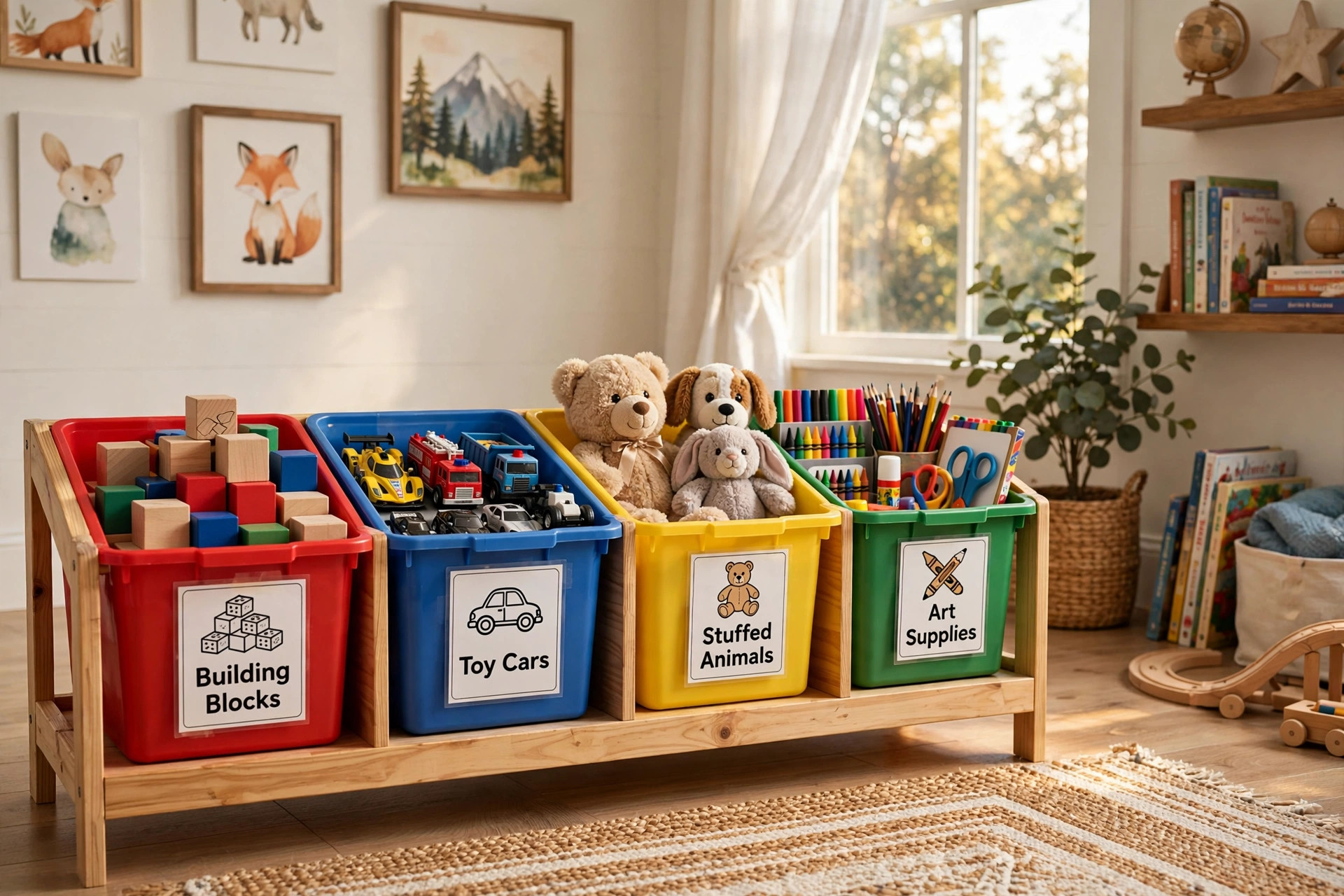

A kids toy organizer with labeled bins is one of the simplest tools a family can buy. Toys cover the floor by dinner time. Parents pick them up at night. The next morning the floor is covered again. A labeled organizer breaks this cycle. Each bin holds one kind of toy. Each bin carries a label that shows what belongs inside. The child learns the system in a few days. Cleanup becomes a short game instead of a long chore. This guide explains how to choose the right organizer, what to pay, how to keep it in good shape, and how to use it with safety in mind.
Why a Labeled Toy Organizer Matters
A child who can see where toys belong can put them back alone. That is the main value of a kids toy organizer with labeled bins. Without labels, bins become mixed boxes. Blocks end up with the dolls. Puzzles end up with the cars. With labels, every toy has a set address.
Labels also teach early skills. A picture of blocks on the blocks bin shows a two-year-old where to put things. A word label beside the picture builds early reading habits. Sorting toys by type trains the same skill children use later in math and science. The organizer becomes a quiet teacher during play.
Parents gain time. When each toy has a home, lost pieces turn up fast. Missing puzzle pieces, lone socks for dolls, and the one small wheel that belongs to a train all sit in known places. Less floor clutter also means fewer trips and falls in the playroom.
The system helps everyone in the house. Grandparents, babysitters, and older siblings can keep the room tidy because the labels explain the rules. There is no need to memorize where things go. A guest can look at the bins and put a toy back in seconds.
Families who want more built-in storage can also look at a kids bookshelf with bins for toy storage, which pairs reading shelves with labeled toy bins in one piece of furniture. The two ideas work well side by side in a playroom or a shared bedroom.
What to Look For When You Choose One: Kids Toy Organizer with Labeled Bins
Size and Number of Bins
Count the kinds of toys, not the number of toys. A child may own two hundred toys, but they fall into ten or twelve groups. Eight to twelve bins cover most families. Blocks, cars, dolls, art supplies, puzzles, books, balls, and stuffed animals each get a home.
Measure the space before you shop. A tall unit holds more, but it needs wall anchoring. A wide low unit fits under a window and is safe for toddlers to reach. Leave room for the bins to slide out fully. Many buyers forget this and find the bottom bins blocked by a door or a bed.
Bin depth matters too. Shallow bins let a child see everything inside at a glance. Deep bins swallow small toys, and the child dumps the whole bin to find one piece. Wide bins suit large items like trucks and dress-up clothes. Narrow bins suit cards, small figures, and crayons.
Labels: Words, Pictures, or Both
Picture labels suit children under five. Word labels suit children learning to read. The best kids toy organizer with labeled bins uses both on the same bin. A drawing of crayons plus the word “crayons” serves a three-year-old and a six-year-old at once.
Choose labels you can change. Children’s interests shift fast. Dinosaurs give way to space ships. Art supplies grow into craft kits. Removable labels, clip-on cards, or dry-erase panels let you update the system without buying new bins. Retailers such as The Container Store and IKEA sell label holders and blank cards that fit standard bin fronts.
Keep the words short. One or two words per label work best. “Cars,” “Dolls,” and “Blocks” beat long phrases a child must puzzle out.
Materials and Build Quality
Solid wood frames last the longest. They survive years of daily use and can pass to a younger sibling. Sturdy plastic frames cost less and wipe clean in seconds. Metal frames are rare for toy storage but last well.
Fabric bins are light and quiet. A child can carry one across the room without a crash. They wear out faster than plastic bins, and stains show sooner. Many families use both: plastic bins for art supplies and small parts, fabric bins for soft toys and dress-up clothes.
Test the bins before you buy if you can. They should slide in and out smoothly. Rough runners make a child yank and spill. Check for sharp edges, splinters, and pinch points. Non-toxic finishes matter because young children touch and mouth everything in reach.
Types and Options
Open Shelf Organizers with Removable Bins
This is the classic kids toy organizer with labeled bins. A frame holds six to twelve bins at two or three heights. Each bin lifts out so a child can carry toys to the rug and bring them back. Labels sit on the front edge of each bin.
These units suit playrooms of any size. Small six-bin units fit a bedroom corner. Twelve-bin units fill a playroom wall. Big-box stores such as Home Depot and Lowe’s carry several sizes, and style sites like Wayfair list wood, plastic, and mixed-material versions.
Rolling Carts
A rolling cart with bins fits inside a closet or beside a bed. It works well in small rooms where a full shelf unit will not fit. The child wheels the cart to the play area and wheels it back. Locking casters keep it still during play.
Carts suit families who move toys between rooms. They also work as craft stations: one bin for paper, one for markers, one for glue and scissors. Labels keep the craft supplies from mixing.
Cube Storage with Bin Inserts
Cube shelves take standard square fabric cubes. Labels attach to the front of each cube. The shelves can hold books on one row and bins on another, which grows with the child. A toddler’s toy cubes later become a school child’s supply cubes.
Cube units come in many finishes, from plain white to wood grain. Pottery Barn Kids and similar children’s furniture stores sell cube sets made for nurseries and kids’ rooms. Because the cubes are a standard size, replacement bins are easy to find for years.
Families short on closet space sometimes pair a toy organizer with a nursery closet organizer for baby clothes or add kids wall shelves for books and toys display above the unit. The combination keeps toys off the floor and books within reach.
Cost and Price Ranges
Toy organizers fit most budgets. Small plastic units with six bins often sell for under thirty dollars. Medium wood organizers with nine to twelve bins run from forty to one hundred dollars. Large solid-wood units cost one hundred dollars and up.
Extra fabric bins cost a few dollars each. Label sets cost little. A full setup for a playroom, unit plus labels plus a few spare bins, often totals under one hundred fifty dollars. That is less than the cost of replacing toys lost in clutter.
Sales help. January and back-to-school season bring storage discounts at many stores. Buying bins in multi-packs costs less per bin than buying them one at a time. Price does not always match quality, so read reviews before you buy. Sites like The Spruce and Bob Vila publish tested roundups of storage furniture, and HGTV runs guides on organizing kids’ rooms.
Care and Upkeep
A kids toy organizer with labeled bins needs little care, but small habits keep it working for years. Wipe plastic bins with a damp cloth when they get dusty or sticky. Wash fabric bins in the machine if the care tag allows it. Let bins dry fully before they go back on the shelf.
Check the labels twice a year. A label that no longer matches the bin contents confuses the child and breaks the system. Update picture labels as the child’s toys change. Laminated cards last longer than paper ones in busy hands.
Tighten the screws on wooden frames every few months. Daily pulling and pushing loosens joints over time. A quick check with a screwdriver takes five minutes. If a bin cracks, replace it before sharp edges appear. Keep one or two spare bins on hand so a broken bin never leaves a gap in the system.
Once a year, sort through the toys with the child. Outgrown toys leave the bins. This keeps the organizer from overflowing and gives the child practice in letting go. Donated toys in good shape can help another family.
Safety Notes for Young Children
Safety comes first with any children’s furniture. Anchor tall organizers to the wall with the hardware that comes in the box. Furniture tip-overs injure children every year, and anchoring takes only a few minutes. The U.S. Consumer Product Safety Commission publishes clear guidance on securing furniture to walls.
Avoid bins deep enough for a toddler to climb into. A child who climbs into a bin can tip the whole unit. Low, wide units are safer for toddlers than tall, narrow ones. Place heavy items in the lowest bins to keep the center of gravity low.
Keep age-inappropriate toys in bins meant for older children, and store those bins on a high shelf. Small parts, magnets, and button batteries belong far from toddlers. Parenting guides at HealthyChildren.org and What to Expect explain which toys suit which ages.
Check for recalls before buying a used organizer. Older units may lack modern safety hardware or may use finishes that no longer meet standards. A quick search on the safety commission’s site takes a minute and is worth the effort.
Frequently Asked Questions
What age is right for a kids toy organizer with labeled bins? Around age two, most children can learn to match toys to picture labels. Start simple with four or five bins. Add more bins as the child learns the system. By age four, many children sort and label with no help.
Are picture labels or word labels better? Both together work best. Pictures guide the child today. Words build reading skills for tomorrow. A bin with a drawing of blocks and the word “blocks” serves a toddler and an early reader at the same time.
How many bins do I need? Most families find eight to twelve bins cover the main toy groups. Common groups are blocks, cars, dolls, art supplies, puzzles, books, balls, stuffed animals, dress-up clothes, and small figures. Start with the groups your child plays with most.
Plastic bins or fabric bins? Plastic bins wipe clean and survive spills. Fabric bins are lighter and quieter when carried. Many parents mix both. Plastic suits art supplies and messy toys. Fabric suits soft toys and dress-up clothes.
How do I get my child to use the labels? Keep the system simple and praise every cleanup. Children copy what they see, so tidy the bins with them for the first weeks. Make it a game: who can find the right bin fastest. Never use cleanup as punishment, or the child will hate the system.
Can the organizer grow with my child? Yes. Cube-style units accept new bins over time. Label sets swap out as toys change. A toddler’s toy organizer later holds school supplies, sports gear, or craft materials. Choose a neutral frame color so the unit still fits the room as the child grows.
A Final Word
A kids toy organizer with labeled bins is a small purchase with a large payoff. It turns cleanup into a habit instead of a battle. It teaches sorting, reading, and care for belongings. It gives the whole family a calmer room to play in. Choose a sturdy frame, pick bins you can see into, and label every bin with a picture and a word. Keep the system simple, update the labels as toys change, and anchor tall units to the wall. Do those things, and the organizer will serve your family well for years.
References
American Academy of Pediatrics. (n.d.). HealthyChildren.org. https://www.healthychildren.org Bob Vila. (n.d.). Home improvement advice. https://www.bobvila.com HGTV. (n.d.). Home and garden ideas. https://www.hgtv.com IKEA. (n.d.). Home furnishings. https://www.ikea.com Lowe’s. (n.d.). Home improvement products. https://www.lowes.com Pottery Barn Kids. (n.d.). Kids furniture and decor. https://www.potterybarnkids.com The Container Store. (n.d.). Storage and organization products. https://www.containerstore.com The Home Depot. (n.d.). Home improvement products. https://www.homedepot.com The Spruce. (n.d.). Home and garden advice. https://www.thespruce.com U.S. Consumer Product Safety Commission. (n.d.). Product safety information. https://www.cpsc.gov Wayfair. (n.d.). Furniture and home goods. https://www.wayfair.com What to Expect. (n.d.). Pregnancy and parenting guidance. https://www.whattoexpect.com
Was this guide helpful?

About James Carter
The My Garden US editorial team writes practical, in-depth home and garden guides for American homeowners — tested advice, no fluff.
You May Also Like
Nursery Rocker With Lumbar Support Pillow: A Parent’s Complete Guide
April 25, 2026 0 views
Kids Play Kitchen Set for Pretend Cooking: A Complete Buying Guide
April 25, 2026 0 views
Kids Vanity Set with Mirror for Girls Room: A Parent’s Buying Guide
April 19, 2026 0 views