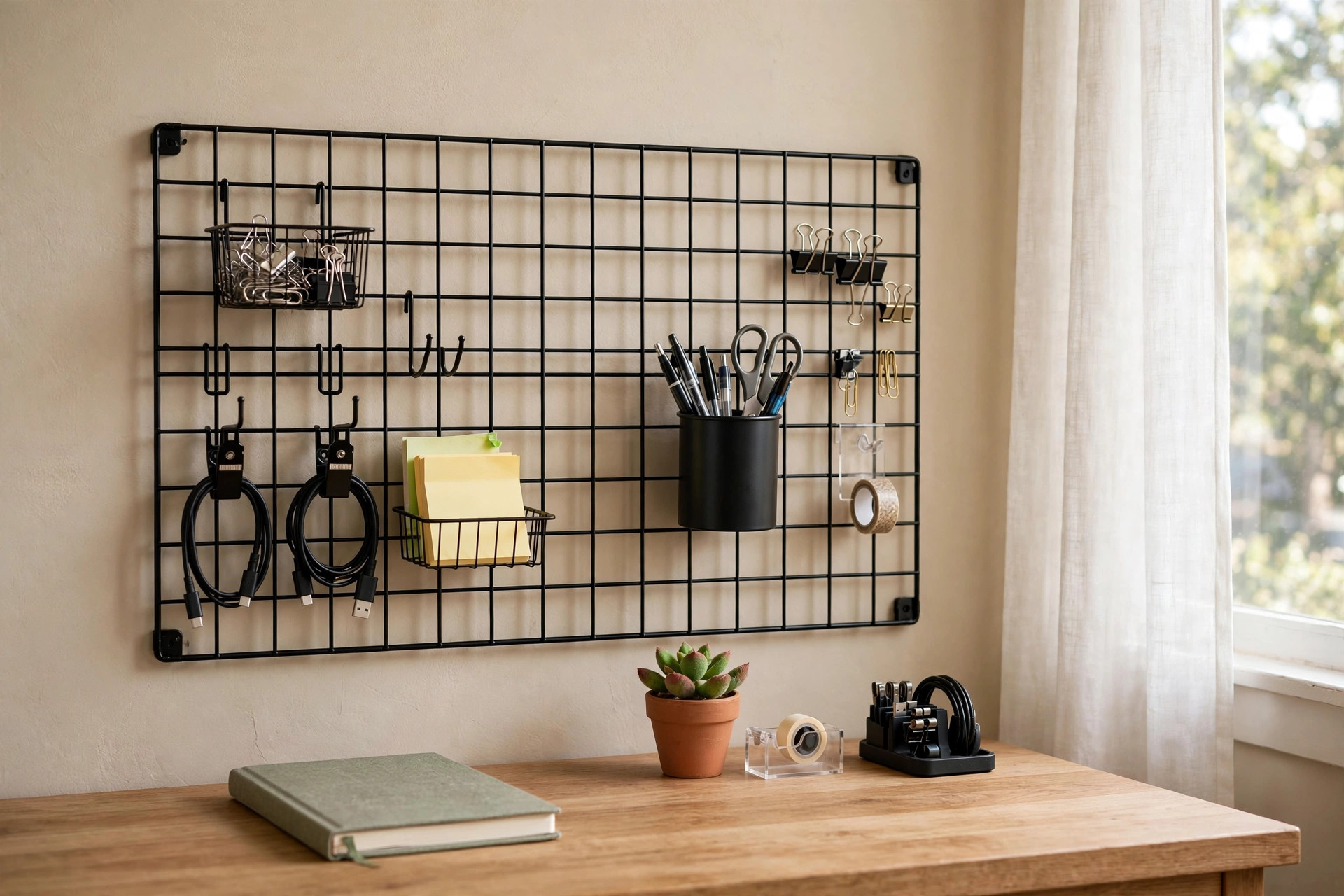

A home office wall grid panel for hanging supplies is a wire or mesh board that mounts to a wall. Hooks, clips, baskets, and small shelves attach to the grid. You hang pens, scissors, cables, notebooks, and small tools where you can see them. The desk stays clear. The room looks calm.
Many people who work from home face the same problem. Supplies pile up on the desk. Pens hide under papers. Phone chargers disappear behind the monitor. A grid panel moves these items off the desk and onto the wall. Everything stays in sight and within reach.
This guide explains why the panel helps, how to choose one, what types exist, what it costs, how to mount it safely, and how to keep it tidy. Read on to find the right setup for your own work space.
Why It Matters
A clear desk helps a clear mind. Studies of work habits have shown for decades that clutter slows people down. When tools have a fixed place on the wall, you stop hunting for them. You save minutes every day. Those minutes add up over a year.
A grid panel also saves floor and desk space. Home offices are often small. Many sit in a corner of a bedroom or a living room. A panel uses the wall, which is space you already have. You do not need a bigger desk or a new cabinet. IKEA store guides often show how vertical storage frees the work surface.
The panel keeps supplies visible. Drawers hide things. A drawer may hold ten useful items, but you forget half of them. On a grid panel, each item hangs in the open. You see the scissors when you need them. You notice when the sticky notes run low.
It also fits many styles. Grid panels come in black, white, gold, and wood tones. They suit a modern room or a classic room. You can change the layout any time. Move a hook. Add a basket. The panel grows with your needs.
What to Look For When Choosing: Home Office Wall Grid Panel for Hanging Supplies
Size and Shape
First, measure your wall. Grid panels for a home office wall grid panel for hanging supplies often range from 12 inches to 40 inches wide. A small panel works over a narrow desk. A large panel covers more wall and holds more items. Leave a few inches of space on each side so the panel does not look cramped.
Some panels are square. Others are tall rectangles. Tall panels suit narrow walls beside a desk. Wide panels suit the space above a long desk. Some sets include two or three small panels that you can arrange in a group. This gives you freedom to design your own shape.
Material and Finish
Most grid panels are made of steel wire. Steel is strong and lasts for years. The wires are coated in powder paint for color and to stop rust. Black and white are the most common colors. Brass and rose gold finishes cost more and look more stylish.
Wood grid panels exist too. They have a warm, soft look. Wood holds less weight than steel, so it suits light items like photos and notes. Plastic panels are the cheapest. They work for very light loads but may bend over time. For most home offices, coated steel is the best value.
Weight Capacity
Check how much weight the panel can hold. A panel that hangs only paper and photos needs little strength. A panel that holds scissors, staplers, and cups of pens needs more. Look for the weight rating on the box or the product page. Consumer Reports style testing groups often advise buyers to choose hardware rated well above the expected load, and that advice applies to wall storage too.
Remember that the weight limit depends on the wall anchors as much as on the panel. Drywall needs special anchors. Wood studs hold more. If you plan to hang heavy items, mount the panel into studs or use strong toggle bolts.
Hook and Accessory Compatibility
Not all grids use the same wire spacing. Before you buy hooks, baskets, and shelves, check that they fit your panel. Many makers sell matching accessory kits. Buying the panel and the accessories from the same maker removes guesswork. The Container Store and similar organizers sell wire-grid systems with full lines of matching parts.
Also think about how you work. If you use many pens, get cup holders. If you lose cables, get clips and cable ties. If you keep notes, get a board clip or a small shelf. Buy a few pieces at first. Add more once you know what you reach for daily.
Types and Options
Wall Mounted Panels
Wall mounted panels screw into the wall. They are the most common type. They hold the most weight and stay still. Once you install one, it can serve you for years. This is the best choice for a fixed home office.
Freestanding Desk Panels
Some small grids stand on the desk with feet or brackets. They need no screws and no wall damage. This suits renters who cannot drill into walls. They hold less than wall mounted panels, and they use some desk space. But they cost little and set up in minutes.
Magnetic Boards with Grid Lines
A few boards combine a magnetic surface with a printed grid pattern. They do not have real wire, so you cannot hang hooks on them. They hold magnets only. They suit people who mainly pin notes and photos. A true wire grid panel offers more storage options.
Multi Panel Sets
Some packages include two or three panels with connectors. You can join them side by side or stack them. This covers a large wall area for less money than one giant panel.The joints may show slightly, but from a distance the group looks like one board.
Cost and Price
A home office wall grid panel for hanging supplies is a low cost project. Basic steel panels cost between 15 and 40 dollars. Mid range panels with a nicer finish cost between 40 and 70 dollars. Designer panels in brass or with wood shelves can cost 70 to 120 dollars.
Accessory kits add to the price. A set of hooks and clips may cost 10 to 20 dollars. Baskets cost 5 to 15 dollars each. A cup holder costs about 8 to 12 dollars. A full setup with panel and accessories often lands between 40 and 90 dollars.
Mounting hardware may cost a few dollars more if you need special wall anchors. Some panels include basic screws and anchors in the box. Check before you buy so you do not need a second trip to the store. Home Depot and most hardware stores stock drywall anchors in many sizes.
Compared with new furniture, this is a small spend. A filing cabinet can cost 150 dollars or more. The grid panel gives more flexible storage for less money.
How to Install It
Start by choosing the spot. Most people hang the panel above the desk, within easy reach. Sit at your chair and raise your arm. The center of the panel should sit near shoulder height. Make sure you can reach the top row without standing up.
Hold the panel against the wall and mark the screw holes with a pencil. Use a level to keep it straight. A crooked panel will bother you every day, so take your time with this step. If you have a stud finder, check for studs behind the marks. Screwing into a stud gives the strongest hold.
Drill pilot holes as directed by the maker. For drywall without studs, push in wall anchors rated for your expected load. Set the panel on the wall and drive the screws. Do not over tighten, or the panel frame may bend. Step back and check that it hangs level.
Now add the accessories. Start with the heavy items low and near the screws. Put cups of pens at arm level. Hang cables and light tools higher. Keep sharp items like scissors in a closed cup or high up if children visit the room. The guides at Herman Miller stress that work tools should sit in the easy reach zone, and that rule fits a grid panel well.
Organizing Your Supplies
Group items by task. Put writing tools in one cup. Put cables and chargers in one basket. Put sticky notes and clips in another. When each group has a home, you return items to their place without thinking.
Leave some empty space. A packed panel looks messy and makes it hard to add new items. Aim to fill no more than two thirds of the grid.
Label the baskets if you share the office. Small tags tied with string work well. Labels help other family members return things to the right spot. They also help you keep the system after a busy week when tidiness slips.
Review the setup each season. Work habits change. A tool you used daily may sit unused for months. Remove what you do not need. Move what you use most to the easiest spot. A grid panel is easy to rearrange, so use that freedom.
Pair the panel with other small organizers. A best desk organizer set for small office desk handles the items that must stay on the desk. A small office supply organizer caddy for desk carries tools when you move to another room. An under desk cable management tray for clean setup hides the power cords that a wall panel cannot hold. Together they make a full system.
Care and Upkeep
Steel grid panels need little care. Dust them with a dry cloth once a month. If the panel hangs near a kitchen, wipe it with a damp cloth to remove grease. Dry it after wiping so the coating stays in good shape.
Check the screws twice a year. Walls shift with heat and cold. A screw that was tight in winter may loosen by summer.
Look at the hooks and baskets. Metal hooks can bend if overloaded. Replace bent hooks rather than straightening them many times, because bent metal weakens. Wash plastic baskets in warm soapy water when they look dusty.
Safety
A wall grid panel is safe when installed well, but a few rules matter. Never hang more weight than the rating allows. Overloading can pull anchors from drywall and drop the panel on your desk or your keyboard.
Keep heavy and sharp items low. A pair of scissors falling from high on the wall is a hazard. Store blades in a closed container. If young children use the room, keep all sharp tools out of their reach or in a locked drawer.
Watch the cords. Hanging chargers is fine, but do not let cords drape where they can catch your arm. Route cables along the grid with clips. Keep the panel away from heat sources like space heaters. Steelcase office safety guides remind workers to keep work zones clear of trip and snag hazards, and loose cords on a wall panel deserve the same care.
If you rent your home, check your lease before drilling. Some landlords forbid wall holes. In that case, use a freestanding panel or adhesive hooks rated for the weight. Fill any small holes with filler before you move out.
Frequently Asked Questions
Can I hang a home office wall grid panel for hanging supplies on drywall?
Yes. Use drywall anchors rated for the total weight you plan to hang. For heavy loads, drive screws into wall studs. A stud finder makes this easy. Most panels include basic mounting parts, but anchors sold separately are often stronger.
What can I hang on a grid panel besides office supplies?
You can hang headphones, small plants, photos, calendars, keys, and craft tools. Many people also hang their daily planner and a clock. Avoid food and open liquids, because spills can damage the wall and the items below.
Will the panel damage my wall?
Screw holes are small and easy to repair with filler and paint. If you cannot drill, choose a freestanding panel or strong adhesive mounts. Adhesive strips hold light panels but not heavy loads, so check the rating first.
How do I stop the panel from looking messy?
Limit what you hang. Keep items in groups inside baskets and cups. Leave open space. Choose one color for most accessories. A tidy panel looks like decor. A crowded panel looks like clutter.
Do grid panels work in a shared or small room?
Yes. A panel uses wall space, so it works in a corner office or a shared bedroom. A room divider screen can hide the work area when guests visit. Reviewers at Wirecutter often note that vertical storage is the best trick for small rooms.
How often should I rearrange the panel?
Rearrange when your work changes. Many people adjust the layout every few months. Move daily tools to the easiest spots. Remove tools you no longer use. The whole process takes ten minutes and keeps the system fresh.
A Final Word
A home office wall grid panel for hanging supplies is one of the simplest upgrades a home worker can make. It costs little. It installs in an hour. It keeps tools visible and the desk clear. It suits renters and owners, small rooms and large ones.
Start small. Mount one panel. Add a few hooks and one basket. Use it for a week. Then adjust. You will soon find the layout that fits your hand and your habits. Guides from UPLIFT Desk and PCMag agree that the best office setup is the one you keep adjusting until it fits you, and a grid panel makes that easy.
A tidy wall leads to a tidy desk. A tidy desk leads to a calmer work day. That is a good return on a small piece of wire and paint.
References
Consumer Reports. (n.d.). Product reviews and ratings. https://www.consumerreports.org Herman Miller. (n.d.). Office furniture and ergonomic seating. https://www.hermanmiller.com IKEA. (n.d.). Home furnishings. https://www.ikea.com PCMag. (n.d.). Technology product reviews. https://www.pcmag.com Steelcase. (n.d.). Office furniture and workplace research. https://www.steelcase.com The Container Store. (n.d.). Storage and organization products. https://www.containerstore.com The Home Depot. (n.d.). Home improvement products. https://www.homedepot.com UPLIFT Desk. (n.d.). Standing desks and ergonomic office furniture. https://www.uplift-desk.com Wirecutter. (n.d.). Product reviews from The New York Times. https://www.nytimes.com/wirecutter
Was this guide helpful?

About Lisa Anderson
The My Garden US editorial team writes practical, in-depth home and garden guides for American homeowners — tested advice, no fluff.
You May Also Like
The Right Home Office Side Table for Printer and Supplies
May 15, 2026 0 views
Home Office Acoustic Panels to Reduce Echo: A Plain Guide
March 3, 2026 0 views
Ergonomic Mouse Pad with Gel Wrist Support: A Plain Buyer’s Guide
February 3, 2026 0 views