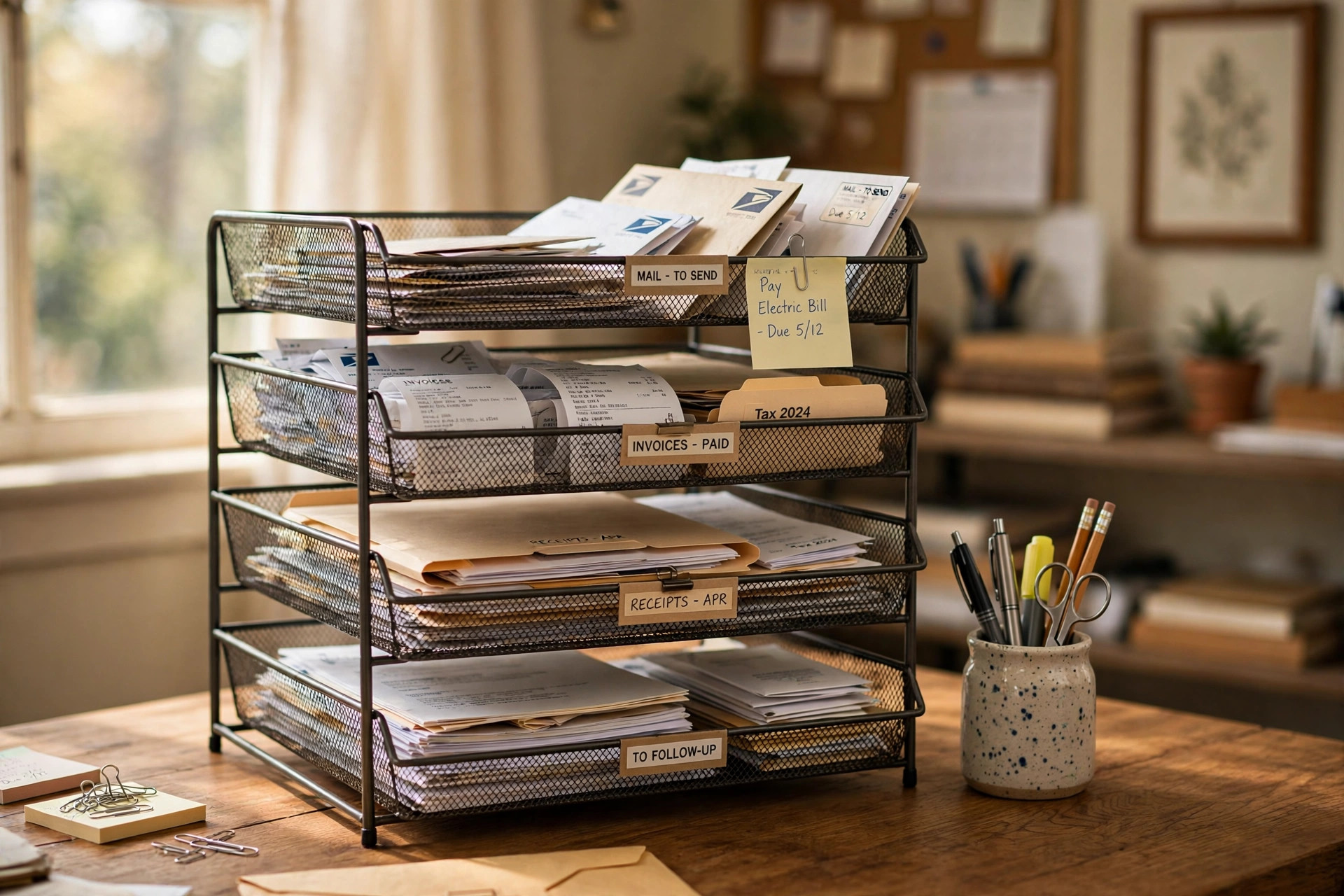

A home office paper tray organizer stackable is one of the simplest tools for a tidy desk. Papers arrive every day. Mail, bills, school forms, work printouts. Without a system, they spread across the desk. They pile up in corners. They get lost. A stackable tray organizer gives each kind of paper its own home. It takes up very little room because the trays sit one above the other. This guide explains why it matters, what to look for, the main types, what it costs, and how to care for it.
Why a Paper Tray Organizer Matters
Work at home brings paper. Even in a digital age, the mail keeps coming. Tax forms, contracts, receipts, and school notices need a place to wait. A stackable tray turns a messy pile into an ordered stack. Each tray can hold one category. One tray for bills to pay. One tray for papers to file. One tray for things in progress.
The benefit is plain. You see everything at a glance. Nothing hides under a heap. You spend less time searching. A home office paper tray organizer stackable also protects your papers. Loose sheets slide off desks. They land on floors. They get coffee stains. Trays keep them flat and safe.
There is a mental benefit too. A clear desk calms the mind. Studies of work habits show that order at the desk helps focus. When your papers sit in labeled trays, your workday starts with order, not chaos. For people who share a home office, trays help even more. Each person can have their own tray. Nobody touches the wrong stack.
Small desks gain the most. A stackable organizer rises upward instead of outward. It uses air space, not desk space. That is why it pairs well with a full desk organizer set for small office desk, where every inch counts.
What to Look for When You Buy: Home Office Paper Tray Organizer Stackable
Not all tray organizers are alike. A good one fits your paper, your desk, and your habits. Keep these points in mind.
Size and Capacity
Most trays hold letter-size paper, eight and a half by eleven inches. Some also fit legal-size sheets. Measure your desk first. A standard single tray is about nine by twelve inches. Stacks of three to six trays are common. A stack of four trays stands about six to eight inches tall.
Think about how much paper you keep. A light user may need only two trays. A busy household may need five or six. Leave room to grow. It is easier to buy one extra tray now than to hunt for a matching one later.
Material
Paper trays come in several materials. Each has strengths.
– Plastic. Light, cheap, and easy to clean. Mesh plastic allows air flow and lets you see the paper inside. – Metal mesh. Strong and neat looking. Steel mesh resists bending and suits a modern desk. – Wood. Warm and handsome. Bamboo and oak trays suit a classic office but cost more. – Acrylic. Clear and clean looking. It shows your papers, which helps some people and distracts others.
Pick the material that fits your budget and your room. Plastic works fine for most homes. Wood suits a study that doubles as a library. Design guides at The Spruce offer ideas for matching office gear to room style, and you can browse their home office section for inspiration (https://www.thespruce.com).
Stacking Style
Stackable trays connect in different ways. Some sit on small posts. Some lock together with clips. Some slide into a side frame. Locked trays stay steady when you pull paper out. Free-stacking trays are easy to rearrange but can tip if bumped. For a busy desk, a frame or locking design is worth the extra cost.
Also check the tray front. A low front wall lets you slide papers in and out fast. A high front wall keeps papers from slipping out. Many homes prefer the low front for daily use.
Types of Stackable Paper Trays
Shoppers will find several common designs. Knowing the types helps you choose.
Letter trays. The classic design. A simple open tray, stacked in twos, threes, or more. Best for general sorting: in, out, pending.
Incline sorters. These trays tilt upward. They sit on a desktop like a small staircase. Papers are easy to see and grab. They take a bit more desk depth than flat stacks.
Vertical file sorters. These hold papers upright, like books on a shelf. They sort by project or client. They work well beside a monitor where desk depth is short.
Rolling tray carts. A small cart with tray shelves on wheels. It moves where you need it. Good for shared rooms and for people who clean the desk often.
Wall-mounted tray sets. These hang on a wall or a cubicle panel. They free the desk completely. They suit tiny rooms where every square inch of desk matters.
Many buyers pair a paper tray with a small office supply organizer caddy for pens and clips. The two together cover both paper and tools. Reviewers at Wirecutter test home office gear in depth, and their guides can help you compare build quality across brands (https://www.nytimes.com/wirecutter).
How to Set Up Your Trays
A tray organizer works best with a simple system. Do not overthink it. Three to five trays are enough for most homes.
Try this classic setup:
1. In. All new paper lands here. Mail, forms, printouts. Sort it once a day. 2. Action. Papers that need a reply, a signature, or a payment. 3. Pending. Papers waiting on someone else. Bills paid online, forms mailed off. 4. File. Papers to store long term. Move them to a cabinet once a week.
Label each tray. Use a small label maker or neat paper tags. Labels stop the trays from becoming junk drawers. Review the Action tray each morning. Clear the In tray each evening. A home office paper tray organizer stackable only works if paper keeps moving through it.
Place the stack where you naturally set papers down. Right-handers often prefer the right side of the desk. Keep the most-used tray at the top or at chest height so you do not strain to reach it. Ergonomic guidance from office furniture makers like Herman Miller and Steelcase stresses that daily tools should sit within easy reach (https://www.hermanmiller.com, Steelcase).
If you sort papers for more than one person, give each person a tray. Color-code the trays if you like. Red for urgent. Green for filed. Keep the code simple so guests and family can follow it.
Cost and Price
A home office paper tray organizer stackable is one of the cheapest office upgrades. Prices vary by material and brand.
– Basic plastic sets, 3 to 5 trays: ten to twenty-five dollars. – Metal mesh sets: twenty to forty dollars. – Wood or bamboo sets: thirty to seventy dollars. – Designer or large sets: up to one hundred dollars or more.
Most homes do fine in the fifteen to thirty dollar range. Retailers such as IKEA and Wayfair carry wide ranges at low prices, and their product pages show real dimensions so you can check the fit before you buy (https://www.ikea.com, Wayfair). Office specialists like UPLIFT Desk also stock desk accessories built for home workstations (https://www.uplift-desk.com).
Watch for extras that raise the price. Label holders, side file rails, and rolling bases add cost. Buy the trays first. Add extras later only if you miss them. Also check shipping costs for wood sets, which are heavier. A cheap set that warps or cracks in a year costs more than a solid set that lasts ten.
Care and Upkeep
Paper trays need little care. Still, a few habits keep them neat and strong.
Dust weekly. Paper sheds dust. A quick wipe with a damp cloth keeps trays clean. For mesh trays, use a soft brush to clear the grid.
Do not overload. Each tray has a limit. A stack of paper two inches thick is about the max for most trays. Overloading bends plastic and warps wood. It also makes papers hard to pull out.
Keep away from heat and sun. Plastic trays warp near radiators and sunny windows. Wood trays dry out and crack. Place the stack a foot or more from heat sources.
Check the stack monthly. Pull each tray. Toss what is dead. File what is done. Trays fail when old paper sits in them for months. A monthly clear-out keeps the system honest.
Clean spills fast. Ink and coffee stain wood and acrylic. Wipe spills at once with a damp cloth. For dried ink on plastic, a little rubbing alcohol on a cotton pad works well. Test on a hidden spot first.
Safety
Paper trays are safe, but a few cautions apply. Tall stacks can tip. Keep stacks of more than five trays against a wall or in a frame. Do not let small children climb on rolling carts. Mesh metal edges can be sharp on cheap trays; check for rough spots before use.
Fire safety matters too. Paper burns. Keep tray stacks away from candles, space heaters, and overloaded power strips. Do not stack paper trays on top of warm electronics like printers. The U.S. Consumer Product Safety Commission publishes general home safety guidance worth a look for any home office (https://www.cpsc.gov).
If you bolt a tray set to a wall, use proper anchors. Drywall alone will not hold a loaded set. A fall from wall height can hurt a foot or crack a floor tile.
Frequently Asked Questions
How many trays do I need? Three to five trays suit most homes. Start with three: in, action, file. Add more only when a tray stays full for weeks. More trays do not mean more order. They often mean more clutter.
Can a stackable tray hold legal-size paper? Many can, but check the tray depth before you buy. Letter trays measure about twelve inches deep. Legal trays need about fifteen inches. Product listings usually state the size. When in doubt, measure a sheet of your paper and compare.
Plastic or metal mesh: which lasts longer? Metal mesh usually lasts longer. It resists cracks and holds its shape. Good plastic lasts for years too, but cheap thin plastic can crack at the corners. If you plan to keep the organizer for a decade, metal is the safer bet.
Will a tray organizer fit on a small desk? Yes. That is its main strength. A four-tray stack takes about one square foot of desk space. If even that is too much, try a wall-mounted set. Pair it with a slim pen holder organizer for office desk to keep small tools off the surface too.
How do I stop papers from sliding out? Use trays with a raised front lip, or place a non-slip mat under the stack. Do not overfill. Keep the stack level. If one tray always spills, move lighter papers there and heavier files lower down.
Are stackable trays good for a shared family office? Yes. Assign one tray per person. Add one shared tray for household bills. Label everything. Family members learn the system in a day. Technology reviewers at PCMag and CNET often cover home office setups for shared spaces, with practical layout tips (https://www.pcmag.com, CNET).
A Final Word
A home office paper tray organizer stackable will not file your papers for you. No tool can. But it gives order a place to live. It turns a spreading pile into a short, neat tower. It costs little, lasts for years, and fits the smallest desk. Buy a solid set, label the trays, and clear them often. Your desk will thank you every morning.
References
CNET. (n.d.). Technology news and reviews. https://www.cnet.com Herman Miller. (n.d.). Office furniture and ergonomic seating. https://www.hermanmiller.com IKEA. (n.d.). Home furnishings. https://www.ikea.com PCMag. (n.d.). Technology product reviews. https://www.pcmag.com Steelcase. (n.d.). Office furniture and workplace research. https://www.steelcase.com The Spruce. (n.d.). Home and garden advice. https://www.thespruce.com UPLIFT Desk. (n.d.). Standing desks and ergonomic office furniture. https://www.uplift-desk.com Wayfair. (n.d.). Furniture and home goods. https://www.wayfair.com Wirecutter. (n.d.). Product reviews from The New York Times. https://www.nytimes.com/wirecutter
Was this guide helpful?

About Lisa Anderson
The My Garden US editorial team writes practical, in-depth home and garden guides for American homeowners — tested advice, no fluff.
You May Also Like

Small L Shaped Desk for Corner Home Office: A Practical Guide
February 6, 2026 0 views
Wall Mounted Desk Shelf Above Computer Monitor: A Simple Buying Guide
September 26, 2026 0 views
An Ergonomic Office Chair With Headrest for Tall Men
July 22, 2026 0 views