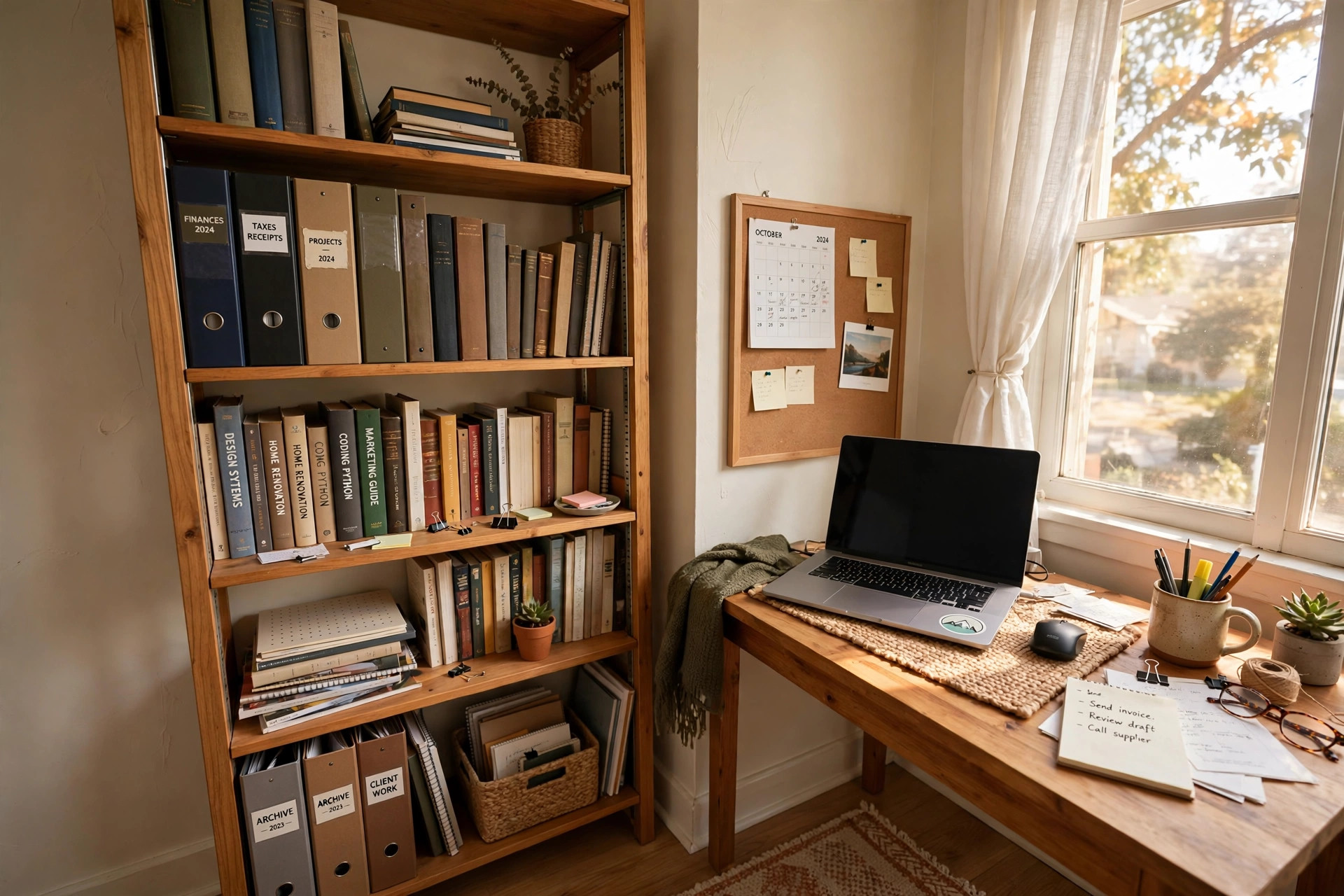

An adjustable bookshelf for home office corner nook placement is one of the simplest ways to add storage to a small work area. Corners are often the hardest places to use. A desk takes one wall. A window takes the other. The corner between them sits empty, or it collects clutter. A bookshelf built for that spot solves both problems at once.
Adjustable shelves matter more here than in a big library. In a nook, every inch counts. You may want to store tall reference books on one level and short paperbacks on another. Fixed shelves force you to waste the leftover space. Movable shelves let you fit the storage to the books, not the books to the storage.
This guide explains what to look for, what types exist, what they cost, and how to keep them safe and sound for years.
Why a Corner Nook Deserves Its Own Bookshelf
A home office corner nook is a small area set aside for work, often in a bedroom, living room, or hallway. It rarely gets much floor space. A full-size bookcase would crowd it. A small shelf fits, but a cheap small shelf often lacks room for everything you need.
A dedicated bookshelf changes how the nook feels. Books, binders, and files move off the desk. The desk stays clear for writing, typing, and thinking. Work goes faster when the work surface is clean.
A corner unit also uses vertical space. Most nooks have open wall height from desk level to ceiling. A shelf that rises three to five feet captures that height. It can hold twenty to sixty books, depending on size. That is often enough for a full working library of manuals, notebooks, and journals.
Many people pair a corner bookshelf with a quiet keyboard for shared home office space when the nook sits in a common room. The shelf holds reference material. The quiet keyboard keeps the peace with family members. Small choices like these make a shared nook feel like a real office.
The adjustable part is what makes the corner shelf practical. Home office needs change. A student fills shelves with textbooks. A freelancer fills them with client files and sample books. Adjustable shelves adapt as the contents change, so the unit does not need to be replaced when your work changes.
What to Look for When You Shop: Adjustable Bookshelf for Home Office Corner Nook
Size and Fit
Measure the corner before you shop. Write down three numbers: the width along each wall, the depth from the corner, and the ceiling height. Most corner bookshelves come in widths of eighteen to thirty-six inches per side.
Leave two inches of breathing room on each side of the unit. This gap makes it easier to slide the shelf into place. It also lets air move behind the unit, which protects books from damp.
Depth matters in a nook. Standard shelves are ten to twelve inches deep. That fits most books and binders. In a very tight corner, look for units eight inches deep. They hold paperbacks and files but not large art books.
Height is your friend in small nooks. A five-foot unit stores more than a three-foot unit on the same floor print. Check that the top shelf is still within easy reach. You will use the shelves you can reach.
Shelf Adjustment
Check how the shelves move. The best systems use metal pins that sit in rows of holes on the side panels. You lift the shelf out, move the pins, and set the shelf back down. The whole job takes a minute.
Count the pin positions. More positions mean finer control. A unit with holes every inch lets you dial in the exact height you need. A unit with holes every three inches is cruder but still useful.
Check the load rating of each shelf. Solid wood shelves can carry forty to sixty pounds. Engineered wood shelves carry twenty to thirty pounds. For heavy books, spread the weight across several shelves. Never put all your heaviest books on one movable shelf.
Some units ship with fixed bottom shelves and adjustable upper shelves. This is a sound design. The bottom shelf carries the heaviest load. The upper shelves carry lighter items and adjust to fit them.
Retailers such as IKEA and Wayfair list shelf counts, depths, and materials in their product pages. Read these details before you buy. A shelf that looks right in a photo may be too shallow or too short in real life.
Materials and Build
Solid wood costs the most and lasts the longest. Oak, maple, and walnut resist dents and hold screws well. A solid wood corner unit can last decades.
Engineered wood, such as medium-density fiberboard, costs less. It looks clean when new. It is weaker at the joints and can sag under heavy books over time. Look for shelves at least three-quarters of an inch thick. Thinner shelves bow.
Metal-frame units with wood shelves are a strong middle choice. The metal frame carries the load. The shelves adjust with ease. These units suit modern nooks and industrial styles.
Corner designs come in three common shapes. The L-shape wraps around the corner with wings on both walls. The triangular unit sits in the corner at a diagonal. The single-sided unit slides into the corner along one wall. The L-shape stores the most. The triangular unit fits the tightest corners. The single-sided unit is the easiest to move.
Office furniture makers such as Herman Miller and Steelcase publish useful guides on matching storage to small work areas. Their advice on weight, reach, and layout applies to home nooks too.
Main Types of Adjustable Bookshelves for Corner Nooks
The Tall Corner Tower
A tall corner tower is a narrow unit, often twelve to eighteen inches wide, that rises four to six feet. It fits in the dead corner where two walls meet. Five or six shelves adjust to hold books of mixed sizes.
Towers suit people with many books and little floor space. They look best in a finish that matches the desk. A dark wood tower next to a dark desk reads as one piece of furniture. Light finishes keep a small nook from feeling closed in.
The Low Corner Bookcase
A low bookcase stands two to three feet tall. It slides under a window or beside a short desk. Two or three adjustable shelves hold books, files, and office supplies.
Low units double as extra surface. The top holds a lamp, a small plant, or a tray for mail. This is handy in nooks where desk space is short. Many people add a home office plant stand for small desk corner nearby to bring life to the nook without taking shelf space.
The Rotating Corner Carousel
A rotating carousel is a square or round unit that spins on a base. Each side holds shelves. You turn it to reach what you need. It fits deep corners where a fixed unit would block access.
Carousels hold fewer books than towers of the same height. Their strength is access. Every shelf stays within reach because the unit turns to you. They suit corners behind a desk chair where reach is limited.
The Wall-Mounted Adjustable System
Wall-mounted systems hang on brackets or rails fixed to the wall. They free the floor entirely. In a tiny nook, this is a real gain. You can push a chair or storage bin under them.
These systems need solid wall anchors. Find the wall studs and screw into them. Drywall anchors alone are not enough for loaded shelves. A wall-mounted unit also needs level installation. Use a spirit level, not your eye.
Adjustable desk specialists such as UPLIFT Desk often show nook layouts that pair height-adjustable desks with wall storage. The idea is the same: keep the floor open and put storage at hand height.
The Ladder-Style Leaning Shelf
A leaning shelf rests against the wall at a slight angle. The shelves get deeper toward the bottom and shallower toward the top. Most have movable shelves or removable shelf boards.
Leaning shelves suit renters. They need no wall holes. The base sits on the floor. The top leans on the wall. They are light and easy to move. Their weakness is weight capacity.
Cost and Price
Prices for an adjustable bookshelf for home office corner nook use fall into three bands.
Budget units cost thirty to one hundred dollars. These are usually engineered wood or particleboard. They work for paperbacks and files. They do not age well under heavy loads. Independent ratings from Consumer Reports can confirm which budget brands hold up. These units are a sound choice for a first apartment or a short-term nook.
Mid-range units cost one hundred to three hundred dollars. This is the sweet spot for most buyers. You get solid shelf pins, thicker boards, and better finishes. Many metal-frame and solid pine units sit in this band. They last five to ten years with normal use.
High-end units cost three hundred to eight hundred dollars or more. Solid hardwood, steel frames, and designer finishes drive the price. These units last decades. They suit a permanent home office.
Watch for hidden costs. Shipping for a tall unit can add thirty to fifty dollars. Assembly services add more. Some units need a wall anchor kit, sold separately. Budget ten to twenty dollars for anchors, a level, and wood screws if you do not own them.
Review sites such as Wirecutter and PC Magazine test furniture for build quality and ease of assembly. Their reviews help you judge whether a mid-range unit is worth the price.
Prices vary by season. January and August often bring sales as stores clear stock. Buying a floor model from a local store can save twenty to forty percent. Check the shelf pins and joints before you buy a floor model. Stores let dozens of hands test the shelves, and loose pins are common.
Care and Upkeep
Dust shelves once a month. A soft cloth or a feather duster does the job. Dust holds moisture, and moisture harms books and wood. Pay attention to the top shelf and the pin holes, where dust settles.
Check the shelf pins twice a year. Pull each shelf and look at the pins. Replace any pin that is bent or loose. Pins cost little. A failed pin drops a shelf of books. Keep two spare pins taped inside the back panel of the unit.
Tighten screws and bolts once a year. Wood shrinks and swells with the seasons. Joints loosen over time. A quarter turn on each bolt keeps the unit rigid. Do this in the fall, after the dry summer air has done its work.
Keep the unit away from direct sun and heat vents. Sun fades finishes and dries wood. Heat vents warp boards. A corner nook near a window may need a curtain to shield the shelves at midday.
If you spill coffee or water on a shelf, wipe it at once. Engineered wood swells when it sits wet. Solid wood stains. A quick wipe saves the finish. For stuck spots, use a damp cloth and dry the area right after.
Rotate heavy books off the same shelf now and then. Constant weight in one spot can bow a shelf over years. Moving books around spreads the wear. This is simple housekeeping, and it extends the life of the unit.
Home guides from The Spruce and Apartment Therapy carry clear routines for dusting and wood care. Their step-by-step methods suit beginners who have never owned wooden furniture.
Safety in the Home Office
A loaded bookshelf is heavy. A tall one can tip. Anchor every unit over three feet tall to the wall. Use an anti-tip strap or an L-bracket screwed into a wall stud. Most new units ship with a strap. Use it. Do not leave it in the box.
Put the heaviest books on the lowest shelves. This lowers the center of gravity. It makes the unit harder to tip. It also saves your back. You lift heavy books less when they sit low.
Keep cords clear of the shelves. Nook corners often collect power strips and chargers. Run cords behind the unit, not across the shelves. Cords on shelves snag when you pull a book. A snagged cord can pull a lamp or a charger off the top.
Watch the top of tall units. Do not stack boxes or bins on top of a bookshelf. The extra height invites a reach-and-stretch fall. The extra weight raises the center of gravity. Use the top shelf for light items only.
If children or pets use the room, add soft corner guards to sharp unit edges. Small children pull on shelves. A guard softens the blow if a child bumps the corner. Move small, swallowable objects to high shelves.
Standing-desk users sometimes pair a corner shelf with a home office desk riser for treadmill walking. Keep the walking path clear of the bookshelf. A shelf that juts into a walking lane is a shin hazard. Leave at least two feet of clear floor between the unit and any walking path.
Frequently Asked Questions
How deep should a corner bookshelf be?
Ten to twelve inches suits most books and binders. Eight inches works for paperbacks and magazines in very tight nooks. Measure your largest book before you buy. Add one inch so books slide in and out with ease.
Can I put a bookshelf in a corner with a baseboard heater?
Keep the unit at least six inches from a baseboard heater. Heat dries wood and can warp shelves. It also dries the glue in book bindings. If the nook has a heater in the corner, choose a wall-mounted unit higher up the wall.
How much weight can adjustable shelves hold?
It depends on the material. Solid wood shelves hold forty to sixty pounds each. Engineered wood shelves hold twenty to thirty pounds each. Metal brackets raise the limit. Check the maker’s rating and spread heavy books across several shelves.
Should the bookshelf match my desk?
It does not need to match exactly, but close finishes look better. A dark walnut desk pairs well with a dark wood shelf. A white desk pairs well with a white or light wood shelf. Mixed finishes work if the styles are similar. Avoid pairing ornate furniture with plain modern pieces.
Is a corner bookshelf hard to assemble?
Most units take thirty to ninety minutes with a screwdriver and the included Allen key. Two people make the job easier for tall units. Read the instructions first. Lay out all parts and count them before you start. Missing a single pin can stall the whole build.
Can I move an adjustable bookshelf once it is loaded?
Unload it first. Moving a loaded unit strains the joints and risks a tip. Remove the books, take out the adjustable shelves, and move the frame. Set it in the new spot, level it, anchor it, and reload the books. The whole move takes under an hour.
A Final Word
An adjustable bookshelf for home office corner nook use is a small buy with a large payoff. It turns wasted corner space into working storage. It clears the desk. It adapts as your books and files change. Measure the corner, choose a sturdy unit with true shelf adjustment, anchor it to the wall, and enjoy a nook that finally works as hard as you do.
References
Apartment Therapy. (n.d.). Home design ideas and inspiration. https://www.apartmenttherapy.com Consumer Reports. (n.d.). Product reviews and ratings. https://www.consumerreports.org Herman Miller. (n.d.). Office furniture and ergonomic seating. https://www.hermanmiller.com IKEA. (n.d.). Home furnishings. https://www.ikea.com PCMag. (n.d.). Technology product reviews. https://www.pcmag.com Steelcase. (n.d.). Office furniture and workplace research. https://www.steelcase.com The Spruce. (n.d.). Home and garden advice. https://www.thespruce.com UPLIFT Desk. (n.d.). Standing desks and ergonomic office furniture. https://www.uplift-desk.com Wayfair. (n.d.). Furniture and home goods. https://www.wayfair.com Wirecutter. (n.d.). Product reviews from The New York Times. https://www.nytimes.com/wirecutter
Was this guide helpful?

About Jennifer Lee
The My Garden US editorial team writes practical, in-depth home and garden guides for American homeowners — tested advice, no fluff.
You May Also Like

Ergonomic Mouse Pad with Gel Wrist Support: A Plain Buyer’s Guide
February 3, 2026 0 views
Home Office Filing System for Tax Documents
March 22, 2026 0 views
Home Office Label Maker for Filing Organization
May 21, 2026 0 views