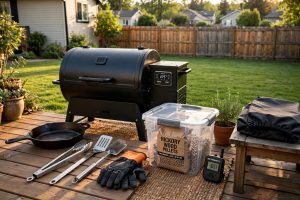

You planned a fine cookout. The burgers are ready. The guests are on the way. Then you reach for the lighter fluid and find the bottle is empty. Do not worry. There are several good ways to learn how to start charcoal grill without lighter fluid, and most of them are safer and cleaner than the old squirt-and-strike habit. This guide walks you through five proven methods, what each one costs, and how to stay safe while the coals catch.
Why It Matters
Charcoal lighter fluid is petroleum-based. It can leave a chemical taste on food when it is not fully burned off. It can also flare up in a sudden burst that is hard to control. Learning how to start charcoal grill without lighter fluid gives you a cleaner fire, better flavor, and fewer surprises. Many seasoned grillers gave up lighter fluid years ago and never looked back.
There is another reason too. A grill lit without fluid lights more evenly. The heat builds in a steady way. You learn to read the coals by color, not by guesswork. That skill pays off every time you cook over charcoal, from quick weeknight burgers to a slow afternoon smoke. If you are thinking about the best charcoal grill for backyard bbq for your family, knowing these lighting methods will help you get more from it from the very first day.
What You Need Before You Start: How to Start Charcoal Grill Without Lighter
No matter which method you pick, a few basics stay the same. You need dry charcoal. Damp briquettes fight every spark. Keep your bag in a dry spot, and bring out only what you plan to burn. You need a long match or a long-nose butane lighter for the paper or starter, plus heat-proof gloves and a pair of long tongs. Set the grill on a flat, steady surface, away from the house, the fence, and anything that can catch fire. Open the bottom vents of the grill. Air flow is the friend of every coal fire. A small metal ash can or bucket beside the grill is useful too, so you have a safe place to set the chimney starter once it is empty.
Method 1: The Chimney Starter
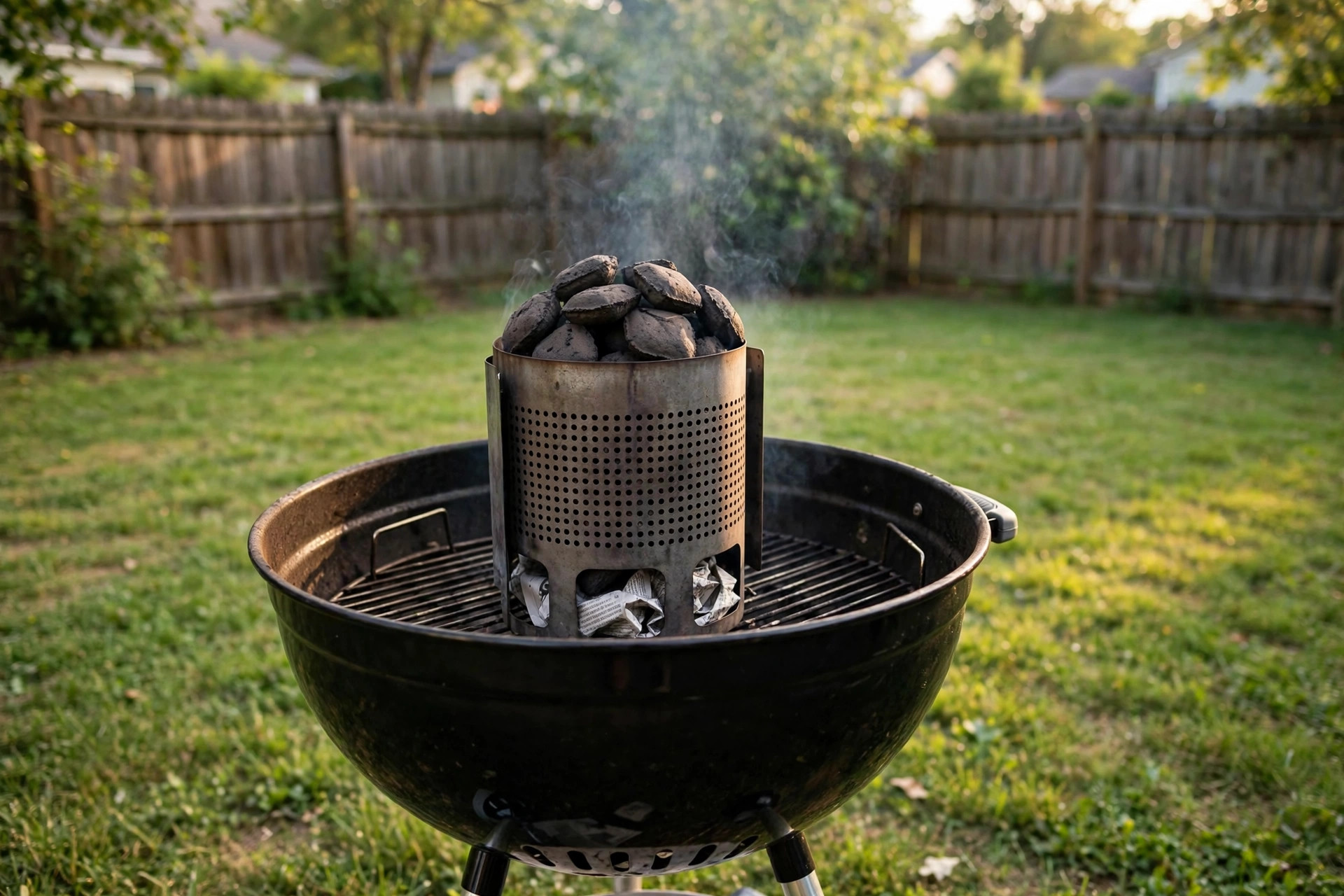
The chimney starter is the gold standard for anyone learning how to start charcoal grill without lighter fluid. It is a tall metal tube with a handle, open at both ends, with a small grate inside. Fill the top with charcoal. Tuck two sheets of crumpled newspaper under the grate. Set the chimney on the grill’s charcoal grate and light the paper through the side holes.
In about fifteen to twenty minutes, the coals on top turn gray-white with ash. Pour them out carefully onto the charcoal grate, spread them with tongs, and you are ready to cook. The chimney costs little, lasts for years, and never adds a drop of chemical to your fire. Guides on how to use a charcoal chimney starter explain the finer points, such as how much charcoal to use for direct and indirect heat.
Method 2: Electric Charcoal Starter
An electric starter is a loop of metal heating element on a long handle. You nestle it into a pile of charcoal, plug it into an outlet, and wait. The element glows red-hot and ignites the coals around it. After eight to ten minutes, you pull the element out with care, let the coals finish catching, and unplug the cord. Always set the hot element on a brick or concrete slab until it cools.
This method is nearly foolproof. It needs no paper and no flame at all. It does need an outdoor-rated extension cord and a nearby outlet, which makes it less handy at a campsite. Electric starters are sold at most large home stores; Home Depot and similar retailers carry several models, and Consumer Reports reviews grill gear for safety and value.
Method 3: Natural Fire Starters
Wax-dipped wood shavings, paraffin cubes, and similar natural fire starters are sold in the grilling aisle. Tuck two or three under your charcoal pile and light them. They burn hot for several minutes, long enough to catch the surrounding briquettes.
These starters cost a few dollars for a box of many. They add no petroleum taste to the food. Some cooks make their own from dryer lint packed into cardboard egg cartons, drizzled with candle wax. Either way, the principle is the same: a clean, steady flame that coaxes the charcoal to life. Kettle grill makers like Weber and Char-Broil both point new owners toward these starters in their grill guides.
Method 4: The Newspaper and Dry Kindling Trick
If you have nothing else, plain newspaper and dry kindling can do the job. Crumple four or five sheets of newspaper into loose balls. Place them under a small teepee of charcoal. Light the paper in several spots. As the paper burns, it warms the charcoal. Add small dry sticks to keep the heat going until the briquettes catch.
This method needs patience. Do not pack the newspaper tight. Air must move through the pile. It works best with natural lump charcoal, which catches faster than dense briquettes. Guides from AmazingRibs.com and The Spruce Eats note that this old-time method rewards a gentle hand and a steady supply of dry tinder.
Method 5: The Bottom-Up Minion or Fuse Method
For long, slow cooks, some grillers arrange charcoal in a ring or a long line, light one end, and let the fire burn slowly around the pile. This is sometimes called the fuse or snake method. Light the starting end with a single paraffin cube or a ball of lit newspaper. The fire creeps along at a steady pace, giving hours of low heat.
This method suits pork shoulders and ribs. It takes more setup than a simple pile, but it keeps the grill lit far longer with almost no tending. Once you master it, you may want to try how to smoke ribs on charcoal grill with the same arrangement.
Lump Charcoal or Briquettes: Which Lights Easier
The type of charcoal you buy changes how easy it is to start the grill without lighter fluid. Natural lump charcoal is made from pieces of real hardwood. It is light, full of air pockets, and catches a spark fast. A chimney of lump charcoal is often ready in twelve to fifteen minutes. It burns hot and gives a fine smoky taste.
Briquettes are pressed into neat pillows with a little starch. They are dense, uniform, and burn for a long, steady time. But they take longer to catch. A full chimney of briquettes usually needs the whole twenty minutes. Many cooks use a mix: briquettes for long steady heat, plus a few lumps on top to help the pile catch. Whichever you buy, keep the bag dry. Even a little dampness makes lighting twice as hard. Store charcoal in a shed or garage, off the concrete floor, with the bag folded shut.
How to Choose the Right Method
Pick the chimney starter for most everyday cooks. It is fast, cheap, and needs no electricity. Pick the electric starter if you dislike dealing with paper and ash, and you grill near the house. Pick natural starters for camping or when you want the lightest kit possible. The newspaper trick is your backup plan. The fuse method is for low-and-slow barbecue.
Think about your grill too. A big kamado holds heat well and works with any method. A small portable grill lights fast with a chimney half full. Brands such as Napoleon, Big Green Egg, Traeger, and Broil King all make charcoal-capable cookers, and each ships with lighting tips for its own design.
Cost and Price
Starting a charcoal grill without lighter fluid costs almost nothing. A chimney starter runs about fifteen to twenty-five dollars. Electric starters cost about the same. A box of natural paraffin starters costs around five dollars and lasts for many cooks. Newspaper and kindling are free. Compare that with a bottle of lighter fluid, which costs a few dollars and runs out. Over a summer of weekend cooks, the chimney starter pays for itself in a few uses.
Care and Upkeep of Your Fire
Once the coals are lit, they need air. Keep the bottom vents open at least halfway while the fire builds. Do not smother the pile with too much charcoal at once; add fuel in layers as the first coals turn gray. Ash builds up under the grate, so clear it between cooks. A grill choked with old ash lights slowly and burns poorly.
After cooking, close all the vents. Starved of air, the coals will die out on their own. You can even reuse half-burned charcoal next time. Many experienced grillers save the unburned pieces and mix them with fresh charcoal for the next fire.
Safety First
Every method here still involves real fire. Keep children and pets away from the grill until it is fully cool. Never light a charcoal grill indoors, in a garage, or on a wooden deck with low clearance. Charcoal gives off carbon monoxide, an odorless gas, so it must burn only in the open air.
Keep a spray bottle of water or a bucket of sand nearby for small flare-ups. Wear gloves when you pour coals from a chimney. Set a hot chimney on a concrete or brick surface, never on grass or a table. Wait until all coals are cold before you throw out the ash.
FAQ
Can I use vegetable oil instead of lighter fluid?
Yes. Soak a folded paper towel in vegetable oil and tuck it under the charcoal. It burns longer than plain paper and is completely food-safe. This is a handy trick when you have no fire starters on hand.
How long does it take to light charcoal without lighter fluid?
A chimney starter takes about fifteen to twenty minutes. An electric starter takes eight to ten minutes to ignite the coals. The newspaper and kindling trick can take twenty to thirty minutes. Plan your cooking time around the wait.
Does charcoal burn as hot without lighter fluid?
Yes. In fact, it often burns more evenly. Lighter fluid burns off fast and leaves uneven heat. A chimney-lit fire reaches cooking heat in a steady, even bed that gives better results on steaks, burgers, and chicken.
Is it safe to use lighter fluid substitutes like kerosene?
No. Never use kerosene, gasoline, or any petroleum fuel on a charcoal grill. They are dangerous, they flare without warning, and they leave foul tastes on food. Stick to the clean methods in this guide.
Why does my charcoal keep going out?
The most common cause is poor air flow. Check that the bottom vents are open and that old ash is not blocking them. Damp charcoal is the next most common cause. Keep your charcoal dry, and your fire will stay lit.
Can I add more charcoal to a lit grill?
Yes. Add fresh briquettes to the edges of the hot pile. Give them ten minutes to catch before you place food over them. Adding a little at a time keeps the heat steady instead of dropping it.
A Short Final Word
Learning how to start charcoal grill without lighter fluid is one of the simplest upgrades a griller can make. The fire is cleaner, the food tastes better, and the whole process is safer. Buy a chimney starter, keep a box of natural starters in the shed, and you will never miss the lighter fluid bottle. Light the coals, open the vents, and enjoy the cook.
References
AmazingRibs.com. (n.d.). Barbecue and grilling science. https://www.amazingribs.com Big Green Egg. (n.d.). Kamado grills and outdoor cooking. https://www.biggreenegg.com Broil King. (n.d.). Gas and charcoal grills. https://www.broilkingbbq.com Char-Broil. (n.d.). Gas and charcoal grills. https://www.charbroil.com Consumer Reports. (n.d.). Product reviews and ratings. https://www.consumerreports.org Napoleon. (n.d.). Fireplaces, grills, and heating products. https://www.napoleon.com The Home Depot. (n.d.). Home improvement products. https://www.homedepot.com The Spruce Eats. (n.d.). Recipes and cooking guides. https://www.thespruceeats.com Traeger. (n.d.). Wood pellet grills. https://www.traeger.com Weber. (n.d.). Grills and outdoor cooking. https://www.weber.com
Was this guide helpful?

About Robert Taylor
The My Garden US editorial team writes practical, in-depth home and garden guides for American homeowners — tested advice, no fluff.
You May Also Like
Best BBQ Rub for Ribs: A Homemade Guide
February 21, 2026 0 views
Best Grill for High Altitude Cooking: What Works Above 5,000 Feet
April 14, 2026 0 views
How to Choose the Best Grill Cart with Side Burner
May 10, 2026 0 views