
Many new grill owners ask about a charcoal chimney starter and how to use it well. It is a simple metal tube. It lights charcoal fast. It uses no lighter fluid. It gives even heat. This guide shows each step. Read it once and you will grill with ease.
Why a Chimney Starter Matters
A chimney starter is one of the best tools in outdoor cooking. Lighter fluid can leave a bad taste on food. It can also cause tall flames. A chimney starter avoids both. It uses newspaper or a small fire cube as fuel. Hot air rises through the tube. The charcoal above catches fire. The result is clean, even heat. Once you learn it, you will never go back to fluid.
Grill makers and cooks agree on this point. Weber explains that natural lighting gives better flavor. The Spruce Eats notes that chimneys are safer than fluid. Cooks who try both often keep the chimney. It is cheap. It is fast. It lasts for years.
Charcoal grills need steady heat. A chimney gives you a full load of hot coals in about 20 minutes. That is enough for burgers, steaks, or chicken. For long cooks like ribs, you may need more. Learning a charcoal chimney starter and how to use it is the first skill every charcoal cook should learn.
What to Look For When You Buy One: Charcoal Chimney Starter How to Use
Most chimney starters look alike. Still, small differences matter. Choose a large size if you own a full size kettle grill. A big chimney holds about 100 briquettes. A small one holds about half. For most families, the large size is best.
Look for thick steel walls. Thin metal bends with heat. Look for a heat shield on the handle. The handle gets hot. A shield keeps your hand safe. Look for a second helper handle near the base. It helps you pour the coals. Rivets should feel firm. Nothing should wobble.
Price is low. Most cost between 15 and 30 dollars. The Home Depot lists many models in this range. A well known brand will last longer. Cheaper ones may rust in one season. Pay a little more for thick steel.
Types of Charcoal to Use With It
Two main types of charcoal work in a chimney. Briquettes are the most common. They burn even and steady. They are easy to find. They cost less than lump charcoal. Most cooks start with briquettes.
Lump charcoal is the second type. It is made from pure wood. It burns hotter and faster. It leaves less ash. It costs more. Many cooks like it for steak and high heat cooks. AmazingRibs.com has long praised lump charcoal for clean flavor.
You can also use wood chunks. Put them on top of the briquettes in the chimney. They add smoke flavor. Cherry, hickory, and apple are good choices. Do not use treated wood. Do not use painted wood. It is not safe for food.
Which Size for Your Grill
Match the chimney to the size of your grill. A 22 inch kettle grill needs a large chimney. A small tabletop grill needs only a small one. Too many coals waste fuel. Too few leave cold spots. When in doubt, buy the large size. You can fill it half full for small cooks. You cannot make a small one bigger. Most families do well with one large chimney.
Heat shields on handles matter too. A bare metal handle will burn your hand. A good shield stays cool enough to grip with gloves. Test the handle in the store. It should feel firm. The pour handle near the base should be easy to reach. A smooth pour means no spilled coals.
Charcoal Chimney Starter How to Use: Step by Step
Here is the full method. Follow it each time. It will become second nature.
Step 1: Set Up a Safe Spot
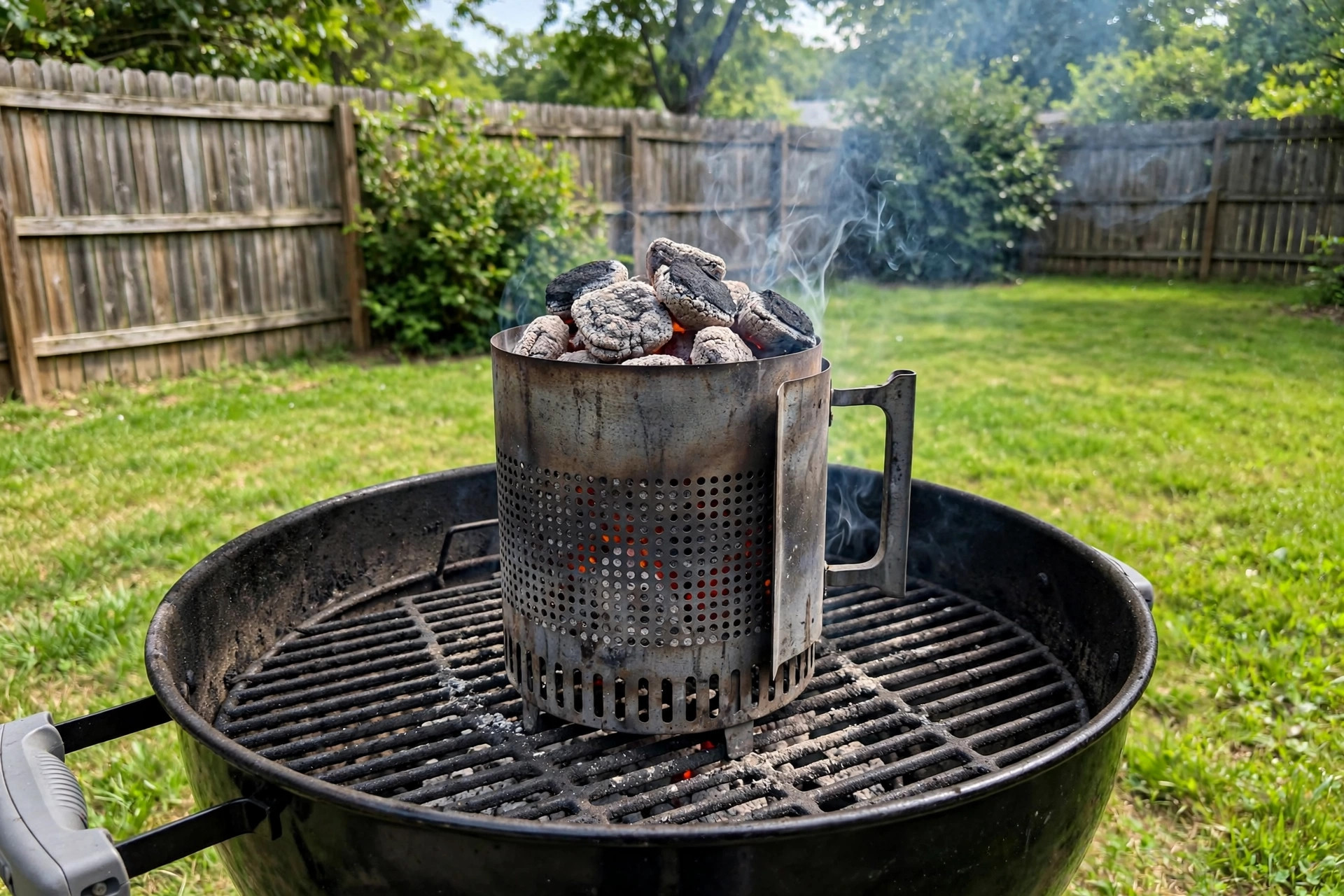
Place the chimney on the charcoal grate of your grill. Keep it off the ground. Place it away from the house. Keep children and pets far from the grill. Charcoal grills are hot tools. Treat them with care.
Step 2: Add Your Fire Starter
Stuff two sheets of newspaper under the chimney. Twist them loose. Air must pass through. You can also use a paraffin fire cube. Place it under the chimney. Light it with a match or lighter. Some cooks use paper towels with a little oil. That works too.
Step 3: Fill the Chimney
Pour charcoal into the top of the chimney. Fill it to the top for high heat. Fill it half for lower heat. Do not pack the coals tight. Air must move up through them. Loose coals light faster.
Step 4: Light and Wait
Light the newspaper or fire cube. Watch the bottom coals. They will catch in a few minutes. You will see smoke. You will hear small crackles. Leave the chimney alone. Do not lift it. Do not stir the coals. Give it 15 to 20 minutes.
Step 5: Check the Coals
Look at the top layer. When the top coals turn gray with ash, they are ready. You may see small flames at the top. That is normal. The whole load should glow. Be patient. Half-lit coals cook food unevenly.
Step 6: Pour the Coals
Put on heat proof grill gloves. Grip the main handle. Use the helper handle to tip the chimney. Pour the coals onto the charcoal grate. Spread them for direct heat. Pile them on one side for indirect heat. Many cooks use a two zone setup. Hot coals on one side. No coals on the other. This gives control.
Step 7: Set the Grate and Cook
Put the cooking grate back on. Close the grill lid. Wait five minutes. The grate will heat up. Brush it clean. Now you can cook. If you want to learn how to smoke ribs on a charcoal grill, start with this same lighting method.
Common Mistakes to Avoid
Many first time users make the same errors. The first error is using too much newspaper. Too much paper makes thick smoke. Two sheets are enough. The second error is packing coals too tight. Tight coals block air. Air is the fuel of the chimney. Loose coals win.
The third error is pouring too soon. Coals that are black on top are not ready. Wait for gray ash. The fourth error is lifting the chimney to check. Leave it down. Moving it spills hot coals. The fifth error is lighting on bare concrete. Heat can crack or stain the surface. Always light on the grill grate.
A sixth error is using damp charcoal. Wet coals smoke and fail to light. Store bags in a dry shed or garage. If your coals got wet, spread them in the sun for a day. The seventh error is forgetting to open the grill vents. Air feeds the coals. Closed vents smother them. Open both top and bottom vents wide before you pour.
Some people ask how to start a charcoal grill without lighter fluid at all. The chimney is the answer. It needs no fluid. Some also ask about a chimney on a windy day. Wind can blow sparks. Pick a calm spot. Keep the grill lid handy.
Cost and Price Range
A chimney starter is cheap. Most cost 15 to 30 dollars. Fire cubes cost a few dollars for a pack. Newspaper is free. Over a year, the cost is tiny. One bag of briquettes costs about 20 dollars. A chimney needs no fluid. Lighter fluid costs 8 to 12 dollars a bottle. You will save that money fast.
Compare this with other tools. The best charcoal grill for backyard bbq cooks may cost 200 dollars or more. A wireless grill thermometer may cost 50 dollars. A chimney costs less than a bag of charcoal. It is the best value in the grill aisle.
Charcoal costs add up over time. A full bag lights about eight full chimneys. If you grill twice a week, a bag lasts a month. That is about 20 dollars a month in fuel. Lighter fluid would add more. The chimney keeps your cost at the bag alone. For long cooks, you may add unlit coals to the grill after the chimney pour. This two step method saves fuel on big cuts like pork shoulder.
Care and Upkeep
A chimney needs little care. After each use, let it cool fully. Do not pour water on hot metal. Water can warp the steel. Shake out loose ash. Store it in a dry place. Rain causes rust. A garage shelf works well.
Check the handle before each cook. Make sure the rivets are firm. Check the grate inside the chimney. Ash can build up. Tap it clean. If the steel starts to rust, brush it off. A little rust does not hurt. Heavy rust weakens the tube. Then it is time for a new one. A good chimney lasts five years or more.
Safety Tips
Fire safety comes first. Always wear heat proof gloves. Coals reach 500 degrees or more. Never pour coals with bare hands. Keep a spray bottle of water near the grill. Small flare ups can be tamed fast.
Light the chimney away from dry leaves. Keep it off wooden decks if you can. Heat passes down through the grate. A grill mat can help. Keep children at least three feet away. Teach them the grill is hot. Do not leave a lit chimney alone.
After cooking, close the grill vents. The coals will cool and die. Wait until the ash is cold. Then scoop it out. Put ash in a metal can. Cold ash is safe to throw away. Char-Broil and Napoleon both stress this point in their grill safety guides.
Frequently Asked Questions
How long does a charcoal chimney starter take? Most loads are ready in 15 to 20 minutes. Cold wind can add time. Lump charcoal may light faster than briquettes. Wait until the top coals are gray with ash. Do not rush the pour.
Can I use a chimney starter on a gas grill? No. The chimney is made for charcoal only. Gas grills light with their own igniters. Some cooks add a smoker box for flavor. Never put a chimney on gas burners. It is not safe.
What can I use instead of newspaper? Paraffin fire cubes work well. They are clean and easy. Some cooks use cotton balls with oil. Some use paper towels with a little vegetable oil. Avoid printed flyers with heavy ink. Avoid lighter fluid. It defeats the purpose.
How much charcoal fits in a chimney? A large chimney holds about 100 briquettes. That is enough for a full kettle grill. A small chimney holds about 50. Fill less for small cooks. You can always light a second load later.
Can I relight old coals in a chimney? Yes. Old coals from a past cook can be reused. They light well in a chimney. Mix them with some fresh charcoal. Do not reuse coals that are crumbling. Crumbled coals turn to dust and block air.
Is a chimney starter safe for beginners? Yes. It is one of the safest ways to light charcoal. There is no fluid to flare. There is no burst of flame. Keep gloves on. Keep children away. Follow the steps. Beginners learn it in one cook.
Final Word
A charcoal chimney starter is a small tool with a big job. It lights charcoal clean. It needs no fluid. It works every time. Now you know a charcoal chimney starter and how to use it from start to finish. Buy a sturdy one. Practice the steps. Your food will taste better. Your grilling will feel easier. Happy cooking.
Buying guides are also published by Consumer Reports and Traeger. Related guides on this site include best gas grill under 500 for beginners and how to season cast iron grill grates.
References
AmazingRibs.com. (n.d.). Barbecue and grilling science. https://www.amazingribs.com Char-Broil. (n.d.). Gas and charcoal grills. https://www.charbroil.com Consumer Reports. (n.d.). Product reviews and ratings. https://www.consumerreports.org Napoleon. (n.d.). Fireplaces, grills, and heating products. https://www.napoleon.com The Home Depot. (n.d.). Home improvement products. https://www.homedepot.com The Spruce Eats. (n.d.). Recipes and cooking guides. https://www.thespruceeats.com Traeger. (n.d.). Wood pellet grills. https://www.traeger.com Weber. (n.d.). Grills and outdoor cooking. https://www.weber.com
Was this guide helpful?

About Robert Taylor
The My Garden US editorial team writes practical, in-depth home and garden guides for American homeowners — tested advice, no fluff.
You May Also Like
How to Store Your Grill for Winter Outdoors
March 10, 2026 0 views
Pellet Grill vs Charcoal Taste Test: Which Wins?
June 3, 2026 0 views
Best BBQ for Beginners Under 200: A Plain Guide to Your First Grill
September 27, 2026 0 views