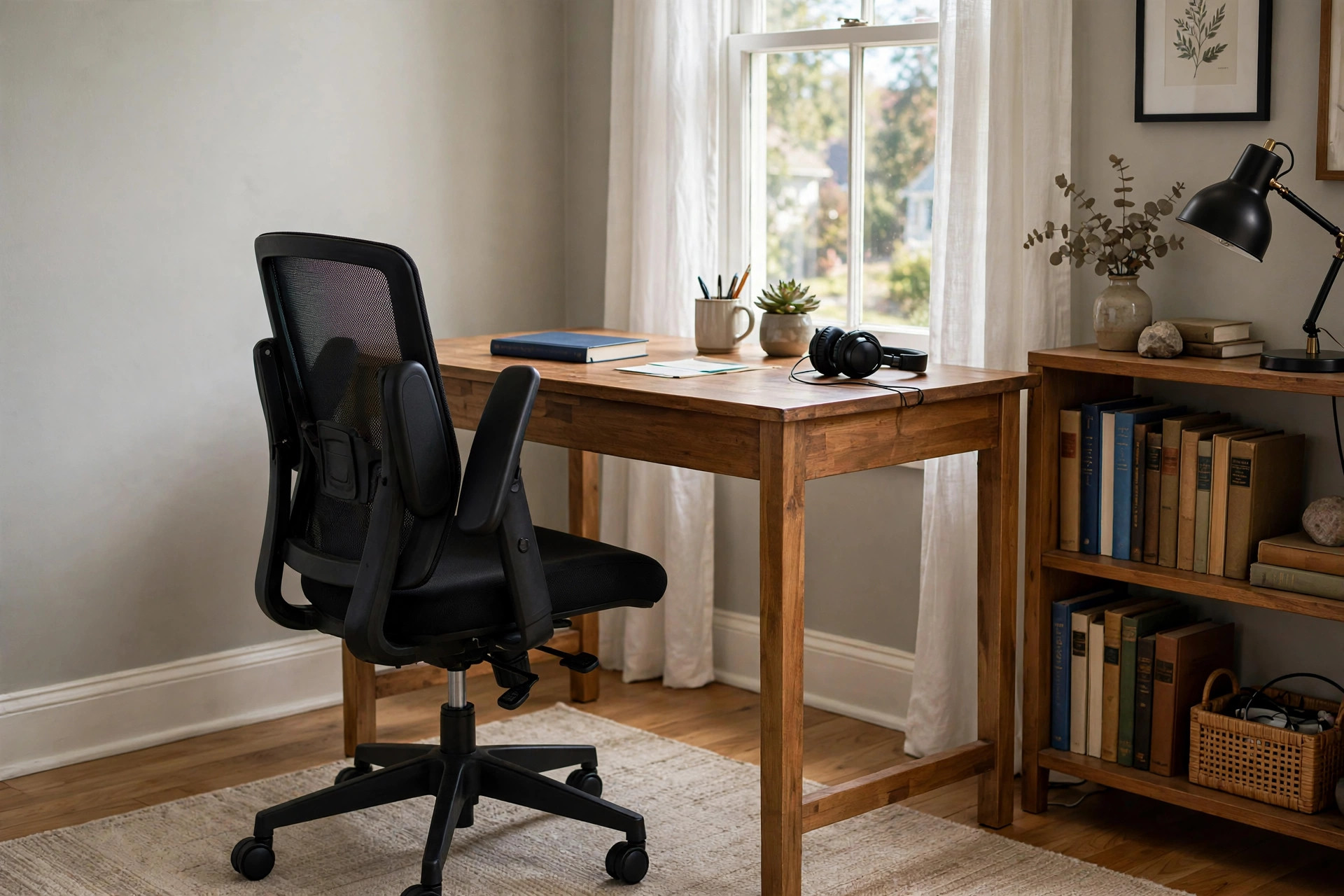

A home office desk chair with flip up arms is one of the most practical pieces of furniture for a small work space. The arms fold up and back. This one simple movement lets the chair slide fully under a desk. It saves floor space. It makes a crowded room feel larger. If you work from home, this chair deserves a close look.
Millions of Americans now work from home at least part of the week. Many work in spare bedrooms, living room corners, or small dens. In these tight spaces, every inch counts. A chair with flip up arms solves a common problem. Fixed arms keep the chair from fitting under the desk. The chair sticks out into the room. It looks cluttered. Flip up arms remove that problem in seconds.
This guide explains the home office desk chair with flip up arms in plain terms. You will learn why the feature matters. You will learn how to choose a good one. You will see the main types on the market. You will learn what they cost, how to care for them, and how to stay safe while using one.
Why Flip Up Arms Matter
Space in Small Rooms
The first reason is space. A home office often shares a room with a bed, a sofa, or storage boxes. When work ends for the day, the chair should disappear under the desk. Chairs with fixed arms cannot do this. Their arms hit the desktop edge and stop the chair short. Flip up arms lift out of the way. The chair rolls in flat against the desk. The floor stays clear. The room looks tidy.
Room to Move
The second reason is freedom of movement. Some tasks need arm support. Typing and using a mouse are easier with the arms down. But other tasks need the arms gone. Playing a guitar, writing in a notebook, or leaning close to read papers are all easier without arms in the way. Flip up arms give you both options. You keep support when you want it. You remove it when you do not.
Closer to the Desk
The third reason is posture. With arms folded up, you can roll closer to your work. Your elbows rest on the desktop. Your shoulders stay low and relaxed. Many people hunch forward because their chair arms keep them too far back. Flip up arms remove that barrier. Good posture is easier to keep all day.
Fitting Under Low Desks
Many home desks are lower than office desks. Kitchen tables, writing desks, and folding tables often sit at 29 inches or less. Standard chair arms collide with these low surfaces. A home office desk chair with flip up arms avoids the clash. Fold the arms up, and the chair slides right in.
How to Choose the Right Chair: Home Office Desk Chair with Flip Up Arms
Buying a chair is a personal decision. Your body, your desk, and your budget all matter. Walk through these points before you spend any money.
Seat and Back Support
Start with the seat. It should feel firm but not hard. A seat pan that is too soft will sag in a few months. Look for high density foam. The seat should be wide enough for your hips. The front edge should not press into the backs of your knees.
The backrest should support your lower back. Lumbar support is the curve that fills the hollow of your spine. Some chairs have an adjustable lumbar pad. Others shape the backrest itself. Either design works if it matches your spine.
Mesh backs are common on chairs with flip up arms. Mesh breathes well and keeps you cool in warm rooms. Padded backs feel warmer and softer. Your comfort decides.
For longer work days, support matters even more. A chair that feels fine for an hour may hurt after six hours. If you sit for long stretches, read more about the best office chair for long hours home office before you decide.
The Flip Mechanism
This is the heart of the chair. Test the flip action if you can. Good arms swing up with a smooth push. They lock upright with a clear click. They stay up on their own. Cheap arms droop or wobble. Some fall back down by themselves. That defeats the purpose.
Check how far the arms travel. The best designs fold past vertical, flat against the backrest. This keeps them fully out of the way. Arms that only rise halfway still block the desk edge.
Look at the hinge. Metal hinges last longer than plastic ones. Plastic is lighter and cheaper, but it can crack after years of daily use. If the chair will fold its arms every day, metal hardware is worth the extra cost.
Base, Casters, and Height
A five point star base is the standard for office chairs. It keeps the chair stable as you lean and turn. The base should be metal or strong nylon. Avoid four leg chairs if you plan to roll around.
Casters should match your floor. Hard plastic casters roll best on carpet. Soft rubber casters are better on wood, tile, and laminate. Rubber casters do not scratch hard floors.
Height adjustment is a must. The seat should let your feet rest flat on the floor with your thighs level. A pneumatic lift cylinder handles this. Press the lever, and the seat rises or falls. The mechanism should move smoothly and hold its setting.
Size and Fit
Measure your desk before you shop. Note the height of the underside of the desktop. Note the width of the knee space. A chair with flip up arms still needs to fit through that opening. The folded arms add some height above the seat. Check the folded height against your desk clearance.
Also consider your own size. Chairs list a weight rating. Most home models support 250 to 300 pounds. Larger users should look for ratings above 300 pounds. Seat width matters too. A seat that is too narrow will feel tight within weeks.
Types and Options
Mesh Back Chairs
Mesh back models are the most popular type of home office desk chair with flip up arms. The mesh keeps air flowing. They are light, modern, and moderate in price. Many strong options exist in this group, including an ergonomic mesh office chair under 200 dollars if your budget is tight.
Fabric Upholstered Chairs
Fabric chairs have padded seats and backs covered in cloth. They feel soft and warm. They come in many colors. They suit bedrooms and living rooms where the chair is always visible. Fabric can stain, so check whether the covers are removable or easy to clean.
Leather and Faux Leather Chairs
Leather chairs look formal. They suit a dedicated study or home library. Real leather lasts for years with care. Faux leather costs less but can peel with age. Both wipe clean with a damp cloth. Leather does not breathe, so it can feel warm in summer.
Task Chairs
Task chairs are simple and light. They have no high back or headrest. They turn and roll easily. They fit small budgets and small rooms. If your work is short sessions at the desk, a task chair is enough.
Manager and Executive Chairs
These are larger chairs with high backs, thick padding, and a heavier look. Many now come with flip up arms as an option. They suit people who want comfort for a full workday. They take up more room. Make sure your desk space can hold one.
Cost and Price
Prices for a home office desk chair with flip up arms span a wide range. What you pay depends on materials, brand, and build quality.
Budget chairs cost between 80 and 150 dollars. These are simple task chairs. The flip mechanism is basic plastic. The foam is thin. They work well for light use, perhaps two or three hours a day. They rarely last more than two or three years of daily use.
Mid range chairs cost between 150 and 350 dollars. This is the sweet spot for most buyers. You get a metal flip hinge. The foam is denser. The mesh or fabric is stronger. Many well known models sit in this band. A mid range chair used every day can last five years or more.
Premium chairs cost 400 dollars and up. These come from long established office furniture makers. The parts are heavy duty. The warranty often runs ten years or more. The comfort is built for eight hour days. If you work from home full time, a premium chair is a sound investment in your health.
Watch for sales. Office furniture often drops in price around back to school season and the January sales. Large online stores such as Wayfair and IKEA run frequent promotions. Review sites such as Wirecutter and PCMag publish tested picks that can guide your choice.
Chairs arrive in large boxes, and most need 20 to 40 minutes to put together with basic tools. The instructions are often only pictures. Take your time and follow each step.
Care and Upkeep
A little care keeps the chair working well for years.
Dust the chair each week with a soft cloth. Vacuum fabric seats with an upholstery attachment once a month. This stops dust and crumbs from grinding into the fibers.
Clean the flip hinges twice a year. Wipe them with a dry cloth. If they squeak, add a drop of light oil to the pivot point. Do not use heavy grease. It attracts dust and forms a paste.
Check the screws every six months. Chairs loosen with daily use. Tighten any bolts under the seat and on the arm hinges. A small Allen wrench is usually all you need. Most chairs include one in the box. Keep it in a drawer for future use.
Treat the casters well. Hair and thread wrap around caster wheels. This stops them from rolling. Pull the casters off the base every few months. Cut away the wrapped hair with scissors. Push them back in. The chair will roll like new.
For leather chairs, apply a leather conditioner once a year. It stops the surface from drying and cracking. For mesh backs, wash with mild soap and water. Rinse well. Let the mesh air dry before you sit.
If the pneumatic lift starts to sink, the cylinder is worn. Replacement cylinders are sold online for 20 to 40 dollars. Swapping one takes ten minutes. This simple repair can add years to a chair.
Safety Notes
Office chairs are safe when used with care. A few rules will protect you.
Do not stand on the chair. The base can tip. The casters can roll. Use a step stool instead. Falls from chairs cause thousands of home injuries each year.
Keep the flip arms locked in the down position when you lean on them. If an arm is only half raised, it can drop under your weight. Make sure each arm clicks fully up or fully down before you rest on it.
Place the chair on a stable floor. On thick carpet, the base can tilt. A chair mat gives a firm surface. It also protects the floor from caster marks.
Check the weight rating and stay within it. Overloading a chair stresses the lift cylinder and the base. It can crack without warning.
Keep small fingers clear of the flip hinges, which can pinch. Teach older children to fold the arms slowly.
If the chair rocks or tilts back, learn the tilt lock. Many chairs have a lever that locks the back upright. Lock it when you stand up. An unlocked chair can swing back and throw you off balance as you rise.
General home safety guidance from sources such as The Spruce covers office setup basics that pair well with these tips.
Frequently Asked Questions
Do flip up arms make the chair less stable?
No. The arms are not part of the load bearing frame. Stability comes from the five point base and your own balance. A home office desk chair with flip up arms is as stable as any task chair. Use the chair normally and it will hold you safely.
Can the arms be removed entirely?
On many models, yes. The arms usually bolt to the seat or back frame. Two to four bolts hold each arm. Remove them and the chair works like an armless chair. Keep the bolts and arms in storage. You may want them back later. Check the manual first. Some brands void the warranty if you remove parts.
Will flip up arms fit under a standard desk?
Most do. A standard desk offers about 25 inches of knee clearance. A chair with folded arms usually needs less than 22 inches. Measure your desk to be sure. Low desks and tables under 28 inches tall are the reason to measure first.
Are flip up arms comfortable for typing?
Yes, when they are down. Set the arm height so your elbows rest at about 90 degrees. Your shoulders should stay relaxed. If the arms do not adjust in height, they may feel too high or too low. In that case, fold them up and rest your forearms on the desk instead.
How long does a flip up chair last?
A mid range chair lasts five to seven years of daily home use. The flip hinges are usually the first part to wear. Metal hinges outlast plastic ones. Budget chairs last two to three years. Premium chairs from makers such as Steelcase and Herman Miller can last a decade or more.
Can I pair this chair with a standing desk?
Yes. Flip up arms are a smart match for a standing desk. Lower the desk to sit and the arms fold up; raise it to stand and roll the chair away. Desk makers such as UPLIFT Desk design their products with this kind of chair in mind.
A Final Word
A home office desk chair with flip up arms is a small choice that brings daily comfort. It saves space. It adapts to your tasks. It helps your posture. Choose a model with a smooth metal hinge, firm support, and the right size for your desk. Care for it with simple cleaning and the odd screw tightening. If you finish the setup with small comforts like an ergonomic footrest for under desk at home, your home office will serve you well for years to come.
References
Herman Miller. (n.d.). Office furniture and ergonomic seating. https://www.hermanmiller.com IKEA. (n.d.). Home furnishings. https://www.ikea.com PCMag. (n.d.). Technology product reviews. https://www.pcmag.com Steelcase. (n.d.). Office furniture and workplace research. https://www.steelcase.com The Spruce. (n.d.). Home and garden advice. https://www.thespruce.com UPLIFT Desk. (n.d.). Standing desks and ergonomic office furniture. https://www.uplift-desk.com Wayfair. (n.d.). Furniture and home goods. https://www.wayfair.com Wirecutter. (n.d.). Product reviews from The New York Times. https://www.nytimes.com/wirecutter
Was this guide helpful?

About Michael Thompson
The My Garden US editorial team writes practical, in-depth home and garden guides for American homeowners — tested advice, no fluff.
You May Also Like
Ergonomic Wrist Rest for Keyboard and Mouse: A Practical Guide
August 24, 2026 0 views
A Portable Standing Desk for Working from Anywhere: What to Know Before You Buy
March 25, 2026 0 views
Rolling File Cabinet for Home Office Organization
July 8, 2026 0 views