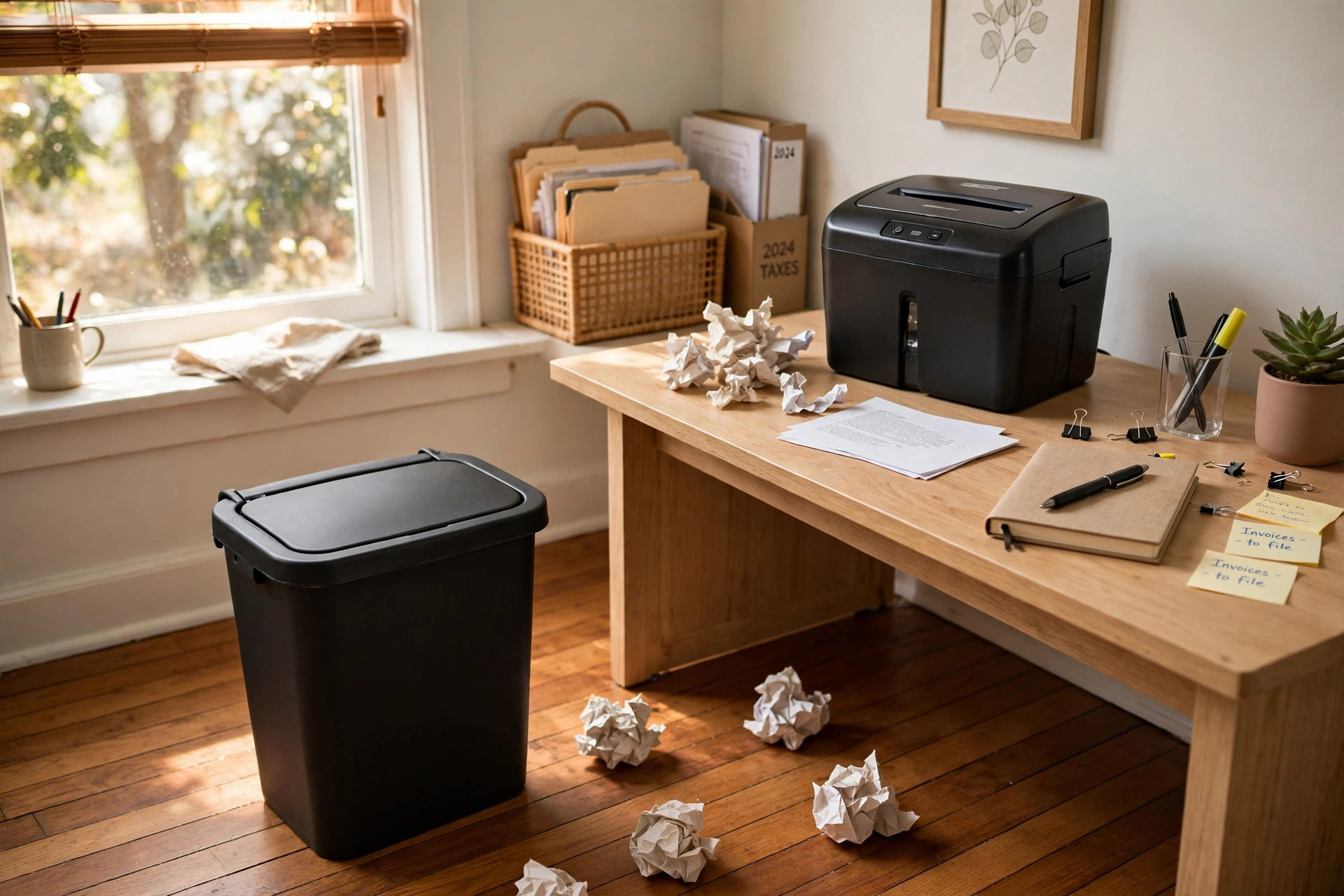

A home office trash can with lid for documents is one of the simplest tools a home worker can buy. It holds old drafts, envelopes, and printed pages. The lid keeps the paper waste out of sight. It also keeps the smell of old coffee cups and lunch scraps away from the room. This small bin does real work in a home office, and it costs little.
Many home offices today share space with the living room, the kitchen, or the bedroom. In a shared room, a tidy look matters. An open bin full of paper can spoil the look of the whole room. A bin with a lid solves this problem at once. The room looks clean even when the bin is full.
This guide explains why a lidded trash can matters, what to look for when you buy one, the main types on the market, typical costs, and how to keep the bin clean. It also answers common questions about paper waste, privacy, and safe disposal of documents.
Why It Matters
A Tidy Desk Helps Clear Thinking
Studies of office work have long shown that clutter raises stress. A desk buried in loose paper makes it hard to find what you need. A trash can under the desk gives every scrap a place to go. The lid keeps the contents hidden, so your eyes rest on a calm, clean room instead of a pile of waste.
Paper Waste Piles Up Fast
A home worker can throw away more paper than expected. Printed drafts, meeting notes, envelopes, catalogs, and shipping boxes build up day by day. Without a bin close at hand, this paper lands on the desk, the floor, or a shelf. A dedicated bin for documents keeps the waste in one place and makes the weekly trip to the recycling box easy.
Privacy of Papers
Old documents can hold private details. Bank statements, medical forms, tax papers, and business contracts should not sit in an open bin where visitors can see them. A lidded can hides these papers from view. When paired with a shredder for sensitive sheets, it forms a simple system for private waste. For larger papers, many workers store files in a home office storage cabinet with locking doors before they shred or recycle them.
What to Look for When Choosing: Home Office Trash Can with Lid for Documents
Size
Measure the space under or beside your desk before you shop. Most home office bins hold two to five gallons. A small bin fits under a desk and needs emptying once or twice a week. A larger bin suits a worker who prints a great deal or shares the office with a partner. Do not buy a bin so large that it blocks your knees or your chair.
Lid Type
The lid is the key feature of this product. Common lid types include:
– Swing lids. The top swings when you press paper against it. It closes by itself. This type is fast and quiet. – Step lids. You press a pedal with your foot. Both hands stay free. This type suits a busy worker. – Lift lids. You lift the top off by hand. This is the simplest design, but you must touch the lid. – Sensor lids. A motion sensor opens the lid. It is the most hands-free option, but it needs batteries or a charge.
Material
Plastic bins are light, cheap, and easy to wash. Metal bins look nicer and last longer. Bamboo and wood bins suit a warm, natural office style. Pick a material that fits your office and your budget.
Shape and Fit
A round bin turns well in a corner. A slim rectangular bin fits between a desk leg and a wall. Some bins are made flat on one side so they sit flush against furniture. Check the floor space and the shape of your desk before you decide.
Types and Options
Small Under-Desk Bins
These bins hold about two gallons. They slide under most desks. They are cheap and easy to carry to the curb recycling bin. They suit workers who throw away a small amount of paper each day.
Slim Paper Bins
Paper waste is tall and light. A slim, tall bin holds many sheets without taking much floor space. This type works well in narrow home offices and in dorm rooms that double as offices.
Step-On Bins
A step-on bin opens with a foot pedal. You never touch the lid. Many models have a soft-close lid that shuts quietly. This type is a good pick for a worker who holds paper in both hands all day. Larger versions of this design are sold by office supply stores, and reviews on sites such as Wirecutter often compare the leading models.
Bins with Paper Shredder Tops
Some bins have a small shredder built into the lid. You feed sensitive sheets through the top, and the shredded bits fall into the bin. This is a clever tool for a home office with no room for a separate shredder. The shredder is slow, but it suits a light daily load.
Divided Bins
A divided bin has two sections. One side takes trash. The other side takes recyclable paper. This design helps a worker sort waste at the desk instead of at the curb.
Cost and Price
A home office trash can with lid for documents usually costs between ten and sixty dollars. The price depends on size, material, and lid type.
– Basic plastic bins cost ten to twenty dollars. They work well and last for years. – Step-on metal bins cost twenty-five to forty-five dollars. They look better and feel sturdier. – Sensor bins cost thirty-five to sixty dollars. They need batteries, which adds a small yearly cost. – Bins with shredder tops cost forty to seventy dollars. You pay for the shredder inside.
Metal bins cost more than plastic ones. Designer colors and brand names also raise the price. For most home offices, a mid-range bin of twenty to thirty dollars gives the best mix of looks and value. Office furniture makers such as Herman Miller and Steelcase sell bins and accessories made for workspaces, though their lines run higher in price than simple store brands.
Care and Upkeep
Empty the Bin Often
Do not let paper sit in the bin for weeks. Old paper gathers dust and can draw bugs in warm rooms. Empty the bin once or twice a week. Move recyclable paper to the main recycling box.
Wash the Bin
Wash the bin every month or two. Turn it upside down over the trash, then wipe the inside with warm water and dish soap. Let it dry in the open air before you put it back. A clean bin smells fresh and looks better.
Replace the Lid Seal
Some lids have a rubber seal that keeps odors in. If the seal wears out, the bin may start to smell. A new seal is cheap. Check the maker’s site for parts, or buy a new lid if seals are not sold alone.
Odor Control
Paper waste rarely smells on its own. The smell comes from items that land in the bin by mistake. Apple cores, yogurt cups, and coffee filters can turn a paper bin into a sour one. Keep a small separate bin or a sealed bag for food waste, and use the office bin for paper only. A thin layer of baking soda on the bottom of the bin soaks up damp odors. Change it each month when you wash the bin. If you drink coffee at your desk, rinse cups before you toss them. These small habits keep the bin fresh, and they cost nothing.
Pick a Spot That Stays Cool
Heat makes odors worse and can warp a plastic bin. Do not place the bin against a sunny window or next to a radiator. A cool, shaded corner of the office works best. If your office gets hot in summer, empty the bin more often.
Keep It in Its Place
Give the bin a fixed spot under the desk or beside it. When the bin always sits in the same place, you will use it without thinking. This small habit keeps paper off the floor.
Safety
Fire Risk
Paper burns fast. Keep the bin away from heaters, candles, and overloaded outlets. Do not throw hot ashes, cigarette ends, or batteries into a paper bin. If you burn incense or candles in your office, place them far from the bin.
Shred Sensitive Papers First
A bin with a lid hides papers, but it does not destroy them. Bank papers, tax forms, medical records, and contracts with private details should go through a shredder before they enter the bin. For papers you must keep, use a lockable filing cabinet for home business documents so they stay safe.
Heavy Bins and Children
A large bin full of paper is light, but a metal bin can be heavy enough to tip onto a small child. If children play in your office, place the bin where they cannot pull it over. Stores such as IKEA and Wayfair sell light bins that are safer in rooms shared with children.
Batteries in Sensor Bins
Sensor bins use batteries. Do not mix old and new batteries. Take used batteries out of the bin and store them for recycling. Never throw batteries into the paper bin. Batteries can start a fire in a truck or a recycling plant.
FAQ
What size trash can is best for a home office?
For most home offices, a bin of two to four gallons is best. It fits under a desk and holds a week of paper waste. If you print a great deal, choose a five-gallon bin instead.
Is a lid really needed on an office trash can?
A lid is not a must, but it helps. It hides waste, cuts odors, and stops light papers from blowing out when a fan or window is open. In a shared room, a lid keeps the office looking neat.
Can I recycle the paper I throw in the bin?
Yes, most office paper is recyclable. Keep the paper clean and dry. Move it to your home recycling box each week. Do not mix food waste into the paper bin. Check your local rules, because some towns do not take shredded paper in curbside bins.
How do I get rid of documents with private details?
Shred them first, then put the shredded bits in the bin. Crosscut shredders cut paper into tiny bits that are hard to read. For very sensitive papers, such as old tax records, check if your town holds a free shredding day. A rolling file cabinet for home office organization can hold papers waiting for shredding day.
How often should I clean the bin?
Wipe the inside once a month with warm, soapy water. Clean it right away if food or drink spills into it. A bin that smells bad should be washed, dried in the sun, and checked for a worn lid seal.
Where should I place the bin in a small office?
Place it within arm’s reach of your chair, under the desk or at the desk’s side. Do not place it where it blocks your feet or your chair wheels. In a very small room, a slim bin behind the desk leg works well.
A Short Final Word
A home office trash can with lid for documents is a small buy with a real daily effect. It keeps paper off the floor, hides waste from view, and helps you sort recycling at the desk. Pick a size that fits your space, a lid type that suits your habits, and a material that fits your budget. Keep the bin clean and empty it often. With a good bin and a simple habit, your home office will stay tidy day after day.
Guides on office setup from sources such as The Spruce, PCMag, UPLIFT Desk, Staples, and Office Depot can help you plan the rest of your workspace around this small but useful tool.
References
Herman Miller. (n.d.). Office furniture and ergonomic seating. https://www.hermanmiller.com IKEA. (n.d.). Home furnishings. https://www.ikea.com Office Depot. (n.d.). Office supplies and furniture. https://www.officedepot.com PCMag. (n.d.). Technology product reviews. https://www.pcmag.com Staples. (n.d.). Office supplies and furniture. https://www.staples.com Steelcase. (n.d.). Office furniture and workplace research. https://www.steelcase.com The Spruce. (n.d.). Home and garden advice. https://www.thespruce.com UPLIFT Desk. (n.d.). Standing desks and ergonomic office furniture. https://www.uplift-desk.com Wayfair. (n.d.). Furniture and home goods. https://www.wayfair.com Wirecutter. (n.d.). Product reviews from The New York Times. https://www.nytimes.com/wirecutter
Was this guide helpful?

About Emily Rodriguez
The My Garden US editorial team writes practical, in-depth home and garden guides for American homeowners — tested advice, no fluff.
You May Also Like
Quiet Paper Shredder for Home Office Apartment: A Buyer’s Guide
September 8, 2026 0 views
Home Office Desk with Hutch and Storage: A Practical Guide
September 7, 2026 0 views
Home Office Cable Raceway for Wall Mounted TV: A Practical Guide
April 27, 2026 0 views