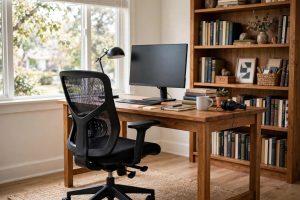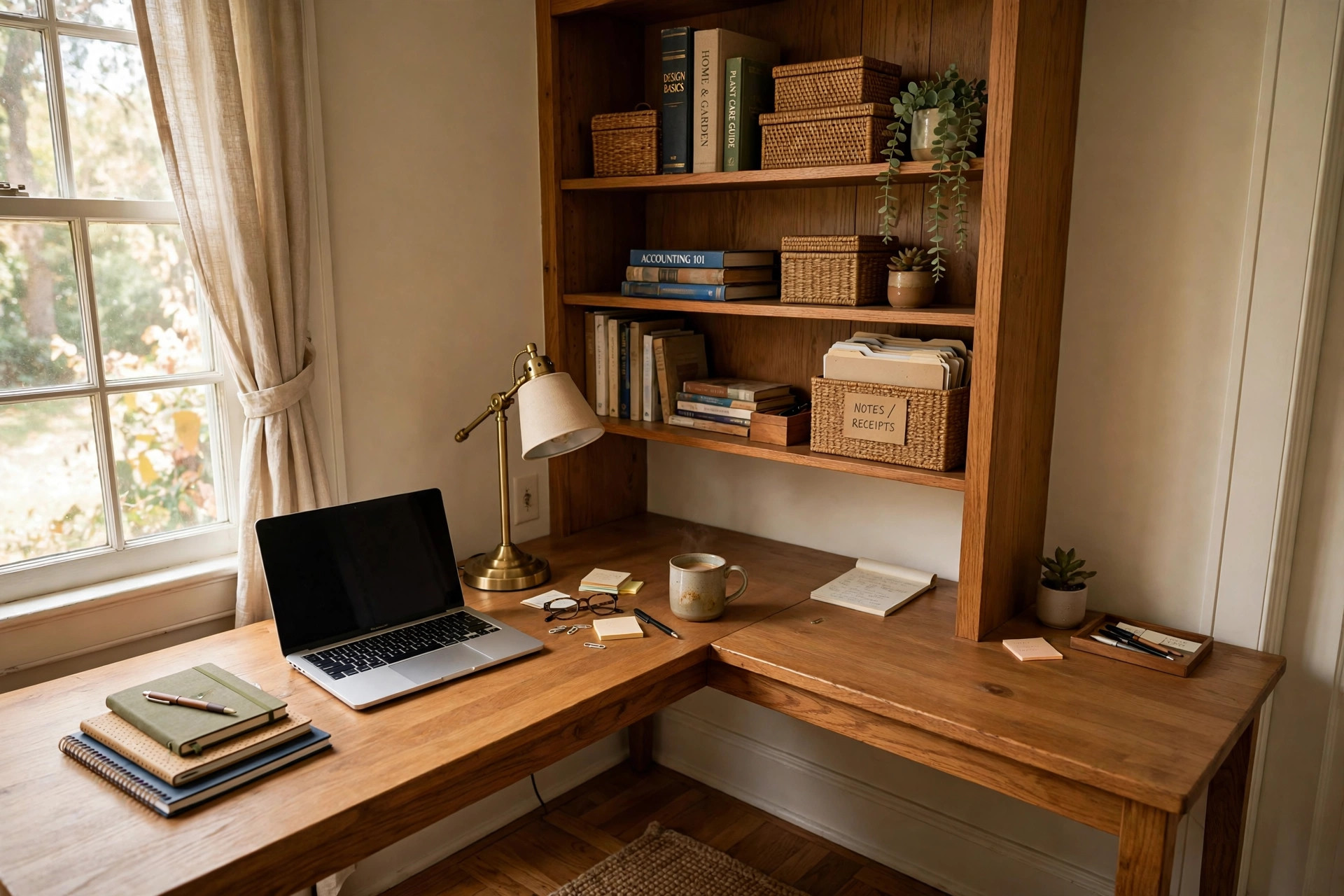

Many people now work from home. They often work in a small room, a spare bedroom, or even a corner of the living room. A plain table can serve as a desk, but it gives no storage. Papers pile up. Pens roll off. Books stack on the floor. A corner desk with hutch for small home office use solves both problems at once. It uses the corner of the room, which often sits empty. It gives a wide work top. Above the top, the hutch adds shelves, small cabinets, and slots for files. This guide explains why this piece of furniture matters, what to look for when you buy one, what types exist, what it costs, and how to care for it.
Why It Matters
Floor space is the scarcest thing in a small home office. Every square foot must earn its place. A corner desk with hutch for small home office rooms earns its place twice over. First, it turns a dead corner into a work zone. Corners are hard to use. A regular straight desk leaves a triangle of wasted space behind it. An L-shaped corner desk fills that space and gives the worker two wings of surface.
Second, the hutch adds storage without taking more floor space. The shelves rise up the wall. They hold books, binders, boxes, and printers. Things that would crowd the desk top now live above it. The desk top stays clear. A clear desk top helps the worker think. Studies of work habits have long shown that order on the desk supports order in the mind.
There is another benefit. A home office must share the house with daily life. When the workday ends, many people want to close the door on work. A hutch with doors or drawers lets the worker tuck papers out of sight. The room can return to being a bedroom or a living room. This matters for rest. Work that stays visible at night makes it harder to switch off.
What to Look For and How to Choose: Corner Desk with Hutch for Small Home Office
Before you shop, take measurements. This is the most important step. Measure the corner where the desk will stand. Measure along each wall. Note the height of the ceiling and the position of windows, doors, and power outlets. A corner desk with hutch for small home office use must fit the corner exactly. If the desk is too deep, it will block a door swing. If the hutch is too tall, it will hit a light fixture.
Look at the work surface next. Ask yourself what will sit on it. A laptop needs less room than a full desktop with two screens. If you plan an affordable dual monitor setup for remote workers usa, you need a top at least 50 inches wide on the long side. If you plan to write by hand and use a laptop, 42 to 48 inches may be enough. Check the depth too. A depth of 20 to 24 inches leaves room for a keyboard and a screen at a safe eye distance.
The Hutch
Not all hutches are the same. Some have open shelves. Open shelves make it easy to grab books and supplies. They also collect dust. Some have closed cabinets with doors. Doors hide clutter and keep dust out. The best choice for many buyers is a mix. Open shelves for things used daily. Closed cabinets for things used rarely.
Check how the hutch attaches to the desk. In some models, the hutch is a separate unit that sits on the desk top. In others, it bolts to the desk. A hutch that bolts to the desk is more stable. If you have small children in the house, stability matters a great deal. A heavy hutch that tips forward can hurt a child.
Materials
Most desks in this class are made of engineered wood. This includes particleboard, MDF, and laminate over a wood frame. Engineered wood keeps the price low. It also comes in many finishes. White, gray, and wood tones are common. Solid wood models exist, but they cost much more. They are also heavier, which matters if you must carry the box up a stairway.
Look at the edge banding. The edges of engineered wood panels should be sealed. Sealed edges resist moisture. Unsealed edges swell if a drink spills. Press the edge with your thumb when you see a floor model. A good edge feels smooth and solid.
Ergonomics
A desk must fit the body of the person who uses it. The standard desk height is 29 to 30 inches. Most adults find this comfortable with a standard chair. If the user is very tall or very short, a fixed height may cause strain. In that case, consider an ergonomic standing desk for small home office instead, or plan to use an adjustable chair and a footrest with the corner desk.
The chair matters as much as the desk. A good chair supports the back and keeps the feet flat on the floor. Pair your new desk with the best office chair for long hours home office work. A fine desk with a poor chair still leads to a sore back.
Types and Options
Corner desks with hutches come in several forms. The right type depends on the room and the work.
The Compact L-Shape
This is the most common type. It has two wings of equal or near-equal length. It fits well in a square corner. The hutch usually runs along one wing. This type suits people who need room for both a computer and paperwork. One wing holds the screen and keyboard. The other holds files and a notebook.
The Long-Short L-Shape
In this type, one wing is long and the other is short. The long wing faces the main wall. The short wing juts into the room. The hutch sits on the long wing. This type works well when the corner sits near a window. The worker can face the window while the short wing holds a lamp and phone.
The Wrap Corner
This is a larger unit. The desk wraps around the worker on three sides. The hutch may run along the back. It needs a bigger corner, at least six feet on each wall. It suits people who run a home business and need room for a printer, files, and supplies all within reach.
The Reversible Design
Some models can be set up with the long wing on the left or the right. This is a useful feature. Room layouts change. A reversible desk adapts. When you shop, check whether the model you like is reversible. Not all of them are.
Corner Desk with Hutch for a Small Apartment
Renters often work in studios and one-bedroom flats. For them, a small corner desk with drawers for apartment office life may be the better pick. These models are lighter and narrower. The hutch is smaller too. They cost less. They also move more easily when the lease ends.
Cost and Price
Price depends on size, material, and brand. A basic corner desk with hutch for small home office use, made of laminate over particleboard, costs between 150 and 300 dollars. These models are light and simple. They serve well for light daily use.
A mid-range model, made of thicker MDF with better hardware, costs between 300 and 600 dollars. The drawers slide more smoothly. The finish looks richer. The unit lasts longer. This is the best value for most buyers.
A premium model, made of solid wood or high-end engineered wood, costs between 600 and 1,200 dollars. These come from office furniture brands known for durability. They often carry longer warranties. They suit people who work from home full time and want furniture that will last a decade.
Watch for extra costs. Delivery of a heavy box can add 30 to 80 dollars. Assembly services cost 50 to 150 dollars. If you hire assembly, the total price rises. Many buyers assemble the desk themselves. A corner desk with hutch usually takes one to two hours to build. Two people make the job much easier.
Care and Upkeep
A desk lasts longer when it is cared for. Dust the hutch shelves once a week. Use a soft, dry cloth. For the desk top, use a damp cloth and mild soap. Wipe up spills at once. Liquid that sits on laminate seeps into the seams.
Keep the desk out of direct sunlight. Sun fades the finish over time. If the desk must sit near a window, use a curtain or blind during the brightest hours.
Check the bolts every six months. Wood and engineered wood shift with the seasons. Bolts loosen. Tighten them with the tool that came in the box. A desk that wobbles wears out faster at its joints.
Do not overload the hutch. Each shelf has a weight limit. The limit is often printed in the manual. Books are heavy. A shelf full of hardcover books can weigh 40 pounds or more. Spread heavy items across several shelves. Keep the heaviest items on the lowest shelf. This also keeps the unit stable.
Cable care helps too. Run power cords through the cable holes if the desk has them. Use small clips to hold cords against the back of the desk. Tidy cords are safer. They do not snag. They do not pull devices off the desk.
Safety
Safety starts with assembly. Follow the manual step by step. Do not skip the back panels. Back panels add strength to the frame. They keep the unit from racking sideways.
Anchor the hutch to the wall. This is the single most important safety step. Furniture tip-over injures thousands of people each year, and children are at the greatest risk. Use the anti-tip hardware that comes in the box. If the box has none, buy a strap kit. Screw one end into a wall stud. Screw the other end into the hutch frame. This takes ten minutes. It can prevent a tragedy.
Place the desk so that cords do not cross walkways. A cord across the floor is a trip hazard. Run cords along the wall. Use a cord cover where they must cross a path.
Mind the weight on the desk top. A printer, a monitor, and a stack of books add up. Check the manual for the weight limit of the desk top. Stay below it.
If the desk has a glass shelf or door, check that the glass is tempered. Tempered glass breaks into small, dull pieces. Plain glass breaks into sharp shards. The product listing should state the glass type.
Frequently Asked Questions
Will a corner desk with hutch fit in a 10 by 10 foot room?
Yes, in most cases. A 10 by 10 foot room has corners that can take a desk 48 to 60 inches on each side. Measure first. Leave at least 36 inches of clear space in front of the desk for the chair. If the room also holds a bed or a sofa, draw the layout on paper before you buy.
Is a hutch worth it, or should I buy wall shelves instead?
Both work. A hutch matches the desk. It is ready to use at once. Wall shelves cost less and free the desk top entirely. Wall shelves need solid mounting into studs. If you rent and cannot drill into walls, a hutch is the better choice.
Can I use a corner desk with hutch for gaming?
Yes. Many gamers use corner desks. The wide top holds a monitor, a keyboard, and a console. The hutch holds games and headsets. Check the weight limit if you plan to mount a large monitor on an arm. Make sure the desk top is deep enough to keep the screen at a safe distance from your eyes.
How hard is it to assemble?
Most models take one to two hours with two people. The hutch is the hardest part. It is tall and awkward to lift. Lay the parts out first. Sort the hardware. Read the manual fully before you start. If you live alone, ask a friend to help with the lifting.
What finish is best for a small, dark room?
Light finishes make a small room feel larger. White, light gray, and pale wood tones reflect light. Dark finishes look rich, but they can make a small room feel closed in. If the room has little natural light, choose a light finish and add a good desk lamp.
How do I keep the desk top clear when the hutch fills up?
This is a common problem. Storage fills to fit the space. Once a year, empty every shelf. Throw away old papers. Donate books you will not read again. A hutch is a tool, not a warehouse. Keep only what you use.
A Short Final Word
A corner desk with hutch for small home office rooms is a practical choice. It uses dead corner space. It lifts storage off the floor and onto the wall. It keeps the work top clear and the room tidy. Measure your corner. Choose a hutch that fits your habits. Anchor it to the wall. Care for it with simple habits. Done well, this one piece of furniture can make a small room work like a much larger one.
For more background, see The Spruce, Wirecutter, and PCMag. For more background, see IKEA, Wayfair, and Herman Miller. Buying guides are also published by Steelcase and UPLIFT Desk.
References
Herman Miller. (n.d.). Office furniture and ergonomic seating. https://www.hermanmiller.com IKEA. (n.d.). Home furnishings. https://www.ikea.com PCMag. (n.d.). Technology product reviews. https://www.pcmag.com Steelcase. (n.d.). Office furniture and workplace research. https://www.steelcase.com The Spruce. (n.d.). Home and garden advice. https://www.thespruce.com UPLIFT Desk. (n.d.). Standing desks and ergonomic office furniture. https://www.uplift-desk.com Wayfair. (n.d.). Furniture and home goods. https://www.wayfair.com Wirecutter. (n.d.). Product reviews from The New York Times. https://www.nytimes.com/wirecutter
Was this guide helpful?

About David Wilson
The My Garden US editorial team writes practical, in-depth home and garden guides for American homeowners — tested advice, no fluff.
You May Also Like
Adjustable Standing Desk Mat with Massage Bumps
June 8, 2026 0 views
Home Office Desk with Hutch and Storage: A Practical Guide
September 7, 2026 0 views
How to Choose a Home Office Storage Box for Tax Records USA
May 19, 2026 0 views