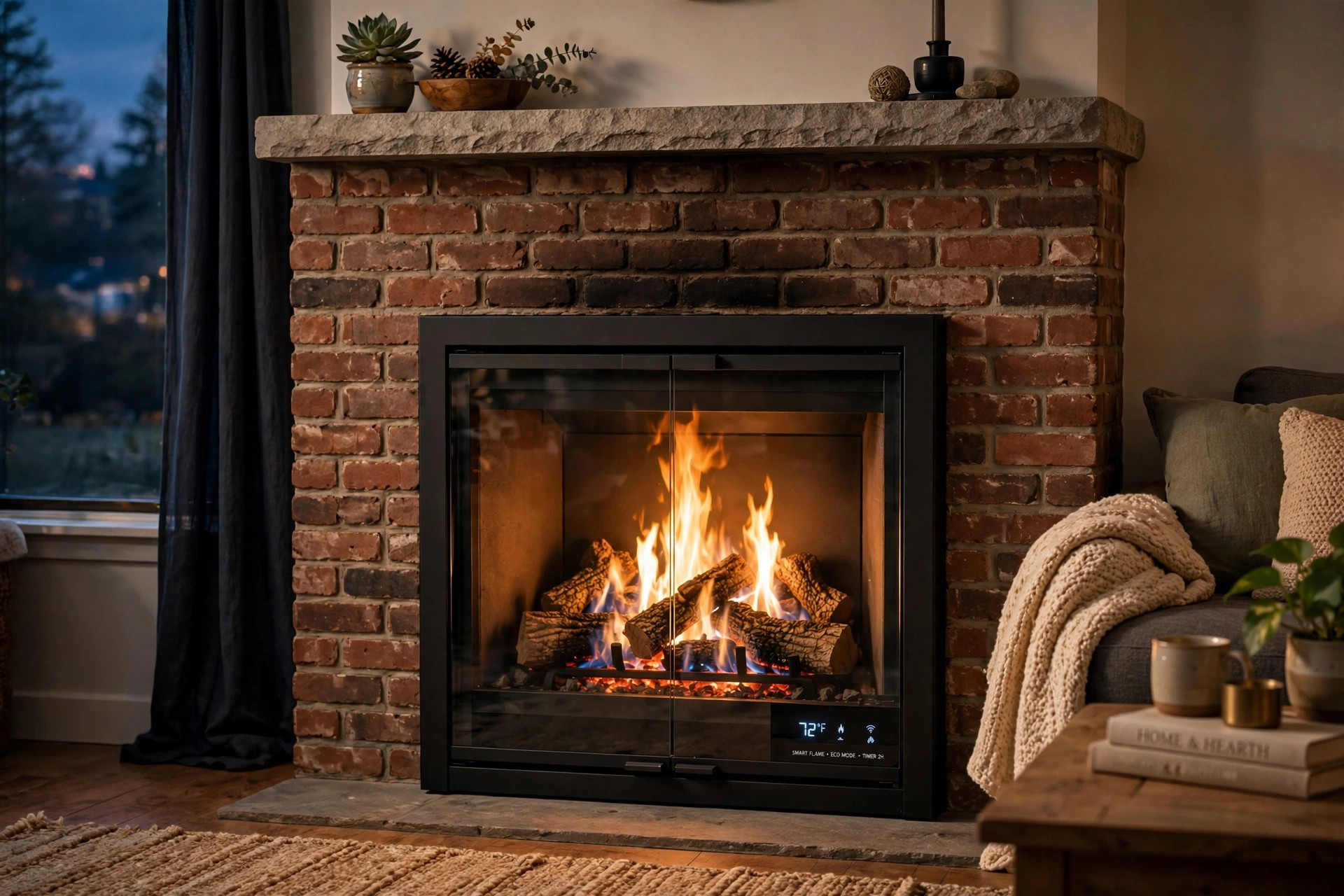

Many old fireplaces look fine but heat little. The room stays cold while most of the heat goes up the flue. A gas insert changes that. It slides into the old firebox and turns it into a closed heating unit. It burns gas clean and throws heat into the room. When you search for smart gas fireplace inserts for sale, you find units with remote controls, thermostats, and even phone apps. This guide explains what these inserts do, how to choose one, what they cost, and how to keep them safe. It is written in plain words for the ordinary homeowner.
Why a Smart Insert Is Worth a Look
A wood fire is a joy. It is also work. You carry wood. You clean ash. You wait for the fire to catch. A gas insert asks little. You press a button. The flame starts. You set the heat you want. The unit keeps it.
Smart models add control. You can turn the fire on from your chair with a remote. Some units join your home network. Then you can start the fire from your phone. A timer can warm the living room before you wake. A thermostat holds the room at one steady temperature. These features matter in cold states where the furnace runs for months. A smart insert can heat the room you use most. Then you can turn the furnace down. Many owners report lower gas bills after the change.
The look stays warm and real. Makers shape ceramic logs to look like oak or birch. The flame dances through them. Glass doors keep the view clear. From the couch, few guests can tell it is not wood.
How a Gas Insert Works: Smart Gas Fireplace Inserts for Sale
An insert is a steel box. It fits inside your old open fireplace. It connects to a gas line. It vents through the chimney or through a new pipe.
Gas burns inside the sealed box. Air for the flame comes from outside, not from your room. Heat leaves the box in two ways. First, warm air blows out around the unit. Second, heat radiates through the glass. A blower fan moves the warm air into the room. This closed design is why inserts heat so much better than open fires. An open fireplace may turn only ten percent of the wood’s energy into room heat. A good gas insert can pass seventy percent and more.
The “smart” part is the control system. A small board takes signals from a remote, a wall switch, or a phone app. It opens and closes the gas valve. It sets flame height. It runs the blower. Some boards learn your habits and suggest a schedule. When you browse smart thermostat controlled gas fireplaces for sale, you will see these control features listed first.
What to Look for When You Shop
Size and Fit
Measure the firebox before you shop. Write down the width at the front and the back. Note the height and the depth. Inserts come in small, medium, and large sizes. A unit that is too big will not fit. A unit that is too small leaves gaps and looks wrong. A dealer can match your numbers to a model. Bring your list when you call.
Venting: Direct Vent or Vent Free
Most inserts are direct vent. They use two pipes in one. One pipe pulls in outside air. The other sends exhaust out. This is the safe and common choice. It works in almost any home.
Vent free units have no pipe at all. They are legal in some states and banned in others. They put a small amount of moisture and fumes into the room. Check your state and local code before you consider one. Your local code and the EPA guidance both shape what you may install.
Efficiency and Heat Output
Look for the steady state efficiency number. Higher is better. Look for the BTU rating too. BTU tells you how much heat the unit can make. A small insert may give 20,000 BTU. A large one may give 40,000 BTU or more. Match the BTU to the size of your room. A unit that is too strong will roast a small den. A unit that is too weak will leave a large great room cold. Consumer buying guides often print simple sizing charts you can use.
Smart Controls and Connectivity
This is where models differ most. Basic units ship with a hand remote. Better units add a thermostat remote. The best add Wi-Fi and an app. With an app you can set weekly schedules, change flame height from another room, and get service alerts. Ask if the app needs a hub or works alone. Ask if it works when the power fails. Many inserts run on batteries for ignition, so the fire still starts in a blackout. That is a fine feature in storm country. Reading a gas fireplace inserts reviews and buying guide helps you compare control systems side by side.
Ignition Type
Most new inserts use electronic ignition. A spark lights the gas when you call for heat. There is no standing pilot burning gas all day. This saves fuel. Some units keep a pilot option for very cold climates. It costs a little gas but keeps the glass from fogging in deep cold.
Types of Gas Inserts You Will Find for Sale
Direct Vent Gas Inserts
This is the standard choice. It seals the firebox with glass. It vents through the chimney with a liner. It is safe, efficient, and widely sold. Brands like Napoleon and Heatilator build wide lines of direct vent models. Most smart features sit on this type.
Vent Free Gas Inserts
These need no chimney pipe. They cost less to install. They are not allowed everywhere. California and some cities restrict them. If your code allows them, they still need fresh air and a working oxygen sensor. Buy only units with a certified safety shutoff.
High End and Designer Models
Some makers sell wide glass fronts with little frame. The fire looks like a ribbon of flame. Heat and Glo and Vermont Castings offer models with clean modern faces. These cost more. They suit new rooms and open floor plans. If you want a simpler electric look instead, browse luxury smart electric fireplaces with free shipping to compare the two paths.
Cost and Price
Prices run wide. A basic insert may sell for 1,500 dollars. A mid range smart unit may sell for 2,500 to 3,500 dollars. A large designer unit may pass 5,000 dollars. The unit is only part of the cost.
Installation adds more. A simple swap into a sound chimney may cost 1,000 to 2,000 dollars in labor. A job that needs a new gas line, a new vent liner, or hearth repair can cost 3,000 dollars or more. Always get two or three written quotes. Ask each installer what is included. Ask about the permit. Most towns want a permit for gas work. Ask about the inspection. A good installer pulls the permit and meets the inspector.
Running cost is modest. Gas inserts sip fuel compared with old furnaces. A unit that runs a few hours each evening may add 20 to 50 dollars a month to the gas bill in winter. That is far less than heating the whole house to the same comfort. Home improvement references and family handyman guides both note that zone heating with an insert is one of the cheapest comfort upgrades a homeowner can make.
Shop the big stores and the local hearth shops. Home Depot and Lowe’s list many models online with buyer reviews. Local hearth dealers often beat big box prices on the full job because they do the install themselves. They also service what they sell. That matters when a part fails in January.
Care and Upkeep
A gas insert needs little care, but it needs some. Plan on a yearly service visit. A technician will clean the glass, check the gaskets, test the ignition, and look at the vent. This visit keeps the unit safe and the warranty valid.
Between visits, you can do small tasks. Wipe the glass with a cleaner made for fireplace glass. Do not use oven cleaner. It can harm the coating. Vacuum dust from around the blower intake. Keep the area in front of the unit clear. Do not stack wood or paper near it.
Watch the flame. It should be mostly blue with warm yellow tips. A flame that is lazy, very yellow, or sooty means the unit needs service. Soot on the glass is another warning sign. Call a technician. Do not take the unit apart yourself. Gas work belongs to licensed hands.
Change remote batteries once a year. If the app drops its connection, check your home Wi-Fi first. Most smart boards rejoin the network on their own after an outage.
Safety
Gas inserts are safe when they are installed right and kept up. Still, respect the flame.
Install a carbon monoxide detector in the same room. Test it each fall. Keep a second detector near the bedrooms. These small boxes save lives.
Keep children and pets back from the glass. The glass gets very hot. A screen or gate made for fireplaces stops burns. Teach children that the glass is hot even when the flame looks low.
Never burn wood, paper, or trash in a gas insert. It is built for gas only. Other fuels can crack the logs, clog the burner, and make dangerous fumes.
Have the chimney liner checked before the first install and every few years after. A cracked liner can leak exhaust into the house. A sweep can run a camera up the flue and show you its state.
If you ever smell gas, leave the house. Call the gas company from outside. Do not flip switches. Do not light matches. This is rare, but every homeowner should know the rule.
Frequently Asked Questions
Can I install a gas insert myself?
You can set the box in place, but the gas and vent work need a licensed installer in most places. Gas lines can leak. Vents can be misrouted. A permit and an inspection protect you. Most makers also require professional install for the warranty to hold.
Will a smart insert work if the power goes out?
Most will still light. The ignition runs on batteries. You can start the fire with the remote. The blower will not run without house power, so less heat moves into the room. The fire still gives radiant warmth through the glass. Some owners add a small battery backup for the blower.
How long does a gas insert last?
A well kept insert lasts 15 to 20 years. The steel box lasts long. Parts like remotes, blowers, and gaskets wear out first. Those parts can be replaced. Yearly service stretches the life of the whole unit.
Do I need my chimney cleaned before installing an insert?
Yes, in most cases. A sweep should clean the flue and check the liner. The installer then runs a new vent liner for the insert. Starting with a clean, sound chimney avoids smoke stains and draft problems later.
Are smart gas fireplace inserts for sale online safe to buy?
Yes, if you buy from known sellers. Stick to the maker’s own site, large home stores, or established hearth dealers with real reviews. Avoid no name listings with no warranty and no service network. The unit is only as good as the installer behind it.
Can a gas insert really lower my heating bill?
It can. The trick is zone heating. You warm the room you live in and let the rest of the house run cooler. The furnace cycles less. Many families see the gas bill drop even as the living room feels warmer. Savings depend on your climate, your gas rate, and how many hours you run the insert.
A Final Word
A smart gas fireplace insert is a practical upgrade. It keeps the charm of a real flame. It adds the ease of a thermostat. It heats the room you use and trims the gas bill. Measure your firebox. Learn your venting options. Compare control systems. Get written quotes from licensed installers. Take these steps and the search for smart gas fireplace inserts for sale will end with a warm room and a quiet winter evening by the fire.
References
Family Handyman. (n.d.). DIY home repair and maintenance. https://www.familyhandyman.com Heat & Glo. (n.d.). Gas fireplaces and inserts. https://www.heatnglo.com Heatilator. (n.d.). Fireplaces and fireplace products. https://www.heatilator.com Lowe’s. (n.d.). Home improvement products. https://www.lowes.com Napoleon. (n.d.). Fireplaces, grills, and heating products. https://www.napoleon.com The Home Depot. (n.d.). Home improvement products. https://www.homedepot.com The Spruce. (n.d.). Home and garden advice. https://www.thespruce.com This Old House. (n.d.). Home renovation guidance. https://www.thisoldhouse.com U.S. Environmental Protection Agency. (n.d.). Protecting human health and the environment. https://www.epa.gov Vermont Castings. (n.d.). Stoves, fireplaces, and inserts. https://www.vermontcastings.com
Was this guide helpful?

About Michael Thompson
The My Garden US editorial team writes practical, in-depth home and garden guides for American homeowners — tested advice, no fluff.
You May Also Like
Childproof Fireplace Screens Price Comparison USA
September 18, 2026 0 views
Affordable Freestanding Electric Stoves With Free Shipping: A Plain Guide
June 22, 2026 0 views
Affordable Fireplace Hearth Rugs for Sale: What to Know Before You Buy
March 31, 2026 0 views