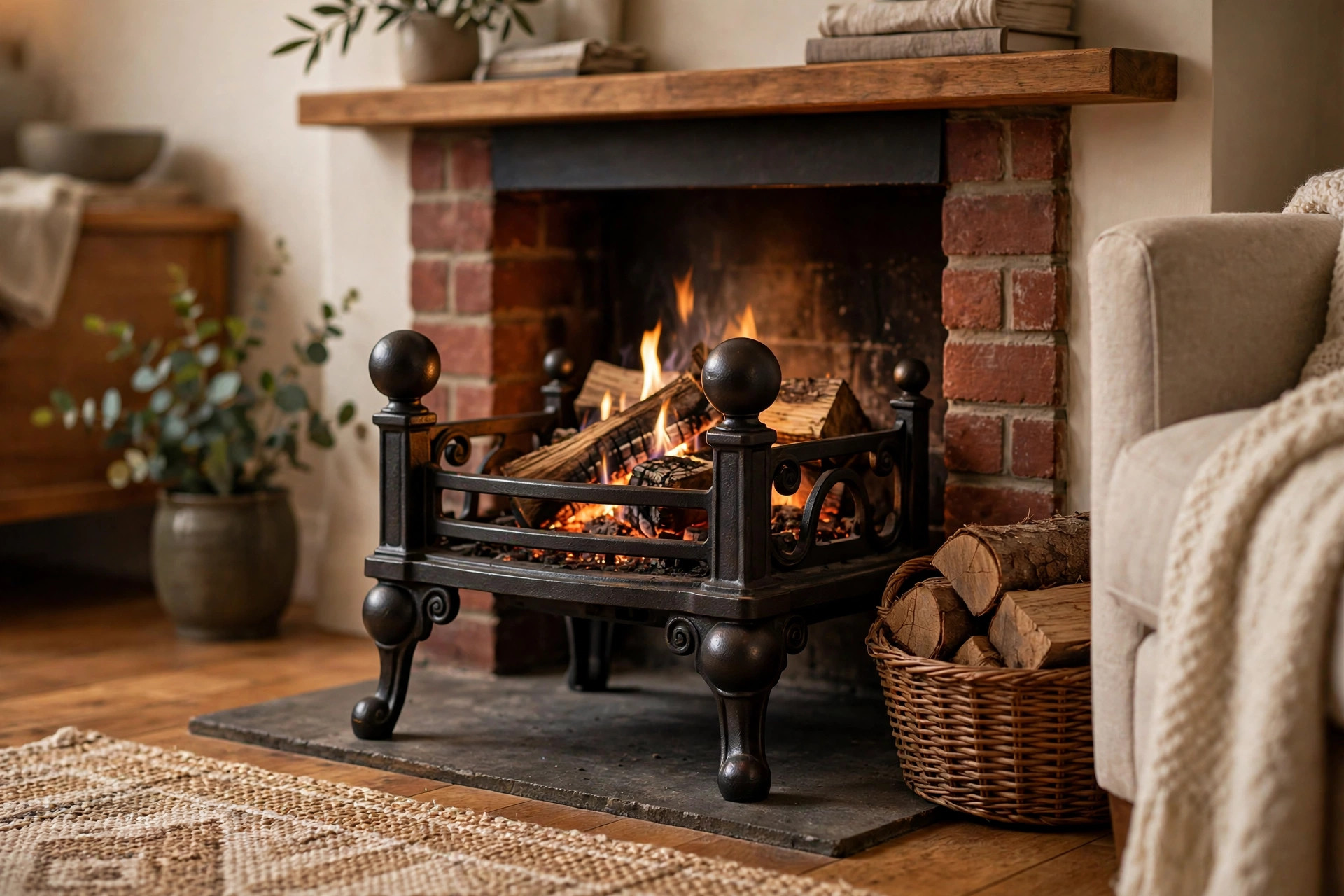

An andiron is a small metal support that holds wood above the floor of a fireplace. Logs rest on two andirons. Air flows under the wood. The fire burns cleaner and brighter because of that flow. Premium andirons for fireplaces for small apartments take this simple tool one step further. They are made of better metal. They carry more weight without bending. They look fine in a small room where every object shows. In a small apartment, the fireplace is often the center of the living room. A cheap set of supports can rust, tip, or look dull against a nice mantel. A premium pair does its job quietly and lasts for years.
Many apartment dwellers own a wood-burning fireplace or a decorative firebox. Some units burn gas logs that sit on a grate with andiron-style ends. In both cases, the right pair of andirons keeps logs in place and keeps sparks away from the floor. This guide explains why premium andirons matter, what to look for, the main types, what they cost, how to care for them, and how to use them with safety in mind.
Why They Matter
A small apartment fireplace has a narrow firebox. Logs sit close to the walls of the firebox. The hearth may be short. The rug or wood floor may sit near the opening. In this tight space, a log that rolls can cause harm. Andirons keep logs raised and locked in place. Cheap andirons are light. They can slide when you push a log with a poker. They can bend under a heavy oak log. Premium andirons are heavy on purpose. The extra weight holds them still when you move wood around.
Good andirons also change how the fire burns. A log lying flat on the floor of the firebox gets little air from below. It smolders and makes smoke. A log raised two or three inches above the floor gets air on all sides. The fire starts faster. It burns hotter. It makes less smoke. The EPA notes that good burning practice, including proper air flow under the wood, cuts down on indoor smoke and pollution from wood fires (EPA guidance on wood burning). A pair of andirons is a small part of that practice, but it helps.
Style matters too. In a small apartment, the fireplace is seen from the couch, the dining table, and often the entry. The front legs of andirons face the room. Many premium sets have shaped legs: a ball, a basket, a pineapple, a simple horn. These shapes catch the light and frame the fire. They turn a plain firebox into a finished hearth.
How to Choose: Premium Andirons for Fireplaces for Small Apartments
Size
Measure the firebox first. Open the fireplace and measure the width from side wall to side wall. Measure the depth from the front edge to the back wall. A standard andiron is about 18 to 22 inches long. That length suits most full-size fireplaces. Small apartment fireplaces are often narrower. Look for short or mid-size andirons, 14 to 17 inches long. The andiron should sit fully inside the firebox with the front leg near the opening. If the legs stick out past the hearth, they can catch a foot or a rug.
Check the height as well. Tall andirons raise logs high and suit a tall firebox. In a low firebox, a tall andiron pushes the flames toward the top of the opening. Short andirons, 8 to 10 inches tall, suit most apartment fireboxes. The front of the andiron, called the billet, should stay below the top of the opening so sparks do not jump over it.
Material
The best andirons are cast iron. Cast iron is heavy, resists heat, and keeps its shape for decades. A pair of cast-iron andirons can weigh 15 to 25 pounds. That weight is a virtue. Wrought iron is also good. It is lighter and often shaped by hand. Hand-forged wrought iron has a hammered surface that many people like.
Some sets mix metals. The legs may be brass or polished steel while the support arms are iron. Brass fronts look warm in a traditional room. Polished steel suits a modern apartment. Avoid thin plated metal. Plating can peel in high heat. The arms that carry the logs should be solid iron or steel.
Check the welds where the front leg joins the support arm. The joint should look clean and solid. A weak weld is the first thing to fail. Premium makers finish the weld smooth and test the joint under load.
Style
Match the andiron to the room, not to the fire. A modern apartment with clean lines wants simple andirons: straight legs, a small knob, black finish. A classic apartment with wood trim suits traditional shapes: urns, balls, pineapples, or gothic arches. The finish should match other metal in the room. Black goes with almost anything. Brass warms a neutral room. Antique bronze sits between the two.
Remember scale. A small fireplace needs small-scale decoration. Large ornate andirons can crowd a narrow opening. Look for sets marked for small or compact fireplaces. Some makers sell apartment-size andirons with the same quality as their full-size line.
Types and Options
Traditional iron andirons. These have a front billet and a long arm that reaches into the firebox. The arm may have small legs near the back. They suit most wood fires. They come in many styles and finishes.
Basket andirons. Some andirons have a basket or cradle on top of the arms. The basket holds small logs and kindling in place. This type suits a small firebox where logs are short. The basket keeps small pieces from rolling.
Gas-log andirons. Many small apartments have gas fireplaces with ceramic logs. These need andirons with a different job. The metal ends hold the ceramic logs in a fixed pattern. If your fireplace burns gas, check the manual before you buy. Real log andirons may not fit a gas set. Some stores that sell fireplace accessories carry andirons made for gas logs.
Andirons with a matching grate. Some sets pair two andirons with a grate between them. The grate adds support for small logs. For basic needs, a pair of andirons alone is enough. People who want a fuller set sometimes pair andirons with separate fireplace grates bought for their firebox size.
Decorative only. A few premium andirons are made for show. They suit decorative fireplaces that never burn wood. If you will never light a fire, a light set is fine. If you plan to burn real wood, buy andirons rated for real heat.
Cost and Price
Premium andirons cost more than basic sets, but the range is wide. A solid cast-iron pair in a simple style runs from 80 to 150 dollars at major home stores. Hand-forged or designer sets can run from 200 to 400 dollars. Antique or signed sets can cost more.
The price reflects the metal and the work. Heavy cast iron costs more than thin steel. Hand-forged wrought iron costs more than cast pieces. Brass and bronze fronts cost more than plain black. A clear coat that resists rust adds a few dollars and is worth it.
For a small apartment, you do not need the largest set. A mid-size premium pair at the low end of the premium range often gives the best value. You pay for solid iron and good joints, not for extra size you cannot fit. Compare the weight of two sets at the same price. The heavier set is usually the better buy.
Care and Upkeep
Cast-iron andirons need little care. Let them cool fully before you touch them. Brush off ash with a dry brush. If ash gets wet, it can stain the iron. Wipe spills of candle wax or sap with a cloth when the metal is cool.
Rust is the main enemy. Most apartments keep the fireplace dry, but a damp basement apartment can invite rust. A light coat of stove polish once a year keeps cast iron black and resists rust. Stove polish is sold where fireplace tools are sold. Apply it with a cloth, buff it dry, and keep it off the floor.
Brass fronts need a different touch. Polish brass with a soft cloth and brass polish made for fireplace use. Do not use harsh cleaners. They can eat through the lacquer that protects the shine. Polished steel fronts can be wiped with a damp cloth and dried at once.
Check the joints once a year. Look for cracks where the leg meets the arm. A cracked weld is a safety issue. Replace a damaged andiron rather than repair it. Keep andirons inside the firebox or on the hearth. Storing them outside invites rust.
Safety
Andirons are a safety tool, and they must be used with care. Always use a fireplace screen with andirons. A screen catches sparks that the andirons cannot stop. Screens come in flat and three-panel shapes. Pick one that covers the full opening. Home repair sites with fireplace projects and advice remind readers that a screen is the first line of defense in any room, and it matters more in a small one where the couch sits close to the fire.
Place andirons well back from the front edge of the hearth. Logs should lie fully inside the firebox. No part of a burning log should hang past the opening. When you add a log, set it on the andirons and push it back with the poker. Do not drop logs from a height. The impact can crack a weld over time.
Never leave a fire alone in an apartment. Sparks can land on a rug a few feet away. Keep the area in front of the fireplace clear of paper, kindling bags, and furniture. Many home guides suggest a clear zone of at least three feet in front of the hearth.
Check your lease and your building rules. Some apartment buildings forbid wood fires even in a working fireplace. Others require the flue to be inspected each year. The National Park Service is not the authority here; your landlord and local fire code are. If wood fires are not allowed, you can still use andirons with candles or gas logs made for the purpose. Never burn trash, painted wood, or treated lumber. They make toxic smoke and leave bad residue.
Children and pets need a guard. Andirons stay hot long after the fire dies. A freestanding child gate or a fixed screen keeps small hands and paws away from hot metal. Teach children that the whole fireplace area is off-limits when a fire burns or when the metal is still warm.
When the heating season ends, clean the firebox and inspect the andirons. This is also a good time to check the chimney. A professional chimney sweep can spot buildup that a homeowner cannot. Guides from fireplace makers and hearth product makers note that a clean flue and a clean firebox go together. A blocked flue sends smoke into the room no matter how good the andirons are.
Frequently Asked Questions
How many andirons do I need? Two. Andirons are sold in pairs. One pair supports the logs. A single andiron cannot hold a log level.
Can I use andirons in a gas fireplace? It depends on the gas set. Many gas fireplaces use ceramic logs set in a fixed pattern on metal supports that look like andiron ends. Real wood andirons may not fit or may block the burner. Read the fireplace manual first. When in doubt, ask the dealer or the maker.
Do andirons work with a fireplace grate? Yes. Many people use both. The andirons hold the logs and frame the fire. The grate adds support between them. If your logs are short, a grate helps. Many home improvement guides show andirons and grates used together in a small firebox.
What is the best finish for a small apartment? Black is the safest choice. It suits modern and traditional rooms. It hides soot. Brass is warm and classic but needs more polishing. Pick the finish that matches your other fireplace tools.
How long do premium andirons last? A good cast-iron pair can last for decades. The metal does not wear out. The joints can fail after many years of heavy use, but this is rare in a premium set. Keep them dry and they will outlast the fireplace tools around them.
Can renters use andirons? Yes. Andirons are not fixed to the fireplace. You can set them in the firebox and take them when you move. This makes them one of the best fireplace upgrades for renters. If your apartment fireplace has a stone surround you cannot change, andirons and a nice screen are the two items you can add. Check your lease about burning wood first. Some buildings also care about how the hearth looks, so a pair that matches your fireplace glass doors or screen keeps the whole front neat.
A Final Word
Premium andirons for fireplaces for small apartments are a small purchase with a long life. They hold logs safe, help the fire burn clean, and give a plain firebox a finished look. Measure your firebox. Pick solid cast iron or wrought iron. Match the style to the room. Pair them with a screen and follow basic fire safety. A well-chosen pair will serve your apartment hearth for many years.
References
Family Handyman. (n.d.). DIY home repair and maintenance. https://www.familyhandyman.com Heatilator. (n.d.). Fireplaces and fireplace products. https://www.heatilator.com Lowe’s. (n.d.). Home improvement products. https://www.lowes.com Napoleon. (n.d.). Fireplaces, grills, and heating products. https://www.napoleon.com The Home Depot. (n.d.). Home improvement products. https://www.homedepot.com The Spruce. (n.d.). Home and garden advice. https://www.thespruce.com This Old House. (n.d.). Home renovation guidance. https://www.thisoldhouse.com U.S. Environmental Protection Agency. (n.d.). Protecting human health and the environment. https://www.epa.gov
Was this guide helpful?

About Emily Rodriguez
The My Garden US editorial team writes practical, in-depth home and garden guides for American homeowners — tested advice, no fluff.
You May Also Like
Buy Gel Fuel Fireplaces Online in Florida: A Complete Guide
April 30, 2026 0 views
Top Rated Childproof Fireplace Screens for Sale
March 17, 2026 0 views
Reliable Fireplace Installation Services in Arizona: A Homeowner’s Guide
September 13, 2026 0 views