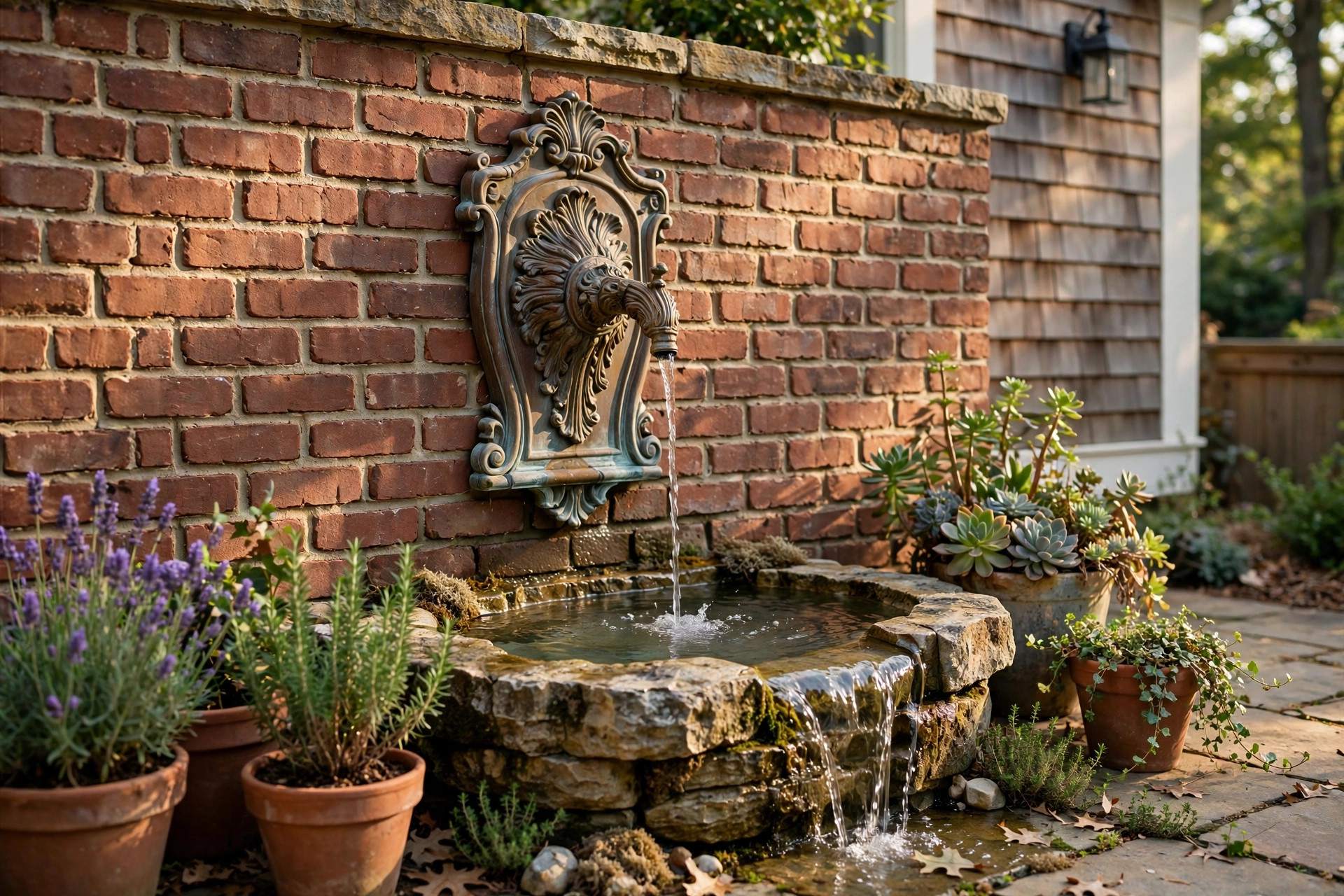

When home owners read outdoor wall fountain for patio reviews, they are looking for more than a list of models. They want to know which fountain will fit their wall, sound pleasant on a quiet evening, and last through many seasons. A wall fountain is a simple idea with a long history. Water flows from a spout or a carved face into a basin. The sound covers street noise. The sight gives the patio a calm point of focus.
This guide walks through what matters when you shop. It covers size, material, pump strength, cost, care, and safety. It also answers common questions that come up in review after review.
Why a Wall Fountain Deserves a Place on Your Patio
A patio is where many families spend warm evenings. A table, a few chairs, and a grill make it useful. A fountain makes it restful. The sound of falling water has a steady effect on people. It softens the noise of cars and dogs. It gives the ear something pleasant to rest on during a meal or a quiet talk.
A wall fountain has a clear edge over a free-standing one. It takes no floor space. This matters on small patios where every square foot counts. Many buyers who write outdoor wall fountain for patio reviews say they picked a wall model because their patio was too small for a large tiered fountain. A wall fountain also mounts at eye level, so the sight of the water is always in view.
Wall fountains come in many looks. Some are carved stone with an old-world feel. Some are plain modern panels with a thin sheet of water. Both bring movement and life to a bare wall.
How to Choose the Right Fountain: Outdoor Wall Fountain for Patio Reviews
Reviews agree on one point. The right fountain is the one that fits your space, your wall, and your habits. Keep these points in mind.
Measure Your Wall and Patio First
Start with a tape measure. Note the width and height of the wall where the fountain will hang. A fountain that is too wide will crowd the wall. A fountain that is too small will look lost on a large wall. Most reviewers suggest that the fountain cover about one third of the wall width.
Also check what the wall is made of. Brick, stone, and solid concrete hold weight well. Wood siding and stucco need special anchors. Many wall fountains weigh 30 to 80 pounds when full of water. That is more than most pictures suggest. Check the weight in the product details before you buy.
Pick a Material That Suits Your Climate
Wall fountains come in several common materials.
* Cast stone and concrete look classic and age well. They are heavy and need strong anchors. * Fiberglass resin is light and costs less. It can be shaped to look like stone or bronze. * Copper and metal give a modern or old-world look. Copper ages to a green tone over time, which many owners like. * Slate and glass panels suit modern homes. Water sheets down the face in a thin, quiet film.
In cold climates, heavy stone holds up best. In mild climates, resin is fine. Read the freeze warning in the manual for your area.
Mind the Pump and Water Flow
The pump is the heart of the fountain. Most wall fountains ship with a small submersible pump. The flow rate, often listed in gallons per hour, sets how loud the water sounds. A soft trickle is about 80 to 150 gallons per hour. A strong spill needs 200 or more.
Many reviews praise fountains with an adjustable flow valve. It lets you turn the sound up or down. If the fountain will sit near a bedroom window, a quiet setting matters. If it must cover the sound of a busy road, you will want a fuller flow.
Decide on Electric or Solar Power
Most wall fountains plug into a standard outlet. The cord is hidden behind the basin. Solar models exist, but they are weaker and stop on cloudy days. For steady use, reviewers favor electric models. If you have no outlet near the wall, a solar unit may still work, but expect a gentle flow.
Types and Styles of Outdoor Wall Fountains
Classic spout fountains. These copy old European garden designs. A lion head or leaf spout pours water into a half-round basin. They suit brick walls and traditional homes.
Modern water walls. A flat panel of slate, copper, or glass sends a thin sheet of water into a long trough. They suit clean, modern patios and make a striking night light when lit from above. A simple best patio umbrella for small balcony can pair well with this style on a compact patio.
Rustic and mission styles. Rough stone, aged bronze, and simple arches give a country feel. They fit older homes and gardens with lots of plants.
Multi-spout fountains. Two or three spouts raise the sound level and the visual interest. They need a stronger pump, so check the specs.
Compact fountains. Small units made for balconies and narrow walls. They are light and easy to mount. Pair one with patio shade ideas without pergola if your wall space gets strong afternoon sun.
Retailers like Frontgate and Article carry a wide range of styles, from classic to modern. Makers such as Polywood focus on durable outdoor builds. Home improvement stores like Lowe’s, Home Depot, and IKEA stock simpler models at lower prices.
Cost and Price
Outdoor wall fountain for patio reviews show a wide price range. Small resin fountains start around 100 to 200 dollars. Mid-range cast stone models run 300 to 800 dollars. Large hand-carved pieces can pass 1,500 dollars.
The price gap reflects material, size, and craft. A hand-finished stone fountain costs more than a molded resin one. Reviews often note that the mid-range models give the best value. They last longer than cheap ones and look better than they cost.
Running costs are small. The pump uses little power, often under 30 watts. Water loss from splash and evaporation needs a top-up every few days in summer. No review calls this a burden.
Installation cost is worth a thought. If you mount it yourself on a solid wall, you pay nothing extra. If you hire a handyman to set anchors and hide the cord, expect 100 to 250 dollars. Sites like Bob Vila and HGTV offer step-by-step mounting guides for do-it-yourself owners.
Care and Upkeep
A wall fountain needs regular, simple care. Most reviews say the work is light.
* Top up the water. Check the level once or twice a week. Pumps burn out if they run dry. * Clean the pump. Every month, lift the pump and rinse the filter screen. Algae and leaves clog it. * Scrub the basin. A soft brush and plain water remove algae. Avoid harsh chemicals that harm the finish. * Use clean water. Hard water leaves white scale on stone and copper. A little white vinegar in the water helps. * Winterize in cold areas. Drain the fountain before hard frost. Store the pump indoors. Frozen water cracks stone and basins.
The Spruce publishes seasonal care checklists that many owners follow year after year. See The Spruce for detailed patio upkeep guides. For independent product testing, Consumer Reports is a trusted name many buyers consult before a big purchase.
Safety on the Patio
Safety matters with any water feature. Keep these rules in mind.
Mount the fountain firmly. Use anchors rated for the full weight, water included. A falling fountain can hurt a person and crack a patio.
Keep cords safe. Use an outdoor-rated extension cord and a ground-fault outlet. Tuck cords where no one can trip.
Watch small children. Even a shallow basin is a risk for toddlers. Reviews often suggest placing the fountain high on the wall or adding a cover when young children visit.
Mind mosquitoes. Still water draws them. A moving pump helps, but in warm months, change the water often or use a mosquito dunk made for fountains.
Common Mistakes Buyers Make
Reading outdoor wall fountain for patio reviews also shows what goes wrong. These are the errors owners mention most.
Guessing the weight. Many buyers check the height and width but not the weight with water added. A basin that holds five gallons adds about forty pounds. Always add the water weight to the dry weight, then buy anchors rated for more.
Ignoring the outlet. Some owners mount the fountain first, then find the nearest outlet is across the patio. Measure the cord length before you drill. The cord should reach the outlet with slack to spare.
Picking sound over setting. A loud fountain near a quiet seating nook can annoy instead of soothe. Think about where you sit. If the seating is close, pick a gentle flow. If the fountain will sit far from the seats, a stronger flow carries better.
Skipping the winter step. In cold areas, a fountain left full through winter often cracks. The repair costs more than the fountain. Drain it in the fall and bring the pump inside.
Forgetting access. The pump sits inside the basin or behind a panel. If you seal the fountain tight against the wall, you cannot reach it for cleaning. Leave room to lift the pump out.
Frequently Asked Questions
How loud is an outdoor wall fountain? Most are gentle. A small fountain sounds like a soft trickle, about as loud as a quiet talk. Larger multi-spout models can be heard from across the yard. Adjustable flow valves let you set the level.
Will a wall fountain raise my water bill? No, not in a meaningful way. The water recycles in a closed loop. You only replace what evaporates or splashes out, which is a few gallons a week at most.
Can I mount a fountain on a fence? Some light resin models, yes. Heavy stone models need a wall or strong posts. Check the weight and the fence strength first. Many reviewers mount on house walls for safety.
Do wall fountains need a plumber? No. They are self-contained. You fill the basin with a hose or a bucket. No water line is needed.
How long does the pump last? A good pump lasts two to four years with regular cleaning. Replacement pumps are easy to find and cost 20 to 50 dollars. Many reviews say a new pump makes an old fountain feel new again.
Can the fountain run in winter? In warm climates, yes. In areas with hard frost, drain it and store the pump. Running a fountain through ice storms risks cracks and pump damage.
A Final Word
Outdoor wall fountain for patio reviews point to a simple truth. The best fountain is not the most costly one. It is the one that fits your wall, suits your taste, and gets cared for. Measure twice. Pick a material for your climate. Keep the pump clean. Do these things, and your patio will have the soft sound of water for many years.
Pair your fountain with good seating to enjoy it fully. A sturdy best outdoor table for eight people turns the patio into a real gathering place, fountain and all.
References
Article. (n.d.). Modern furniture. https://www.article.com Bob Vila. (n.d.). Home improvement advice. https://www.bobvila.com Consumer Reports. (n.d.). Product reviews and ratings. https://www.consumerreports.org Frontgate. (n.d.). Outdoor furniture and decor. https://www.frontgate.com HGTV. (n.d.). Home and garden ideas. https://www.hgtv.com IKEA. (n.d.). Home furnishings. https://www.ikea.com Lowe’s. (n.d.). Home improvement products. https://www.lowes.com Polywood. (n.d.). Outdoor furniture. https://www.polywood.com The Home Depot. (n.d.). Home improvement products. https://www.homedepot.com The Spruce. (n.d.). Home and garden advice. https://www.thespruce.com
Was this guide helpful?

About David Wilson
The My Garden US editorial team writes practical, in-depth home and garden guides for American homeowners — tested advice, no fluff.
You May Also Like

Best Patio Cover for Rain Protection: A Complete Buying Guide
August 13, 2026 0 views
How to Find the Best Bistro Set for Small Patio Spaces
September 21, 2026 0 views
How to Remove Rust from Patio Furniture: A Complete Guide
March 8, 2026 0 views