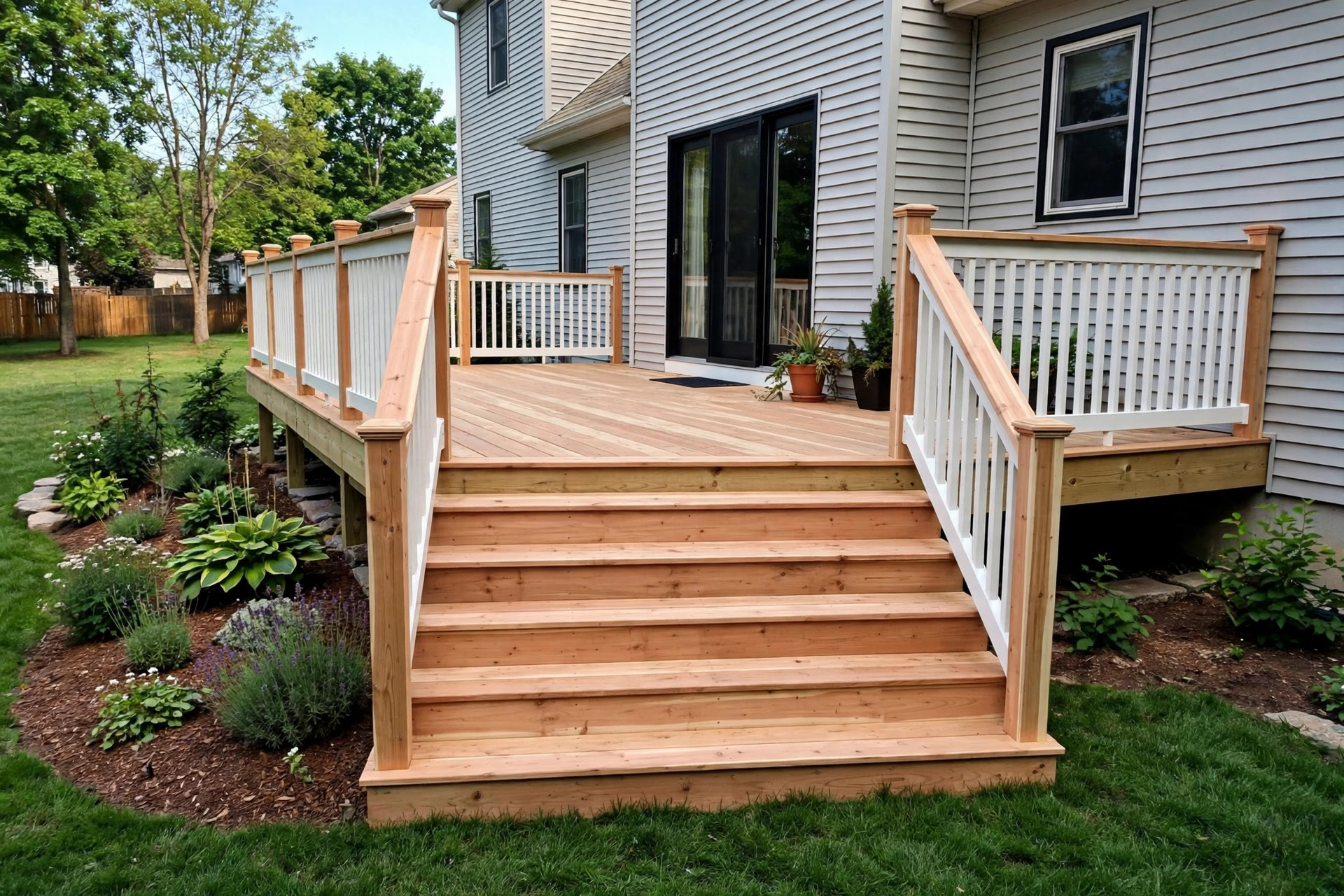

A Deck Worth Building
A deck changes the way a family lives in warm weather. Morning coffee moves outside. Children play in the yard. Neighbors stop for a visit. When you search for premium deck building contractors near me, you want more than a quick job. You want a deck that stands straight, feels solid, and lasts for many years.
The word “premium” matters here. A premium contractor does more than hammer boards. He or she plans the design, pulls the right permits, uses strong materials, and finishes every edge. A cheap job may sag, split, or rot within a few years. A premium job holds its value and adds value to the home.
This guide explains how to find the right builder. It covers what to look for, what questions to ask, what a deck costs, and how to keep it in good shape.
Why a Good Contractor Matters: Premium Deck Building Contractors near Me
A deck is a structure. People stand on it. Furniture rests on it. Wind, rain, snow, and sun test it every day. Poor footings shift. Poor flashing lets water into the house. Poor railings fail when someone leans on them.
A skilled contractor knows the building code in your town. He knows how deep footings must go. He knows how to attach a ledger board to the house so it will not pull away. These details are not seen once the deck is done, but they decide whether the deck stays safe.
Premium builders also care about looks. Boards line up. Spacing stays even. Stairs feel comfortable. The deck fits the style of the house instead of looking like an afterthought. That finish work is what separates a premium result from an average one.
What to Look For in a Premium Deck Contractor
License and Insurance
Start with the basics. A real contractor carries a license where one is required. He carries general liability insurance and workers’ compensation for his crew. Ask to see both. A professional hands them over without complaint. If a builder dodges the question, move on.
Insurance protects you. If a worker is hurt on your property, you do not want the bill. If the house is damaged during the work, the contractor’s policy should pay. Get a copy of the insurance certificate before work starts, not after.
Portfolio and Reviews
Ask to see past work. A premium builder keeps photos of finished decks. Better yet, he can give you addresses or references so you can see the work with your own eyes. Drive by. Look at how the boards meet the posts. Look at the stairs and the railings.
Read online reviews, but read them with care. Look for patterns. Do customers mention clean work sites? Do they say the crew showed up on time? Do they praise how the builder handled problems? Every job has a problem or two. The best builders solve them fast and keep the owner informed. Resources like This Old House offer sound advice on vetting home improvement pros.
Detailed Written Estimates
A premium contractor gives a written estimate, not a number on a napkin. The estimate should list the size of the deck, the materials, the footing depth, the railing style, the finish, and the timeline. It should state the payment schedule. It should name who pulls the permits.
Compare at least three estimates. If one price is far below the others, ask why. The low bidder may plan to use thinner boards, skip flashing, or cut labor corners. A fair price reflects fair work.
Communication
Note how the contractor talks to you from the first visit. Does he listen? Does he explain options in plain words? Does he answer questions directly? A premium builder treats you as a partner in the project. Poor communication at the start usually means worse communication later.
Types of Decks and Material Options
Wood Decks
Pressure-treated pine is the most common deck material in the United States. It costs less than other options and takes stain well. With regular care, it lasts about ten to fifteen years. Cedar and redwood cost more but resist rot and insects on their own. They give a warm, natural look that many homeowners love. For a look at current material pricing, see this guide to pressure-treated lumber decking prices.
Composite Decks
Composite boards mix wood fiber and plastic. They resist rot, splintering, and fading far better than plain wood. They need no staining or sealing. The trade-off is price. Composite costs more up front, though many owners find the savings on upkeep make it worth it. Colors stay even for years, and the surface feels smooth underfoot.
PVC and Vinyl Decks
PVC decking is pure plastic. It handles water better than any other material and works well near pools or in rainy regions. It costs the most of the common options. For a high-end look with almost no upkeep, many premium builders suggest it.
Design Options
Size, shape, and features change both the look and the price. A simple rectangle is the cheapest build. Multiple levels, built-in benches, planter boxes, and wide stairs add craft and cost. Pergolas and shade structures can be added now or later. If you plan to add shade, browse pergola installation kits to understand the options. Lighting along stairs and rails adds safety and beauty after dark. A good contractor draws the design on paper and walks you through it before a single board is cut.
Cost and Price: What a Premium Deck Costs
Deck prices vary widely by region, size, and material. As a rough guide, a basic pressure-treated wood deck may cost fifteen to thirty-five dollars per square foot in 2026 prices. A mid-range composite deck often runs thirty-five to sixty dollars per square foot. A high-end PVC deck with custom railings, lighting, and built-in features can pass sixty dollars per square foot.
For a common size, say a 320-square-foot deck, a wood build might total five thousand to eleven thousand dollars. The same size in composite might total eleven thousand to nineteen thousand dollars. These are rough ranges. Local labor rates and site conditions move the number up or down.
What Drives the Price Up
– Site work. A sloped yard or poor soil needs deeper footings and more labor. – Height. A deck three feet off the ground needs more posts, bracing, and stairs than a low platform. – Permits and inspections. Most towns require them. The contractor handles this, but the fees sit in your budget. – Railings. Cable railings and glass panels cost more than plain wood balusters. – Extras. Built-in seating, lighting, skirting, and privacy screens add cost and value.
Ask the contractor what the price includes. Does it cover demolition of the old deck? Does it cover the final stain or seal? Does it cover hauling away the scrap? Clear answers now prevent surprise charges later. Retailers like Lowe’s and The Home Depot list decking materials and can help you sense-check material costs.
Payment
Never pay the full price up front. A common schedule is a deposit of ten to twenty-five percent, progress payments as work is done, and a final payment after you walk through the finished deck and approve it. Get the schedule in writing. A builder who demands full payment before starting is a warning sign.
Care and Upkeep
Every deck needs care, though some need less than others. A wood deck should be cleaned each year. A gentle wash removes dirt, pollen, and mildew. Inspect the boards for cracks, loose screws, and soft spots. Re-stain or re-seal every two to three years, or as the finish wears. Guides from Family Handyman show simple yearly care routines any owner can follow.
Composite and PVC decks need less work. Wash them with soap and water once or twice a year. Keep leaves and debris from sitting in the gaps between boards. Do not use harsh chemicals or metal scrapers, which can mark the surface.
Check the structure every year, no matter the material. Look under the deck at the posts and beams. Watch for water stains on the house where the deck meets the wall. Tighten any loose hardware. Catching a small problem early keeps it small. The Bob Vila site has helpful seasonal checklists for outdoor structures.
Trim plants back so air moves under and around the deck. Good airflow keeps wood dry and slows rot. Move planters now and then so moisture does not sit under them.
Safety
A deck is safe only when it is built and kept right. Ask your contractor about the local code for railing height and baluster spacing. In most places, railings must be at least thirty-six inches high, and balusters must be close enough that a four-inch ball cannot pass through. This rule protects small children.
Stairs need care too. Treads should be even in depth and rise. A handrail on each side helps everyone, young and old. Step lights or low-voltage lighting along the stairs prevent trips at night.
Grills need space. Keep a hot grill away from railings, siding, and overhangs. The maker James Hardie and the experts at CertainTeed both stress keeping heat sources clear of exterior cladding. Never use a charcoal grill under a covered deck or near low eaves.
Finally, do not overload the deck. A hot tub, for example, weighs thousands of pounds when full. A deck must be built for that load from the start. Tell your contractor about any heavy plans during the design stage, not after the deck is done. General home exterior guidance from The Spruce covers load and spacing rules in plain language.
Frequently Asked Questions
How long does it take to build a deck?
A simple deck may take one to two weeks. A larger deck with multiple levels, custom railings, or built-in features may take three to six weeks. Weather, permit waiting times, and material delivery can add days. Ask your contractor for a written schedule.
Do I need a permit for a new deck?
In most American towns, yes. Permits apply to decks above a certain height or size, and to any deck attached to the house. A premium contractor pulls the permit for you and meets the inspector. Building without a permit can cause fines and trouble when you sell the home.
What is the best deck material for a rainy climate?
Composite and PVC handle rain best because they resist rot and absorb little water. Cedar also performs well with proper sealing. Pressure-treated pine works but needs more frequent care in wet regions.
Should I repair my old deck or build new?
If the frame is solid and only the surface boards are worn, a re-deck may save money. If posts are soft, beams are sagging, or the ledger is pulling from the house, a full rebuild is safer. Ask the contractor for an honest check of the frame.
How do I find the best-rated builders in my area?
Search reviews, ask neighbors, and look at finished work in person. If you want more names to compare, this roundup of top deck building contractors near you is a good starting point. Then interview at least three and compare written estimates.
Does a new deck raise home value?
A well-built deck usually adds value. Appraisers and buyers see it as added living space. The return is strongest when the deck suits the home and the neighborhood. A modest, clean deck often returns more of its cost than an oversized luxury build.
A Short Final Word
Finding premium deck building contractors near me starts with knowing what “premium” means. It means a licensed, insured builder with a strong portfolio, clear written estimates, and honest communication. It means the right materials for your climate and the right design for your home. Take time to compare builders. Ask hard questions. Check the details. The deck you build this year should still stand straight and look fine twenty years from now. A careful choice today buys decades of mornings, evenings, and quiet weekends outdoors.
References
Bob Vila. (n.d.). Home improvement advice. https://www.bobvila.com CertainTeed. (n.d.). Building materials and exterior products. https://www.certainteed.com Family Handyman. (n.d.). DIY home repair and maintenance. https://www.familyhandyman.com James Hardie. (n.d.). Fiber cement siding and exterior products. https://www.jameshardie.com Lowe’s. (n.d.). Home improvement products. https://www.lowes.com The Home Depot. (n.d.). Home improvement products. https://www.homedepot.com The Spruce. (n.d.). Home and garden advice. https://www.thespruce.com This Old House. (n.d.). Home renovation guidance. https://www.thisoldhouse.com
Was this guide helpful?

About Lisa Anderson
The My Garden US editorial team writes practical, in-depth home and garden guides for American homeowners — tested advice, no fluff.
You May Also Like

Where to Buy Double Hung Windows in Texas: A Complete Guide
May 16, 2026 0 views
The Best Insulated Vinyl Siding for Midwest Homes: A Homeowner’s Guide
September 20, 2026 0 views
Top Rated Asphalt Driveway Sealing Reviews: What Homeowners Should Know
April 14, 2026 0 views