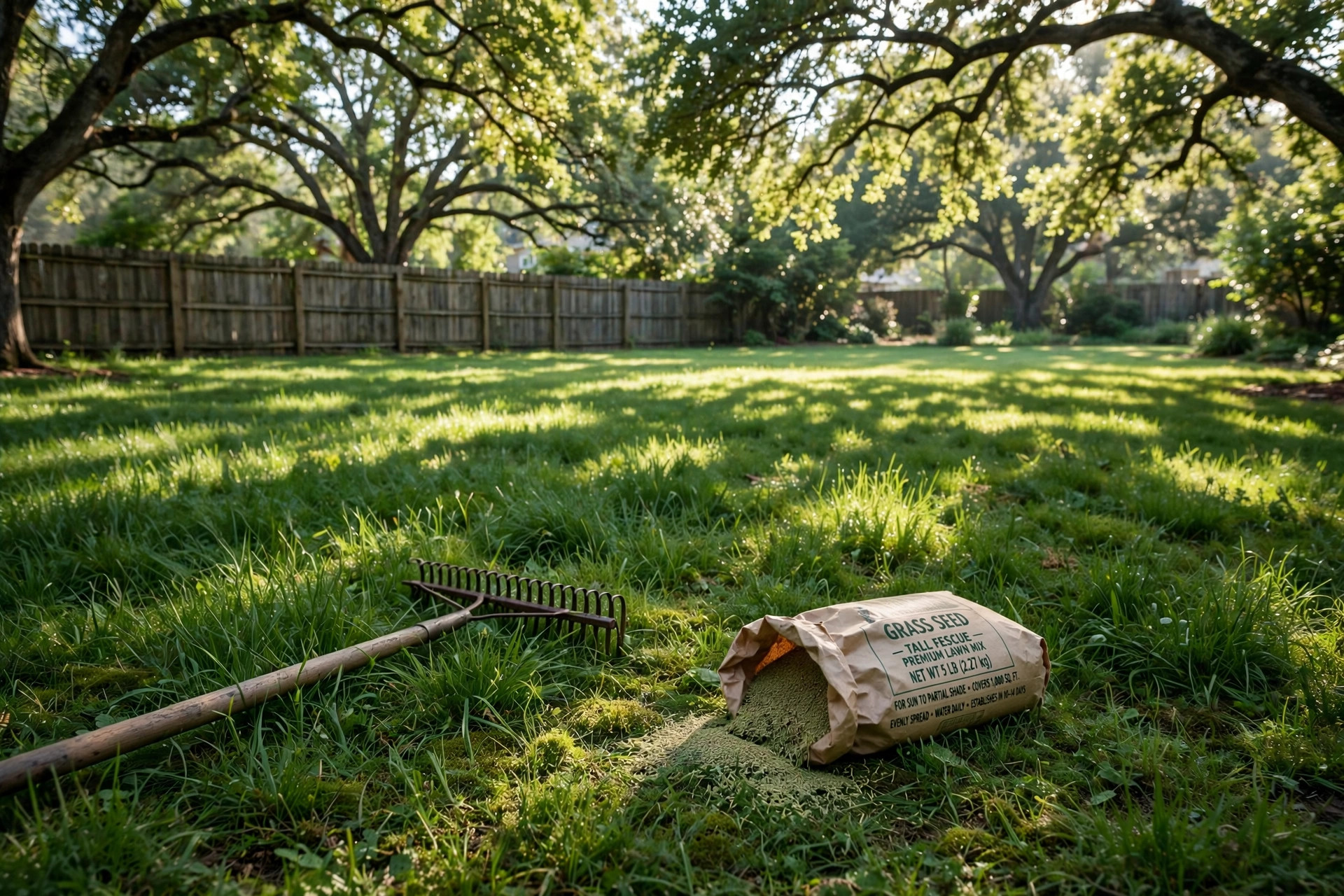

Most yards have a shady corner where grass refuses to grow. The soil turns bare under a maple or an oak. Moss moves in. Mud shows after every rain. Many home owners read tall fescue seed for shade reviews before they buy, hoping one bag of seed will fix the problem. Tall fescue can help. It is one of the toughest cool season grasses, and many blends are made for low light. But no seed works by magic. You still need the right blend, the right soil, and the right habits. This guide walks through what the reviews say, what matters most, and how to get grass growing where other grass has failed.
Why Shade Is Hard on Grass
Grass needs sunlight to make food. This process is called photosynthesis. In full shade, most grass makes too little food to stay thick. It grows thin and pale. Weeds and moss take over the bare spots.
Trees make shade harder in three ways. First, their leaves block the sun. Second, their roots drink most of the water in the soil. Third, falling leaves smother new growth if they are not raked. This is why a lawn can look fine in the open sun and turn to dirt ten feet away under a tree.
Light shade means three to four hours of sun. Dappled shade means sunlight filters through leaves all day. Deep shade means almost no direct sun. Tall fescue handles light and dappled shade well. It struggles in deep shade, where almost no seed will grow. Knowing your shade type helps you read seed reviews with a clear eye.
How Tall Fescue Handles Shade: Tall Fescue Seed for Shade Reviews
Tall fescue is a cool season grass. It grows best in spring and fall across the northern two thirds of the United States. Its roots grow deep, often six inches or more. Deep roots help it survive dry spells and compete with tree roots.
Compared with bluegrass and ryegrass, tall fescue keeps more green color with less water and less feeding. This matters under trees, where water is scarce. Modern turf type tall fescues grow finer blades than the old pasture types, so they look neat and dark green, much like a classic lawn. For hot, sunny spots in the yard, a bag of drought tolerant grass seed may suit better than any shade blend.
Many seed makers sell special shade blends. These bags mix tall fescue with other shade lovers like fine fescue. The mix gives a lawn a better chance across different shade levels. When you read tall fescue seed for shade reviews, pay attention to whether the reviewer used a pure tall fescue bag or a blend. Results can differ a great deal between the two.
What to Look for When You Read Reviews
Seed reviews are useful, but they can mislead. A reviewer in Ohio and a reviewer in Georgia live in different worlds. Tall fescue is a cool season grass. It thrives in places with cold winters and mild summers. In hot southern states, it may suffer no matter what the bag says. Before you trust a review, check where the reviewer lives and what their yard looks like.
Seed Label Terms
Every bag of grass seed carries a label with test dates and seed contents. The law requires this label, and honest makers print it clearly. Look for these details:
– The seed mix, listed by percent. A bag that is mostly weed seed or filler is a poor buy. – The germination rate. A rate above 85 percent is good. – The test date. Seed that was tested more than a year ago may be weak. – The words weed free. Cheap seed often carries weed seed, which causes new problems.
A clean label matters more than a pretty bag. Scotts and Pennington both print full labels, and their shade lines get frequent mention in tall fescue seed for shade reviews.
Shade Tolerance Claims
Many bags say shade tolerant or grows in shade. These claims are not always tested the same way. A blend that survives four hours of morning sun may fail in all day shade. Reviews from real yards tell a truer story than the front of the bag. Look for reviews that mention how many hours of sun the spot gets. Look for photos taken months after planting, not days. A review written one week after seeding proves little. A review written after one full year proves a lot.
Also watch for reviews that mention prep work. The best results often come from reviewers who loosened the soil, added compost, and watered on a schedule. If a reviewer did all that work and the seed still failed, the seed may truly be weak. If a reviewer threw seed on hard dry dirt and got nothing, the seed may not be at fault.
Types and Options
Turf Type Tall Fescue
Turf type varieties are bred for home lawns. They have fine blades, dark green color, and good disease resistance. They are the best choice for a yard that people will see and use. Most tall fescue seed for shade reviews cover turf type products, since these dominate store shelves.
Dwarf Tall Fescue
Dwarf types grow slower and stay shorter, so they need less mowing. A dwarf tall fescue blend suits a shady side yard that you do not want to mow often.
Shade Blends With Fine Fescue
Many shade bags mix tall fescue with fine fescues, such as creeping red fescue or chewings fescue. Fine fescues love shade and need very little care. The mix fills in faster than tall fescue alone. One trade off is wear. Fine fescue handles foot traffic poorly. If children play in the shady spot, a blend heavier in tall fescue will hold up better.
Coated and Uncoated Seed
Some seed is coated with a thin layer that holds water and fertilizer. Coated seed is easier to keep moist in dry shade, but a bag of coated seed holds less actual seed per pound. Check the label to compare true seed weight, not bag weight.
Cost and Price
Tall fescue seed is one of the most affordable lawn seeds. Prices move with bag size, brand name, and seed quality. These ranges cover typical United States retail prices:
– A 3 pound bag of basic tall fescue runs about 12 to 20 dollars. It covers roughly 750 square feet of new seeding. – A 7 pound bag of premium turf type tall fescue runs about 25 to 45 dollars. – A 20 pound bag of a shade blend runs about 60 to 110 dollars. It covers roughly 5,000 square feet.
Coated seed costs more per pound of pure seed, so it looks pricey on the shelf. Bulk seed from a farm store often costs less than branded bags, but the label may be less clear. Buying more than you need is wise. A spare bag lets you patch thin spots the next season without a second trip.
Compared with sod, seed is far cheaper. Sod for a shady area can cost three to five times more, and shade sod still needs the same soil prep. For most home owners, seed is the smart first try.
Planting and Care and Upkeep
Good results start with good prep. Seed cannot grow on packed dirt under a tree. Follow these steps for the best chance of success.
Prepare the Soil
Rake away leaves, sticks, and old dead grass. Loosen the top two inches of soil with a rake or a garden fork. Tree roots near the surface make this hard. Work gently so you do not cut the roots. Spread a thin layer of compost, about one quarter inch, over the area. Compost feeds the soil and holds water.
A soil test helps, but it is not required. If you want one, your state extension office sells low cost kits. Tall fescue likes soil with a pH between 6.0 and 7.0. Lime raises pH if your soil tests too sour.
Seed at the Right Time
Fall is the best time to seed tall fescue. Early fall gives warm soil for germination and cool air for young plants. Late August through September works in most northern states. Spring seeding can work, but summer heat arrives before the young grass has deep roots.
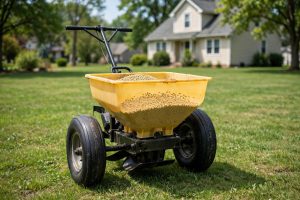
Spread seed at the rate on the bag, usually 6 to 8 pounds per 1,000 square feet for new lawns. Use a spreader for even coverage. Rake lightly so the seed touches soil. Then press it down with a roller or by walking over it on a board.
Water With Care
New seed must stay moist until it sprouts, which takes 7 to 21 days. Water lightly once or twice a day. Do not flood the area. Under trees, the tree roots drink fast, so check the soil often. Once the grass is two inches tall, cut back to deeper, less frequent watering.
A sound watering plan matters more in shade than in sun. Too much water invites disease. Too little lets tree roots win.
Mow High
Set your mower to cut tall fescue at 3 to 3.5 inches. Taller grass shades its own roots and catches more light. Never cut more than one third of the blade at once. Sharp blades matter. Dull blades tear the grass and let disease in. Guides from Toro and John Deere both stress sharp blades and regular checks, and tips for mower engine care help keep any mower running clean.
Feed Lightly
Tall fescue needs less food than bluegrass, and even less in shade. One or two light feedings a year, in fall, is enough for most shady lawns. Too much fertilizer pushes weak top growth that disease attacks. If you overseed in fall, feed after the new seed is up.
Common Problems in Shade
Even good seed faces problems under trees. Here are the most common ones and how to handle them.
Thin spots that return. Tree roots outcompete grass over time. Overseeding every fall keeps the lawn thick. Mulch rings around tree trunks, two to three feet wide, reduce the battle zone and look neat.
Disease. Shade stays damp, and damp grass gets brown patch and other fungi. Water in the morning so leaves dry by night. Improve air flow by pruning low tree limbs. If patches spread, read a lawn fungus treatment guide before reaching for chemicals.
Moss. Moss grows where grass cannot. It loves shade, wet soil, and sour pH. Killing moss without fixing the cause wastes money. Test the soil, improve drainage, and thin the tree canopy to let in more light.
Fallen leaves. A thick layer of leaves in fall will kill young grass. Rake or mulch mow leaves weekly during leaf drop. A mulching mower chops leaves into fine bits that feed the soil.
Safety
Grass seed itself is safe. It contains no poison. But some bags carry a coating with fungicide or fertilizer. Keep coated seed away from children and pets until it is watered in. Wash hands after handling any treated seed.
Keep pets off new seed until it is well rooted, about three to four weeks. Dog urine burns young grass fast. A temporary fence or a simple rope line works.
If you use weed killer or insect killer near the new grass, read the label. Many products forbid use on new seed for several weeks. Independent testers at Consumer Reports rate lawn products for safety claims, and the big home stores like Home Depot carry seed, spreaders, and rakes in one trip. For hand tools and pruning gear, brands like Echo and Ryobi make solid homeowner lines.
Frequently Asked Questions
Will tall fescue grow in full shade? Tall fescue needs at least three to four hours of direct or filtered sun a day. In deep all day shade, no grass seed will thrive. For those spots, consider mulch, ground cover plants, or shade garden beds instead of fighting a losing battle.
How long does tall fescue seed take to sprout? Expect sprouts in 7 to 14 days in warm soil. Full coverage takes 6 to 8 weeks. Shade slows this down. Keep watering lightly until the new grass has been mowed twice.
Can I mix tall fescue with other seed? Yes. Many shade blends already mix tall fescue with fine fescue. Mixing yourself is fine too, as long as both types suit your climate. Avoid mixing cool season seed with warm season seed like bermuda. They fight each other and both look bad.
Is tall fescue safe for dogs? The grass itself is safe and tough, and it handles dog traffic better than fine fescue. Keep dogs off fresh seed for a few weeks, and pick up waste promptly, since urine spots damage any grass.
Do I need to remove old grass before seeding? For bare shady dirt, no. Rake it clean and seed. For thin existing grass, mow it short, rake hard to expose soil, and overseed. Seed must touch soil to sprout. Seed sitting on top of thick old grass will fail.
How much seed do I need for a shady backyard? Measure the area in square feet. For new seeding, plan 6 to 8 pounds per 1,000 square feet. A typical shady side yard of 500 square feet needs about 3 to 4 pounds. Buy a little extra for patching bare spots later.
A Short Final Word
Tall fescue seed for shade reviews point to a clear truth. The seed works when the yard is ready for it. Pick a turf type blend made for shade. Prep the soil. Seed in fall. Water with care. Mow high. For light and dappled shade, tall fescue remains one of the best bets an American home owner can plant.
References
Briggs & Stratton. (n.d.). Outdoor power equipment engines. https://www.briggsandstratton.com
Consumer Reports. (n.d.). Product reviews and ratings. https://www.consumerreports.org
Deere & Company. (n.d.). Lawn care equipment. https://www.deere.com
Echo Incorporated. (n.d.). Outdoor power equipment. https://www.echo-usa.com
LawnStarter. (n.d.). Lawn care guides and services. https://www.lawnstarter.com
Pennington Seed. (n.d.). Grass seed and lawn care. https://www.pennington.com
Ryobi. (n.d.). Power tools and outdoor equipment. https://www.ryobitools.com
Scotts. (n.d.). Lawn care products. https://www.scotts.com
The Home Depot. (n.d.). Home improvement products. https://www.homedepot.com
Toro. (n.d.). Lawn mowers and irrigation. https://www.toro.com
Was this guide helpful?

About Michael Thompson
The My Garden US editorial team writes practical, in-depth home and garden guides for American homeowners — tested advice, no fluff.
You May Also Like
Solar Landscape Lights That Actually Work: A Practical Guide for Homeowners
March 31, 2026 0 views
Paver Walkway Installation Cost Near Me: A Simple Guide
June 23, 2026 0 views
Buffalo Grass Seed for Texas Lawns: A Practical Guide for Hot, Dry Summers
January 31, 2026 0 views