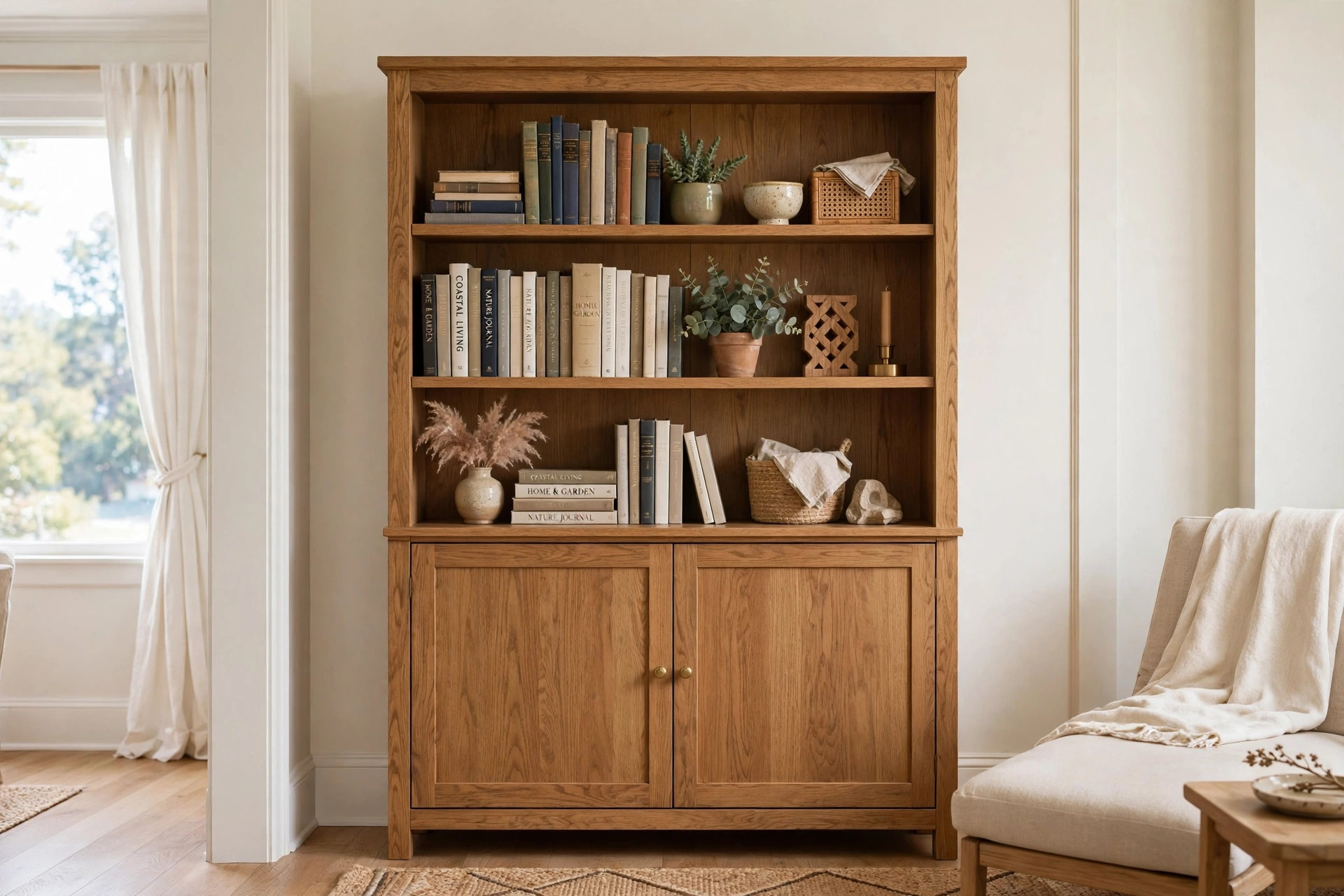

This guide to bookcases with storage doors reviews and buying guide will help you pick the right piece for your home. A bookcase with storage doors gives you the best of both worlds. The open shelves show your books and favorite objects. The closed doors hide the clutter you do not wish to see. This simple mix of open and closed storage works in nearly every room of the house.
Why It Matters
Books need a home. Papers, board games, photo albums, and craft supplies do too. Without a plan, these things pile up on tables and floors. A bookcase with doors solves the problem in a neat way. You keep what you use often on the open shelves. You tuck the rest behind the doors. The room looks calm. You can still find what you need.
Storage furniture has changed over the years. Old bookcases were only shelves. Dust gathered on every row. Today many models come with doors on the lower half or on all sections. This change makes the bookcase fit better into real homes. Rooms in American houses serve many uses at once. A living room may also hold school work and bills. A hallway may hold linens and toys. Closed storage lets one piece serve many jobs.
Good reviews matter when you shop. Makers use fine words for every product. Words like “premium” and “heavy duty” appear on boxes that may be weak. Honest reviews from real buyers cut through the sales talk. They tell you how the doors hang, how the finish holds up, and whether the shelves sag. Read them before you spend your money. Sites such as Consumer Reports test furniture for build quality and safety. Their tests give you facts that ads will not.
What to Look For When You Choose: Bookcases with Storage Doors Reviews and Buying Guide
Start with size. Measure your wall space before you shop. Write down the height, the width, and the depth. Leave room for the doors to swing open. Leave room to walk past. A bookcase that is too deep will eat up floor space. A bookcase that is too tall may need a wall anchor for safety.
Next, look at the frame material. Solid wood is the strongest choice. It costs more, but it lasts for decades. Oak, pine, and maple are common. Engineered wood, such as particle board with a laminate skin, costs less. It works well for light loads. It does not hold screws as firmly as solid wood. Metal frames with wood shelves sit between the two in price and strength. They fit modern rooms.
Check the shelves. Good shelves are at least three quarters of an inch thick. Thick shelves resist sag. Adjustable shelves give you more freedom. You can move them to fit tall books or short boxes. Look at the shelf pins. Metal pins hold better than plastic ones.
Study the doors. Hinges should feel firm when you move them. Soft-close hinges keep the doors from slamming. That is a kind detail in a quiet home. Magnet catches are common and cheap to fix. Make sure the doors line up when closed. Gaps that are wide or uneven may mean weak hinges or a warped frame.
Look at the finish. Stained wood shows grain and hides small marks. Painted finishes look clean but may chip at the edges. Laminate finishes wipe clean with ease. They resist stains from coffee and water rings. If you have small children, a finish that wipes clean will save you work.
Think about the back panel. A thin cardboard back keeps the price low. A wood back adds strength and stops the case from racking. Some buyers find the back plain or ugly. A solid back also keeps dust off the wall side of your books.
Finally, read the load limits. Makers list how much weight each shelf can hold. Books are heavy. A full shelf of hardcovers can weigh forty pounds or more. Stay within the limits. When you read a review on The Spruce or Wayfair, look for notes about shelf sag after months of use. Those notes tell you more than the box label.
Types and Options
Lower Doors, Open Top
The most common style has open shelves on top and doors on the bottom. Books sit at eye level where you can reach them. The closed base hides supplies, games, and old files. This style suits living rooms and home offices. It is also easy to build and ship.
Full-Length Doors
Some bookcases hide everything behind doors. These look like fine cabinets. They work well in dining rooms and bedrooms where you want a calm, closed look. Glass-pane doors form a middle ground. They show off dishes or collections while keeping dust away. Glass doors cost more and need care when you clean them.
Narrow and Wide Models
Narrow bookcases, about two feet wide, fit tight corners and hallways. Wide models, four feet or more, hold more but need a long wall. Tall units, over six feet, hold many books but can feel heavy in a small room. Short units, under four feet, can double as a side table with storage below. Many homes use a pair of narrow units side by side instead of one wide case. Two units are easier to move and let you shape the room.
Corner Bookcases
Corner units use space that often goes to waste. They are harder to find and cost more than straight models. If your room is small, a corner bookcase with doors can solve a real storage problem.
Modular Units
Some makers sell stackable or linkable units. You buy one now and add more later. This is smart for renters and for families that move often. Check that the brand will still sell the same line in a year or two. Lines change fast, and an orphan unit looks odd alone.
Related pieces can round out a room. A matching nightstand with storage drawers keeps a bedroom tidy, and our guide to nightstands with storage drawers reviews and buying guide walks through that pick. For small apartments, rolling storage carts reviews and buying guide covers carts that move where you need them. In the kitchen, pantry shelving units reviews and buying guide helps you sort food storage the same neat way.
Cost and Price
Prices vary widely. A simple engineered-wood bookcase with doors sells for about sixty to one hundred fifty dollars. These are light pieces for light loads. Mid-range models run from two hundred to five hundred dollars. Solid wood or strong metal frames live in this range. Fine solid wood bookcases with soft-close hinges can cost eight hundred dollars or more.
Shipping adds to the cost. Large furniture ships by freight in some cases. Check whether the store ships free. Many big stores, such as Home Depot and Lowe’s, offer free shipping on furniture orders over a set amount. Walmart and IKEA also carry budget bookcases with doors at fair prices.
Assembly is another cost to weigh. Flat-pack pieces need one to three hours of your time. Read the reviews about the instructions. Good instructions use pictures and label each part. Bad instructions waste your afternoon. If you dislike assembly, look for models that ship put together. They cost more but save you time and sweat.
Watch for sale seasons. Furniture prices drop in January and July when stores clear stock. Holiday weekends bring price cuts too. Set a budget before you browse. It is easy to spend more when you see fine grain and soft-close doors.
Care and Upkeep
Dust the open shelves once a week with a soft cloth. Dust dulls the finish over time. Behind the doors, dust builds up too. Open the doors once a month and wipe the inner shelves. This takes only a few minutes and keeps the case fresh.
Clean spills at once. Water rings and coffee stains set fast on wood. Use a damp cloth, then dry the spot. Avoid harsh cleaners on laminate. A mild soap and water mix is enough. For solid wood, a light furniture polish a few times a year feeds the finish. The Family Handyman guides offer plain steps for wood care that work on any bookcase.
Tighten the hinges once a year. Doors loosen with daily use. A screwdriver and five minutes fix most sagging doors. If a hinge hole strips out, fill it with wood glue and a small dowel, then re-drive the screw. This repair holds well.
Keep the case out of damp spots. Wood swells in wet air. A bookcase near a drafty window or a humid basement wall may warp. Leave a small gap between the case and the wall so air can move. In very dry homes, wood can shrink and joints can loosen. A room humidifier in winter helps.
Balance the load. Put heavy books on the lower shelves. Light objects go up high. This keeps the case stable and cuts shelf sag. Do not pile books on the floor of the closed section if the base is thin. Spread weight across the shelves.
If the finish gets scratched, touch-up pens from The Container Store or Apartment Therapy readers’ favorite brands can hide small marks. Deep scratches may need a furniture marker in a matching stain color.
Safety
Tall bookcases can tip forward. This is a real danger for small children who climb. Anchor every tall bookcase to a wall stud. Most models include an anti-tip strap or bracket. Use it. It takes ten minutes and can stop a serious accident. Consumer Reports tests anti-tip kits and reports which hold best.
Place the bookcase on a level floor. A rocking case will stress the joints and the doors will not hang right. Use shims under the low corner if the floor slopes. Shims are cheap and sold at any hardware store.
Keep the doors from slamming on small fingers. Soft-close hinges help. If your model lacks them, you can add stick-on door bumpers. They cost little and cut noise too.
Do not overload the top shelves. Heavy weight up high makes the case top-heavy. Books belong low. Light decor goes high. When you move the bookcase, empty it first. Moving a full bookcase strains the joints and can split the frame.
Check the glass doors with care. Tempered glass is the safe choice. It breaks into small blunt pieces instead of sharp shards. Ask the seller what kind of glass the doors use. If you cannot learn the answer, choose solid doors instead.
Frequently Asked Questions
How wide should a bookcase with storage doors be?
It depends on your wall and your books. A case two to three feet wide fits most rooms. Wide cases, four feet or more, hold more books but need a long clear wall. Measure twice and check the door swing. Two narrow cases often work better than one wide case in a small room.
Are bookcases with doors better than open shelves?
Each has its place. Doors hide clutter and cut dust. Open shelves show books and decor and are easier to browse. A mix of both gives you the best of each. If dust is a problem in your home, more doors mean less cleaning.
What is the strongest material for a bookcase?
Solid hardwood is the strongest. It holds heavy books without sag and survives moves. Engineered wood costs less and works for light to medium loads. Metal frames with wood shelves are strong and suit modern rooms. Read load ratings and buyer reviews before you choose.
How do I stop the shelves from sagging?
Keep shelf spans short. A shelf under thirty inches wide sags less. Use shelves that are at least three quarters of an inch thick. Store the heaviest books on the bottom. Adjustable center supports can stiffen a wide shelf. Reviews on Pottery Barn and Wayfair often note which models sag after a year, so read them first.
Can I paint a laminate bookcase?
Yes, but prep matters. Clean the surface well. Scuff it lightly with fine sandpaper so paint can grip. Use a primer made for slick surfaces, then paint with two thin coats. Let it dry a full day between coats. Rushing the job leads to chips.
Where can I find honest reviews before I buy?
Look at many sources. Retailer reviews show real owner photos and notes about assembly. Editorial reviews, such as those on The Spruce and Apartment Therapy, compare several models side by side. Lab tests from Consumer Reports add hard facts on strength and safety.
A Final Word
A bookcase with storage doors is a quiet worker in the home. It holds your books, hides your clutter, and keeps the room calm. Choose the right size, check the build, read real reviews, and anchor it to the wall. Spend a little care on upkeep and it will serve you for years. The best bookcase is not the fanciest one. It is the one that fits your room, holds your load, and closes its doors with a soft, sure click.
References
Apartment Therapy. (n.d.). Home design ideas and inspiration. https://www.apartmenttherapy.com Consumer Reports. (n.d.). Product reviews and ratings. https://www.consumerreports.org Family Handyman. (n.d.). DIY home repair and maintenance. https://www.familyhandyman.com IKEA. (n.d.). Home furnishings. https://www.ikea.com Lowe’s. (n.d.). Home improvement products. https://www.lowes.com Pottery Barn. (n.d.). Furniture and home decor. https://www.potterybarn.com The Container Store. (n.d.). Storage and organization products. https://www.containerstore.com The Home Depot. (n.d.). Home improvement products. https://www.homedepot.com The Spruce. (n.d.). Home and garden advice. https://www.thespruce.com Walmart. (n.d.). Everyday low prices. https://www.walmart.com Wayfair. (n.d.). Furniture and home goods. https://www.wayfair.com
Was this guide helpful?

About Michael Thompson
The My Garden US editorial team writes practical, in-depth home and garden guides for American homeowners — tested advice, no fluff.
You May Also Like
Space Saving Corner Closet Organizers for Southern States: A Practical Guide
March 19, 2026 0 views
Garden Tool Organizers Price Comparison USA: A Simple Buying Guide
June 8, 2026 0 views
Nightstands With Storage Drawers Reviews and Buying Guide
March 1, 2026 0 views