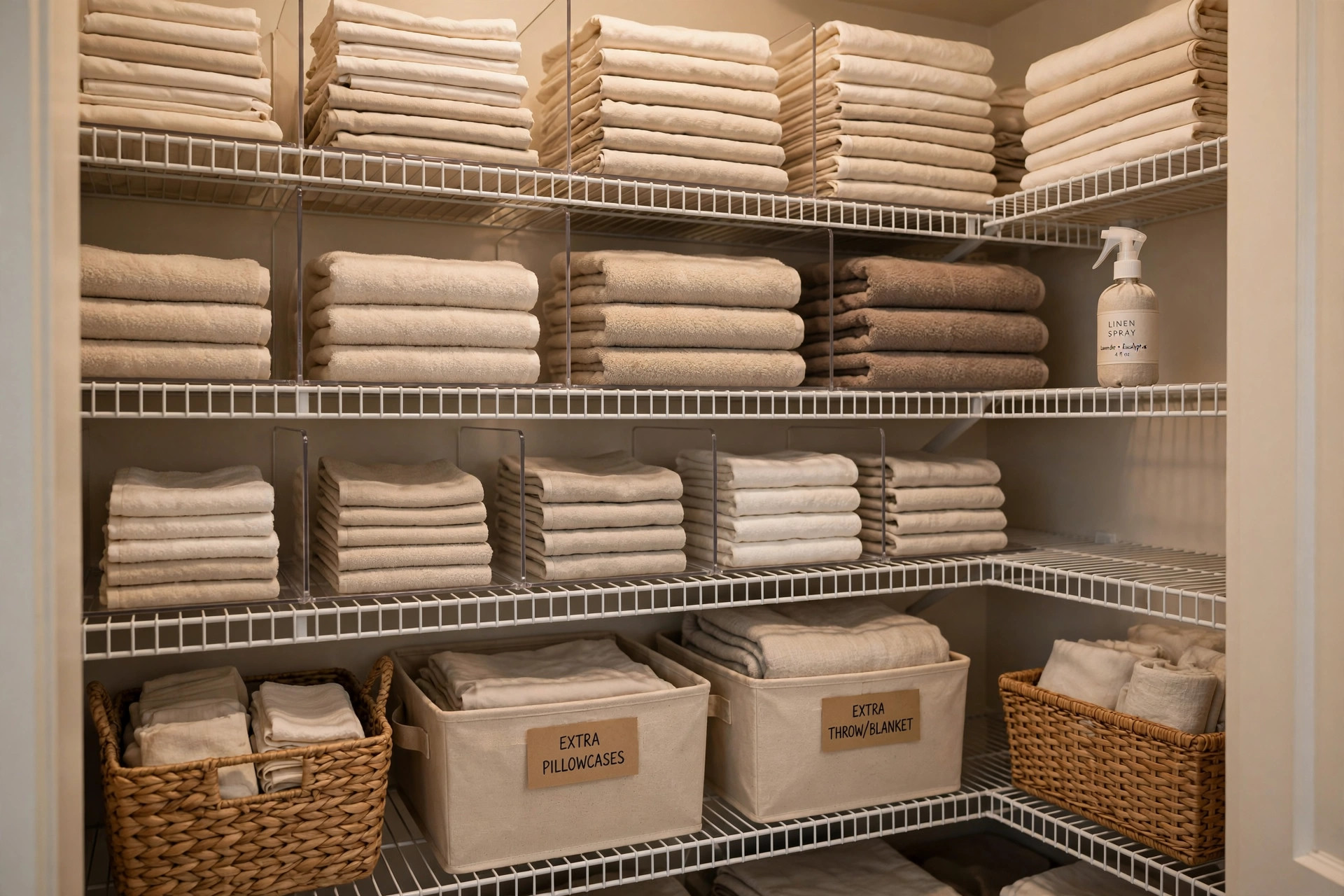
Most American homes have one small closet that collects all the sheets, towels, and blankets the family owns. In many houses it is the hardest closet to keep neat. Sheets unfold. Towels slide off the pile. Blankets take more room than they should. This linen closet organizers reviews and buying guide will help you fix that. It explains the main types of organizers, what to look for when you buy, what they cost, and how to care for them. By the end you will know how to pick the right set for your own home.
Why a Linen Closet Organizer Matters
A linen closet holds items the whole family touches every day. Clean sheets go on the beds. Fresh towels hang in the bathroom. A guest room needs a spare blanket. When the closet is a mess, simple jobs take longer. You pull out a pillowcase and three towels fall on the floor. You cannot find the flat sheet that goes with the fitted sheet. These small problems add up.
Good organizers make every shelf work harder. They split one tall shelf into two useful levels. They keep folded stacks standing straight. They let you see what you own at a glance. Reviews from many home owners say the same thing. After adding organizers, they stopped buying sheets they did not need because they could finally see what they already had. That saves money over time.
There is also the matter of fresh air. Towels and sheets need to breathe. A pile pressed tight on a shelf can hold dampness. That dampness can bring a musty smell. Organizers that allow air to move around each stack help your linens stay fresh. Many closet organizer systems for busy families now list air flow as a selling point, and for good reason.
What to Look for When You Shop: Linen Closet Organizers Reviews and Buying Guide
Measure First
Before you buy anything, take a tape measure to the closet. Write down the width of each shelf from wall to wall. Measure the depth from the front edge to the back wall. Measure the height between shelves. Many buyers skip this step and end up with bins that are too tall for the space. A bin that will not fit is money wasted. Take the numbers with you when you shop, in the store or online.
Think about what goes in the closet now. Count your sheet sets. Count your bath towels, hand towels, and washcloths. Note the bulky items such as quilts and winter blankets. Your organizer set should fit the load you own, with a little room to grow. Planning guides at The Container Store and IKEA show how to map a closet shelf by shelf before you buy.
Materials and Build
Linen closet organizers come in wire metal, plastic, fabric, wood, and woven fibers. Each has strengths. Wire shelves are strong and let air pass through. Plastic bins wipe clean with a damp cloth. Fabric bins are soft on the outside and will not scratch shelves. Wooden dividers look fine and last for years. Woven baskets give a warm, home-like look.
Check the joints and edges. Wire grids should be smooth, with no sharp ends. Fabric bins should have firm sides so they do not sag when full. Plastic should feel thick, not thin and bendy. The Home Depot buying pages note that weight limits matter more than looks. A shelf riser that holds ten pounds is fine for pillowcases. It is not fine for a stack of bath sheets.
Air Flow and Moisture
Sheets and towels must stay dry. Pick organizers that leave gaps for air. Open wire shelves beat solid trays here. Fabric bins made of cotton or canvas breathe better than sealed plastic tubs. If your closet sits next to a bathroom, moisture is a real concern. Steam from the shower can drift in. In that case, keep plastic bins slightly open, or choose ventilated baskets. Care tips from Good Housekeeping remind readers to wash and fully dry all linens before storing them. No organizer can fix a damp towel.
Main Types of Linen Closet Organizers
Stackable Shelves and Shelf Risers
These are the workhorses of the linen closet. A stackable shelf is a small frame that sits on a closet shelf and creates a second level above it. A shelf riser does the same job in a lower profile. Together they turn one tall shelf into two or three short ones. Short stacks of folded towels are easy to lift out. Tall stacks lean and fall. Many reviews rate stackable shelves as the single best buy for a linen closet.
Look for frames with a non-slip top and rubber feet. The feet keep the frame from sliding when you pull a towel out. Some frames fold flat for storage. If you need a hand with measuring and set up, the step-by-step closet projects at Family Handyman show how to place risers for the best reach.
Fabric Bins and Cubes
Fabric bins and cubes hold the loose items that will not stack well. Washcloths, hand towels, and small pillowcases go in bins. Guest sheets can live in a labeled cube. Choose bins with a front handle so you can pull them down like a drawer. A rigid frame inside the fabric keeps the bin square when it is empty.
Breathable cotton canvas is a smart pick for sheets. It lets air move and keeps dust out. For a closer look at soft-sided storage, the fabric storage cubes reviews and buying guide covers which fabrics hold up best in daily use. Product testers at Consumer Reports have also compared fabric bins for wear over time.
Shelf Dividers
Shelf dividers are flat panels that clip onto a shelf and stand upright. They act like bookends for folded towels. Each stack gets its own slot. Nothing leans. Nothing falls. Dividers cost little and change the feel of a closet fast. They work best on shelves that are at least twelve inches deep, so the panel has room to grip.
Wire dividers suit wire shelving. Wood or acrylic dividers suit solid wood shelves. Make sure the clip fits the shelf thickness in your closet. The small-space ideas at Apartment Therapy show how dividers can split one wide shelf into zones for each family member.
Door Racks and Narrow Rolling Units
The back of the closet door is free space in most homes. An over-the-door rack can hold rolled hand towels, small spray bottles, and sewing kits for mending tears in sheets. A narrow rolling unit fits in the gap between the door frame and the wall. These add storage without taking shelf space. Measure the door gap first. Some doors sit close to the wall and leave no room for a rack. Shopping roundups at Wayfair list the true depth of each unit, which helps you check the fit.
If your linen overflow lives near the laundry area, a heavy duty laundry room shelving buying guide can help you plan shelves for bulky items like comforters and mattress pads.
Cost and Price Ranges
Linen closet organizers are kind to the budget. A set of four shelf dividers often costs under fifteen dollars. A pair of stackable wire shelves runs about twenty to forty dollars. Fabric bins and cubes sell for eight to twenty dollars each, based on size and fabric. Over-the-door racks range from fifteen to thirty-five dollars.
A full closet makeover with risers, bins, and dividers for four shelves often lands between sixty and one hundred fifty dollars. Premium sets in wood or woven fiber cost more. They look fine and last longer, but the basic metal and fabric types do the same job. The Bob Vila cost guides note that buying a matched set can save money over buying each piece alone. Watch for sales in January, when stores clear out home storage goods, and in August, when back-to-school shopping brings closet deals.
Think in terms of cost per use. A twenty-dollar shelf riser that you use every day for ten years costs less than a penny a day. That is good value. Cheap bins that sag and tear in a year are not. Read the reviews. Look for notes about how the product held up after six months. The Spruce has long covered home storage tests and often flags which budget picks last.
Care and Upkeep
Organizers need little care. Wipe wire shelves with a damp cloth twice a year. Dust wood dividers when you change the sheets. Wash fabric bins in the machine if the label allows it. Most cotton bins wash well on a gentle cycle. Let them air dry fully before you put them back.
Once a year, empty the closet shelf by shelf. This is the best time to check for wear. Look for bent wire, torn seams, and loose clips. Replace what is broken. While the shelf is empty, wipe it down. Then put back only the linens you still use. Frayed towels and thin sheets can go to the rag bag or the donation box. A yearly reset keeps the system working. It also keeps the closet from slowly filling with items you no longer need.
If you use scented sachets or cedar blocks to keep linens fresh, keep them off the fabric bins. Oils can stain fabric over time. Set them on the shelf itself, away from folded white sheets. Let sheets rest between uses. Rotating your sheet sets gives each set time to air out and wear evenly.
Safety Notes
A linen closet is safe by nature, but a few rules help. Do not overload a shelf. A stack of wet-washed blankets is very heavy. Check the shelf brackets in an older home. They can loosen over the years. Tighten them before you add new organizers.
Keep small items like safety pins and sewing needles in a closed tin, not loose in a bin. Small children may reach into a low bin. Keep cleaning sprays and stain removers out of the linen closet. They belong in a locked cabinet away from food and clothes. If you add a motion-sensor light inside the closet, pick a battery light rated for closets. Hard-wired lights near fabric need care. A rack on the back of the door should not block the door from closing fully. A door that will not latch can swing open on its own.
Frequently Asked Questions
How many sheet sets should a linen closet hold?
Most families do well with three sets per bed. One set is on the bed. One set is in the wash. One set waits in the closet. More than that crowds the shelves. Fewer means you wash in a rush. Count your beds and plan shelf space from there.
Should I fold or roll towels in the closet?
Both work. Folding suits deep shelves and dividers. Rolling suits bins and door racks. Rolled towels let you see every towel at a glance. Folded stacks look tidier on open shelves. Pick the method that fits your organizers and stick with it. A mixed closet looks messy even when it is full of clean towels.
What size bins fit a standard linen closet?
A standard reach-in closet shelf is about twelve inches deep. Bins up to eleven inches deep fit with room to spare. Widths of ten to twelve inches work well side by side on a thirty-inch shelf. Always measure your own shelves. Older homes vary a lot. Bring your tape measure numbers when you shop.
Can I use plastic tubs with lids for sheets?
You can, but leave the lid loose or pick a vented tub. Sealed plastic traps dampness. Sheets stored in sealed tubs can smell musty after a few months. Fabric bins or open baskets breathe better. If you already own tubs, drill a few small holes in the sides for air. Store only fully dry linens in them.
How do I keep white sheets from turning yellow in storage?
Store sheets clean, dry, and out of direct light. Do not store them in cardboard boxes. Cardboard gives off acids that yellow fabric over time. Cotton or muslin bags are a better choice for long storage. Wash sheets in warm water and skip the fabric softener. Softener leaves a film that traps body oils, and those oils turn yellow with age.
Do I need matching organizers?
No. Matching sets look nice in photos, but a mix of types often works better. Use dividers where you stack towels. Use bins where you toss washcloths. Use a riser where a shelf is too tall. Buy for the job each shelf must do. The result may not match, but it will work every day.
A Short Final Word
A neat linen closet is not about perfect folds or matching baskets. It is about a system you can keep up with on a busy week. Measure your shelves. Pick organizers that fit what you own. Give air room to move. Keep the load light and the bins clean. This linen closet organizers reviews and buying guide covered the main types, the costs, and the care steps. Start with one shelf. Add a riser and a few dividers. You will feel the change the first time you reach for a clean towel and find it right where it should be.
References
Apartment Therapy. (n.d.). Home design ideas and inspiration. https://www.apartmenttherapy.com Bob Vila. (n.d.). Home improvement advice. https://www.bobvila.com Consumer Reports. (n.d.). Product reviews and ratings. https://www.consumerreports.org Family Handyman. (n.d.). DIY home repair and maintenance. https://www.familyhandyman.com Good Housekeeping. (n.d.). Product reviews and home advice. https://www.goodhousekeeping.com IKEA. (n.d.). Home furnishings. https://www.ikea.com The Container Store. (n.d.). Storage and organization products. https://www.containerstore.com The Home Depot. (n.d.). Home improvement products. https://www.homedepot.com The Spruce. (n.d.). Home and garden advice. https://www.thespruce.com Wayfair. (n.d.). Furniture and home goods. https://www.wayfair.com
Was this guide helpful?

About Emily Rodriguez
The My Garden US editorial team writes practical, in-depth home and garden guides for American homeowners — tested advice, no fluff.