
When the power goes out, the silence tells the story. The refrigerator hum stops. The lights die. The television screen goes black. A solar generator for home backup can fill that silence. It stores power from the sun and gives it back when the grid fails. This guide pulls together solar generator for home backup reviews USA shoppers rely on. It explains what these machines do, what to look for, how much they cost, and how to keep them safe. It reads plainly, so every reader can follow it.
Why a Solar Generator for Home Backup Matters
Storms knock down power lines. Heat waves overload the grid. Ice snaps tree limbs onto wires. The United States sees millions of outages each year. Most last a few hours. Some last days. Food spoils. Basements flood when sump pumps stop. Medical devices lose charge. Home security systems go dark when they lose power, which is why many households pair backup power with their best home battery backup system reviews usa research and monitored alarms from providers like SimpliSafe or ADT.
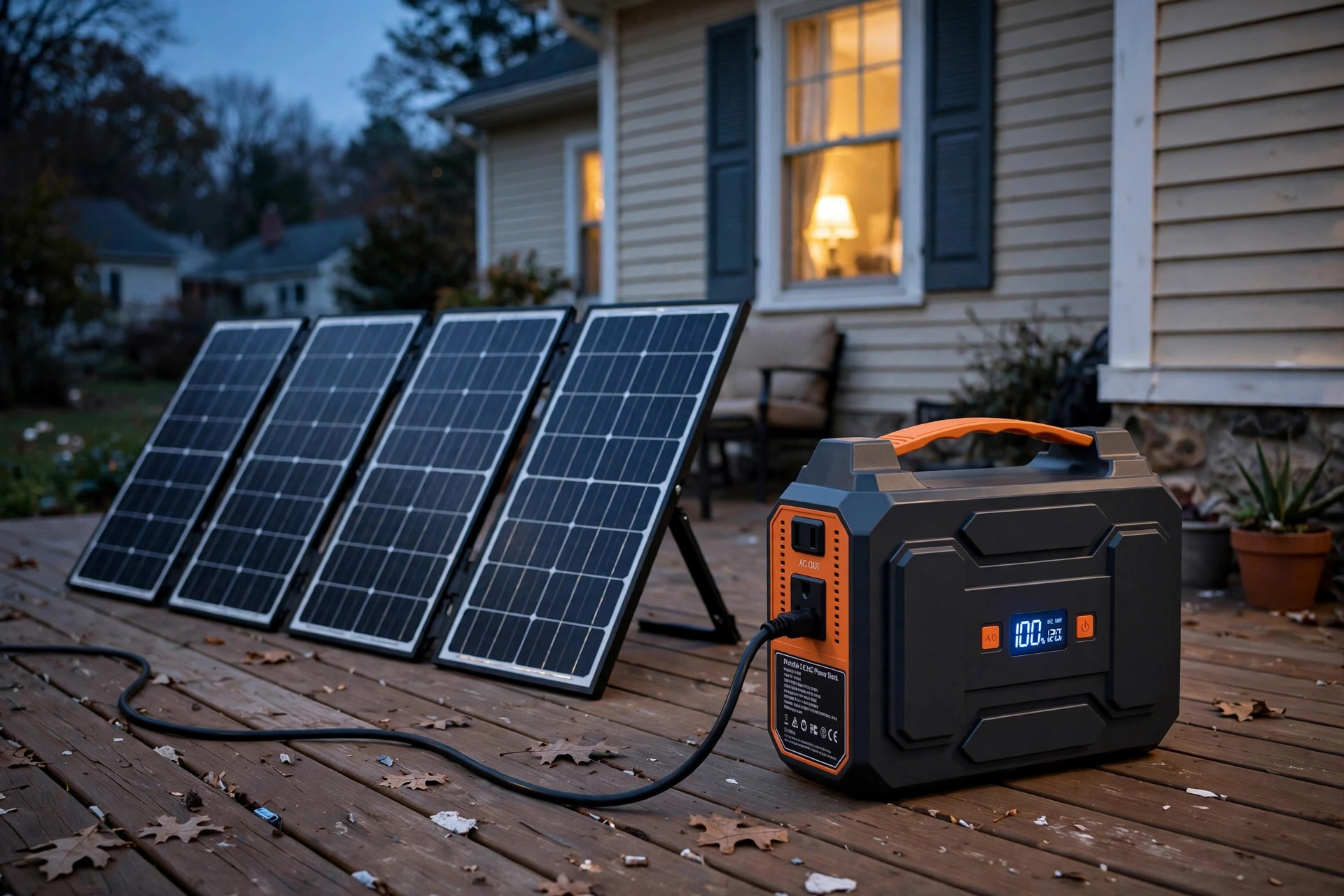
A solar generator for home backup answers this problem. It is a battery in a box. Solar panels fill the battery. An inverter turns the stored power into the kind used by lamps, phones, and fridges. It makes no noise. It burns no fuel. It can sit in a living room without fumes. That makes it very different from a gas machine. It suits homes, apartments, and small offices.
Solar generator for home backup reviews USA buyers write share a common note. People love the quiet. They love that it starts with a button. They love that it needs no gasoline cans in the garage. The machine simply waits, charged and ready.
What a Solar Generator Is, and What It Is Not: Solar Generator for Home Backup Reviews Usa
The name misleads a little. It is not a generator in the old sense. It does not create power from fuel. It is a power station. Three parts do the work.
First, the battery. Most new units use lithium iron phosphate cells. These last far longer than older lithium types. They can charge and drain thousands of times.
Second, the inverter. It changes battery power into the alternating current that home devices use. The size of the inverter decides what you can run. A small one runs phones and lights. A large one runs a refrigerator or a microwave.
Third, the charge controller. It takes power from solar panels and feeds it to the battery at the right rate. Good controllers waste little energy.
What it is not: it is not a whole house generator that powers every circuit for a week. Most solar generators cover part of the home. They are best for lights, phones, internet gear, medical devices, and one or two large items like a fridge.
How to Choose: What the Reviews Say Matters
Solar powered generator reviews from across the country point to the same list of features. Read them before you buy.
Battery capacity
Capacity is measured in watt-hours. A 500 watt-hour unit runs a phone for days or a small fridge for a few hours. A 2,000 watt-hour unit runs a fridge for most of a day. Think about what must stay on. List the items. Add up their watts. Multiply by the hours you need. That gives the capacity you should shop for.
Inverter output
Output is measured in watts. It must be higher than the largest item you will run. A fridge needs about 150 watts to run but far more to start. Check the surge rating too. Many reviewers test this by starting a fridge and watching for a fault light.
Solar input
Solar input decides how fast the sun refills the battery. It is measured in watts. A unit that accepts 400 watts of solar fills twice as fast as one that accepts 200 watts. Panels are often sold apart from the unit. Match the panel voltage to what the unit accepts. Independent testers such as Consumer Reports and CNET publish home backup power station usa comparisons that show charge times side by side.
Ports and outlets
Count what you get. Most units have wall-style outlets, USB ports, and a car-style 12-volt port. More ports mean more devices at once. Some units add wireless charging pads on top.
Weight and wheels
Large units can weigh over 100 pounds. If you must move it, look for wheels and a strong handle. Smaller units weigh 20 to 40 pounds and carry like a toolbox.
Expandability
Some units accept extra battery packs. You buy one now and add another later. This is a smart path for buyers on a budget.
App and display
A clear screen shows charge level, input watts, and output watts. Many units also pair with a phone app. The app can show history and let you change settings from the couch. Tech reviewers at PCMag and The Verge often test these apps for ease of use.
Types and Options on the Market
Portable solar generator for emergency backup units fall into three size groups.
Small units run from 300 to 600 watt-hours. They weigh little. They charge phones, laptops, cameras, lights, and small fans. They suit apartments and short outages. Prices run low. Many buyers start here.
Mid-size units run from 1,000 to 1,500 watt-hours. They are the most popular. They run a full-size refrigerator for several hours plus phones and lights. They weigh 30 to 50 pounds. One person can carry them.
Large units run from 2,000 to 3,600 watt-hours. They can run a fridge, a freezer, lights, and internet gear through a long outage. Some can even run a window air conditioner for a short time. They are heavy. Many ride on wheels. Two or more can link together for double the power.
Some brands sell the unit and panels as a kit. Others sell them apart. Kits save the guesswork. Buying apart lets you pick larger or better panels. Either path works if the voltages match.
Cost and Price: What to Expect
Price follows capacity. Small units cost a few hundred dollars. Mid-size units cost around one to two thousand dollars. Large units cost two to four thousand dollars. Solar panels add to the bill. A 200-watt panel often costs a few hundred dollars. A 400-watt panel costs more.
Look at the cost per watt-hour. Divide the price by the capacity. This lets you compare a small unit and a large unit fairly. Watch for sales. Prices drop often around storm season and holidays.
Think about running costs too. Sunlight is free. A gas generator burns fuel every hour it runs. Over years of use, the solar unit can cost less to own. It also needs almost no service. No oil changes. No spark plugs. No stale fuel to drain.
If the price shocks you, consider the best ups for home network equipment usa as a smaller first step for routers and modems, then grow to a full solar unit later. For buyers comparing all fuel types, The Spruce and the Google Store list smart home gear that pairs well with backup power, and Energy Star explains how efficient appliances stretch every stored watt-hour further.
Setting Up Your Solar Generator
Setup takes minutes. Unbox the unit. Charge it from a wall outlet first. A full first charge teaches the battery meter its true range. Then connect the solar panels. Place them where the sun hits hardest. South-facing spots work best in most of the country. Tilt them toward the sun. Keep them clean. Dust and leaves cut output.
Run a test. Unplug the fridge from the wall and plug it into the unit. Watch how long the battery lasts. Write the number down. Do the same for your phone charger and a lamp. This test tells you what a real outage will feel like. Do it on a calm day, not during the storm.
Store the unit at room temperature. Heat shortens battery life. Cold slows output. Keep the charge near half full if you store it for months. Top it up every few months. Check the manual for the exact numbers.
Care and Upkeep
Care is simple. That is one reason solar generator for home backup reviews USA owners give high marks.
Keep vents clear. The inverter makes heat when it works hard. Blocked vents can trigger a shutdown. Wipe dust from the vents with a dry cloth.
Keep panels clean. Wash them with water and a soft cloth a few times a year. Do not use harsh cleaners. They can scratch the surface.
Check cables once a year. Look for cracked insulation or loose plugs. Replace worn cables. Loose connections waste power and can spark.
Update the software. Many units have firmware updates that fix bugs and add features. The phone app usually handles this.
Use the battery now and then. Batteries last longest when they cycle. Run the unit down to half and charge it back up every few months. This keeps the cells healthy.
Safety
Solar generators are safer than fuel machines, but they still hold a lot of energy. Respect them.
Never open the case. The battery inside can hurt or kill if handled wrong. Leave repairs to the maker.
Keep the unit dry. Rain and floodwater can cause shorts. If the unit gets soaked, do not use it. Let it dry fully and have it checked.
Do not plug a space heater into a small unit unless the ratings allow it. Heaters draw huge power. They can trip the inverter or melt a weak cable.
Charge in a ventilated room. The unit gives off little heat, but good airflow still helps. Do not bury it under blankets.
The CPSC tracks product recalls for portable power stations. Check their site for your model before you buy and once a year after.
Common Mistakes Buyers Make
Reviews warn of the same errors again and again.
Buying too small is the first. People guess their needs and guess low. A fridge draws more than they think. Measure or look up the watts of each device. Then add a margin.
Skipping the solar panels is the second. Some buyers get the unit and never buy panels. Then an outage drains the battery with no way to refill it. The panels are half the point.
Ignoring the surge rating is the third. Motors need a burst of power to start. If the surge rating is too low, the fridge will not start even though the running watts fit.
Storing it empty is the fourth. A battery left at zero for months can lose capacity for good. Keep it charged.
Frequently Asked Questions
How long will a solar generator run my refrigerator?
It depends on size. A 1,000 watt-hour unit runs a modern efficient fridge for about 6 to 10 hours. A 2,000 watt-hour unit runs it for about half a day to a full day. Older fridges use more power. Open the door less during an outage to stretch the time.
Can I recharge it while it powers my devices?
Yes. Most units allow pass-through charging. The panels feed the battery while the battery feeds your devices. On a sunny day, a mid-size unit can run a fridge and still gain charge. On a cloudy day, expect slower gains.
How many solar panels do I need?
Match the panels to the unit’s solar input rating. If the unit accepts 400 watts, two 200-watt panels fill it at the rated speed. More panels help on cloudy days. Fewer panels just mean slower charging. Never exceed the maximum input voltage in the manual.
Will it work in winter?
Yes, but with less sun. Short days and low sun angles cut panel output. Cold also trims battery output a little. Keep the unit indoors where it is warm. Place panels where snow cannot cover them. Many northern owners add an extra panel to make up the difference.
Is a solar generator better than a gas generator?
It depends on the job. Solar units are quiet, clean, and safe indoors. Gas units run longer on a tank of fuel and cost less per watt for very large loads. For most home backup needs, a solar unit wins on ease and safety. For running a whole house for a week, gas still leads.
How long does the battery last before it wears out?
Lithium iron phosphate batteries in new units often promise 3,000 to 4,000 full cycles. Used gently, that means ten years or more of service. Even then the battery does not die. It simply holds less charge than when new.
A Short Final Word
A solar generator for home backup is a quiet guard for the home. It asks little and gives much. Read the solar generator for home backup reviews USA owners post. Measure your needs. Buy a little more capacity than you think you need. Test the setup before the storm. Then rest easy. When the lights go out, yours will stay on.
References
ADT. (n.d.). Home security and automation. https://www.adt.com CNET. (n.d.). Technology news and reviews. https://www.cnet.com Consumer Reports. (n.d.). Product reviews and ratings. https://www.consumerreports.org ENERGY STAR. (n.d.). Energy efficient products. https://www.energystar.gov Google Store. (n.d.). Smart home devices. https://store.google.com PCMag. (n.d.). Technology product reviews. https://www.pcmag.com SimpliSafe. (n.d.). Home security systems. https://www.simplisafe.com The Spruce. (n.d.). Home and garden advice. https://www.thespruce.com The Verge. (n.d.). Technology news and reviews. https://www.theverge.com U.S. Consumer Product Safety Commission. (n.d.). Product safety information. https://www.cpsc.gov
Was this guide helpful?

About Lisa Anderson
The My Garden US editorial team writes practical, in-depth home and garden guides for American homeowners — tested advice, no fluff.
You May Also Like
Best Wireless Doorbell Camera Reviews USA: A Plain Guide to Choosing Well
September 3, 2026 0 views
Long Range Driveway Alarm Reviews 2026 USA: What Buyers Should Know
August 28, 2026 0 views
Garage Door Opener Installation Cost Near Me: What Homeowners Pay in 2026
February 22, 2026 0 views