
Introduction
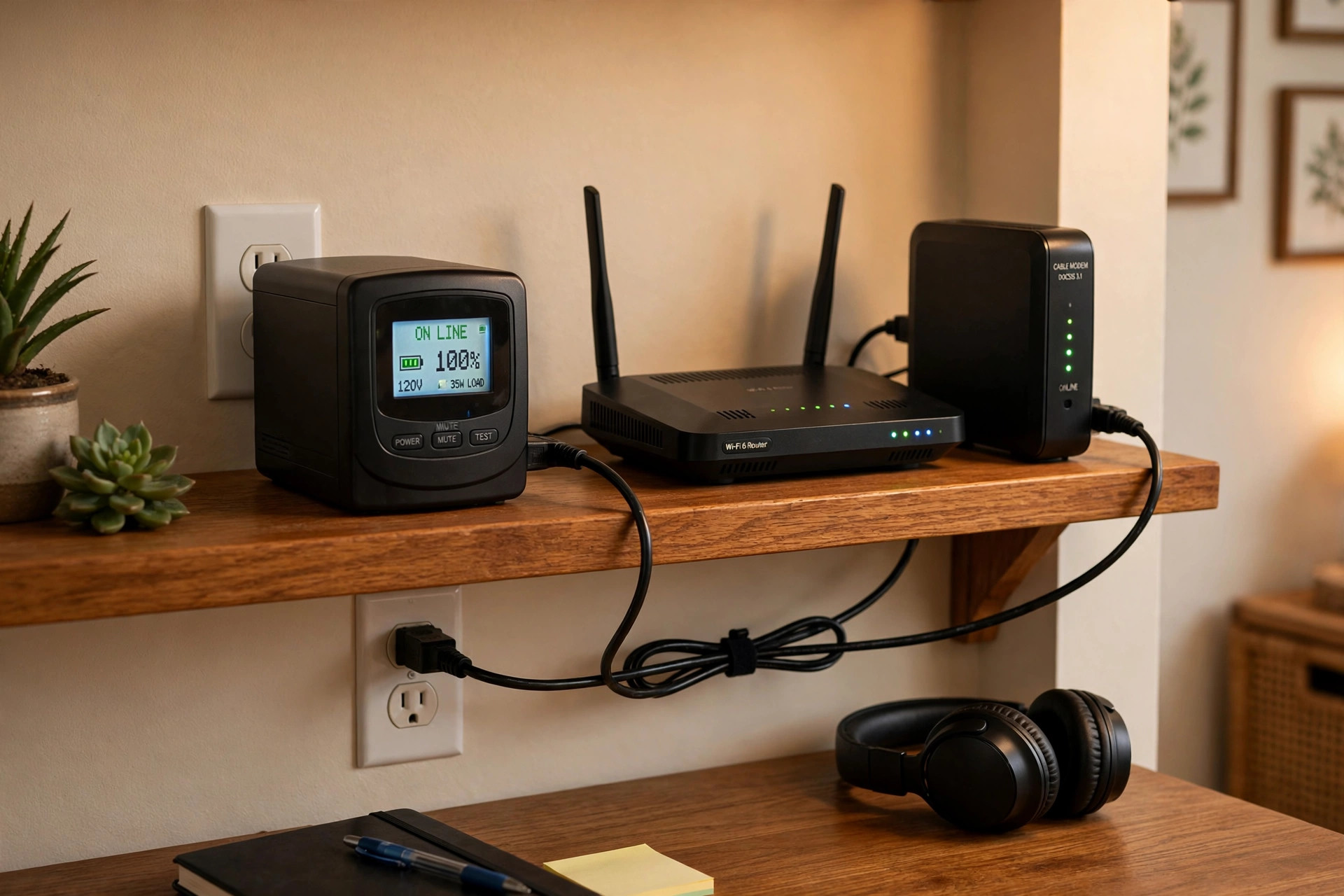
The lights go out. The modem dies. The router dies. The whole house goes offline. This happens to many American homes every year. Storms knock down lines. Grid work cuts power for hours. A UPS fixes this problem. A UPS is an uninterruptible power supply. It is a box with a battery inside. It plugs into the wall. Your modem and router plug into it. When the power fails, the battery takes over in less than a second. Your internet stays on. Your work call does not drop. Your security cameras keep recording.
Finding the best ups for home network equipment usa buyers trust is not hard once you know what to look for. Most home networks draw very little power. A modem uses about 10 watts. A router uses about 10 to 15 watts. Together they use less than a desk lamp. So you do not need a big, costly unit. You need a small, quiet unit sized for a light load. This guide explains how to choose one.
Why Your Home Network Needs a UPS: Best Ups for Home Network Equipment Usa
Power fails more often than most people think. The average American home loses power once or twice a year. Some regions lose it much more. A short blink of half a second is enough to kill your connection. The modem and router must restart. That takes two to five minutes. Video calls end. File uploads stop. Smart home gear goes dark.
A UPS does three jobs. First, it gives backup power during an outage. Second, it protects against surges. A surge can fry a modem in one strike. Third, it smooths out brownouts. A brownout is a drop in voltage. It makes gear act strange. A UPS with line conditioning keeps the voltage steady.
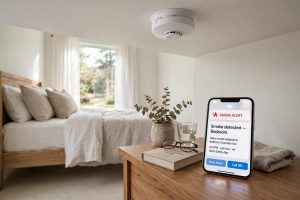
Your network is also the heart of your home. The smart lock, the doorbell camera, the thermostat, and the smoke alarm alerts all need the internet. If the power fails and the network dies, you lose remote access to your house. A small UPS keeps that link alive. For homes that depend on smart security, see our guide on the best outdoor security camera without wifi subscription to pair a camera system with a solid network.
How to Choose: What to Look For
Wattage and VA Rating
A UPS has two ratings. One is watts. The other is volt-amperes, called VA. Add up the watts of your gear. A modem at 10 watts and a router at 15 watts give 25 watts. Add a network switch at 8 watts. That is 33 watts total. Pick a UPS with a watt rating at least twice your load. For a small network, a 350 to 600 VA unit is plenty.
Runtime
Runtime is how long the battery lasts. A 600 VA unit can run a 30-watt network for about 45 to 90 minutes. Check the runtime chart from the maker. Real numbers matter more than bold claims. Longer runtime costs more. For most homes, one hour is enough to ride out short outages or shut down with care.
Outlet Types
A UPS has battery-backed outlets and surge-only outlets. Plug your modem, router, and switch into the battery-backed outlets. Plug a phone charger into a surge-only outlet. Do not plug a laser printer into a UPS. It draws too much power at startup. Keep it on a plain surge strip instead.
Sine Wave Type
Cheap units make a stepped or simulated sine wave. Costly units make a pure sine wave. Most modems and routers work fine on either type. Some sensitive gear prefers pure sine wave. If your router has an advanced power supply, a pure sine wave unit gives peace of mind.
LCD Display and Alerts
A small screen shows the load, the battery level, and the time left. This helps you plan. An alarm beep tells you the power is out. Many units also have software that sends alerts to your computer. Simple lights work fine too, but a display is nicer.
Battery Replacement
Batteries wear out in three to five years. A good UPS lets you swap the battery yourself. Check that replacement batteries are easy to find and priced fairly. Sealed lead-acid batteries are the common type. Lithium units last longer but cost more.
For a broader look at whole-house backup options, our article on the best home battery backup system reviews usa compares larger systems that can power far more than a network rack.
Types of UPS for Home Network Gear
Standby UPS
A standby UPS is the basic type. It waits in the background. When power fails, it switches to battery in a few milliseconds. It is cheap and quiet. It is fine for most modems and routers. Most homes need nothing more.
Line-Interactive UPS
A line-interactive UPS also fixes voltage dips without using the battery. It uses a transformer to boost or trim the power. This is the sweet spot for home networks. It handles brownouts well. It costs a bit more than a standby unit. Makers such as APC and CyberPower sell many models in this class.
Online UPS
An online UPS runs your gear from the battery all the time. It gives the cleanest power. It also costs the most and makes more noise. Homes do not need this type for a modem and router. Small offices with servers may choose it.
Mini UPS for Modems
A mini UPS is a small box made just for routers and cameras. It often uses a USB-C or DC output. It can run for hours because it feeds power straight to the device. It is compact and silent. It cannot power a desktop computer. For a simple two-device network, it is a neat choice.
Cost and Price in the USA
Prices vary by size and brand. A standby unit of 350 to 600 VA costs about 60 to 120 dollars. A line-interactive unit of 750 to 1000 VA costs about 130 to 220 dollars. A mini UPS for one router costs about 30 to 70 dollars. Battery replacements cost about 25 to 60 dollars.
Do not buy on VA alone. A large unit running a tiny load wastes money and space. Size the unit to your load. Read the runtime chart. Compare warranty terms. Many brands give two or three years on the unit and one year on the battery.
Shopping at large retailers makes comparison easy, and independent test labs publish solid buying data. You can find detailed test results at Consumer Reports, and plain-language tech buying advice at CNET. Both sites test power and networking gear on a regular basis.
Setting Up Your UPS the Right Way
Place the UPS near your modem and router. Plug it into a wall outlet, not a power strip. Charge it for a full day before the first use. Then plug in your modem and router to the battery-backed outlets. Write the install date on the unit with a marker. This tells you when the battery is due for a swap.
Run a test. Unplug the UPS from the wall. Time how long your network stays up. Write the number down. Repeat the test every six months. If the runtime drops by half, the battery is worn. Replace it.
Keep the unit cool and dry. Do not stack books or clothes on top. Heat shortens battery life. Keep it off the floor if your area floods. If you are building a full smart setup, our smart home wifi network setup guide usa walks through modem and router placement for strong coverage.
Care and Upkeep
A UPS needs little care. Dust it once a year. Check the battery date. Test the runtime twice a year. Keep the software or app updated if the unit has one. Replace the battery every three to five years, or sooner if tests show weak runtime.
Do not open the battery case yourself unless the manual says you may. Old batteries go to a recycling center. Many stores take them for free. Never put a UPS battery in the household trash.
Watch for warning signs. A unit that beeps often may have a weak battery. A hot case means poor airflow. Swelling of the battery case is a sign to stop using the unit at once and replace the battery.
Safety
Batteries hold stored energy. Treat them with care. Keep the UPS away from water. Do not plug one UPS into another UPS. Do not plug in heaters or toasters. These draw far more than the unit can give.
If a battery leaks, unplug the unit and move it with care. Wash your hands after touching leaked material. Recycle the battery at a proper drop-off point. The Consumer Product Safety Commission offers clear guidance on home battery safety and product recalls.
Keep the unit where children cannot pull it down. Heavy units can tip and hurt small feet. Secure loose cables so no one trips. A tidy setup is a safe setup.
How a UPS Fits a Smart Security Home
Many homes now run security gear on the same network. Doorbell cameras, floodlight cameras, and alarm hubs all need power and internet. When the lights go out, a UPS keeps the router alive so cameras can still upload clips. A system from Ring or an alarm panel from ADT or SimpliSafe works best when the network never drops.
Some hubs have their own backup batteries. Check the manual. Even with a hub battery, the modem and router still need the UPS. Without them, alerts cannot reach your phone. Tech coverage at The Verge often explains how outages affect smart home gear, which can help you plan.
For heavier power needs, industrial-grade backup lines from Eaton serve small offices. And if you want to cut standby waste across your home, ENERGY STAR lists efficient electronics that draw less idle power.
FAQ
How long will a UPS run my modem and router?
It depends on the load and the battery size. A 600 VA unit with a 30-watt network often lasts 45 to 90 minutes. A 1000 VA unit can last two hours or more. Check the maker chart for your exact load.
Can I plug my whole home office into the UPS?
You can, but size it right. A modem and router use little power. A desktop computer, monitor, and desk lamp add a lot. Add all watts together. If the total is over half the UPS rating, buy a larger unit or split the load.
Will a UPS keep my internet on if the outage is wide?
Often yes. The UPS powers your modem and router. If your internet provider keeps its own gear running, your connection stays up. During a large outage, the provider may also fail. Then the UPS keeps your local network alive but the web stays down.
How often should I replace the UPS battery?
Every three to five years is normal. Heat and deep discharges shorten life. Test the runtime twice a year. When the runtime falls well below the new-unit number, buy a fresh battery.
Is a pure sine wave UPS worth it for home network gear?
For most modems and routers, no. A standard line-interactive unit works fine. Buy pure sine wave if your gear has an active power supply or if the manual asks for it. It costs more but gives the cleanest output.
Can a UPS protect against lightning?
A UPS gives good surge protection, but no small box stops a direct strike. Unplug sensitive gear during a severe storm if you can. A whole-house surge protector at the breaker panel adds a strong second layer.
Final Word
A UPS is a small box with a big job. It keeps your modem and router alive when the power fails. It guards against surges and brownouts. It costs less than a family dinner out. Size it to your load, test it twice a year, and swap the battery on time. Your network will thank you the next time the lights flicker.
References
ADT. (n.d.). Home security and automation. https://www.adt.com APC. (n.d.). Uninterruptible power supplies and surge protection. https://www.apc.com CNET. (n.d.). Technology news and reviews. https://www.cnet.com Consumer Reports. (n.d.). Product reviews and ratings. https://www.consumerreports.org CyberPower Systems. (n.d.). UPS battery backup systems. https://www.cyberpowersystems.com Eaton. (n.d.). Power management and backup solutions. https://www.eaton.com ENERGY STAR. (n.d.). Energy efficient products. https://www.energystar.gov Ring. (n.d.). Smart home security devices. https://www.ring.com SimpliSafe. (n.d.). Home security systems. https://www.simplisafe.com The Verge. (n.d.). Technology news and reviews. https://www.theverge.com U.S. Consumer Product Safety Commission. (n.d.). Product safety information. https://www.cpsc.gov
Was this guide helpful?

About James Carter
The My Garden US editorial team writes practical, in-depth home and garden guides for American homeowners — tested advice, no fluff.
You May Also Like
Best Carbon Monoxide Detector Reviews 2026: A Plain Guide for American Homes
May 29, 2026 0 views
Solar Lease vs Buy Comparison USA 2026: A Plain Guide for Homeowners
April 10, 2026 0 views
Best Professionally Monitored Security System USA: A Complete Homeowner Guide
July 10, 2026 0 views