
Most houses have one room that stays too cold in winter and one room that stays too hot in summer. The living room feels fine. The bedroom at the end of the hall feels like a different climate. This problem has a name. It is called uneven room balancing. Many American homeowners look at a smart vent for room balancing as a way to fix it.
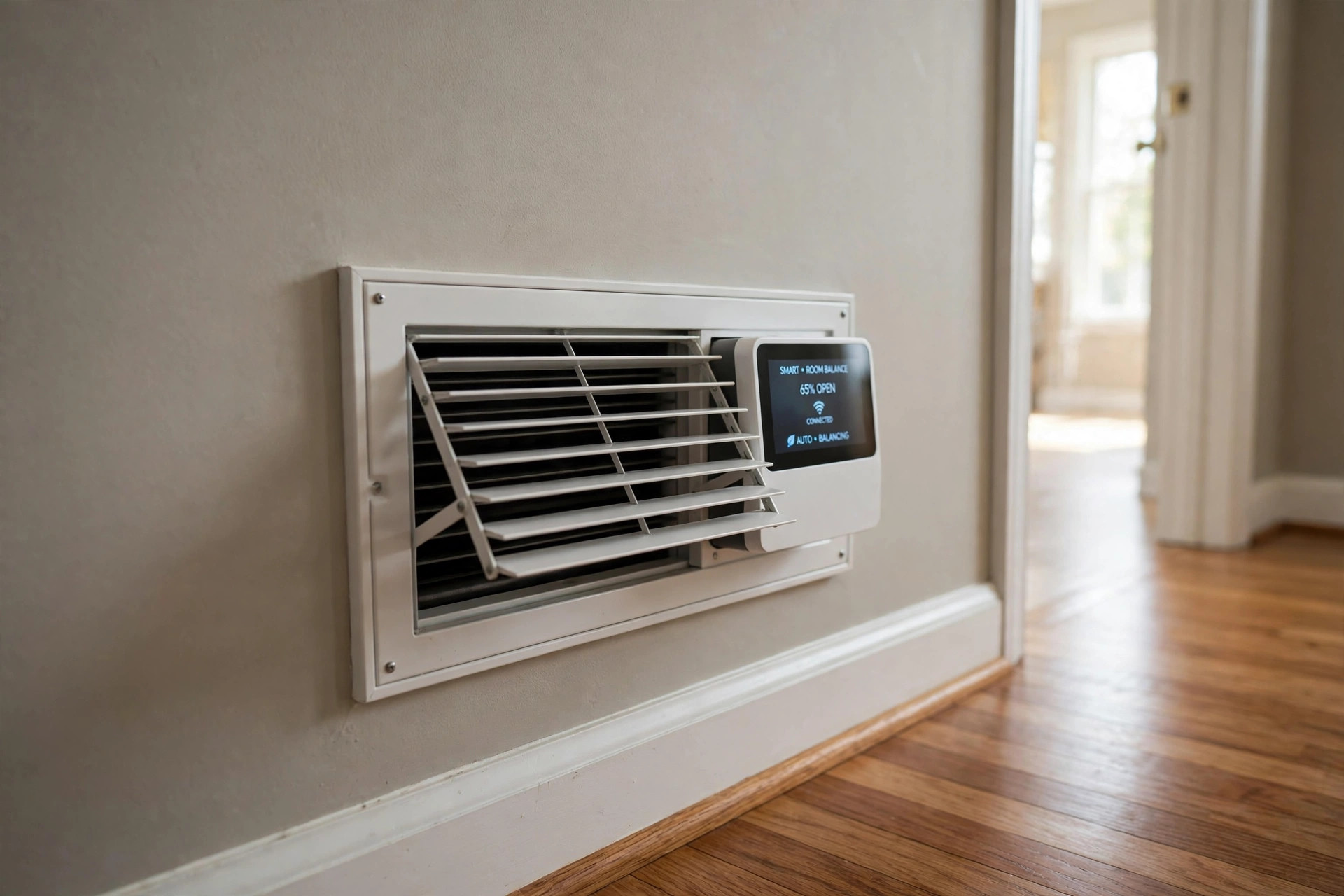
A smart vent is a small device that sits inside the floor or wall vent opening. It has a small motor and a set of louvers. It opens and closes the airflow to one room. A sensor or a room thermostat tells it what to do. The idea is simple. Push more air to rooms that need it. Hold air back from rooms that do not.
This guide walks through the smart vent for room balancing reviews USA shoppers read before they buy. It explains what these vents do, how they work, what to look for, and what they cost. It also covers care and safety. The goal is to help a buyer decide with clear eyes.
Why Room Balancing Matters
Heating and cooling takes up a large share of the home energy bill. The federal government has long said this. Energy guidance from ENERGY STAR points out that forced air systems waste energy when rooms get air they do not need. When one room gets too much air, another gets too little. The thermostat sits in the hallway and reads the middle of the house. The rooms at the ends of the duct run suffer.
Older homes suffer most. Duct runs were often sized by rule of thumb. Long runs lose pressure. Sharp turns cut airflow. A room far from the furnace gets a weak flow. A room close to the furnace gets a blast. Reviewers of smart vents in the USA often say the same thing. The upstairs bedrooms run hot. The basement runs cold. The main floor feels right.
Room balancing means each room gets the share of air it needs. In the past, a technician would do this by hand. He would set dampers inside the ducts. That takes time and skill. A smart vent lets the homeowner adjust the flow room by room. It does this with motors and sensors. Many owners say the change is easy to feel within a day.
How a Smart Vent Works: Smart Vent for Room Balancing Reviews Usa
A smart vent replaces the old register cover. The old cover is a fixed grill. The smart vent is a box with a moving louver set. A small motor drives the louvers open or shut. A radio chip talks to a hub or a phone app. Some models also read the room temperature right at the vent.
Most systems work with a room sensor. The sensor sits on a shelf or a wall. It reads the temperature in that room. When the room hits the set point, the vent closes part way. When the room falls short, the vent opens wide. Some brands tie in with smart thermostats. Others run on their own app. Technology writers at PCMag and CNET have reviewed these systems for several years. Their tests show the same pattern. The vents work best when the home also has a good Wi-Fi signal and a clear plan for each room.
The vents run on batteries in most cases. A set of AA batteries can last a year or two. The vent wakes, moves, and goes back to sleep. This keeps power use low.
It is worth noting one limit. A smart vent cannot make air. It can only direct air. If the furnace or air conditioner is too small for the house, no vent can fix that. Room balancing works on the margin. It moves air from where it is wasted to where it is needed. That is enough in most homes. It is not enough when the equipment is failing or sized wrong.
What to Look For When You Buy
Reviews of the smart vent for room balancing in the USA point to a few key features. Start with size. Vents come in standard register sizes. The common floor sizes are 4 by 10 inches and 4 by 12 inches. Wall sizes vary more. Measure the duct opening, not the old grill. Write down the numbers before you shop.
Next, look at the control method. Some systems need a hub that plugs into the router. Some talk straight to the phone. Some pair with a smart thermostat or a voice assistant from Google. A buyer who already owns a smart thermostat should check for a match. Mixed systems can still work, but setup takes longer.
Battery life matters. Look for a stated battery life of at least twelve months. Check what kind of battery the vent uses. Standard AA batteries are easy to replace. A built in rechargeable pack may last longer but costs more to replace.
Noise is another point. The motor makes a soft sound when the louvers move. A vent in a quiet bedroom can be heard at night. Buyers who sleep light should look for reviews that mention bedroom noise.
The app should be simple. Good apps show each room, each vent, and each sensor on one screen. They let the owner set schedules by room.
Static pressure safety is the most technical point, and it matters most. Forced air systems need a minimum amount of open vent area. If too many vents close at once, pressure builds in the ducts. That can strain the blower motor. Good systems watch for this. They keep a set share of vents open at all times. Some use a pressure sensor in the duct. Buyers should ask about this before buying. Articles from home pros at This Old House stress that airflow must never be choked too far.
Types and Options
There are two main types of smart vents. The first type is the drop in vent. It fits into a standard floor register boot. The homeowner pulls out the old grill and drops in the smart vent. No tools are needed in most cases. This type suits renters and first time buyers. It also suits people who want to test one room first.
The second type is the hard wired or duct mounted vent. It sits deeper in the duct or ties to house power. An installer usually puts it in. This type suits a full home system. It can be more reliable because it never needs batteries. It costs more up front.
Some systems sell vents only. Others sell a kit with vents, room sensors, and a hub. Kits cost more but set up faster. A buyer with one hot bedroom may do well with a single vent and a sensor.
There is also a choice between brand tied systems and open systems. Brand tied systems work with one smart thermostat brand. They can offer tight control. Open systems work with many brands. They offer more choice. The right pick depends on what the buyer already owns.
Cost and Price
A single smart vent in the USA often costs between sixty and one hundred twenty dollars. A room sensor adds twenty to forty dollars. A hub, when needed, adds fifty to one hundred dollars. A four room kit often runs three hundred to six hundred dollars.
That is the hardware cost. Most systems have no monthly fee. A few charge for advanced features. Buyers should read the fine print on the app page.
Installation cost is low for drop in vents. The homeowner can do it in minutes. Hard wired systems may need an HVAC technician. A service call can add one hundred to three hundred dollars.
Payback is hard to promise. Some makers claim ten to twenty percent savings on heating and cooling. Real world reviews are more modest. Many owners report small savings and better comfort. The main gain is comfort, not cash.
Setting Up for Best Results
Start with a plan. Walk the house with a notebook. Mark which rooms run hot and which run cold. Note the time of day the problem shows. A south facing room runs hot in the afternoon. An upstairs room runs hot at night. These notes guide the settings.
Place the room sensor with care. Do not put it near a window, a lamp, or a heat source. Do not put it on the floor. A shelf at chest height on an inside wall works best. The sensor should read the air the people feel.
Set schedules by room, not by house. The guest room may only need full air on weekends. The home office needs air on work days. The nursery needs steady air at night. Most apps allow a weekly schedule per room. Use it.
Give the system a week to learn. Some systems adjust on their own. Others need the owner to tweak the settings. Check each room at the same time each day. Small changes work best. Move the set point one or two degrees at a time.
Strong Wi-Fi helps a great deal. Vents at the far ends of the house may lose signal. A mesh Wi-Fi system can fix dead spots. Network gear that stays on during short power cuts also helps. A small UPS for home network equipment keeps the hub and router alive when the lights flicker.
Care and Upkeep
Dust the grill once a month. A soft brush or a vacuum with a brush head works well. Dust can block the louvers and a built in temperature sensor.
Check the batteries once a year. Most apps show the battery level. Replace all the batteries in a vent at the same time. Do not mix old and new batteries.
Look at the louvers now and then. Make sure they move freely. A child’s toy or a rug edge can jam a floor vent. Keep the area in front of the vent clear for at least a foot.
If a vent stops talking to the hub, check the batteries and move the hub closer. Most problems trace back to power or signal. Reset the vent only as a last step.
Safety
Smart vents are low voltage devices. They pose little shock risk. Still, a few safety rules apply. Never close off more vents than the maker allows. High duct pressure can damage the blower. It can also crack duct seams. The maker will state a minimum open share. Follow it.
Keep vents clear of curtains and furniture. Blocked vents can trap heat in the ducts. That is a fire concern in rare cases. The Consumer Product Safety Commission tracks home heating hazards, and clear airflow is a basic rule. Guidance from the safety agency at CPSC backs the same point. Keep the path open.
Do not use smart vents to shut off air to a room with a gas appliance. Furnaces and water heaters need combustion air. A room that feeds air to a gas unit should keep its vent open. When in doubt, ask an HVAC technician.
Smoke and carbon monoxide alarms still come first. A smart vent system is a comfort device. It is not a life safety device. Every home needs working alarms on each floor. Homeowners who add smart locks and alarms may also look at guides for the best smart deadbolt for rental property use, since rental rules differ from owner rules. Whole home security guides from Ring, SimpliSafe, and ADT can help plan the rest of the system.
Renters should check the lease. A drop in vent leaves no marks. That makes it renter friendly. Still, some leases bar changes to HVAC parts. A quick note to the landlord avoids trouble.
Frequently Asked Questions
Do smart vents work with any furnace or air conditioner?
They work with most forced air systems. They do not work with baseboard heat, radiators, or mini splits. Those systems have no ducts. The vent has nothing to control. Check the system type before buying.
How many smart vents does a house need?
Start with the problem rooms. Most buyers start with two to four vents. A full home system may use eight to twelve. Do not put a smart vent on every single register. The system needs some always open vents to keep pressure safe.
Will a smart vent lower my energy bill?
It may lower it a little. The bigger gain is comfort. Rooms that were too hot or too cold become usable. Some owners lower the thermostat a degree because the worst rooms feel better.
Can I install them myself?
Drop in vents are a do it yourself job. Pull the old grill. Drop in the new vent. Pair it with the app. The whole job takes about ten minutes per vent.
Do they work when the Wi-Fi goes down?
Most vents hold their last position when the signal drops. Some systems keep a local schedule. Full remote control returns when the Wi-Fi returns.
Are smart vents worth the cost?
For a home with clear hot and cold spots, many owners say yes. The comfort gain is real and fast. For a home that already feels even, the gain is small. Try one vent in the worst room first.
A Short Final Word
A smart vent for room balancing is a modest device with a clear job. It moves air where it is needed. It holds air back where it is not. Reviews across the USA tell a steady story. Setup is easy. Comfort improves. Savings are small but real.
The wise buyer starts small. Fix the worst room first. Learn the app. Then add more vents if the results please. Keep some vents always open. Keep the sensors placed well. And keep the expectations plain. No vent can fix a weak furnace. But for the common case of uneven rooms, a smart vent is one of the simplest fixes on the market. Homeowners who want broader background on home systems can browse guides at The Spruce and Bob Vila.
References
ADT. (n.d.). Home security and automation. https://www.adt.com Bob Vila. (n.d.). Home improvement advice. https://www.bobvila.com CNET. (n.d.). Technology news and reviews. https://www.cnet.com ENERGY STAR. (n.d.). Energy efficient products. https://www.energystar.gov Google Store. (n.d.). Smart home devices. https://store.google.com PCMag. (n.d.). Technology product reviews. https://www.pcmag.com Ring. (n.d.). Smart home security devices. https://www.ring.com SimpliSafe. (n.d.). Home security systems. https://www.simplisafe.com The Spruce. (n.d.). Home and garden advice. https://www.thespruce.com This Old House. (n.d.). Home renovation guidance. https://www.thisoldhouse.com U.S. Consumer Product Safety Commission. (n.d.). Product safety information. https://www.cpsc.gov
Was this guide helpful?

About Robert Taylor
The My Garden US editorial team writes practical, in-depth home and garden guides for American homeowners — tested advice, no fluff.
You May Also Like

Door Jammer Security Bar Reviews 2026 USA: A Plain Guide for Every Home
January 30, 2026 0 views
Span Panel vs Traditional Panel Cost USA: A Homeowner’s Guide
January 8, 2026 0 views
Best Wireless Doorbell Camera Reviews USA: A Plain Guide to Choosing Well
September 3, 2026 0 views