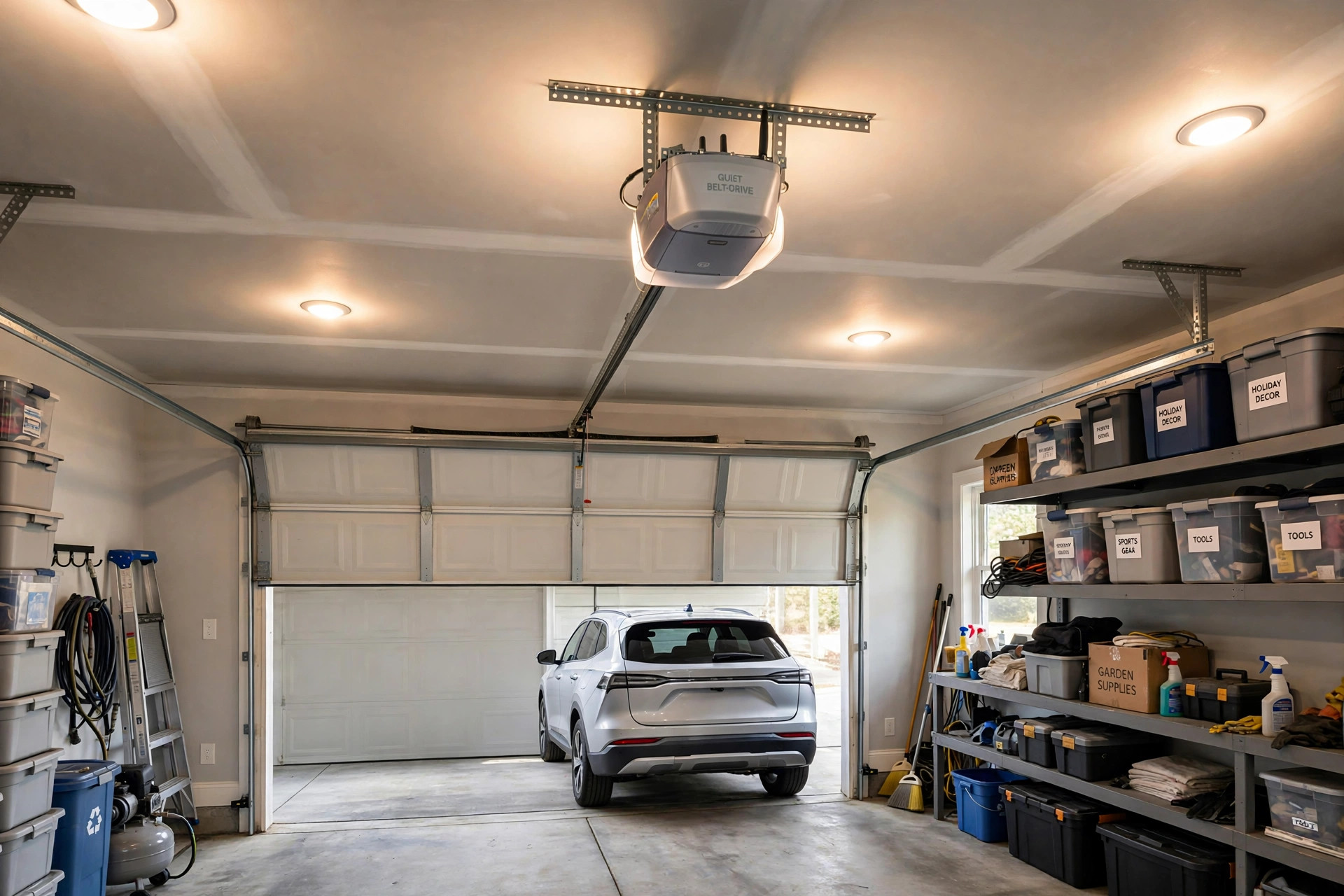

A loud garage door opener can rattle the whole house. It can wake a baby at dawn. It can shake the floor of a bedroom that sits above the garage. That is why the best quiet garage door opener reviews usa homeowners read all point to one idea: the drive system matters more than the brand name. When you understand how each type works, you can pick a machine that opens the door with a soft hum instead of a grinding roar.
This guide walks you through the reviews, the noise levels, and the facts. It covers what makes an opener quiet, the types on the market, real costs, care, and safety. It also answers the questions buyers ask most.
Why a Quiet Opener Matters
Most homes in America have the garage attached to the house. The wall between the two spaces is thin. A chain-drive opener can send vibration through wood studs and drywall straight into living rooms and bedrooms. Reviews from homeowners across the country repeat the same story. The old opener worked fine for years, but the noise grew worse with age. Rollers wore down. The chain stretched. Each morning the whole family heard it.
A quiet opener changes daily life in small but real ways. A parent can leave for work at five in the morning without waking the house. A teenager can come home late at night without a bang on the wall. A home office stays calm when a delivery driver opens the door at noon. These are the reasons the best quiet garage door opener reviews usa focus so much on sound levels.
Noise also points to wear. A loud machine is often a machine under strain. Belt-drive models run with rubber on metal, and that design wears far more slowly than chain on metal. So a quiet opener often lasts longer too.
How to Read Quiet Garage Door Opener Reviews: Best Quiet Garage Door Opener Reviews Usa
Reviews of quiet garage door openers in the United States tend to test the same things. When you read them, look for these points:
Drive type. Reviewers always name it. Belt drive ranks quietest, then screw drive, then chain drive. This single detail tells you more about noise than anything else on the box.
Horsepower or power rating. Most homes need a half-horsepower unit for a single door and three-quarter horsepower for a heavy double door. More power than you need adds cost but not much noise.
Measured noise. Some review labs use sound meters. They place the meter a set distance from the door and record decibels. Look for numbers under 60 decibels at close range, which is about the level of normal speech.
Real-home testing. Lab numbers are useful, but home tests matter more. Good reviews install the opener in an actual garage and note whether sound carries into the rooms above.
Smart features. Many quiet models now include Wi-Fi. You can check the door from a phone. This does not change noise, but it adds value for the price.
Warranty length. A long warranty on the motor and belt signals that the maker trusts the build. Five years or more on the motor is a good sign.
Review sites such as Consumer Reports run detailed home-product tests and publish noise ratings for major models, which makes them a solid place to compare results side by side. Tech reviewers at PCMag and The Verge also cover smart garage openers and test the phone apps that come with them.
Types of Quiet Garage Door Openers
There are four main types. Each has a different sound profile.
Belt-Drive Openers
Belt-drive openers use a rubber belt, often reinforced with steel, to pull the trolley along the rail. The rubber glides instead of clanking. This is the quietest common type, and it tops almost every list of the best quiet garage door opener reviews usa readers trust.
Belt drives suit homes with bedrooms above or beside the garage. They cost more than chain drives, usually by fifty to one hundred dollars. The belt rarely needs grease. It can last fifteen to twenty years with basic care.
Chain-Drive Openers
Chain-drive openers use a metal chain on a sprocket. They are the oldest design and the cheapest to buy. They are also the loudest. A new chain drive runs at a moderate hum, but after a few years the chain stretches and the noise grows.
Chain drives still have a place. For a detached garage, noise barely matters. For a heavy wooden door, a strong chain drive can outlast lighter units. But for attached garages, reviews almost never recommend them when quiet comes first.
Screw-Drive Openers
Screw-drive openers use a threaded steel rod that turns inside a trolley. Fewer moving parts mean fewer points of wear. They run at a medium noise level, louder than belt drives but quieter than old chain models.
Screw drives work well in mild climates. In very cold places, the thick grease they need can stiffen, and the opener may strain on winter mornings. Some owners in northern states note this in their reviews.
Wall-Mount (Jackshaft) Openers
Wall-mount openers, also called jackshaft openers, mount on the wall beside the door instead of the ceiling. They turn the torsion bar directly. With no rail and no trolley, vibration has little path into the ceiling. They are among the quietest options of all.
They cost the most, often twice the price of a belt drive. They also free up ceiling space, which suits garages with high storage needs. Reviews praise them for silence but warn that the price and the need for a torsion-spring door limit their use.
What to Look for When You Buy
Beyond the drive type, these details shape your choice:
Door weight. Weigh the door or read the label on it. A standard single steel door weighs about 100 to 150 pounds. A double door or a wood door can pass 300 pounds. Match the opener rating to the weight.
Soft start and stop. Quiet models ease the door into motion and slow it before it closes. This feature cuts the thud at each end of travel. Reviewers often mention it by name.
Battery backup. Power cuts lock a garage door shut. A battery backup lets the opener run a limited number of cycles during an outage. Many states now require it on new installs.
Rollers and hardware. Old metal rollers add noise no opener can fix. Nylon rollers with sealed bearings cut rolling sound by a large margin. If you buy a quiet opener, plan to upgrade the rollers too.
Lighting. Most new openers carry bright LED panels. Some add motion-sensor lights that turn on when you enter the garage. This is a small comfort that owners mention often.
Smart control. Wi-Fi models link to phone apps and voice assistants. You can ask a smart speaker to close the door or check whether you left it open. Google Home compatibility, for example, is listed on the Google store pages for supported models.
Cost and Price
Prices for quiet garage door openers in the United States fall into clear bands:
– Chain drive: 150 to 250 dollars for the unit alone. – Belt drive: 220 to 400 dollars for the unit alone. – Screw drive: 200 to 350 dollars for the unit alone. – Wall-mount: 450 to 800 dollars for the unit alone.
Professional installation adds 200 to 400 dollars in most markets. A do-it-yourself install takes a careful homeowner about four to six hours. The manual runs long, and the spring work demands respect, but the wiring is simple.
Running costs are low. An opener uses little power, often less than a single light bulb on standby. Wi-Fi models use slightly more. Over a year, electricity costs rarely pass twenty dollars.
Replacement parts are cheap too. A belt costs 40 to 80 dollars. Safety sensors cost 20 to 40 dollars per pair. Nylon rollers cost about 30 dollars for a full set. These are the parts that most often extend the life of a unit.
Care and Upkeep
A quiet opener stays quiet only with basic care. Follow this routine once or twice a year:
1. Check the door balance. Pull the red release cord and lift the door by hand. It should move freely and stay put at waist height. A door that falls or rises on its own strains the motor and adds noise. 2. Lubricate the rollers and hinges. Use a silicone-based garage door spray, not heavy grease. Wipe off the old film first. 3. Tighten hardware. The door shakes each day. Bolts on the track and brackets loosen over time. A socket wrench and ten minutes fix this. 4. Test the sensors. Wave a broom under the door while it closes. The door must reverse at once. Dirty sensor lenses cause false stops; wipe them clean. 5. Inspect the belt or chain. A belt should have no cracks or fraying. A chain should sag about half an inch at its midpoint. Adjust tension as the manual shows. 6. Listen. A new squeal or grind tells you where to look. Most new noises trace to rollers or dry hinges, not the motor.
These steps take under an hour. They keep the opener near its factory noise level for its full life.
Safety
Garage doors are heavy machines. The United States Consumer Product Safety Commission tracks garage door injuries and publishes guidance on safe use, and every buyer should read it before installing a unit. The main rules are simple:
– Never let children play with the remote or the wall button. – Keep the wall button at least five feet off the floor, out of reach of small hands. – Test the auto-reverse feature every month. Place a two-by-four flat on the floor where the door lands. The door must reverse when it touches the board. – Never attempt to adjust the torsion spring yourself. A wound spring holds enough force to cause grave injury. Call a trained technician. – Disconnect the opener before you work on the door, and use the manual release only when the door is fully closed.
Battery backups deserve one more note. When the power fails, the opener runs on battery for a day or two. After that, you rely on the manual release. Practice using the release cord before you need it in the dark.
Pairing Your Opener With Home Security
A garage door is one of the largest entry points to a house. A quiet opener is good for comfort, but smart buyers think about the whole entry system. A keypad lock for the garage door lets family members enter without a remote, and a driveway motion sensor alarm warns you when a car pulls in.
Many owners link the garage to a wider smart home setup. Phone alerts from a video doorbell or camera can show who is at the door when it opens. Ring doorbell cameras integrate with several major opener brands, and the company documents the pairings on its site. For whole-home protection, some buyers compare a full home security system with no monthly fee against monitored plans from companies such as ADT or SimpliSafe, both of which publish their current packages and pricing online.
Frequently Asked Questions
How quiet is a belt-drive opener in decibels?
Most belt-drive openers measure between 50 and 60 decibels at a distance of ten feet. That is close to normal conversation. Inside the rooms above the garage, the sound often drops to a faint hum. Actual numbers depend on the door, the rollers, and the garage walls.
Are quiet garage door openers worth the extra cost?
For attached garages, yes. The price gap between a chain drive and a belt drive is usually under one hundred dollars. That sum buys years of quieter mornings and nights. For detached garages, the value is lower, and a chain drive can serve well.
Can I make my current opener quieter?
You can reduce noise without replacing the unit. Swap metal rollers for nylon rollers with sealed bearings. Lubricate the hinges and track. Tighten all bolts. Add a vibration-isolation pad between the opener bracket and the ceiling. These steps cut noise by a noticeable amount, though they will not match a true belt drive.
How long does a quiet garage door opener last?
A quality belt-drive opener lasts 12 to 20 years. Chain drives last 10 to 15 years. Wall-mount units often reach 15 to 20 years. Regular care adds years to every type. The warranty on the motor, often five to seven years, is a rough guide to expected life.
Do smart garage door openers cost more to run?
The difference is tiny. A Wi-Fi radio on standby draws a fraction of a watt. Yearly electricity cost for a smart opener stays under twenty dollars, the same as a basic model. The larger cost is the purchase price, which runs 30 to 60 dollars above non-smart versions.
What is the quietest garage door opener type of all?
Wall-mount jackshaft openers are the quietest, because they remove the ceiling rail entirely. Among ceiling-mounted types, belt drive is the quietest. Both appear at the top of the best quiet garage door opener reviews usa shoppers rely on each year.
A Final Word
The best quiet garage door opener is the one that fits your door, your garage, and your home. For most American families, that means a belt-drive unit with soft start and stop, nylon rollers, and a solid warranty. Spend the extra hour on installation care. Test the safety reverse. Lubricate on schedule. The reward is a door that opens and closes with little more than a whisper, day after day, year after year.
See CNET for more detail.
References
ADT. (n.d.). Home security and automation. https://www.adt.com CNET. (n.d.). Technology news and reviews. https://www.cnet.com Consumer Reports. (n.d.). Product reviews and ratings. https://www.consumerreports.org Google Store. (n.d.). Smart home devices. https://store.google.com PCMag. (n.d.). Technology product reviews. https://www.pcmag.com Ring. (n.d.). Smart home security devices. https://www.ring.com SimpliSafe. (n.d.). Home security systems. https://www.simplisafe.com The Verge. (n.d.). Technology news and reviews. https://www.theverge.com
Was this guide helpful?

About Michael Thompson
The My Garden US editorial team writes practical, in-depth home and garden guides for American homeowners — tested advice, no fluff.
You May Also Like

The Best Motorized Shades for Large Windows in USA Homes
October 1, 2026 0 views
Best Carbon Monoxide Detector Reviews 2026: A Plain Guide for American Homes
May 29, 2026 0 views
Best Home Battery Backup System Reviews USA: A Complete Buyers Guide
June 16, 2026 0 views