
Light under the kitchen cabinets does more work than most people think. It lights the counter where meals are made. It keeps shadows off the cutting board. It makes the whole room feel calm in the evening. For those reasons, smart under cabinet lighting reviews 2026 USA are worth reading before anyone buys. New sets this year connect to phones, voices, and home hubs. They can dim, change color, or wake up by motion. Prices run from a few dollars to a few hundred. This guide walks through the main points: why the lights matter, what to look for, the main types, typical costs, simple care, and basic safety. It ends with answers to common questions and a short final word.
Why It Matters
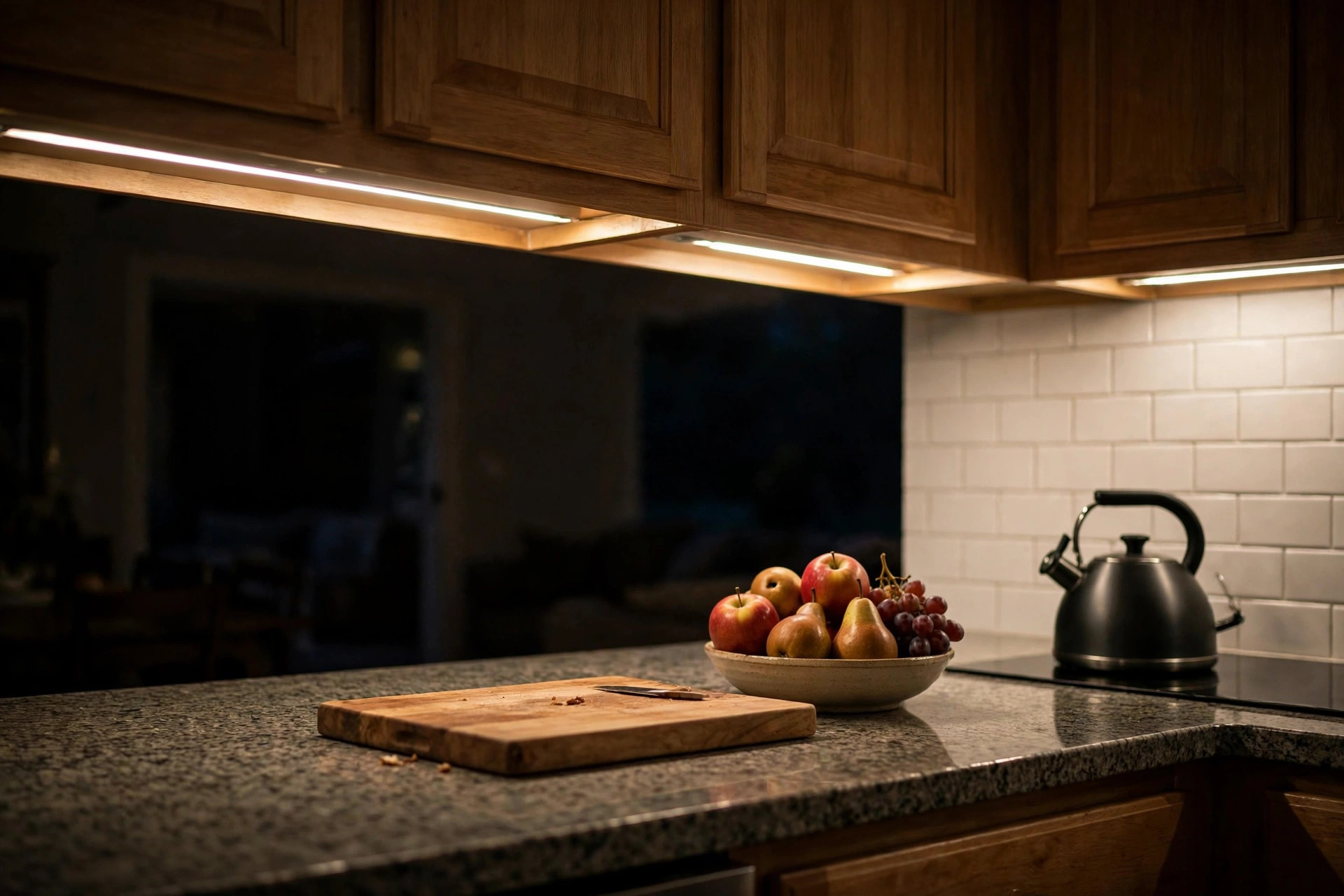
Kitchen counters sit in the shadow of the upper cabinets. Overhead lights cannot reach them well. A cook must cut, chop, and read labels in dim light. Under cabinet lights fix that. They put light exactly where the work is done.
Smart versions add control. A voice command can turn them on with wet hands. An app can dim them for dinner. A timer can shut them off at bedtime. Motion sensors wake the lights when someone steps into the kitchen at night.
Reviews help buyers tell good sets from weak ones. Some strips fade in a few months. Some pucks throw a harsh blue glare. Some apps drop the connection every week. Testers at CNET and reviewers at The Verge point out these faults before money changes hands. Their long test notes save buyers from short-lived sets.
There is also a money angle. Bright task light under the cabinets can replace a full room light for evening snacks and late work. The guidance from ENERGY STAR shows that LED lights use a small share of the power that old bulbs used. Lower wattage means a lower bill at the end of the month.
What to Look For: How to Choose: Smart under Cabinet Lighting Reviews 2026 Usa
Brightness comes first. Makers list it in lumens. For kitchen counters, most buyers are pleased with 300 to 800 lumens per foot of strip or per bar. Too much light gives glare on stone counters. Too little leaves dark spots in the middle of the run.
Color temperature comes next. It is measured in kelvin. Warm white near 2700 kelvin feels like evening sun. Neutral white near 4000 kelvin suits daily cooking. Cool white near 5000 kelvin reads as daylight and can look harsh. Many smart sets let the owner slide between these values in the app, so one set can serve both cooking and dining moods.
Look at how the set connects. Some use Wi-Fi. Some use Zigbee or Bluetooth with a small hub. Wi-Fi sets need no hub but add load to the router. Hub-based sets often respond faster. If the home already uses a smart light switch that needs no neutral wire, check that the new lights can join the same app or voice helper, so one voice command can run the whole kitchen.
Power source matters too. Battery sets are easy to place but need fresh cells or recharging. Plug-in sets need an outlet nearby. Hardwired sets tie into the home wiring and look clean, but they may call for an electrician. Testers at Consumer Reports often note that hardwired kits give the steadiest power over the years, while battery sets win on easy setup.
Length and cut marks deserve a look. Strip lights can be cut at marked points and linked with connectors. Measure each cabinet run before ordering. Leave a little extra at each end for the connectors and the power feed.
Also check dimming and schedules. Good sets dim smoothly from one to one hundred percent. Good apps allow sunrise fades and bedtime shutoffs. Read user reviews for news of flicker at low levels, since some cheap drivers hum or pulse when dimmed.
Ask about the warranty. A one-year warranty is the floor. Two or three years shows the maker trusts the driver and the diodes. Keep the receipt with the manual. A warranty claim is much easier with proof of the buy date.
Types and Options
LED Strip Lights
Strips are thin ribbons with many small diodes. They bend around corners and hide well under the cabinet edge. They suit long runs and L-shaped kitchens. Many smart strips answer to Alexa, Google Home, or Apple Home. The color tech in strips keeps improving, and our look at smart light strip reviews for TVs shows how strong color control has become across this whole class.
Puck Lights
Pucks are small round discs. They are often battery powered. They mount with screws or adhesive. They suit small kitchens, pantries, and glass cabinets. Their light falls in pools, so dark gaps can appear between pucks. Smart pucks add timers and dimming but rarely match the even glow of a strip.
Bar and Panel Lights
Bars are rigid sticks of LEDs inside a metal or plastic shell. They give a smooth line of light with no bright dots. Many link together in a chain with short cables. Panels are wide flat plates that spread light over a big area. Both types suit buyers who want a finished look with no visible dots.
Across all three types, motion sensor under cabinet lighting has grown popular. A small sensor wakes the light when hands approach the counter. It is a small touch that feels right in a busy kitchen. Many buyers pair these task lights with smart ceiling lights, and our roundup of smart bulb reviews for recessed lighting covers that side of the room as well.
Cost and Price
Prices in 2026 run across a wide band. A set of six battery pucks can cost twenty to forty dollars. A Wi-Fi smart strip for a full kitchen can cost sixty to one hundred twenty dollars. Premium bars with hubs and color tuning can reach one hundred fifty to two hundred fifty dollars.
Installation adds to the total. Battery and plug-in sets need no help. Hardwired sets may need an electrician, and that can add one hundred to three hundred dollars depending on the run length and the home layout.
Buyers should weigh the cost per year of light. A cheap set that fails in a year costs more over time than a solid set that runs for five. Long reviews from owners who kept the lights for a year or more are the best proof of value. Test labs such as PCMag often track how sets hold up over months of daily use.
There are ways to save. Buying a kit with the hub included beats buying parts one by one. Watching for holiday sales helps. Choosing the right length avoids waste. Energy-efficient LEDs cost little to run each year.
Care and Upkeep
Under cabinet lights live near heat, steam, and cooking grease. A soft cloth wipe once a month keeps them bright. Unplug the set before cleaning. Do not spray cleaner on the diodes. A damp cloth, then a dry one, is enough.
Check the adhesive mounts twice a year. Heat can loosen sticky pads. If a strip starts to sag, replace the tape with fresh strong strips or add small clips under the cabinet.
For battery sets, recharge or change cells on a set schedule. Weak batteries make the lights dim and can harm the driver board. For plug-in sets, check the cord for cracks near the plug and the transformer.
Keep the app up to date. Makers push fixes for dropped connections and timer bugs. If a strip flickers, first try a power supply of the right rating before blaming the strip itself.
Store the manual and the model number. When a section fails years later, that record helps the buyer find matching parts or a matching warranty claim.
Once a year, review the light scenes saved in the app. Tastes change. A scene that suited winter may feel wrong in summer. Save two or three scenes with clear names, such as Cooking, Dinner, and Night. Clear names make the house easier for guests and for older family members to use.
Safety
Electricity and kitchens need respect. Even low-voltage LED sets carry rules. Keep all transformers and plugs away from sink splashes. Do not run power cords under rugs or across walkways.
The U.S. Consumer Product Safety Commission warns about cheap electrical goods that lack proper marks. Buy sets that carry a UL or ETL listing. The mark means a lab tested the set for fire and shock risk. Unlisted sets cost less for a reason, and the risk is not worth the savings.
Battery sets need care too. Use only the cells the maker names. Do not mix old and new cells. Swollen batteries should go to a recycling point at once and never into the trash.
LED lights make very little heat, but the area under cabinets still needs air. Do not bury a strip in insulation or pile towels against a bar. Let the metal shell breathe so heat can leave.
If a hardwired install is planned, many places call for a licensed electrician. That is money well spent. A pro also knows the local code on junction boxes and wire paths.
Voice control brings one more note. Name each light clearly in the app. A vague name can turn on the wrong zone in the dark, which is a small shock at 2 a.m.
Frequently Asked Questions
How long do smart under cabinet LED lights last? Most good LEDs are rated for twenty-five thousand to fifty thousand hours. In kitchen use that means many years. The driver or battery often fails first, not the diodes. Philips, a maker of home lighting, publishes life ratings that land in this same band.
Can I connect them to Alexa or Google Home? Most Wi-Fi and hub smart sets can. Check the box or listing for the right logo before buying. The Google Store lists many lights that pair with Google Home, and voice setup usually takes only a few minutes.
Are strips or pucks better for a kitchen? Strips give the most even light across a long counter. Pucks suit small spots and renters who want no wires. Bars sit in the middle with a clean look. Reviews for 2026 give the edge to strips for full kitchens and pucks for pantries.
Do I need an electrician? Not for battery or plug-in sets. Hardwired sets tie into the branch circuit, and most owners hire a pro. Security firms such as SimpliSafe and ADT both remind homeowners that even small electrical projects deserve proper care.
Can under cabinet lights also help with security? They are not security lights, but a lit kitchen at night can deter a prowler. Full security still needs cameras and alarms from names like Ring. A lit kitchen plus a doorbell camera is a stronger pair than light alone.
What is the best color for kitchen counters? Most cooks like warm to neutral white, about 2700 to 4000 kelvin. It shows food color well and feels easy on the eyes. Save bright daylight tones for a garage workbench.
A Short Final Word
Smart under cabinet lights are a small buy that pays back every day. They make cooking safer. They make evenings calmer. They use little power. Read the smart under cabinet lighting reviews 2026 USA buyers trust, measure your cabinets, and pick a listed set from a maker with a real warranty. Start with one run of cabinets. If it feels right, add the rest.
References
ADT. (n.d.). Home security and automation. https://www.adt.com CNET. (n.d.). Technology news and reviews. https://www.cnet.com Consumer Reports. (n.d.). Product reviews and ratings. https://www.consumerreports.org ENERGY STAR. (n.d.). Energy efficient products. https://www.energystar.gov Google Store. (n.d.). Smart home devices. https://store.google.com PCMag. (n.d.). Technology product reviews. https://www.pcmag.com Philips. (n.d.). Lighting products. https://www.philips.com Ring. (n.d.). Smart home security devices. https://www.ring.com SimpliSafe. (n.d.). Home security systems. https://www.simplisafe.com The Verge. (n.d.). Technology news and reviews. https://www.theverge.com U.S. Consumer Product Safety Commission. (n.d.). Product safety information. https://www.cpsc.gov
Was this guide helpful?

About David Wilson
The My Garden US editorial team writes practical, in-depth home and garden guides for American homeowners — tested advice, no fluff.
You May Also Like
Best Professionally Monitored Security System USA: A Complete Homeowner Guide
July 10, 2026 0 views
Smart Lock for Airbnb Remote Access Reviews: What Hosts Should Know
March 10, 2026 0 views
Best Smart Sump Pump Alarm Reviews USA
January 11, 2026 0 views