A radiant barrier for attic use is one of the most argued-over upgrades in American home energy. Some call it the best cheap fix for a hot attic. Others call it a poor use of money. The truth sits in the middle. To judge the radiant barrier for attic pros cons usa homeowners face, it helps to know what the product is, how it works, and where it earns its keep.
Why It Matters
Heat moves in three ways: by contact, by moving air, and by radiation. In a hot climate, the roof is the main door through which heat enters the house. The sun bakes the shingles, and the hot deck throws radiant heat down into the attic, the same kind of heat you feel from a fireplace across the room.
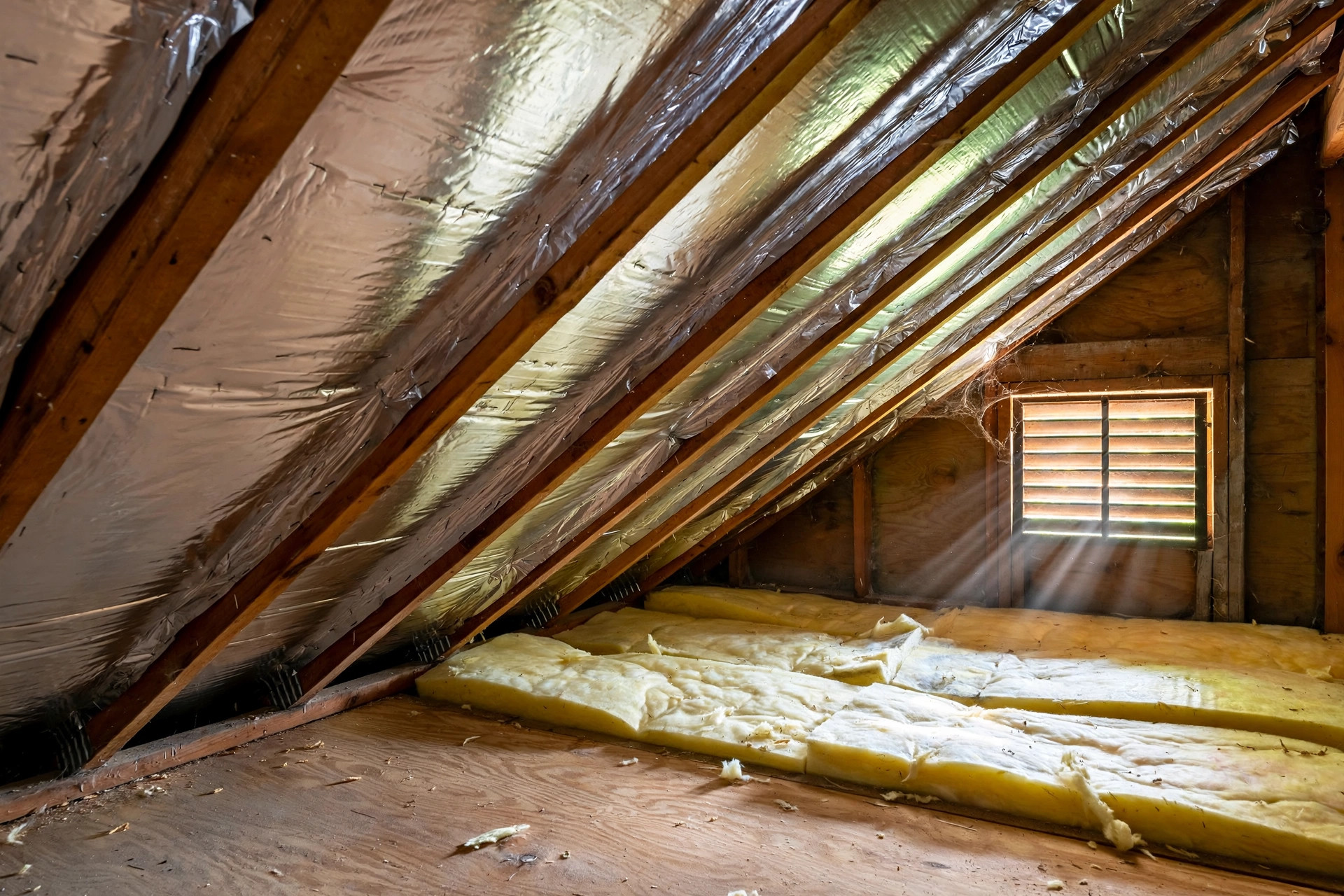
Most attic insulation is made to slow heat that moves by contact. It does little against radiant heat. That is the gap a radiant barrier tries to fill. A radiant barrier is a thin sheet of aluminum foil, sometimes with a paper or plastic backing, fixed to the underside of the roof rafters or laid over the attic floor. The foil face reflects radiant heat back toward the roof instead of letting it soak into the insulation and the ceiling below. In hot states it can cut attic temperatures by a fair amount, and that is why the product has a strong following from Texas to Florida to Arizona.
Whether the radiant barrier for attic pros cons usa debate lands in your favor depends on your climate, your attic, and your cooling bill. A home in a mild northern state with a gas furnace will see far less benefit than a home in Phoenix with an air conditioner that runs eight months of the year.
How a Radiant Barrier Works: Radiant Barrier for Attic Pros Cons Usa
Think of the shiny side of aluminum foil in your kitchen. A radiant barrier does the same thing on a large scale. The foil face of a radiant barrier reflects roughly 95 percent of radiant heat when it is new and clean.
Two things must be true for it to work well. First, the foil face must face an air gap. Foil pressed flat against insulation or wood does almost nothing, because heat then moves through by contact. Second, the foil must stay clean. Dust settling on the foil slowly cuts its power to reflect. This is why barriers fixed to the underside of the rafters hold up better over time than sheets laid flat on the attic floor, where dust builds up year after year.
Radiant barriers are not the same as attic fans or insulation. They can work with them, and in many attics the best result comes from a mix of good air sealing, thick insulation, and a barrier. If your insulation is thin and your attic leaks air into the living space, fix those first. For a fuller picture of attic air flow, see this guide on best attic ventilation for hot climates.
The Pros of a Radiant Barrier
Real cooling savings in hot climates
This is the main pro, and it is real. Research by the Florida Solar Energy Center found that a radiant barrier in a sunny, hot climate can cut cooling costs by 2 to 10 percent, with the high end coming in homes with little attic insulation and ducts running through the attic. Homes with ducts in the attic gain twice, because the barrier also keeps the air around the ducts cooler.
The material is cheap and light
Rolls of perforated radiant barrier foil are not costly when compared with other home upgrades. A roll that covers a thousand square feet often costs less than two hundred dollars. The sheets are light and easy to cut. For a do-it-yourselfer, it is one of the least costly energy projects a house can take on.
It works with what you already have
A barrier does not ask you to tear out insulation or replace your air conditioner. It adds a layer of defense on top of what is there, each handling a different kind of heat.
Fast payback in the right house
In a hot climate with high electric rates and an attic full of ductwork, the payback can be a matter of a few summers. Few upgrades promise even a chance of that at this price. When the barrier is installed during a re-roofing, the cost is even lower, because the labor is already on site.
The Cons of a Radiant Barrier
Small benefit in cool or mild climates
In the North and in mild coastal zones, heating costs rule the year. A radiant barrier does almost nothing for winter heating, and its summer savings are small. If your cooling bill is only a few hundred dollars a year, a barrier may never pay for itself. Climate zone maps from Energy Star and guidance at the U.S. Department of Energy both point to the same rule: hot climates first.
Dust and fading performance
Dust is the quiet enemy. On attic-floor installs, dust settles on the foil and slowly eats away its power to reflect. After some years the benefit can fall by half or more. Rafter-mounted foil stays cleaner, but no attic stays dust-free forever.
It is not a stand-in for insulation or air sealing
Some ads make the barrier sound like a magic fix. It is not. If your attic has three inches of old insulation, adding more insulation usually gives more savings per dollar than a barrier. If air leaks from the house into the attic, sealing those leaks comes first. The building science writers at This Old House and Family Handyman both stress the same order: seal, then insulate, then consider extras like a barrier.
Install quality matters more than the product
A barrier fixed with big gaps, sagging sheets, or the foil side facing the wrong way does little good. DIY jobs done in a hurry can leave half the attic unprotected. Hired jobs are only as good as the crew. And in some attics with tight clearances, low slopes, or heavy wiring and plumbing in the way, a neat install is hard to pull off.
Types and Options
Perforated foil rolls
This is the most common type. Thin aluminum foil with tiny holes that let moisture pass through. The holes stop the barrier from trapping water vapor against the roof deck. This is the type most guides recommend for attics.
Foil-faced sheathing
Used during new builds or re-roofs. Roof deck boards come with the foil face already on them. The installer simply turns the foil side down toward the attic. This gives the cleanest, most even barrier, but it is only an option when the roof deck itself is being replaced.
Radiant barrier paint and chips
Sprays and loose chips claim some of the same effect, but tests show they fall well short of a real foil sheet. Treat these claims with care.
Double-sided versus single-sided
Double-sided foil reflects from both faces. Single-sided foil has a backing on one side. In a rafter install, the face toward the attic air is the one that counts most. Double-sided rolls give a bit more room for error.
What to Look for and How to Choose
Check your climate first
Look at your summer electric bills. If cooling runs from May to October and costs you dearly, you are in the right zone. The Sun Belt states — Texas, Arizona, Florida, southern California, Nevada — are the natural home of this product. If you run the air conditioner only a few weeks a year, look elsewhere for savings.
Check your attic insulation
Find out how much attic insulation you need for your zone before you shop for foil. If your attic is below the recommended depth, adding insulation almost always beats a barrier on savings per dollar. A barrier makes the most sense when insulation is already at a fair level and you want one more layer of defense.
Choose perforated foil
Pick perforated foil for any install inside the attic. Non-perforated foil can trap moisture against the wood deck and invite mold or rot. The tiny holes make little difference in the reflection but a large difference in safety.
Plan the install method
Stapling foil to the underside of the rafters is the most common retrofit method and keeps the foil cleaner than laying it on the floor. Leave a small gap at the ridge and the eaves so attic air can still move for ventilation. Overlapping sheets by an inch or two stops heat from slipping through the seams.
Get the right tools
You will need a staple gun, a sharp utility knife, a straight edge, and a headlamp. Cut rolls to length on the floor before you carry them up. Work on a cool morning if you can, because an attic in July is a rough place to spend hours.
Cost and Price
Material cost is modest. Perforated foil runs roughly 10 to 30 cents per square foot when bought in rolls. A typical attic of a thousand square feet of roof underside might need about fifteen hundred dollars in material or less, though attic shapes vary a great deal.
Labor is the larger part of a hired job. Professional installs often run from 50 cents to a dollar fifty per square foot, so a full attic can land between one thousand and three thousand dollars. Getting the barrier during a re-roof cuts labor sharply, because the crew is already on the roof.
Weigh this against other options. Blown insulation often costs less per unit of savings in cold and mixed climates. In hot climates with ducts in the attic, the barrier holds its own. Equipment makers like Carrier, Trane, Lennox, and Rheem all build high-efficiency cooling systems that pair well with a cooler attic, and Goodman offers budget-friendly units for the same idea: less heat leaking in means less work for the machine.
Care and Upkeep
A radiant barrier asks for little. Once it is up, there is almost nothing to do each year. Still, a few checks keep it working.
– Look in once every year or two. Check that no sheets have fallen or torn loose. – Keep the foil face clean. On rafter installs, dust is light, but a thick cobweb across the foil does no favors. – Do not stack boxes against it. Stored goods pressed on the foil kill the air gap and the benefit with it. – Watch for roof leaks. Water stains on the foil are an early warning that the roof needs care. – If you add attic-floor insulation later, do not bury a floor-laid barrier under it. Buried foil loses its air gap and stops working.
Safety
Attic work has real hazards, and they come before any talk of savings.
– Heat: attics in summer can top 140 degrees. Work early, drink water, and leave if you feel dizzy. – Falls: walk only on joists or laid planks. One wrong step can put a foot through the ceiling below. – Electricity: attics hold live wires, junction boxes, and recessed light cans. Turn off circuits you will work near. – Dust and fibers: wear a dust mask or respirator, gloves, and eye protection. Old insulation is an irritant. – Staples and foil edges: foil edges can cut skin. Gloves help. – Moisture: use only perforated foil inside the attic so vapor can escape. If you see mold on the deck, fix the moisture source first.
FAQ
Will a radiant barrier work in a cold climate?
It will do very little. The product fights summer radiant heat, not winter heat loss. In northern states the savings are so small that most experts say to skip it and spend the money on insulation and air sealing instead.
Can I install it myself?
Yes, many homeowners do. Rafter stapling is simple but slow work in a hot, tight space. If your attic is low, crowded, or hard to move in, hiring a crew is money well spent.
Does it replace attic insulation?
No. It handles a different kind of heat. Insulation slows heat moving by contact; the barrier reflects radiant heat. They work best as a pair. Think of insulation as the main wall and the barrier as a sun shade in front of it.
Radiant barrier or attic fan — which is better?
They do different jobs. A barrier reflects heat before it enters the attic; a fan pulls hot air out after it arrives. In a hot climate both can help, but the barrier is often the quieter, lower-cost first step. Compare the two in this guide to attic fan installation costs.
How long does a radiant barrier last?
The foil itself can last for decades. Its power to reflect fades slowly as dust settles on it. Rafter-mounted foil keeps most of its power for many years. Floor-laid foil fades faster. Plan on a long life with a slow, gentle decline.
Will it void my roof warranty?
It should not, but check with your roofer and shingle maker before a re-roof install. Most makers accept foil-faced sheathing, but a written OK is worth having.
A Final Word
The radiant barrier for attic pros cons usa debate will not end soon, because both sides have a point. The pros are real: real cooling savings in hot climates, low material cost, easy fit with existing insulation, and fast payback in the right house. The cons are real too: little help in cool climates, fading power as dust settles, and no substitute for sealing and insulation.
The rule is simple. If you live where summer rules the energy bill, your attic is already insulated to a fair level, and your ducts run through hot attic air, a radiant barrier is a sound bet. If you live where winter rules, or your attic insulation is thin, spend your money there first. Buy perforated foil, keep the air gap, and install it with care. The foil only works as well as the hands that hang it.
References
Carrier. (n.d.). Heating and cooling systems. https://www.carrier.com ENERGY STAR. (n.d.). Energy efficient products. https://www.energystar.gov Family Handyman. (n.d.). DIY home repair and maintenance. https://www.familyhandyman.com Goodman. (n.d.). Heating and cooling equipment. https://www.goodmanmfg.com Lennox. (n.d.). Heating and cooling systems. https://www.lennox.com Rheem. (n.d.). Heating, cooling, and water heating. https://www.rheem.com This Old House. (n.d.). Home renovation guidance. https://www.thisoldhouse.com Trane. (n.d.). Heating and air conditioning. https://www.trane.com U.S. Department of Energy. (n.d.). Energy efficiency and renewable energy. https://www.energy.gov
Was this guide helpful?

About Lisa Anderson
The My Garden US editorial team writes practical, in-depth home and garden guides for American homeowners — tested advice, no fluff.