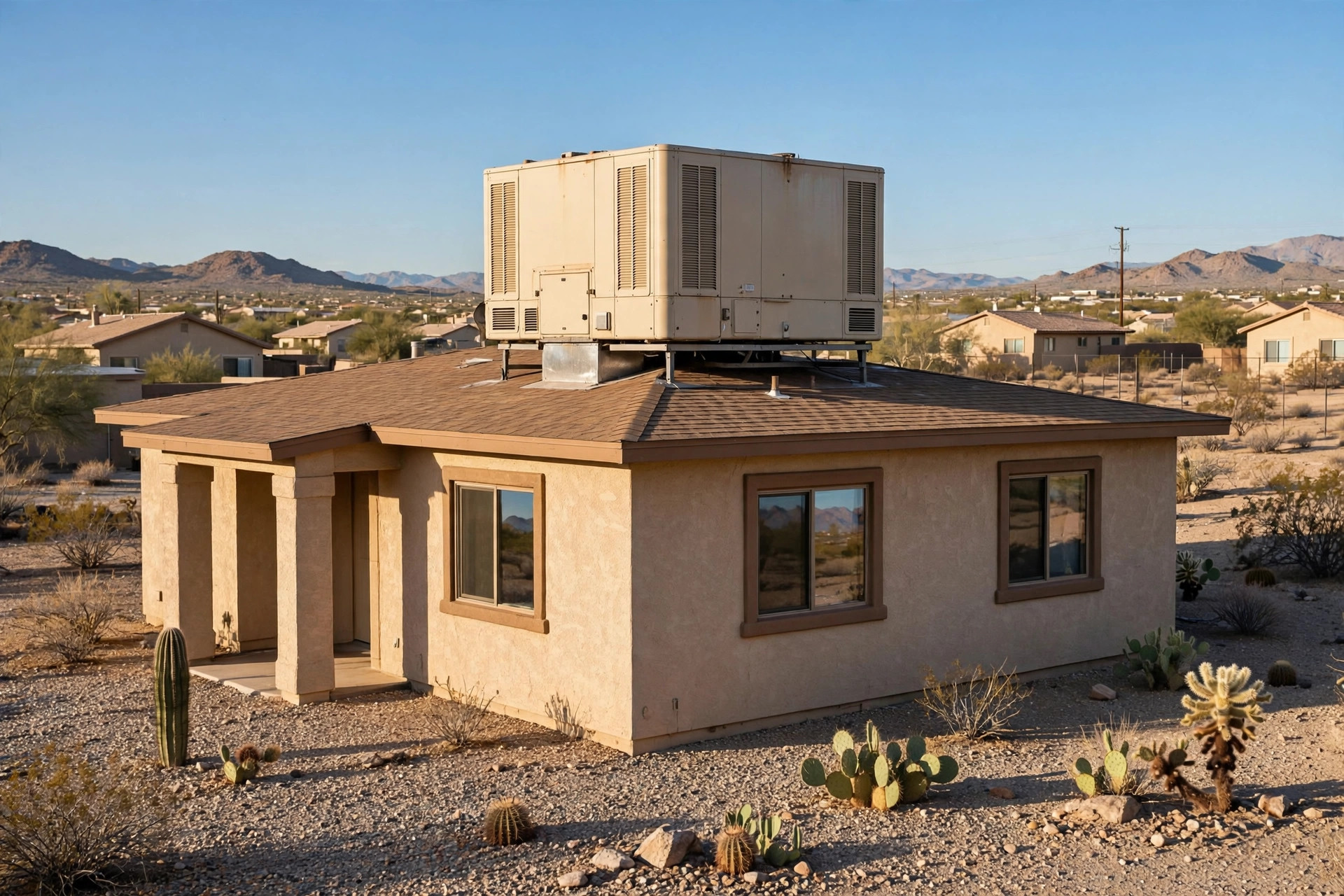

When summer heat settles over the dry regions of the United States, the question of swamp cooler vs AC for dry climates USA comes up in many homes. In states like Arizona, New Mexico, Nevada, Utah, and parts of Texas and California, the air is hot but holds little moisture. That fact changes which cooling system makes sense. A swamp cooler, also called an evaporative cooler, cools air by moving it across wet pads. An air conditioner, or AC, uses a sealed system of refrigerant and coils to pull heat and moisture out of the air. Each has a place in dry climates. The right choice depends on cost, comfort, upkeep, and how dry your local air truly is. This guide walks through the facts in plain terms so you can decide with a clear head.
Why the Choice Matters in Dry Climates
Cooling is one of the largest uses of electricity in a hot home. A wrong choice can mean years of high bills, poor comfort, or both. In dry heat, an evaporative cooler can drop the air temperature by 20 to 30 degrees while using far less power than a central air conditioner. The U.S. Department of Energy notes that evaporative coolers can cut cooling energy use by a large share in suitable climates. For a family watching a monthly budget, that saving is hard to ignore.
But a swamp cooler has limits. It adds moisture to the air, so on humid days it loses much of its cooling power. It also needs fresh air flow through the home to work well, which means open windows and a different feel from the sealed comfort of central AC. An air conditioner cools on demand in any humidity level and also dries the air, which many people prefer for sleep and for protecting wood floors and furniture.
Climate maps draw a rough line. Cities like Phoenix, Albuquerque, El Paso, and Denver sit on the dry side. Coastal California or the Gulf states do not. If your area sees summer humidity below about 40 percent on most days, an evaporative cooler is worth a serious look. Above that, a standard AC is usually the safer buy. Checking seasonal humidity records for your zip code takes ten minutes and can save thousands of dollars.
How Each System Works: Swamp Cooler vs Ac for Dry Climates Usa
A swamp cooler is a simple machine. A fan draws hot, dry outdoor air through pads soaked with water. As the water turns to vapor, it pulls heat from the air. The cooled air blows into the house. The Family Handyman site explains the parts: a water pump, a fan, and pads that must stay wet and clean. There is no refrigerant and no compressor. That simplicity is why the unit costs less and uses about a quarter of the electricity of a central AC.
A central air conditioner works in a loop. A compressor squeezes refrigerant into a hot gas, the gas gives up heat to the outside air, and then the cold refrigerant passes over an indoor coil. Warm room air blows across the coil and comes out cold and dry. Carrier and Trane both describe this sealed cycle in their product guides. Because it removes moisture, an AC keeps indoor humidity in a tight band, usually between 30 and 50 percent. That range feels comfortable and helps prevent mold.
Related indoor air equipment worth knowing includes whole house dehumidifier installation cost usa, which many AC owners add in damp regions to keep humidity down.
What to Look For When You Compare
Start with your local climate numbers. Look at average summer humidity, not just temperature. A town that hits 105 degrees at 15 percent humidity is a strong match for a swamp cooler. A town at 95 degrees and 45 percent humidity will leave an evaporative cooler struggling on the worst days.
Next, look at the house itself. Swamp coolers work best when the home can breathe. You need windows open a crack in each cooled room so old air can escape. Newer homes built tight for energy savings may fight this design. A ducted AC, on the other hand, needs a full set of ducts in good shape. Many older desert homes that ran on swamp coolers for years lack ducts. Adding ducts can cost more than the AC itself.
Think about water too. A swamp cooler uses water every day it runs. In a desert town facing water limits, that is a real factor. Check your local water rates and any use limits before you commit. Some cities offer rebates for high-efficiency coolers, and ENERGY STAR lists products that use less water and power.
Comfort style matters as well. A swamp cooler makes the air feel like a light breeze near a lake. It is cool but not ice-cold, and the rooms feel a little damp. Central AC gives a colder, drier blast. People with dust allergies often prefer AC because it keeps windows shut and runs air through a filter. Lennox points out that sealed AC systems pair well with high-grade filters for cleaner indoor air.
Types and Options on the Market
Swamp coolers come in three main forms. Window and portable units sit in one room and cost the least. They suit renters and small spaces. Whole-house ducted models mount on the roof or wall and blow through ducts like a furnace does in winter. Two-stage, or indirect, coolers add a second step that cools the air without adding as much moisture. These cost more but hold up better when humidity creeps up.
Air conditioners also come in several forms. Central split systems are the most common for whole homes. Package units put everything in one outdoor box. Ductless mini-splits serve rooms without ducts and let you cool only the rooms you use. Rheem and Goodman both sell lines of central and ductless equipment sized for hot climates.
One more option is a combo setup. Some desert homes keep a swamp cooler for mild months and a small AC for the hottest weeks. Others run a cooler on the roof and mini-splits in the bedrooms. Mixed systems add cost but give you a backup when the air turns damp during monsoon season.
If you are also weighing humidity controls inside the home, read our piece on bypass vs fan powered humidifier comparison for how indoor air moisture gear works.
Cost and Price: Buying and Running
Price is where swamp coolers shine. A portable room unit may cost 150 to 400 dollars. A whole-house roof unit installed runs about 2,500 to 4,500 dollars in most western markets. A central air conditioner for the same home usually costs 4,500 to 9,000 dollars installed, and more if new ducts are needed.
Running costs tell the same story. A swamp cooler uses roughly a third to a quarter of the electricity of a central AC. On a 110-degree day in Phoenix, that gap can be worth 50 to 100 dollars a month. But the math changes if you buy a cooler and then run a portable AC as well because the cooler cannot keep up. Two systems can cost more than one good one.
Do not forget water and upkeep. A whole-house cooler can use 3 to 10 gallons of water an hour on hot days. At desert water rates, that adds 20 to 60 dollars a month in summer. Filter pads wear out and need changing once or twice a season. The pump and float valve need checks too. An AC needs a yearly service visit, usually 100 to 200 dollars, plus filter changes you can do yourself.
Tax credits can tip the scale. Federal and state programs have covered high-efficiency heat pumps and AC units in recent years. See our guide on heat pump tax credit 2026 requirements usa before you sign a quote, since credits change each year.
Care and Upkeep Through the Seasons
A swamp cooler asks for hands-on care. Each spring, open the unit, scrub the reservoir, check the pads, oil the fan motor if it has oil ports, and test the pump. Mid-summer, check pad wear and water lines once a month. Hard water leaves mineral scale on pads and makes them cool poorly. Some owners add a bleed-off valve that flushes hard water out to protect the pads. Each fall, drain the unit, dry the reservoir, and cover it for winter. The This Old House home guides stress that fall shutdown prevents freeze damage in colder desert nights.
An air conditioner asks for less owner labor. Change the filter every one to three months. Keep the outdoor unit free of weeds, leaves, and dust. Hose the coil fins gently once a year. Book a spring tune-up so the technician checks refrigerant charge, the drain line, and the electrical parts. A drain line clog is the most common summer failure, and a quick flush with vinegar water each spring stops it.
Whichever you choose, keep the calendar. Both machines last longer with steady care. A neglected cooler grows mold in the pads and blows stale air. A neglected AC loses cooling power and raises the power bill a little more each year.
Safety Notes
Both systems run on electricity and need respect. Cut power at the breaker before you open a cooler for pad changes. Water and wiring sit close together inside the box. Replace cracked cords and worn plugs at once. Make sure roof mounts are bolted to solid structure, since a filled cooler is heavy and summer storms can shake a loose mount.
With a central AC, keep the outdoor disconnect box clear and never open it unless you are trained. Refrigerant lines are sealed and should only be handled by a licensed technician. Poorly installed units can drip water inside walls, so check the condensate drain each season. If you smell burning or see the breaker trip again and again, call a professional and stop using the unit.
Frequently Asked Questions
Can a swamp cooler work in a heat wave over 110 degrees? Yes, if the air stays dry. At 110 degrees and 10 percent humidity, a good cooler can still push out air near 80 degrees. When humidity climbs past 40 percent, output drops fast and the rooms feel damp rather than cool.
Will a swamp cooler add too much moisture to my home? In dry climates it usually does not. Indoor humidity may rise from 15 percent to 35 percent, which most people find comfortable. Watch for signs of excess moisture, such as foggy windows or musty smells, and shut the unit down if they appear.
Is AC cheaper to run if I already have solar panels? Solar can lower the pain of AC bills a lot. With net metering, daytime AC use pairs well with midday sun. A cooler still uses less power, but cheap solar power shrinks the running-cost gap between the two.
Do swamp coolers cool as well as AC at night? Often yes, and sometimes better. Desert nights drop into the 80s or 70s, and dry night air cools very well through wet pads. Many cooler owners shut the unit off late at night and just run the fan.
How long does each system last? A swamp cooler lasts about 15 to 20 years with yearly care, though pads and pumps need regular replacement. A central AC lasts about 15 to 20 years as well, with the compressor and coil being the big parts that wear out.
Can I add a swamp cooler to a home that has central AC ducts? It is possible but tricky. Coolers need air to escape through open windows, while AC ducts are built for sealed rooms. A contractor can design a shared duct layout, but most homes pick one system for the whole house.
A Final Word
The swamp cooler vs AC question has no single winner for every dry-climate home. A swamp cooler costs less to buy and run, suits very dry air, and brings a fresh, breezy feel to the house. An air conditioner costs more but cools in any weather, dries the air, and keeps windows shut against dust and heat. Look at your summer humidity, your water rates, your ducts, and your comfort taste. Run the numbers for your own home before you buy. With the right match, either system can carry you through a long desert summer in comfort.
References
Carrier. (n.d.). Heating and cooling systems. https://www.carrier.com ENERGY STAR. (n.d.). Energy efficient products. https://www.energystar.gov Family Handyman. (n.d.). DIY home repair and maintenance. https://www.familyhandyman.com Goodman. (n.d.). Heating and cooling equipment. https://www.goodmanmfg.com Lennox. (n.d.). Heating and cooling systems. https://www.lennox.com Rheem. (n.d.). Heating, cooling, and water heating. https://www.rheem.com This Old House. (n.d.). Home renovation guidance. https://www.thisoldhouse.com Trane. (n.d.). Heating and air conditioning. https://www.trane.com U.S. Department of Energy. (n.d.). Energy efficiency and renewable energy. https://www.energy.gov
Was this guide helpful?

About Michael Thompson
The My Garden US editorial team writes practical, in-depth home and garden guides for American homeowners — tested advice, no fluff.
You May Also Like
Steam Humidifier for Whole House Reviews: A Complete Guide for USA Homes
September 4, 2026 0 views
Insulation for Pole Barn House Reviews USA: What Homeowners Need to Know
July 9, 2026 0 views
Kitchen Exhaust Fan for Island Cooktop USA: A Practical Buyer’s Guide
September 5, 2026 0 views