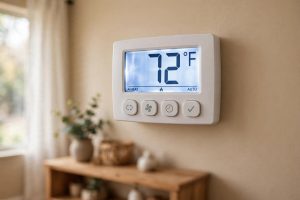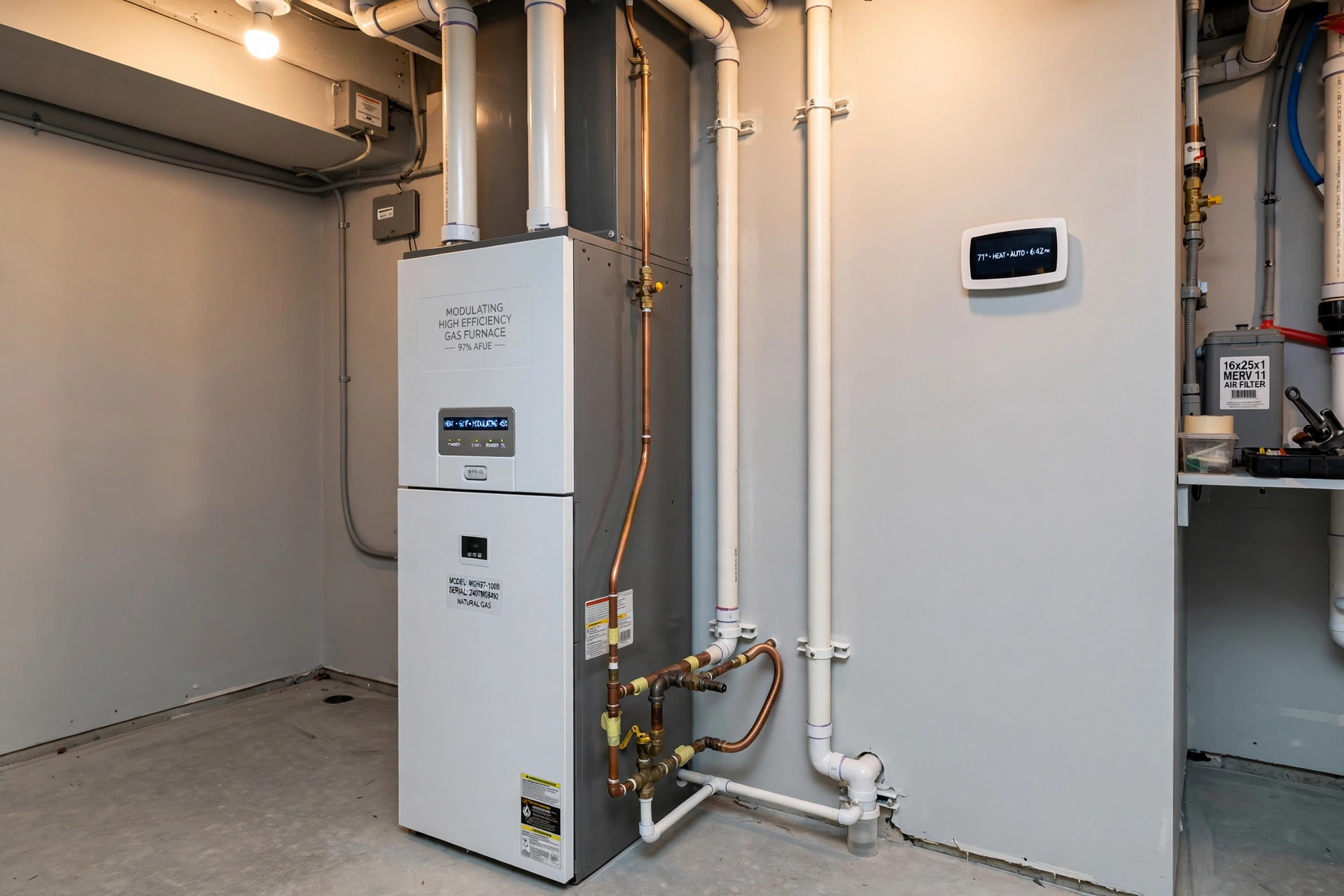

A furnace that swings between full blast and full stop is hard to live with in a true winter climate. One room feels too hot, another feels too cold, and the blower noise starts and stops all evening. This guide to modulating furnace reviews for cold climates explains how modulating gas furnaces solve that problem, what the leading models offer, what real ownership costs look like, and how to choose the right unit for a home that must stay warm through long stretches of subzero weather.
Why Modulating Heat Matters in a Cold Climate
In a mild climate, a simple single-stage furnace can do the job well. In a cold climate, the furnace runs for hours each day, sometimes without pause during the coldest week of the year. Under that kind of load, the limits of a single-stage furnace show up fast.
A single-stage furnace produces heat at one rate, usually between 90 and 100 percent of its rated output. When the house needs only half that much heat, the furnace still fires at full power. It warms the air quickly, overshoots the thermostat setting, and shuts down. Ten or fifteen minutes later, the house has cooled, and the cycle starts again. The result is a sawtooth temperature pattern, cool drafts between cycles, and extra wear on the heat exchanger and blower from constant starting and stopping.
A modulating furnace works differently. Its gas valve and variable-speed blower can adjust output in small steps, often from about 40 percent of rated capacity up to 100 percent. On a moderately cold day, it may run at 45 percent for a long, steady stretch. During the coldest hours of the year, it can reach full output. Because the heat supply follows the heat loss of the house, room temperatures stay nearly constant. The long, gentle cycles also keep air moving through the ducts, which evens out temperatures between rooms and floors.
For homeowners in northern states, modulating furnace reviews for cold climates matter more than reviews written for mild regions. The furnace is not a backup appliance. It is the main defense against a winter that can drop to twenty below zero.
How to Read Furnace Reviews the Right Way: Modulating Furnace Reviews for Cold Climates
Online reviews of furnaces deserve a careful eye. Most five-star reviews are written within the first year, when every furnace works fine. The more useful reviews come from owners in cold regions who have lived with a unit for three to five years. They describe whether the furnace kept the house warm during a polar vortex, how often it needed service, and whether the dealer stood behind the warranty.
When you study modulating furnace reviews for cold climates, look for these details:
– Location of the reviewer. A furnace that performs well in Georgia tells you little about performance in Minnesota or Maine. Seek reviews from zones 6 and 7 of the climate map. – Furnace size and house size. A 100,000 BTU furnace in a small, well-insulated home will short cycle even with a modulating burner. Good reviews mention that a load calculation was done. – Ductwork condition. Long runs and leaky ducts can make any furnace look bad. The best installers inspect ducts before sizing equipment. – Dealer quality. A factory-trained dealer who follows the installation manual makes a bigger difference than the brand badge on the front.
Keep in mind that no furnace review site covers every model. Sources such as Consumer Reports, This Old House, and Family Handyman publish balanced guidance drawn from lab tests and field experience.
What Makes a Furnace “Modulating”
The Modulating Gas Valve
At the heart of every modulating furnace is a gas valve that can adjust fuel flow in fine steps. A typical unit can hold output steady at any point between 40 and 100 percent of its rating. The control board reads indoor temperature and the rate of temperature change, then sets the firing rate to match the heat loss of the house minute by minute.
The Variable-Speed Blower
The blower motor must match the burner. Modulating furnaces use electronically commutated motors that can spin at a wide range of speeds. At low firing rates, the blower moves air slowly and quietly. At full fire, it moves the full volume of air the duct system was designed for.
The Communicating Thermostat
Most modulating furnaces reach their full potential with a communicating thermostat that talks to the furnace control board over a digital bus. Some models work with a conventional two-stage thermostat, but you lose part of the benefit. When comparing modulating furnace reviews for cold climates, note which thermostat the reviewer used, because it changes the result.
Leading Modulating Furnace Models Reviewed
The major manufacturers each offer modulating gas furnaces rated at 97 to 98 percent annual fuel utilization efficiency. Here is what the well-known models share and where they differ.
Carrier Infinity 98
Carrier builds the Infinity 98 around its Greenspeed intelligence, which adjusts firing in one percent steps. The unit holds 98.5 percent efficiency in its smaller sizes, among the highest ratings on the market. Reviewers in cold regions praise its quiet operation and steady temperatures. The main complaint is price: it sits at the top of the residential line.
Trane S9V2 and XC95m
Trane offers modulating models with a communicating control option and a long-standing reputation for rugged heat exchangers. Cold climate owners often mention surviving the worst winter weeks without a service call. Trane restricts sales to factory-authorized dealers, which tends to raise installation quality but also raises price.
Lennox SLP98V
Lennox markets the SLP98V as the quietest and most efficient furnace it makes, with efficiency ratings up to 98.2 percent and sound levels as low as 67 decibels. Reviews from the upper Midwest describe even room-to-room temperatures in two-story homes. Some owners report that parts availability through independent dealers can be slow.
Rheem Prestige Series R98V
Rheem sells the Prestige R98V with its EcoNet communicating control and a 98.7 percent efficiency rating in the 60,000 BTU size. Reviewers often call it the best value among top-tier modulating furnaces: strong performance at a price below the premium brands.
Goodman GMVM97
Goodman offers the GMVM97 at a price well below the premium brands, with efficiency up to 98 percent and a strong parts warranty when registered online. Reviews track the installer: well-installed units run for years without trouble, while poor installations produce most of the complaints.
Across all these brands, a pattern appears in honest modulating furnace reviews for cold climates. The happiest owners had a proper heat load calculation, used the matching communicating thermostat, and bought from a dealer with strong local reviews. Unhappy owners usually describe sizing or ductwork problems, not a bad furnace.
Single-Stage vs Two-Stage vs Modulating
It helps to place the three designs side by side.
A single-stage furnace fires at one rate. It costs the least to buy, often $2,500 to $4,500 installed for a basic model. It does the job in mild climates. In a cold climate, expect wider temperature swings and higher gas use.
A two-stage furnace fires at about 65 percent on low and 100 percent on high. It costs a few hundred dollars more than a single-stage unit. It removes much of the temperature swing of a single-stage furnace and runs quieter on low stage.
A modulating furnace adjusts across a wide range, typically 40 to 100 percent. It costs the most, often $5,500 to $9,000 or more installed, depending on size and region. It gives the steadiest temperatures, the quietest operation, and the lowest gas use. In a climate where the furnace runs for five months, the fuel savings narrow the price gap over time.
If your home has rooms that are hard to heat, or if you plan to stay in the house for ten years or more, the modulating furnace earns its premium. For a thorough look at how heating choice interacts with whole-home comfort, see our guide to cold climate heat pump reviews 2026 usa.
Cost and Price: What Owners Actually Pay
Sticker prices on furnace websites mean little. Nearly all the cost sits in labor, ductwork changes, permits, and the thermostat. Here are realistic installed price ranges for a modulating gas furnace in the United States, based on dealer quotes and owner reports:
– Small home, 60,000 BTU: $5,500 to $7,500 – Average home, 80,000 to 100,000 BTU: $6,500 to $9,000 – Large home, 120,000 BTU: $8,000 to $11,000
These ranges assume a straightforward replacement in an existing home with usable venting and ductwork. Costs rise if the installer must reline a chimney, enlarge the gas line, or repair ducts.
Fuel savings are real but modest on paper. Moving from an old 80 percent furnace to a 98 percent modulating unit can cut gas use for heating by about 18 percent. On a $1,800 annual heating bill, that is roughly $320 a year. The bigger gain is comfort: steady heat means fewer cold rooms and less temptation to set the thermostat higher.
Financing a new furnace is common. Many dealers offer twelve-month same-as-cash plans or longer terms through manufacturer programs. Our breakdown of hvac financing options for new system usa explains the terms to watch before you sign.
Sizing: The Step Most Reviews Warn About
An oversized furnace is the most common installation mistake, and modulating technology only partly forgives it. A modulating furnace that is twice as large as the house needs will still spend much of its life at its lowest firing rate, and its low end may still be more heat than a mild autumn day requires. The unit will cycle more than it should, and efficiency will suffer.
The correct method is a Manual J heat load calculation. The technician measures the house, checks insulation levels, window types, and air leakage, and computes the heat loss at the design temperature for your area. The furnace is then sized to meet that load with a small margin, often 10 to 20 percent. If a dealer sizes your furnace by the size of the old one, or by square footage alone, find another dealer. The U.S. Department of Energy publishes free guides on tightening the building shell before sizing new equipment.
Efficiency Ratings and Rebates
Furnace efficiency is measured by AFUE, the annual fuel utilization efficiency. A 98 percent AFUE furnace turns 98 cents of every gas dollar into heat. All the modulating models above rate between 96 and 98.7 percent.
ENERGY STAR certifies gas furnaces at 95 percent AFUE or higher for northern climates. Buying a certified furnace can qualify you for utility rebates and, in some states, tax credits. Some utilities offer $200 to $500 for a qualifying high-efficiency furnace.
Care and Upkeep
A modulating furnace is a precision machine, and it repays regular care.
– Change the filter on schedule. A clogged filter starves the blower, raises operating temperatures, and can trip safety limits. Check monthly during heating season. – Book a yearly tune-up. A technician should inspect the heat exchanger, clean the flame sensor, check the condensate drain, and verify gas pressure. Condensing furnaces produce acidic condensate that must drain freely. – Keep vents clear. Direct-vent furnaces draw combustion air and exhaust through pipes on the outside wall. Snow drifts can block them. After a heavy snow, check that both pipes are clear. – Do not close too many registers. Shutting vents in unused rooms raises pressure in the ducts and forces the blower to work harder.
With annual service, a well-installed modulating furnace should run 20 to 25 years. Keep the installation paperwork and the warranty registration in a safe place. Most manufacturers require online registration within 60 to 90 days to activate the full parts warranty.
Safety
Gas furnaces are safe when installed and maintained correctly, but cold climate homeowners should know the basics.
Install a carbon monoxide detector on each floor and near sleeping areas, and test it monthly. A cracked heat exchanger can release carbon monoxide into the duct system. The risk is small, but the detectors are cheap insurance.
Never store flammable materials near the furnace. Keep the area around the unit clear for service access. If you smell gas, leave the house and call the gas company from outside.
Modulating furnaces use sealed combustion, which draws air from outdoors rather than from the basement. This is safer and more efficient than older furnaces that used indoor air.
Frequently Asked Questions
Are modulating furnaces worth it in cold climates?
For most homeowners in cold regions, yes. The furnace runs long hours, so the steady temperatures, quieter operation, and lower gas use pay back every day of the heating season. The value is greatest for people who stay in their homes for a decade or more.
How long does a modulating furnace last?
Expect 20 to 25 years with yearly maintenance. The variable-speed blower and modulating gas valve are reliable parts, but they are more expensive to replace than the parts in a basic furnace. A strong parts warranty matters.
Do modulating furnaces need special thermostats?
They work best with the matching communicating thermostat from the same manufacturer. A standard thermostat will still run the furnace, but you will get two-stage style behavior at best.
Can a modulating furnace work with my existing ductwork?
Usually, yes, but the ducts should be inspected first. Undersized or leaky ducts raise noise and reduce comfort. Long duct runs to far rooms may need balancing dampers.
What size modulating furnace do I need?
Only a Manual J load calculation can answer this. As a rough guide, a well-insulated 2,000 square foot home in a cold climate often needs 60,000 to 80,000 BTU. Never size by the old furnace or by square footage alone.
How do modulating furnaces compare to boilers?
Both can heat a cold climate home well. A boiler with radiant floor heat gives the most even warmth of all, since the floor itself becomes the heat source. Our review of the best boiler for radiant floor heat usa compares the leading options if your home has or could use hydronic heat.
A Short Final Word
Modulating furnace reviews for cold climates keep returning to the same conclusion. The technology itself is proven. Every major brand now sells a modulating model above 97 percent efficiency, and owners in the coldest states report steady, quiet heat through winters that break lesser equipment. The differences that matter are not on the specification sheet. They are the load calculation, the ductwork, the thermostat pairing, and the dealer who stands behind the work.
References
Carrier. (n.d.). Heating and cooling systems. https://www.carrier.com Consumer Reports. (n.d.). Product reviews and ratings. https://www.consumerreports.org ENERGY STAR. (n.d.). Energy efficient products. https://www.energystar.gov Family Handyman. (n.d.). DIY home repair and maintenance. https://www.familyhandyman.com Goodman. (n.d.). Heating and cooling equipment. https://www.goodmanmfg.com Lennox. (n.d.). Heating and cooling systems. https://www.lennox.com Rheem. (n.d.). Heating, cooling, and water heating. https://www.rheem.com This Old House. (n.d.). Home renovation guidance. https://www.thisoldhouse.com Trane. (n.d.). Heating and air conditioning. https://www.trane.com U.S. Department of Energy. (n.d.). Energy efficiency and renewable energy. https://www.energy.gov
Was this guide helpful?

About Michael Thompson
The My Garden US editorial team writes practical, in-depth home and garden guides for American homeowners — tested advice, no fluff.
You May Also Like
Mini Split Maintenance Cost Per Year USA: A Plain Homeowner’s Guide
October 5, 2026 0 views
The Best Bladeless Fan for Nursery Reviews USA: What Parents Should Know
September 6, 2026 0 views
What Does Heat Pump Installation Cost Near Me in 2026? A Homeowner’s Plain Guide
January 24, 2026 0 views