
More than 13 million American homes draw their water from a private well. For these households, the pump is the heart of the water system. If the pump works well, the shower is strong and the garden hose runs full. If it does not, the water sputters and the pressure fades when two taps open at once.
This is why constant pressure well pump reviews USA homeowners read matter so much. A constant pressure well pump is a special kind of pump that keeps water pressure steady no matter how many faucets are open. In this guide, we explain how these pumps work, what reviewers praise, what to watch for, and how to choose the right one for your home.
Why Steady Water Pressure Matters
The problem with old-style pumps
A standard well pump works like a light switch. It turns on when the pressure tank runs low. It turns off when the tank fills. This on-and-off cycle causes pressure to swing. You feel it in the shower. The water is strong, then weak, then strong again. It is the same in the kitchen when the dishwasher and the sink run together.
These swings are more than a small annoyance. Low pressure can starve a washing machine. It can slow a sprinkler system. It wears out the pump too, because the motor starts and stops hundreds of times a day.
What constant pressure fixes
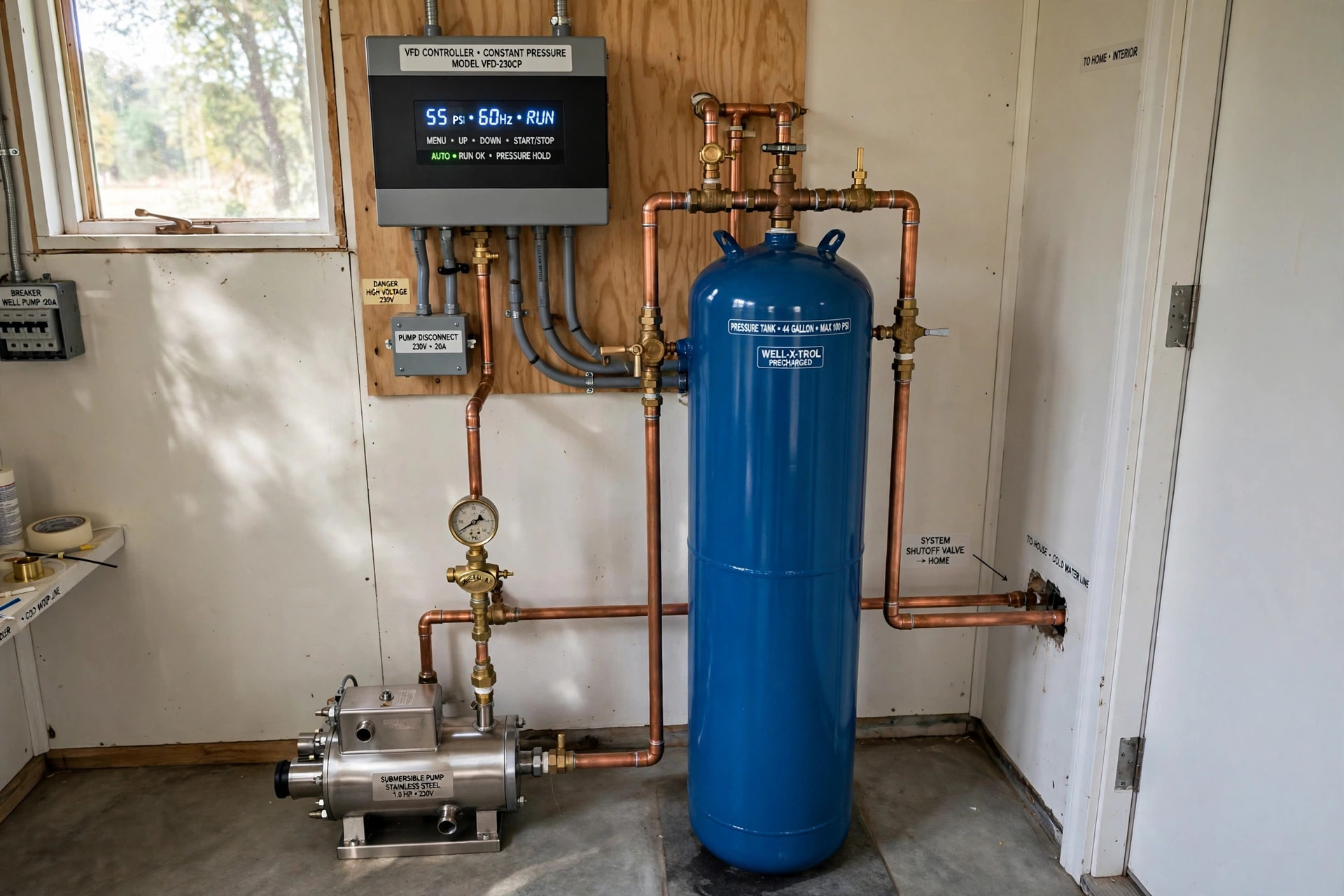
A constant pressure well pump solves the swing problem. It uses a smart controller that changes the pump speed to match demand. One person showers. The pump runs slow. The whole family uses water at once. The pump runs fast. The pressure stays the same in both cases.
Homeowners who read constant pressure well pump reviews often say the same thing. They wish they had made the switch sooner. The water feels like city water. The pump runs quiet. The electric bill often drops because the motor no longer wastes energy on full-power starts.
How a Constant Pressure Well Pump Works: Constant Pressure Well Pump Reviews Usa
The variable speed motor
The key part is the variable frequency drive. This is a small electronic box that tells the pump how fast to run. It watches the water pressure with a sensor. When the pressure dips, it speeds the motor up. When the pressure rises, it slows the motor down.
Think of it like the gas pedal of a car. A standard pump is either parked or driving at top speed. A constant pressure pump drives at just the right speed for the road.
The pressure tank still matters
Most constant pressure systems still use a pressure tank. The tank is much smaller than the big tank on an old system. It acts as a buffer. It holds a small reserve of water so the pump does not need to react to every drop of use, like a leaking faucet.
Guides at This Old House note that a small tank, often just two to five gallons, is enough for most of these systems. The smart controller does the heavy work.
Types of Constant Pressure Well Pump Systems
Not every system called “constant pressure” works the same way. Reviews often compare three main types.
Variable speed submersible pumps
This is the most common type. A submersible pump sits deep inside the well. A controller on the wall adjusts its speed. These systems are quiet because the pump is underground. They work with deep wells, often 200 feet or more.
Reviewers like the smooth feel of these systems. They also like that one unit handles the whole home. The main drawback is cost. The pump, controller, and labor can add up.
Constant pressure valve systems
A constant pressure valve is a mechanical device that fits between a standard pump and the home. It keeps pressure steady by limiting flow when demand is low. It does not change the pump speed.
These systems cost less than full variable speed units. They are a good middle path. Reviews say they work well for modest homes. They do not save as much energy, and the pump still cycles on and off.
Booster pump systems
Some homes add a booster pump after the main well pump. The booster raises pressure to a set point and holds it there. This is common in homes where the well pump is old but still works, or where the house sits far above the well.
Homeowners considering a full upgrade often compare these options with submersible well pump reviews for deep wells to see which design suits their well depth.
What to Look for in Reviews
When you read constant pressure well pump reviews USA sites publish, focus on the details that affect daily life.
Steady pressure range. Good reviews name the exact pressure, often 40 to 60 pounds per square inch. They tell how many fixtures the pump can feed at once without a drop.
Build quality. Look for stainless steel pump ends and sealed motors. Reviewers praise units that keep working through sand and sediment. Units with plastic parts near the motor draw complaints.
Controller reliability. The controller is the brain of the system. Reviews often mention lightning damage. A good controller has surge protection. Some brands sell a separate surge protector as an add-on.
Noise. Most reviewers say variable speed pumps run quiet. If a review mentions a loud hum from the controller box, check whether the box was mounted on a shared wall.
Ease of repair. Parts should be easy to find. Popular brands have parts at Lowe’s and other large stores. Rare brands may leave you waiting weeks for a part.
Warranty. Most pumps carry a one to five year warranty. Longer warranties often point to better build quality.
Energy use. Several reviews compare electric bills before and after the switch. A variable speed pump can cut pumping energy by a quarter or more in a busy household.
Top-Rated Models Homeowners Praise
Reviews across the country point to a few names again and again. We describe the types here rather than naming a single winner, because the best pump depends on your well.
Premium variable speed pumps
The best-reviewed pumps come from long-standing pump makers. They use stainless steel housings, sealed motors, and smart controllers with soft start. Soft start means the motor ramps up gently instead of jerking on. This cuts wear and lowers the lights-dimming surge that old pumps cause.
Reviewers often praise the smooth shower pressure and the quiet running. The main complaint is price. These units can cost two to three times more than a standard pump.
Mid-range smart pumps
Mid-range units use the same variable speed idea but with simpler controls. They suit shallow and medium wells. Reviews say they hold pressure well for one or two bathrooms. Large homes with four or five bathrooms sometimes find them weak during peak use.
Budget constant pressure kits
Budget kits pair a standard pump with a mechanical valve or a simple controller. Reviews are mixed. Some homeowners are pleased with the steady pressure for the money. Others report that the pump still cycles and the pressure still drifts under heavy use.
Buyer guides at Bob Vila and The Spruce remind shoppers to match the pump to the well depth and the home size, not just the price tag.
Cost and Price Guide
Prices vary by region, well depth, and labor rates. The numbers below are typical ranges in the United States in 2026.
Pump and controller unit. A variable speed submersible pump with controller often costs between 900 and 2,500 dollars for the equipment alone. Budget kits start near 400 dollars.
Professional installation. A licensed well contractor usually charges 500 to 1,500 dollars for labor. Deep wells and hard-to-reach pump houses cost more.
Total project. Most homeowners pay between 1,800 and 4,000 dollars for a full constant pressure system installed. Homes that also need a new pressure tank or new wiring pay more.
Running costs. Electricity for a well pump is modest in most homes. Variable speed pumps often lower this cost. One review noted a drop of about 10 dollars a month in a home of four.
Before you sign, compare the full job with well pump replacement cost near me so you know the going rate in your county.
Care and Upkeep
A constant pressure pump needs little care, but a few habits keep it healthy.
Check the pressure setting once a year. A simple gauge on the tank or the controller shows the cut-in pressure. If the number has drifted, call your contractor to reset it.
Test the pressure tank. A waterlogged tank makes the pump work harder. Tap the side of the tank. It should sound hollow at the top and solid at the bottom. If the whole tank sounds solid, it may need service.
Protect the controller. The controller is sensitive electronics. Mount it in a dry spot. A surge protector made for well pumps costs little and can save the unit during a storm. Advice from Family Handyman stresses keeping the controller box clean and dry.
Watch for sediment. Sandy water wears pump parts fast. A whole-house sediment filter before the home plumbing helps. Filter makers like Aquasana sell units sized for well water.
Winter care. In cold states, the well house must stay above freezing. A small heat lamp or insulated cover protects pipes and the controller.
Annual well check. The Environmental Protection Agency advises private well owners to test their water yearly. A pump upgrade is a good time to schedule that test.
Safety Notes
Well work has real risks. Keep these rules in mind.
Electricity and water do not mix. A well pump runs on high voltage. Never open the controller box or pull a pump without turning off the breaker first. Most states require a licensed electrician or well contractor for this work.
Heavy lifting. A submersible pump hangs on hundreds of feet of pipe and wire. Pulling it by hand is dangerous. Contractors use a pump puller or a boom truck.
Water quality. A new pump stirs up sediment in the well. Run an outside faucet until the water clears before you drink it. Test the water after any major pump work.
Pressure relief. Every system needs a pressure relief valve. It opens if the pressure climbs too high. Make sure yours is present and working.
Faucet and fixture makers like Moen and Delta Faucet also publish pressure guidelines for their products. Most home fixtures are rated for 80 pounds per square inch or less, so keep your setting below that limit.
Frequently Asked Questions
Do I need a new well for a constant pressure pump? No. The pump fits in your existing well. The contractor checks the well depth and the pipe size first. Most wells drilled in the last 50 years accept these pumps.
How long does a constant pressure well pump last? A well-made unit lasts 10 to 15 years with normal use. Sand, lightning, and dry running shorten its life. A dry-run sensor, which shuts the pump off when the well runs low, is worth the small extra cost.
Can I install it myself? Most homeowners should not. The work mixes deep plumbing, heavy lifting, and high voltage wiring. A mistake can ruin the pump or hurt the installer. Hire a licensed well contractor.
Will it work during a power outage? No, unless you have backup power. Like all electric pumps, it stops when the power fails. Some homeowners add a generator for outages. A small pressure tank holds a few gallons until then.
Is a constant pressure pump worth the extra cost? For most well owners, yes. The steady pressure is a daily comfort. The pump often lasts longer because it starts gently. Energy savings are modest but real. Reviews show high owner satisfaction once the system is set up.
Does it help with a sprinkler system? Yes. Sprinklers need steady pressure to spray evenly. Constant pressure pumps are popular with homeowners who water large lawns. Pair the pump with a hot water recirculating pump cost installed review if you are planning other plumbing upgrades at the same time.
A Final Word
A constant pressure well pump turns well water into city-style comfort. The pressure stays put. The shower stays strong. The pump works less and lasts longer.
Start by reading constant pressure well pump reviews USA buyers have posted for your well depth. Get two or three quotes from local contractors. Ask each one about the controller warranty, surge protection, and the dry-run sensor. With the right unit and a careful install, your water worries end for a decade or more.
References
Aquasana. (n.d.). Water filtration systems. https://www.aquasana.com Bob Vila. (n.d.). Home improvement advice. https://www.bobvila.com Consumer Reports. (n.d.). Product reviews and ratings. https://www.consumerreports.org Delta Faucet. (n.d.). Kitchen and bathroom faucets. https://www.deltafaucet.com Family Handyman. (n.d.). DIY home repair and maintenance. https://www.familyhandyman.com Lowe’s. (n.d.). Home improvement products. https://www.lowes.com Moen. (n.d.). Faucets and plumbing fixtures. https://www.moen.com The Spruce. (n.d.). Home and garden advice. https://www.thespruce.com This Old House. (n.d.). Home renovation guidance. https://www.thisoldhouse.com U.S. Environmental Protection Agency. (n.d.). Protecting human health and the environment. https://www.epa.gov
Was this guide helpful?

About Sarah Mitchell
The My Garden US editorial team writes practical, in-depth home and garden guides for American homeowners — tested advice, no fluff.
You May Also Like
Best Toilet Flapper Replacement Reviews USA: A Practical Buying Guide
January 26, 2026 0 views
Best 50 Gallon Gas Water Heater Reviews USA: A Complete Buying Guide
April 8, 2026 0 views
UV Water Purifier for Well Water Reviews: What Rural Homeowners Should Know
September 6, 2026 0 views