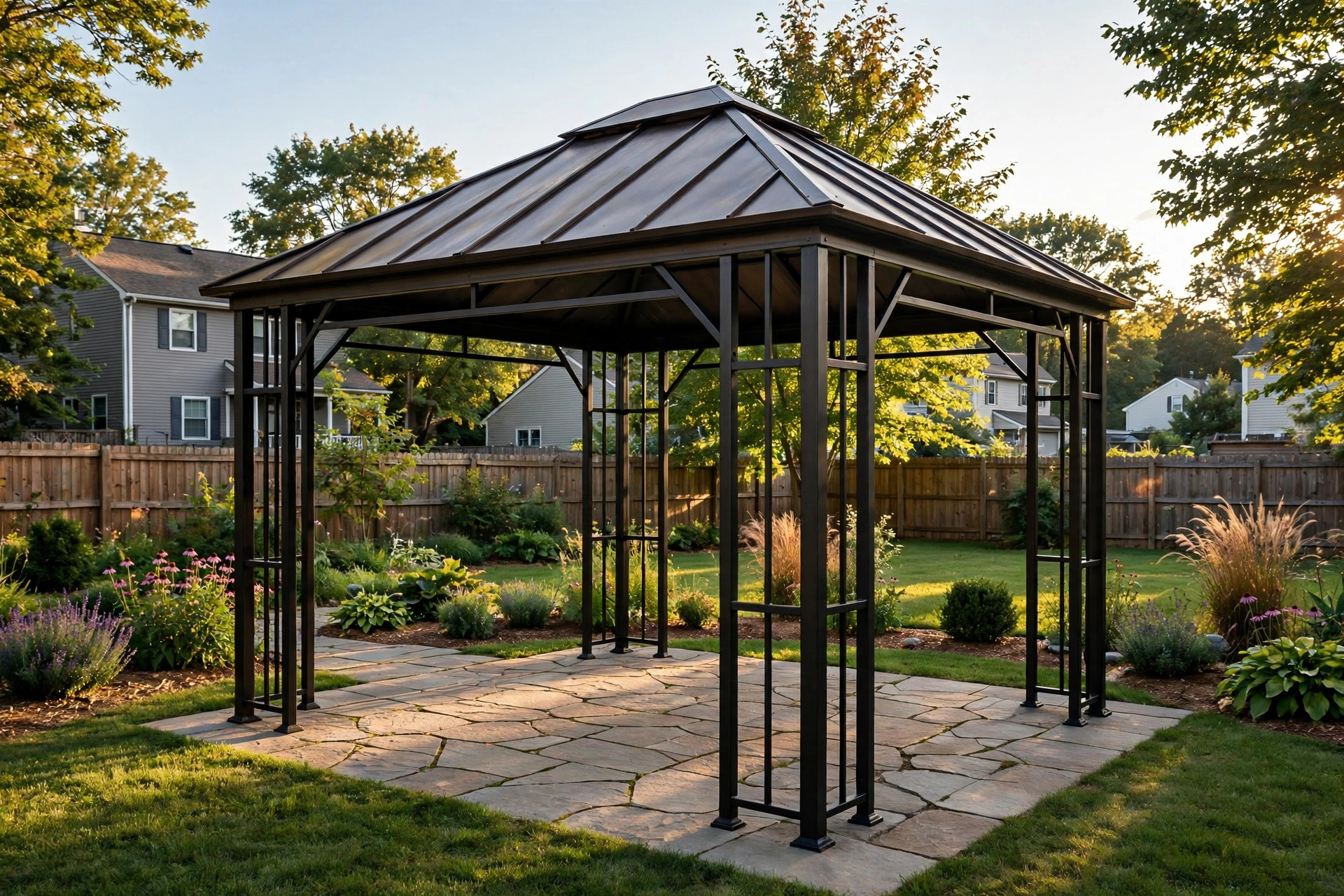

A metal gazebo can turn a plain yard into a place where a family gathers. It gives shade on hot days and shelter when a light rain passes. It also adds a clear center to the yard, a spot for chairs, a grill, or a quiet book.
Search for the best metal gazebo for backyard reviews and you will find hundreds of listings, star ratings, and strong opinions. Some of these reviews are honest. Some are paid for. Some were written by people who never put the gazebo together. This guide reads the review world for you and lays out what matters in plain words.
The point is simple. A good metal gazebo should stand straight in the wind, keep its paint through the summer, and give you shade where you want it. Everything else is detail. Let us walk through it.
Why a Metal Gazebo Is Worth a Look
A gazebo is an open-sided shelter with a roof. It sits apart from the house or stands near the patio. Metal gazebos use steel or aluminum for the frame and the posts. This makes them sturdier than fabric pop-up tents and cheaper than wood structures built on site.
Reviews agree on three main strengths. First, metal frames hold up under wind better than thin aluminum tubes or fabric tents. Second, hardtop roofs made of steel panels shed rain and hold light snow. Third, metal gazebos cost far less than a wooden pavilion built by a contractor. Most good models sell for a few hundred to a few thousand dollars.
There are real limits. A metal gazebo is not a sealed room. It will not keep out cold wind or flying insects unless you add curtains or netting. Many models need two or three adults for assembly, and most need anchoring to a patio or deck. Still, for a family that wants a shaded spot to eat and sit, a metal gazebo is a fair deal.
How to Read Reviews Before You Buy: Best Metal Gazebo for Backyard Reviews
Review sites and store pages carry thousands of opinions on metal gazebos. Before you trust them, learn how to read them.
Look at the date. A review from three years ago may describe a model that the maker has since changed. Metal thickness, roof clips, and hardware kits get revised. Newer reviews carry more weight.
Look for reviews with photos. A shopper who shows the finished gazebo, the packed box, and the rust spots after a year is giving you real facts. One-line reviews with five stars and no detail tell you little.
Watch for repeated complaints. If twenty buyers in a row say the screws snap, or the roof panels rattle in the wind, take it as a warning. One angry review may be bad luck. Twenty is a pattern.
Check what the reviewer did not do. Many low ratings come from buyers who never anchored the gazebo. Reviews at sites like Consumer Reports remind shoppers that any shelter left unanchored can move in a strong gust. When a review says “it blew away,” ask whether the owner bolted it down.
Compare review counts. A model with 3,000 ratings and a 4.4 average is a safer bet than a model with 30 ratings and a perfect 5.0. Large numbers smooth out fake reviews.
Finally, read the questions and answers sections on large store pages such as Wayfair. Real buyers ask about snow loads, wind ratings, and replacement parts. The answers often say more than the star ratings.
What to Look For in a Metal Gazebo
The Frame
The frame is the skeleton. Steel is the most common frame metal. It is strong and costs less than aluminum. Look for powder-coated steel, which resists rust. Check the size of the posts. Posts of two or three inches across hold up better than thin ones.
Aluminum frames weigh less and never rust. They cost more. They suit buyers who want to move the gazebo or who live near salt water, where steel rusts faster.
Ask about the wall thickness of the tubing. Thin walls bend in the wind. Reviewers often praise thick posts and curse thin ones.
The Roof
The roof matters as much as the frame. Hardtop roofs use galvanized steel panels. They last years and handle rain well. Soft canopies use polyester fabric. They are cheaper and easier to replace, but the sun wears them out in two or three seasons.
A two-tier roof, with a small upper roof above the main one, lets hot air escape. Reviewers in warm states praise this venting. It also looks good.
Check how the roof attaches. Screws and bolts hold better than plastic clips. Plastic clips break in the sun.
Size and Shape
Metal gazebos commonly come in 8 by 8, 10 by 10, 10 by 12, and 12 by 14 feet. Measure your patio before you shop. Allow room to walk around the furniture. A 10 by 10 gazebo fits a small table and four chairs. A 12 by 14 fits a full dining set.
Height matters too. A peak height of eight or nine feet gives air flow and room for tall guests. Low roofs feel cramped and trap heat.
Wind, Rain, and Snow
No backyard gazebo survives a hurricane. But good models handle normal weather. Look for a stated wind rating. Many makers rate their gazebos for winds of 40 to 60 miles per hour when anchored.
Snow is a harder test. Most metal gazebos carry only a few inches of snow. If you live where snow piles up, plan to brush the roof clear or take the canopy down for winter. Reviewers in northern states repeat this advice often.
Rain handling is simple. A sloped roof with a good overhang keeps the posts and the furniture dry. Flat roofs pond water and sag.
Assembly and Anchoring
Most metal gazebos arrive in one or two flat boxes. Plan for four to eight hours of work with two adults. Read the reviews about the manual. Clear diagrams and labeled parts save hours. Some buyers hire a handyman for the roof panels, and many say it is worth the fee.
Anchoring is not optional. Bolt the posts to a concrete patio with expansion anchors, or screw them into a wood deck with lag bolts. For grass, use ground stakes or concrete footings. A guide to how to anchor gazebo to patio shows the common methods. An unanchored gazebo is a hazard in the first big storm.
Common Types of Metal Gazebos
The classic hardtop gazebo has four or six steel posts and a peaked steel roof. It is the workhorse of the category. Reviews rank these highest for long life.
The soft-top gazebo uses a steel frame with a fabric canopy. It costs less and sets up faster. The canopy needs replacing every few years, so count that cost before you buy.
The two-tier gazebo has a vented upper roof. It suits hot climates. It costs a bit more than a single-roof model.
The wall gazebo, also called a lean-to, attaches one side to the house. It saves space and uses the house wall for support. Check local rules before you bolt anything to the house.
The enclosed gazebo adds curtains and mosquito netting on tracks. It gives shade by day and bug protection in the evening. Reviewers with ponds or woods nearby love the netting.
Some models add a ceiling hook for a fan or a light. If you want evening use, this small feature matters. A best patio umbrella for wind reviews page can help with smaller shade needs, but a gazebo covers far more ground.
What They Cost
Prices for metal gazebos fall into clear bands. Small soft-top models sell for 150 to 400 dollars. Mid-size hardtop models, the most reviewed group, sell for 400 to 900 dollars. Large two-tier hardtops with curtains and netting run 900 to 2,000 dollars. Big or fancy models pass 2,500 dollars.
Price buys metal thickness, better hardware, and a stronger roof. Reviews show that the cheapest models cut corners on screws, canopy fabric, and roof clips. The middle band gives the best value for most buyers.
Count the extra costs. Anchors, curtains, netting, and a replacement canopy add to the bill. Delivery fees apply to heavy boxes. If you hire help for assembly, add that too.
Sales cluster around spring and late summer. Buying in late August can save a real amount. Clearance models sell fast, so check stock.
Care and Upkeep
A metal gazebo asks little, but it asks for regular care. Wash the frame and roof twice a year with mild soap and water. This keeps dirt from eating the coating.
Check bolts and screws each spring. Wind loosens hardware. Tighten what is loose and replace what is rusted. Stainless or coated replacement hardware lasts longer.
Touch up paint chips soon. Bare steel rusts fast. A small bottle of matching touch-up paint costs little and saves the post.
Take down fabric canopies in winter where snow falls. Store the fabric dry. Leave hardtop roofs in place, but brush off heavy snow.
Trim back branches that rub the roof. Falling limbs dent steel panels. Keep the gutters of the house clear so water does not pour onto the roof.
With this care, a good steel gazebo lasts ten years or more. Reviewers who skip care often report rust in year three.
Safety
A gazebo is safe when it is anchored, built right, and used with sense. Bolt it down on day one. Do not wait for the first storm.
Keep grills and fire pits at a safe distance. Heat and sparks damage canopies and paint. A best fire pit chat set for backyard belongs in the open yard, not under a fabric roof. Never grill under a canopy.
Hang lights and fans from the rated hook only. Do not overload the roof frame with heavy planters or hammocks.
Check local codes. Some towns require a permit for structures over a certain size. Homeowner groups may limit height or color. A quick call to the town office saves trouble later.
In high wind warnings, close and tie the curtains. Take down soft canopies if a severe storm is forecast. A few minutes of work can save the whole structure.
Keep children from climbing the frame. The roof is not a play deck. Teach the rule early.
Questions Buyers Ask
How long does a metal gazebo last? A powder-coated steel gazebo with a hardtop roof lasts ten to fifteen years with basic care. Soft-top models last five to eight years before the frame coating wears and the canopy needs a second replacement.
Can a metal gazebo stay up in winter? Hardtop models can stay up in mild winters. In heavy snow country, brush the roof clear after storms or take the structure down. Soft canopies should come down before the first snow. Ice and snow loads cause most winter damage.
Is a metal gazebo better than a wood gazebo? Metal costs less and needs less upkeep. Wood looks warmer and can be repaired plank by plank. Reviews favor metal for buyers who want low care and a fair price, and wood for buyers who want a custom look.
Do I need a permit for a backyard gazebo? It depends on your town. Many places allow small gazebos without a permit. Larger or taller structures may need one. Call your town building office before you buy. Keep the store receipt and the model manual in case the inspector asks.
Can I put a metal gazebo on grass? Yes, but anchor it well. Use ground stakes rated for shelters, or pour small concrete footings at each post. Grass shifts with rain, so check the anchors each season. A patio or deck gives a firmer base.
What size gazebo fits a dining set for six? A 10 by 12 or 12 by 14 gazebo fits a six-person table with room to walk around it. A 10 by 10 is tight for six. Measure your table and add three feet on each side for chairs and walking space.
A Final Word
The best metal gazebo for backyard reviews is not the cheapest and not the dearest. It is the one with thick posts, a true hardtop roof, clear assembly steps, and honest reviews from buyers who anchored it and kept it for years.
Shop with a tape measure in hand. Read the one-star reviews as well as the five-star ones. Bolt the posts down on day one. Do these simple things and your gazebo will give you a decade of shade, dry chairs, and long summer evenings.
For more patio ideas, browse collections of outdoor seating and shade at IKEA, where simple designs and fair prices are the norm.
References
Consumer Reports. (n.d.). Product reviews and ratings. https://www.consumerreports.org IKEA. (n.d.). Outdoor furniture. https://www.ikea.com Wayfair. (n.d.). Patio and garden. https://www.wayfair.com
Was this guide helpful?

About Robert Taylor
The My Garden US editorial team writes practical, in-depth home and garden guides for American homeowners — tested advice, no fluff.
You May Also Like
Best Outdoor Table for Eight People
May 20, 2026 0 views
Outdoor Console Table for Patio Reviews: A Plain Guide to Buying Well
July 29, 2026 0 views
Outdoor Bar Stools for Patio Counter Height: A Practical Buying Guide
June 22, 2026 0 views