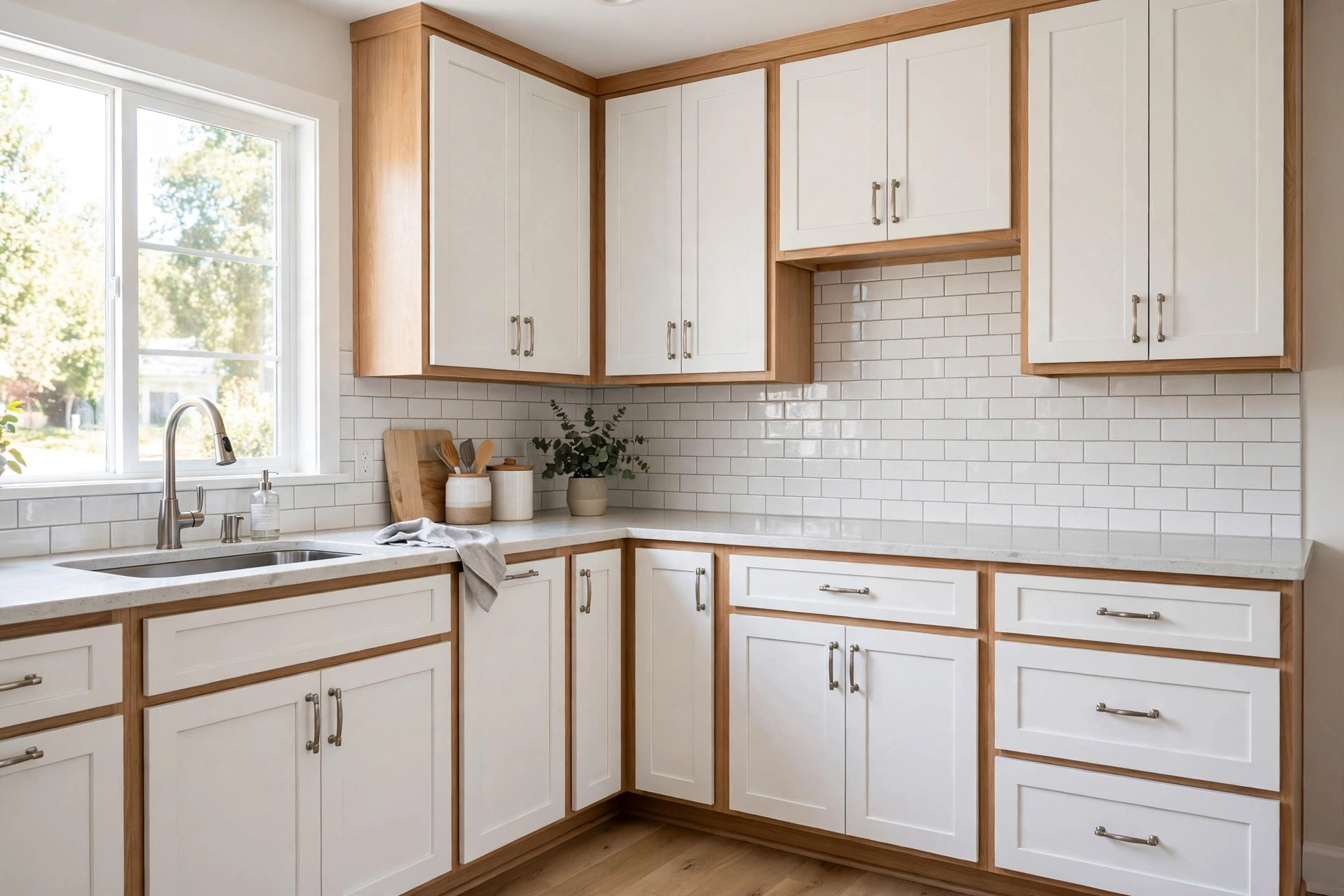

When homeowners ask about the cabinet refacing cost per linear foot in the USA, they are asking about one of the most practical ways to update a kitchen. Refacing keeps the cabinet boxes that are already in place and replaces the visible parts: the doors, the drawer fronts, and the surface skin on the frames. The result looks new, the work takes less time than a full remodel, and the cost is often far lower. This guide explains how refacing is priced, what a fair price looks like, and how to plan the work with care.
Why Refacing Costs Are Priced Per Linear Foot
Most contractors quote cabinet refacing by the linear foot of cabinetry. A linear foot is a simple straight-line measure of the cabinet run along the wall. A ten-foot wall of base cabinets counts as ten linear feet. Upper cabinets count in the same way. This method gives both the homeowner and the contractor a clear basis for the bid.
The cabinet refacing cost per linear foot in the USA usually falls between 100 and 300 dollars. A small kitchen of about 20 linear feet might cost 2,000 to 6,000 dollars. A larger kitchen of 40 linear feet might run 4,000 to 12,000 dollars. These are wide ranges, and the rest of this guide explains why the number moves up or down.
Per-foot pricing lets a homeowner compare bids with ease. When two contractors give quotes on the same kitchen, the per-foot number shows which bid is truly higher. It also helps the homeowner plan. Measure the cabinet runs with a tape measure, multiply by the contractor’s per-foot rate, and you have a rough budget before anyone visits the house.
How Refacing Works: Cabinet Refacing Cost Per Linear Foot Usa
Refacing begins with a check of the cabinet boxes. The boxes are the frames and shelves that are fixed to the wall. They must be square, solid, and free of water damage. A good contractor will open every door and check every box before giving a price. If the boxes are weak or warped, refacing is not the right choice.
When the boxes pass the check, the old doors and drawer fronts come off. The crew sands and cleans the face frames. Then they apply new veneer to the frames. Veneer is a thin sheet of wood or laminate that covers the old surface. New doors and drawer fronts go on next, along with new hinges and handles. The boxes stay. Everything you see is new.
The job usually takes three to five days for a standard kitchen. There is no demolition of the boxes, so there is little dust and no loss of the kitchen for weeks. Many families keep using the kitchen during the work. Advice on project planning and home renovation methods can be found at This Old House, which has long covered kitchen updates in plain terms.
What Drives the Cabinet Refacing Cost Per Linear Foot
Several facts move the per-foot price. The material of the new doors is the largest driver. Laminate is the least costly option. It resists stains and wipes clean, and it suits a tight budget. Real wood veneer costs more. It gives a natural grain and can be stained in many tones. Solid wood doors cost the most of all. They look rich and last for decades.
The finish also matters. A plain painted finish is standard. A glazed or distressed finish takes more labor and raises the price. Special colors mixed to order can add to the cost as well. Paint companies such as Sherwin-Williams and Benjamin Moore offer wide color lines for cabinet paint, and Behr sells durable cabinet coatings at many stores.
Hardware adds to the total. New hinges, knobs, and pulls are part of every refacing job. Basic knobs cost little. Solid brass or hand-forged pulls cost more. Soft-close hinges, which stop doors from slamming, add a small charge per door but many homeowners feel the charge is worth it.
Extras raise the per-foot figure too. Crown molding on top of the cabinets, a new light rail under the upper cabinets, and pull-out shelves inside the boxes all add labor and material. If the bid includes these extras, the per-foot rate will look higher. Compare bids line by line so the extras do not hide in the total.
The region matters as well. Labor rates in the USA differ by state and by city. A contractor in a large coastal city may charge more per foot than one in a small town in the Midwest. Travel time, local demand, and the cost of the shop all play a part. Homeowners can check typical home project costs at Bob Vila to see how their region compares.
Types of Refacing and What They Cost
Laminate Refacing
Laminate refacing uses a tough plastic skin on the frames and laminate doors. It is the lowest-cost path, often at the bottom of the per-foot range. It stands up well to heat and moisture. The look is clean and modern. The limit is that laminate cannot be sanded and restained later.
Wood Veneer Refacing
Wood veneer refacing puts a thin layer of real wood over the frames and adds veneer or solid wood doors. It sits in the middle of the price range. It can be stained to match the doors, and it shows a true wood grain. With care it lasts as long as new wood cabinets.
Solid Wood Refacing
Solid wood refacing uses solid wood doors with veneer or wood skin on the frames. It is the top of the range. It gives the deepest look and can be refinished years later. Homeowners who plan to stay in the house for a long time often choose this option. Reviews of wood finishes and care tips appear at The Spruce.
How to Choose a Finish
Start with the style of the house. A colonial or farmhouse kitchen suits raised-panel wood doors. A modern kitchen suits flat-panel doors with a smooth finish. Look at the floor, the counters, and the wall color before you choose. The cabinets should sit well with the rest of the room, not fight it.
Order samples before you sign. Most refacing firms will bring door samples to the house. Hold each sample against the wall and the counter in daylight and in lamplight. Colors shift under different light. A white that looks crisp at noon can look gray at night.
Think about upkeep. Glossy finishes show fingerprints. Matte finishes hide them but can be harder to wipe clean. Semi-gloss is the middle path for most kitchens. It wipes down with ease and does not glare. Design ideas for matching finishes to room style are covered at HGTV.
If painting is part of your plan, note that some homeowners compare refacing with cabinet refinishing prices or even painting their cabinets instead. Refinishing and painting cost less than refacing but they keep the old doors, which may be dated in style.
Refacing Versus Full Replacement
Full replacement means new boxes as well as new doors. It costs far more per linear foot. A full set of new mid-range cabinets can run two to three times the cost of refacing. Replacement also takes longer, often two to four weeks, and the kitchen may be out of use.
Refacing wins when the boxes are sound and the layout works. Replacement wins when the boxes are damaged, when the layout must change, or when the homeowner wants deeper or taller cabinets. Measure the true need before you choose. A contractor who sells both options can give an honest view.
Some homeowners take a third path: refacing the boxes and spray painting the new doors in a custom color. This can give a high-end look at a mid-range price.
Getting Bids and Reading the Contract
Get at least three written bids. Each bid should state the per-foot rate, the total linear feet measured, the door material, the finish, the hardware, and the extras. It should also state the start date and the finish date.
Ask each bidder the same questions. How long has the firm done refacing? Does it use its own crew or outside workers? What warranty covers the doors and the veneer? A one-year warranty on labor and a five-year warranty on materials is common. Put the answers in writing.
Check the firm’s past work. Ask for the addresses of two or three past jobs, or look at photos of finished kitchens. Call the past customers if you can. Ten minutes on the phone can save months of regret.
Never pay the full amount up front. A deposit of one third is normal. A second payment may fall due when the materials arrive. The final payment should wait until the work is done and you have walked through the kitchen with the crew chief.
Care and Upkeep of Refaced Cabinets
Refaced cabinets need simple care. Wipe the doors with a soft cloth and warm water mixed with a drop of mild dish soap. Dry them after wiping so water does not sit in the seams. Do not use harsh scouring pads or strong chemical cleaners. They can dull the finish.
Keep heat and steam in mind. A kettle that steams the same cabinet door every day can loosen veneer over time. Use the range hood when you cook. Keep the area near the dishwasher dry.
Touch up small nicks as soon as you see them. A touch-up pen from the paint maker can hide a chip before it grows. If a strip of veneer lifts at an edge, call the installer. A quick repair now stops a larger fix later. Maintenance guides for home surfaces are published at The Spruce.
Safety During the Work
Refacing is less messy than a full remodel, but it still calls for care. The crew will sand the frames, which makes fine dust. Ask them to seal the kitchen from the rest of the house with plastic sheeting. Keep children and pets out of the work area.
Veneer glue and finishes give off fumes. Open windows and run a fan while the crew works. If anyone in the house has asthma or strong chemical sensitivity, plan to be out during the gluing and finishing days.
Check that the crew follows local rules for waste. Old doors and scraps should leave the site in an orderly way. A clean site is a safer site, and it shows the crew takes the work in earnest.
Frequently Asked Questions
How is the linear foot measured for cabinet refacing?
The contractor measures the width of each cabinet run along the wall. Base cabinets and wall cabinets are each measured in straight feet. Corner cabinets count for the space they cover. Ask the contractor to show you the tape measurements so the count is clear to both sides.
Does the cabinet refacing cost per linear foot include hardware?
Most bids include basic knobs or pulls and standard hinges in the per-foot price. Upgraded hardware, such as soft-close hinges or designer pulls, is often listed as an extra. Read the bid line by line to see what the hardware allowance covers.
How long do refaced cabinets last?
With normal care, refaced cabinets last 15 to 20 years or more. Solid wood doors last the longest. Laminate lasts well too but cannot be refinished. Good cleaning habits and quick repairs make a large difference.
Is refacing cheaper than replacing the cabinets?
Yes, in most cases. Refacing usually costs 30 to 50 percent less than full replacement with mid-range cabinets. The saving comes from keeping the boxes and from the shorter labor time. If the boxes are damaged, replacement may be the wiser spend.
Can I change the color of my cabinets with refacing?
Yes. Refacing is one of the best ways to change color, because the new doors and veneer come in the finish you choose. You can move from dark wood to white, or from white to a soft gray, without tearing out the boxes.
Will refacing raise the value of my home?
A clean, modern kitchen helps a home sell. Refacing gives the look of a new kitchen at a lower cost, which can lift the sale price more than the job cost. Real estate agents often rank kitchen updates among the best returns on money spent.
A Short Final Word
The cabinet refacing cost per linear foot in the USA gives you a fair way to budget a kitchen update. Measure your cabinet runs, learn the per-foot range for your material, and get three written bids. Choose a finish that suits the house, and hire a crew with a record of neat work. With sound boxes and honest pricing, refacing brings a fresh kitchen at a fair price, and the room can look new in less than a week.
See Lowe’s for more detail.
References
Behr. (n.d.). Paints, primers, and stains. https://www.behr.com Benjamin Moore. (n.d.). Paints and stains. https://www.benjaminmoore.com Bob Vila. (n.d.). Home improvement advice. https://www.bobvila.com HGTV. (n.d.). Home and garden ideas. https://www.hgtv.com Lowe’s. (n.d.). Home improvement products. https://www.lowes.com Sherwin-Williams. (n.d.). Paints and coatings. https://www.sherwin-williams.com The Spruce. (n.d.). Home and garden advice. https://www.thespruce.com This Old House. (n.d.). Home renovation guidance. https://www.thisoldhouse.com
Was this guide helpful?

About Michael Thompson
The My Garden US editorial team writes practical, in-depth home and garden guides for American homeowners — tested advice, no fluff.
You May Also Like

Chalk Paint for Outdoor Furniture Reviews: What Buyers Really Say
April 14, 2026 0 views
Black Fence Paint Ideas for Backyard USA
April 29, 2026 0 views
How the Best Exterior House Painting Cost Estimator in the USA Works
May 28, 2026 0 views