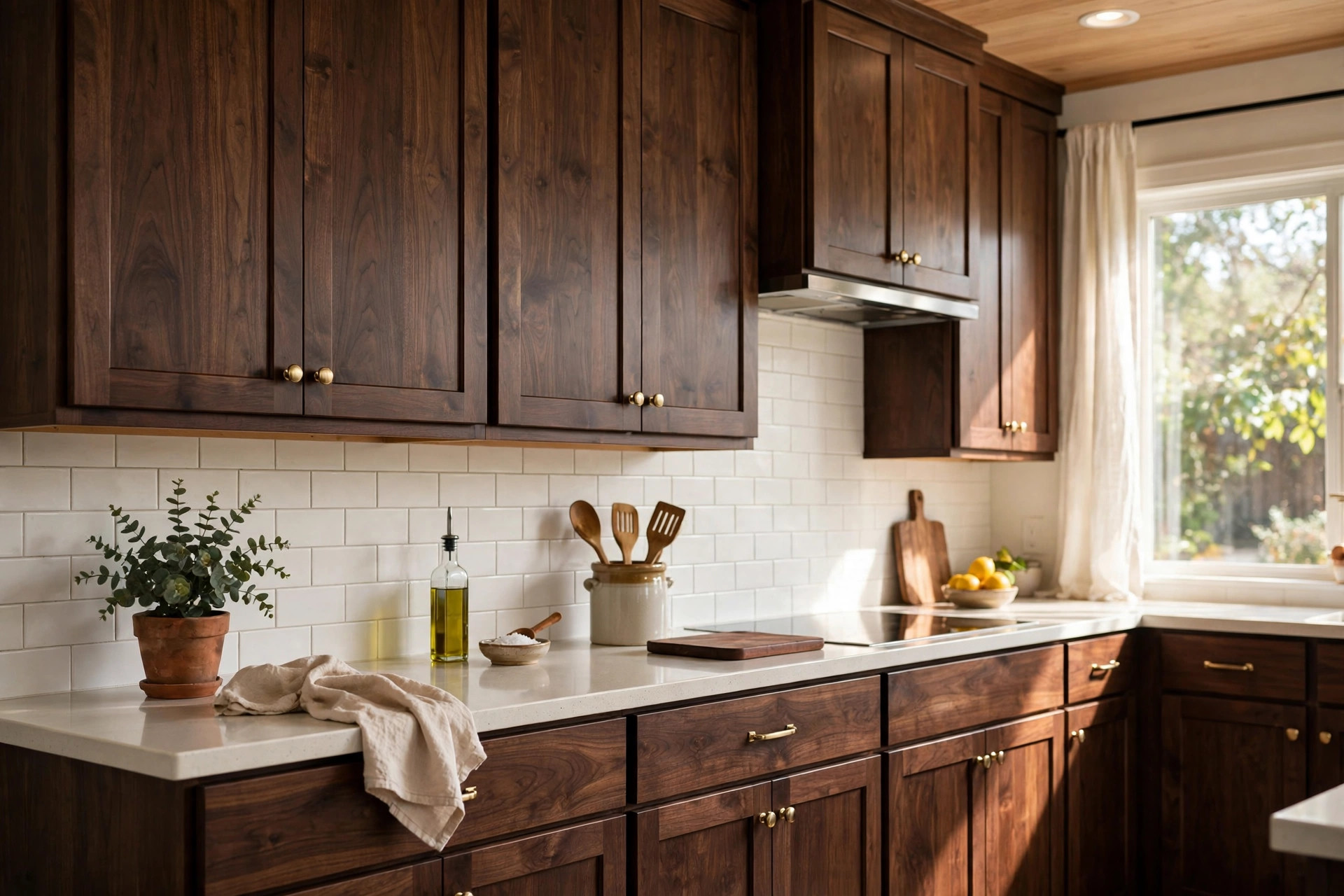

Old kitchen cabinets make a whole room look tired. New cabinets can cost five figures. Many American homeowners search for a cheaper path. That is why gel stain for kitchen cabinets reviews usa has become such a popular search. Reviews from real buyers across the country say the same thing: gel stain can change the look of wood cabinets in a single weekend, without stripping the old finish. It does not work miracles. But for the right cabinets, it gives a rich new color at a small fraction of replacement cost.
Why Gel Stain Matters for Kitchen Cabinets
Cabinets are the largest visual surface in most kitchens. When their color dates the room, the whole house feels older. Full replacement means weeks of work and a large bill. Hiring a pro to refinish costs less, but it still runs into the thousands for most homes.
Gel stain offers a middle road. It is a thick, oil-based stain that sits on top of the wood instead of soaking deep into it. That is the key point. Because it coats the surface, you do not need to strip the old finish down to bare wood. Light sanding is usually enough. Reviews on home improvement sites like The Spruce note that this single feature saves homeowners more time than anything else about the product.
American reviewers praise the look most of all. Dark walnut and java tones turn honey-oak cabinets into something that looks custom. Cherry tones warm up plain maple. Many buyers post before-and-after photos that look like a full remodel. The catch is clear in the reviews too. Gel stain shows brush marks if you rush. Thin spots look uneven. And it takes days to fully cure, so patience is part of the job. Homeowners who accept that trade-off report the best results.
What Gel Stain Is and How It Works: Gel Stain for Kitchen Cabinets Reviews Usa
Standard wood stain is thin like water. It soaks into bare wood and colors it from inside. Gel stain is different. It has the thickness of pudding. You brush it on and wipe it back, and the color builds up on the surface of the wood. Guides at This Old House describe this as a glazing action rather than a true penetrating stain.
This matters for cabinets because most cabinets already carry a factory finish. You cannot soak stain through lacquer or varnish. But you can lay gel stain over it. The process is simple in outline. Remove doors and hardware. Clean with a degreaser. Scuff the surface with fine sandpaper. Brush on the gel stain in thin, even strokes. Let it sit briefly, then wipe off the extra with a clean rag. The longer it sits before wiping, the darker the tone. Let the coat dry fully, often a full day. Repeat for a second coat. Then seal with a clear topcoat.
Two coats are the norm in most reviews. One coat can look thin and patchy on large flat doors. Three coats add little except longer dry time. Most buyers report that the second coat is where the color becomes rich and even.
How to Choose: What Reviews Say to Look For
Gel stain reviews in the United States cluster around a few big buying points. Read them before you shop, and you will choose better.
Color range. Dark tones dominate the reviews: walnut, java, espresso, dark cherry. These colors hide the most sins on old cabinets. Lighter tones exist but get fewer reviews, and some buyers say they look streaky on large doors. Pick a color that matches or deepens your wood, not one that fights it.
Ease of application. The best-reviewed brands level out smoothly and forgive slow brushwork. Cheaper products can drag or leave lap marks. Reviewers often praise stains that wipe back cleanly with a rag, since the wipe-back step is where beginners make mistakes.
Dry time and odor. Nearly all gel stains are oil-based. That means strong odor and slow drying. Plan for good ventilation and two to three days per coat in humid weather. A few reviewers complain that doors felt tacky for days. This is normal for oil products. Do not rush the cure.
Coverage. A quart usually covers a small to medium kitchen with two coats. Large kitchens with tall pantry walls need more. Buy one extra quart beyond your estimate. Running out mid-project leaves visible color shifts, and reviews warn about this often.
Where to buy. Gel stains from national brands sit on the shelves of The Home Depot and Lowe’s, and paint specialists like Sherwin-Williams carry their own lines. Paint makers such as Behr and Benjamin Moore publish stain guides on their sites that help with color matching. Design inspiration for kitchen color schemes is easy to find on HGTV.
Types and Options on the Market
Gel stains come in a few broad groups, and knowing them helps you read the reviews with a clear head.
By wood tone. The classic range runs from golden oak through cherry, mahogany, walnut, and near-black espresso. Match the stain to the wood under it. A dark stain over light oak gives deep, even color. A light stain over dark wood looks washed out and thin, and reviews of that pairing are rarely kind.
By finish depth. Some products are sold as one-step color, meant to be sealed with a separate clear topcoat. Others come in kits with a matching topcoat included. Kits cost more per ounce but remove guesswork about which sealer to use. For beginners, reviewers often favor the kit route.
Oil-based versus alternatives. Almost every gel stain on the shelf is oil-based. That gives it long open time, which is why it is forgiving to brush. A small number of water-based gel stains exist. They dry faster and smell less, but reviewers say they can dry too fast on big cabinet doors and leave lap marks. For a whole kitchen, most buyers still pick oil-based.
Tint bases. A few lines offer tintable bases that a paint store can tint to custom colors. This is useful when you must match existing trim or floors. The trade-off is price. Custom-tinted quarts cost more and are rarely returnable.
When you compare gel stain with other cabinet updates, keep the whole picture in mind. If you want a full list of painted options, see our guide to the best paint for kitchen cabinets. If you would rather hire the job out, our review of kitchen cabinet refinishing service costs lays out typical price ranges. And if you are weighing a full color change, read how spray painting kitchen cabinets compares on cost and finish quality.
Cost and Price: What Homeowners Actually Pay
Gel stain itself is cheap. A quart from a national brand often costs between twenty and thirty-five dollars. Most kitchens need one to two quarts for two coats, plus a clear topcoat of similar price. Sandpaper, degreaser, rags, brushes, and painter tape add perhaps thirty to fifty dollars more. In all, a typical do-it-yourself cabinet stain job lands between eighty and two hundred dollars in materials. That is the figure reviewers quote again and again.
The real cost is time. Expect a full weekend to remove doors, clean, sand, stain, and seal, plus several days of cure time before you hang the doors back. If you cannot spare that time, a professional refinishing job costs far more. Cost breakdowns at Bob Vila show most pro cabinet jobs start near two thousand dollars and rise with kitchen size. Gel stain saves that money only if you do the work yourself.
A few reviewers suggest a hybrid path. Do the staining yourself, but hire a painter for a final clear coat if you worry about dust in the finish. This keeps costs low while raising the quality of the last, most visible layer.
Care and Upkeep After Staining
Gel stain must be sealed. The stain alone is not tough enough for kitchen life. Apply at least two coats of clear polyurethane or a matching gel topcoat, and let each coat cure fully. Reviews that complain of chipping almost always come from jobs that skipped this step.
For daily cleaning, use a soft cloth with mild dish soap and water. Wipe spills quickly, especially near the stove and sink. Avoid harsh scrubbing pads and strong chemical cleaners. They dull the topcoat over time.
Small nicks happen. Keep a little leftover stain and topcoat in the garage. A dab of stain on a scratch, sealed with a small brush of clear coat, makes most marks vanish. Deep gouges may need wood filler first, then stain over the top. With light care, reviewers say a well-sealed gel stain job looks good for five to eight years, and some report ten.
Safety Steps You Must Not Skip
Gel stain is an oil product, and oil products demand respect. Work with windows open and a fan moving air. Wear gloves and eye protection. Many reviewers use a simple respirator mask during application and sanding. The fumes are strong.
The most serious risk is the rags. Oil-soaked rags can catch fire on their own as the oil cures. Never bunch them in a trash can. Spread used rags flat outdoors to dry fully, then dispose of them as your town requires. Keep the cans away from heat, and keep children and pets out of the work area. The product label carries the same warnings. Read it before you start.
Latex gloves are cheap insurance against stained skin. Gel stain on hands lasts for days. Long sleeves and old clothes are standard in the reviews.
Frequently Asked Questions
Can gel stain go over cabinets without stripping? Yes. That is its main selling point. You need only clean the cabinets well and scuff the surface with fine sandpaper so the stain can grip. Heavy peeling or flaking finish must be sanded off first, but sound varnish can stay.
How long does gel stain last on kitchen cabinets? With a proper clear topcoat, most reviewers report five to eight years of good service. High-use doors near the stove may wear sooner. Touch-ups are easy because you keep the same product on the shelf.
Can I paint over gel stain later? Yes, once it has fully cured. Scuff the topcoat, prime with a bonding primer, and paint. Give the stain a full week or two to cure before you prime, or the paint may not bond well.
Does gel stain work on laminate or veneer? This is where reviews split. Gel stain grips best on real wood. On smooth laminate it can look fine at first but may chip later. A bonding primer under a proper primer system is the safer route for laminate. Some brave homeowners report success on veneer, but only with careful prep.
How many coats of gel stain do cabinets need? Two coats is the standard answer in nearly every review. One coat looks thin. Three coats add depth but extend dry time and risk a muddy look. Wipe each coat back well and let it dry fully before the next.
Is gel stain safe around food? The stain itself should be sealed. Once the clear topcoat is fully cured, the surface is as safe as any finished cabinet. Never use the stain on a cutting board or any surface that touches food directly.
A Final Word
Gel stain for kitchen cabinets earns its strong reviews in the United States for one reason. It does a real job at a small price. It will not replace new cabinets or a professional spray finish. But it will turn dated oak into deep walnut, warm up tired maple, and buy a kitchen five to ten more good years. Prep well, work in thin coats, seal with a clear topcoat, and respect the safety rules for oil products. Do those things, and the reviews suggest you will be pleased with the result.
References
Behr. (n.d.). Paints, primers, and stains. https://www.behr.com Benjamin Moore. (n.d.). Paints and stains. https://www.benjaminmoore.com Bob Vila. (n.d.). Home improvement advice. https://www.bobvila.com HGTV. (n.d.). Home and garden ideas. https://www.hgtv.com Lowe’s. (n.d.). Home improvement products. https://www.lowes.com Sherwin-Williams. (n.d.). Paints and coatings. https://www.sherwin-williams.com The Home Depot. (n.d.). Home improvement products. https://www.homedepot.com The Spruce. (n.d.). Home and garden advice. https://www.thespruce.com This Old House. (n.d.). Home renovation guidance. https://www.thisoldhouse.com
Was this guide helpful?

About Michael Thompson
The My Garden US editorial team writes practical, in-depth home and garden guides for American homeowners — tested advice, no fluff.
You May Also Like

How to Use a Painting Quote Comparison Checklist for Homeowners
June 13, 2026 0 views
Garage Floor Epoxy Coating Kit Reviews USA
March 2, 2026 0 views
Asphalt Driveway Sealcoating Cost Near Me: What Homeowners Really Pay
July 3, 2026 0 views