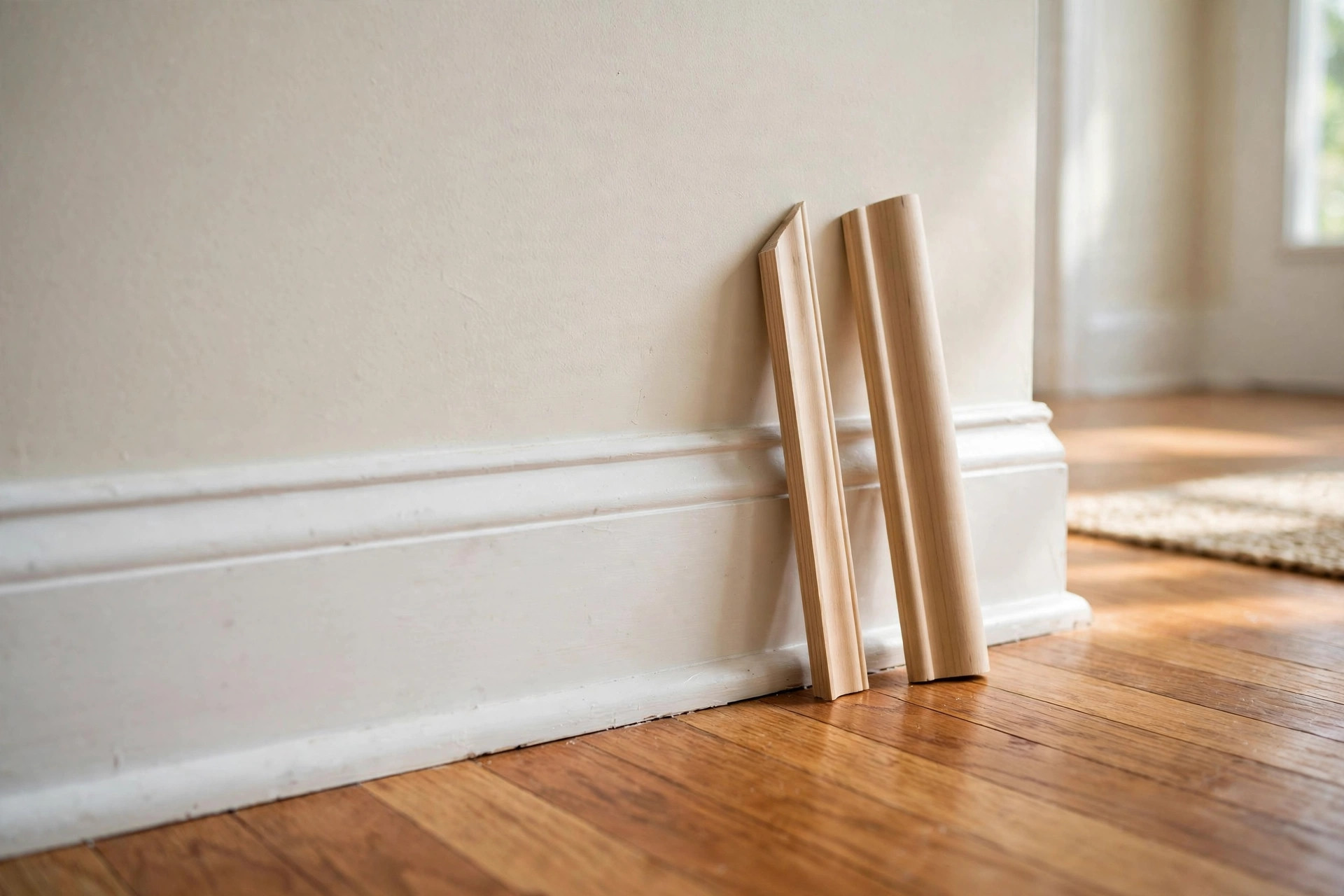

If you have ever shopped for small trim to finish a baseboard, you have met the same puzzle. Two small strips sit side by side in the store. They look almost the same. One is called shoe molding. The other is called quarter round. This shoe molding vs quarter round guide USA will show you the real difference. It will cover shape, size, use, cost, and fitting. By the end you will know which one fits your floor and your wall.
Why the Choice Matters
The strip at the bottom of a baseboard does more than fill a crack. It hides the gap between the floor and the wall. Floors move a little with heat and cold. They expand in summer and shrink in winter. A small gap must be left along the wall so the floor can move. Without trim, that gap looks rough and gathers dust. With the right trim, the baseboard looks neat and finished.
A poor pick can spoil a good room. A round strip beside a flat baseboard can look heavy. A thin strip in a large room can look lost. Paint or stain can hide some flaws, but shape stays visible.
What Each One Is: Shoe Molding vs Quarter Round Guide Usa
Shoe Molding
Shoe molding is a tall, narrow strip of trim. Its face is taller than it is deep. Common sizes are 1/2 inch tall by 3/4 inch deep, or 7/16 inch by 11/16 inch. The front edge is rounded, and the strip stands slim against the baseboard.
The name comes from the word shoe, meaning a cover for the base of a thing. It sits at the foot of the baseboard like a small foot. Its thin form works well where the baseboard itself is thin, such as ranch or modern styles.
Because it is flexible, shoe molding bends around gentle curves in a wall. Thin pine shoe molding can follow a wall that waves in and out. This is a strong point in older homes where walls are not straight. The strip closes small gaps without looking bulky.
Quarter Round
Quarter round is a true quarter of a circle. It is equal in height and depth. Common sizes are 1/2 inch by 1/2 inch, 3/4 inch by 3/4 inch, and 1 inch by 1 inch. The curve runs evenly from top to bottom.
It sits at the foot of the baseboard and covers the gap between floor and wall. Its round face throws a soft shadow that hides small rough spots. It suits thicker baseboards and traditional rooms where trim is bold.
Quarter round is stiffer than shoe molding. It does not bend as well around curves. On a wall that waves, it can leave small open spots unless you fill behind it.
How the Two Differ at a Glance
Shape is the first difference. Shoe molding is a tall thin shape with a soft round edge. Quarter round is a perfect quarter circle.
Size is the second difference. Shoe molding is often smaller in face area. Quarter round often comes in larger sizes, up to one inch square.
Flex is the third difference. Shoe molding bends. Quarter round does not bend much. This matters on old walls.
Look is the fourth difference. Shoe molding reads as light and neat. Quarter round reads as bold and rounded. Flat modern baseboards pair better with shoe molding. Tall colonial baseboards pair better with quarter round.
Use is the fifth difference. Both hide floor gaps. Shoe molding is the common pick for hardwood floors with modern trim. Quarter round is the common pick for tile floors, where the gap along the edge is wider and the round face covers more.
How to Choose for Your Home
Start with your baseboard. A baseboard that is 3 1/4 inches tall and flat suits shoe molding. A baseboard that is 5 1/4 inches or taller with a curved top suits quarter round. Match bold trim with bold trim and slim trim with slim trim.
Look at your floor. Hardwood and vinyl plank floors need a trim that hugs a thin edge. Shoe molding is the usual pick. Tile floors have grout lines and thick edges that leave a wider gap. Quarter round covers that gap with its round face. Many tile installers reach for quarter round for this reason.
Walk your walls. Press a straight edge, such as a level, against the baseboard line. If the wall dips in and out by more than a quarter inch, shoe molding will bend to meet it. Quarter round will bridge over the dips and leave shadows. In a very old home, shoe molding saves time and filler.
Think about paint. Both types take paint well when they are wood. Pine shoe molding paints clean and shows a smooth line. Primed pine quarter round is made for paint and comes ready to finish. If you want a stained wood look, choose oak or another hardwood in either shape. Guides from Sherwin-Williams explain how paint grade and stain grade wood differ, which helps you buy the right stock.
Check the room size. Small rooms and hallways look best with slim shoe molding. Large living rooms with high ceilings can carry the bolder quarter round.
Types and Materials
Most shoe molding and quarter round sold in the United States comes in four materials.
Solid pine. This is the most common. It is light, easy to cut, and takes paint well. It is also the most flexible, which is why it suits shoe molding.
Primed finger joint pine. Small boards are joined into long strips and primed white in the mill. It is stable and ready for a top coat of paint. It costs a little more than raw pine but saves a coat of primer.
Oak and other hardwoods. Oak shoe molding and oak quarter round are used for stained trim. They are harder and less flexible. They must be pre drilled near the ends to stop splits.
PVC and composite. Plastic trim will not rot. It suits baths, laundry rooms, and damp basements. It cuts with a fine saw and glues with trim adhesive. It cannot be stained, only painted.
Sizes run from 1/2 inch to 1 inch. Shoe molding rarely goes above 3/4 inch deep. Quarter round is sold up to 1 inch square for large gaps. Always buy a little extra. Ten percent waste is a safe rule for a room with corners and doors.
Cost and Price
Trim is one of the cheapest parts of a room. Prices shift by region and by wood type.
Pine shoe molding often costs between 25 cents and 60 cents per linear foot. Primed pine runs a little higher. Oak shoe molding can run 60 cents to 1 dollar per foot. PVC shoe molding sits near the middle of the range.
Quarter round costs about the same or a little less than shoe molding at the same size, because it is a simpler shape to mill. Pine quarter round often costs 20 cents to 55 cents per foot. Oak and PVC run higher.
For a 12 by 15 foot room, you need about 55 linear feet after waste. At 40 cents a foot, the trim itself costs around 22 dollars. Paint, nails, and caulk add a little more. A handy person can finish such a room in an afternoon.
Hiring the work costs more. A carpenter may charge 1 dollar to 3 dollars per foot for labor, plus materials. Many home owners paint the trim before it goes on the wall, which cuts labor time. Retail prices from The Home Depot and Lowe’s let you price a whole room before you start.
Fitting the Trim
Good tools make a clean job. You need a miter saw, a brad nail gun or hammer, 1 1/4 inch brad nails, wood filler, paintable caulk, and a tape measure. A coping saw helps at inside corners. Old home pros at This Old House show the same basic kit for small trim work in period houses.
Start by painting or priming the trim before you cut it. This is faster than painting it on the wall. Leave the face clean so nail holes fill well.
Measure each wall. Cut outside corners at a 45 degree miter. Cope inside corners for a tight fit: cut the first piece square into the corner, then shape the end of the second piece with a coping saw so it meets the face of the first. Shoe molding is thin and easy to cope. Quarter round is thicker and takes a little more care.
Nail the trim to the baseboard, not to the floor. The floor must move. Set nails every 12 to 16 inches. Keep nails low enough to catch the baseboard. At the ends of a run, add a nail within 2 inches of the cut so the tip does not lift.
Fill nail holes with filler. Caulk the top edge where the trim meets the baseboard. Do not caulk the bottom edge against the floor. The floor moves, and caulk there will crack. Sand the filler lightly, then paint the final coat. Step by step fitting guides from Bob Vila walk through miter and cope cuts for small trim, and trim fitting basics on The Spruce show how to keep nail lines straight and clean.
If you fit shoe molding around a curve, bend it by hand as you nail. Let the strip follow the wall. Work from the middle of the curve outward so the bend stays even.
Care and Upkeep
Small trim takes more knocks than any other trim in the house. Vacuum cleaners, shoes, and toys all hit it. A painted strip may need a fresh coat every few years in a busy hall.
Clean it with a damp cloth. Dust builds along the top edge of quarter round, where the round face meets the wall. A soft brush clears it. Shoe molding has less surface to catch dust, which is a small point in its favor.
Watch for gaps in winter. Wood floors shrink when the air is dry. This is normal. A humidifier in winter can cut the movement.
If a section splits, cut it out and fit a new piece. Small trim is cheap, and a patch is quick. Keep a few spare feet from the first job so the wood and profile match.
When you repaint a room, tape the floor or use a shield along the trim. Paint on the floor is hard to remove from wood. Paint maker Behr offers trim painting tips that keep lines sharp where wall meets floor.
Safety
The work is light, but safety still counts. Wear eye protection when cutting. A miter saw throws chips fast. Keep fingers clear of the blade and let it stop before you lift the guard.
Use a nail gun with care. Keep the tip pressed to the trim and your free hand away. Test fire on scrap first. If you use a hammer, wear gloves and set the nail with a nail set so the hammer head does not mar the trim.
Watch for old paint. Homes built before 1978 may have lead paint on old trim. Do not sand or scrape it dry. Have it tested, or call a certified firm to handle it. This matters most when you pull old trim off the wall.
Keep the floor dry while you work near baths and kitchens. Wet floors and power tools are a poor mix. Work in dry weather when you can, and open a window for air if you use strong glues or stains.
FAQ
Can I use shoe molding and quarter round in the same house? Yes. Many homes mix them. Use shoe molding in bedrooms and halls, and quarter round along tile in baths and kitchens. Keep the finish the same so the house still reads as one.
Which one is better for hardwood floors? Shoe molding is the usual pick. It is thin, it bends to the floor, and it suits the slim look of hardwood. This shoe molding vs quarter round guide USA comes down on the side of shoe molding for most wood floors.
Can I put quarter round on a modern flat baseboard? You can, but it may look heavy. A flat 3 1/4 inch baseboard pairs best with shoe molding. If you must use quarter round, pick the 1/2 inch size so it stays light.
Do I nail the trim to the floor or to the wall? Nail it to the baseboard only. The floor must float and move with the seasons. Nailing trim to the floor pins the floor down and can cause gaps or buckles.
Should I paint the trim before or after I install it? Before is faster for the first coat. Put the final coat on after filling and caulking. This seals the joints and gives a clean, even finish.
Is PVC trim worth the extra cost? In damp rooms, yes. PVC will not swell or rot where water splashes. In dry rooms, pine is cheaper and easier to cut, so wood is the better buy.
A Short Final Word
Shoe molding and quarter round both finish a baseboard. The shapes differ, and the best pick follows the baseboard, the floor, and the wall. Slim modern trim calls for shoe molding. Bold traditional trim calls for quarter round. Tile floors lean toward quarter round. Wood floors lean toward shoe molding. With this shoe molding vs quarter round guide USA in hand, you can buy with care, fit with ease, and end with a neat line where floor meets wall. For more trim ideas, see our guides on shiplap wall installation cost per square foot, board and batten installation cost usa, and wainscoting installation service near me reviews. Room styling photos on HGTV show how these trim choices look in finished living rooms.
References
Behr. (n.d.). Paints, primers, and stains. https://www.behr.com Bob Vila. (n.d.). Home improvement advice. https://www.bobvila.com HGTV. (n.d.). Home and garden ideas. https://www.hgtv.com Lowe’s. (n.d.). Home improvement products. https://www.lowes.com Sherwin-Williams. (n.d.). Paints and coatings. https://www.sherwin-williams.com The Home Depot. (n.d.). Home improvement products. https://www.homedepot.com The Spruce. (n.d.). Home and garden advice. https://www.thespruce.com This Old House. (n.d.). Home renovation guidance. https://www.thisoldhouse.com
Was this guide helpful?

About Robert Taylor
The My Garden US editorial team writes practical, in-depth home and garden guides for American homeowners — tested advice, no fluff.
You May Also Like

Best Paint for Kitchen Cabinets: USA Reviews
June 28, 2026 0 views
Terracotta Paint Colors for Accent Walls: How to Choose and Paint the Warmest Wall in Your Home
March 6, 2026 0 views
Cabinet Painting vs Refacing Cost Comparison: Which Is Right for Your Kitchen?
August 12, 2026 0 views