
A basement floor epoxy kit for sale usa is easy to find, but hard to judge. Shelves at home centers hold a dozen boxes. Online stores hold a hundred more. Each one promises a strong, glossy floor that lasts for years. Few of them tell you what really matters.
This guide speaks plainly. It explains what these kits are, how they differ, what they cost, and how to use one well. The words stay simple. The advice stays practical. By the end, you will know which basement floor epoxy kit for sale usa fits your home, your floor, and your budget.
Why an Epoxy Coating Matters in a Basement
A bare concrete basement floor looks rough. It collects dust. It stains. Oil, paint, and cleaning chemicals sink into the surface and leave dark marks. Moisture rises through the pores of the slab. The result is a floor that always looks dirty, no matter how often you sweep it.
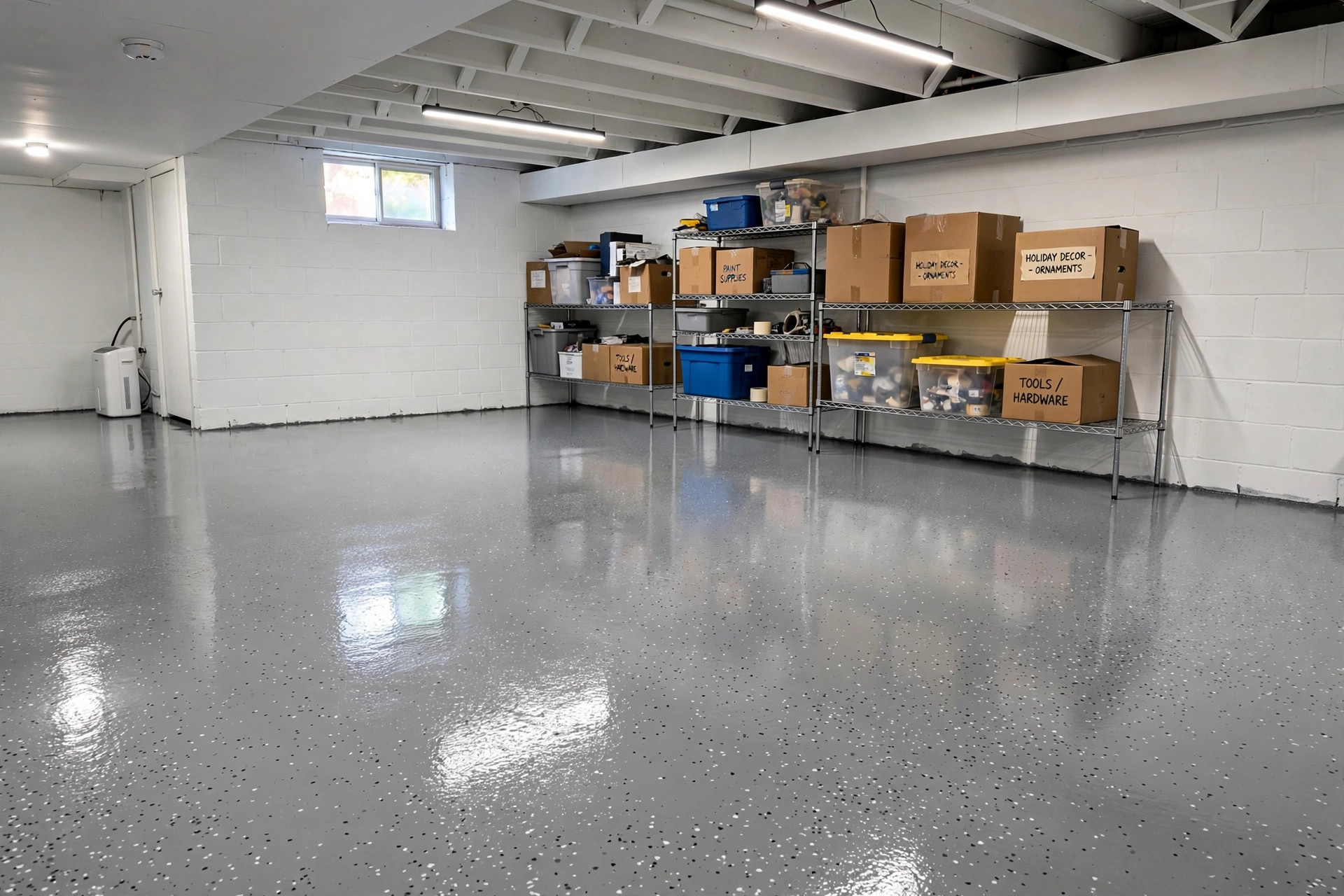
Epoxy changes that. It is a two-part coating: a resin and a hardener. When you mix the two, they react and form a hard plastic film that bonds to the concrete. The film seals the pores. Stains wipe up. Dust has nothing to cling to. The floor takes on a smooth, glossy look that brightens the whole room.
In a basement, this matters more than in most rooms. Basements serve as laundry rooms, workshops, playrooms, and storage areas. The floor takes heavy use. A good coating makes the space cleaner, drier, and more pleasant. It also raises the value of the home, because a finished-looking basement floor signals care to a buyer.
Epoxy is not paint. Paint sits on the surface and peels. Epoxy bonds at a chemical level and wears like armor. That is the reason many homeowners choose a basement floor epoxy kit for sale usa over plain concrete paint.
What to Look for When You Shop: Basement Floor Epoxy Kit for Sale Usa
Not every kit on the market is equal. Read the label before you buy. The following points separate a good kit from a weak one.
Solids content. The label may list “solids by volume.” This number tells you how much of the liquid stays on the floor after the coating dries. A kit with 90 to 100 percent solids leaves a thick film. A kit with 30 to 50 percent solids leaves a thin one. Thick films last longer. For a basement that sees foot traffic and storage bins, choose the higher number.
Two-part formula. A true epoxy kit has two cans: part A (resin) and part B (hardener). Some cheap “epoxy” paints are really one-part acrylic paints with an epoxy label. They cost less and cover more floor, but they peel within a year or two. If the box does not ask you to mix two parts, it is not true epoxy.
Coverage per gallon. Most kits cover 200 to 250 square feet per gallon for one coat. Measure your basement before you shop. Add ten percent for waste. A 500-square-foot basement needs about three gallons per coat, or a kit sized for that area.
Working time. After you mix the two parts, the clock starts. This is called pot life. Most home kits give you 30 to 60 minutes at room temperature. In a warm basement, the time is shorter. Buy a kit with enough working time for the size of your crew. One person alone should not attempt more than 300 square feet in a single batch.
Color and flake options. Many kits come in gray or tan. Some include decorative color flakes that you scatter over the wet coating. Flakes hide dirt and small flaws. They also make the floor less slippery. Decide the look before you buy, because color choice is hard to change later.
Consumer testing groups such as Consumer Reports publish ratings on coatings and home finishes. Their reports can help you compare brands before you spend money.
Types of Epoxy Kits on the Market
The basement floor epoxy kit for sale usa market holds three main types. Each has strengths and limits.
Water-based epoxy kits. These are the most common home-center kits. They mix with water for easy cleanup. They cost the least. They give a thin film, so two coats are a must. They work well on dry, older basement floors with light use.
Solvent-based epoxy kits. These give a thicker film than water-based kits. They resist chemicals better. They also smell strongly during application, and cleanup needs solvents. They suit workshops and garage-style basements where oil and grease are common. Compare them with garage floor epoxy coating kit reviews if your basement doubles as a work area.
100 percent solids epoxy kits. These are professional-grade. They contain no water or solvent to evaporate, so the full thickness stays on the floor. One coat often does the work of two. They cost the most and have the shortest working time. A careful do-it-yourselfer can use them, but speed matters.
Some kits are labeled “epoxy” but are really concrete floor paint for basements with added resin. These cost less up front. They also wear faster. If you want a floor that lasts a decade, choose true two-part epoxy.
Decorative options matter too. Metallic epoxy kits create a swirled, marble-like look. They cost more and need more skill. If you like the style, test a small board first. The look is bold, and you will live with it for years.
Home improvement sites such as This Old House and Bob Vila carry step-by-step guides with photographs. These help you see what each type of kit looks like on a real floor.
Cost and Price: What a Kit Really Costs
A basement floor epoxy kit for sale usa ranges in price by type and size. The numbers below are typical in 2026.
– Small water-based kit (250 sq ft): 80 to 150 dollars. – Medium two-part kit (500 sq ft): 200 to 350 dollars. – Large 100 percent solids kit (1,000 sq ft): 400 to 700 dollars. – Decorative flake kit with topcoat: 300 to 600 dollars for 500 square feet.
The kit price is not the whole job. You will also need concrete cleaner or etcher, a degreaser if the floor is oily, crack filler, a squeegee and rollers, and safety gear. Plan another 50 to 150 dollars for these supplies.
Labor changes the math. A professional installer charges 3 to 12 dollars per square foot, including materials. For a 500-square-foot basement, that is 1,500 to 6,000 dollars. A do-it-yourself job with a good kit costs 300 to 500 dollars in total. The savings are large, but only if you prepare the floor well. A rushed job fails early, and then you pay twice.
Paint makers such as Behr, Sherwin-Williams, and Benjamin Moore publish coverage charts and price lists for their concrete coatings. These help you budget before you go to the store.
How to Apply the Kit Step by Step
Good results come from good preparation. The coating itself is the easy part. Follow these steps in order.
1. Test for moisture. Tape a two-foot square of plastic sheeting to the floor. Leave it for 24 hours. If water beads under the plastic, the slab lets moisture through. Epoxy will not stick to a wet slab. Fix drainage or seal the walls first. The Spruce offers clear guides on moisture testing for basement floors.
2. Clean the floor. Sweep, then scrub with a concrete degreaser. Oil spots are the enemy of adhesion. Rinse well and let the floor dry fully.
3. Repair cracks. Fill cracks wider than a hairline with concrete crack filler. Sand smooth after it cures. Epoxy will bridge small cracks, but wide ones will show through.
4. Etch or grind. New, smooth concrete is too slick for epoxy. Etch it with a citric-acid concrete etcher, or rent a floor grinder for large areas. The surface should feel like fine sandpaper. Rinse and let it dry.
5. Mix the epoxy. Pour part B into part A. Stir with a drill and paddle for three minutes, scraping the sides. Do not mix more than you can spread in the working time.
6. Cut in the edges. Use a brush to paint a four-inch border along walls and posts. Work in sections.
7. Roll the floor. Pour ribbons of epoxy and spread with a squeegee, then back-roll for an even film. Keep a wet edge. If your kit includes flakes, scatter them while the coating is wet.
8. Apply the second coat. Wait the time the label states, usually 12 to 24 hours. Roll the second coat the same way.
9. Cure. Let the floor cure at least 72 hours before light foot traffic and seven days before heavy use. Cold air slows curing. Keep the basement above 50 degrees Fahrenheit.
Stores such as Home Depot stock rollers, squeegees, and etchers made for this exact job. Their staff can point you to the right aisle.
Care and Upkeep
An epoxy basement floor asks little of you. Sweep it weekly. Mop it monthly with a mild soap and water. Avoid harsh acids and citrus cleaners, which dull the gloss over time.
Place felt pads under furniture legs. They stop scratches. Use a mat under laundry machines to catch drips. If a small chip appears, sand the spot and dab on leftover mixed epoxy from a small repair kit.
The gloss fades slowly under sunlight, but basements get little sun. Most home epoxy floors look good for seven to ten years. High-traffic paths may wear sooner. A fresh clear topcoat every five years keeps the shine.
Epoxy is also easy to touch up. If you tried a similar product in the kitchen, the care is much the same as with epoxy countertop kits for kitchens: gentle cleaners, no steel wool, and quick wipe-ups of spills.
Safety While You Work
Epoxy is a chemical product. Treat it with respect.
– Ventilate. Open basement windows. Run a fan to push air out. Solvent-based kits need strong airflow. Even water-based kits release fumes. – Wear a respirator. A simple dust mask is not enough. Use a respirator rated for organic vapors, especially with solvent-based products. – Protect skin and eyes. Wear gloves, long sleeves, and safety glasses. Uncured epoxy irritates skin. If it touches your skin, wash with soap and water at once. – Keep children and pets away. Do not let them walk on the wet floor or breathe the fumes. Keep the area closed until the floor cures. – Mind the slipperiness. A wet epoxy floor is slick. Wear shoes with grip, not smooth soles.
Design sites like HGTV show finished basement projects with coated floors, which can help you plan the look. But their photos never show the safety steps. Do not skip them.
Frequently Asked Questions
How long does a basement epoxy floor last? A true two-part epoxy on a well-prepared floor lasts seven to twelve years in a basement. Water-based kits sit at the lower end of that range. One-hundred-percent solids kits sit at the higher end.
Can I apply epoxy over old paint? Only if the old paint is firmly stuck. Scrape a test area with a knife. If paint flakes off, strip it first. Epoxy bonds to the weakest layer, so loose paint under the coating means failure.
Does epoxy stop water leaks? No. Epoxy is not a waterproofing system. It seals the surface, but water pressure from below will lift it. Fix leaks and drainage before you coat.
What temperature does the basement need to be? Most kits need the air and the floor to be between 50 and 90 degrees Fahrenheit during application and curing. Cold floors cause poor adhesion and cloudy finishes.
How long before I can move furniture back? Wait at least 72 hours for light items and seven full days for heavy furniture, appliances, and storage. Moving too early leaves marks that never come out.
Is a kit better than hiring a pro? A kit saves money and works well for a dry, simple basement. A professional is worth the cost for large basements, damaged floors, or metallic and decorative finishes that demand skill.
A Final Word
The right basement floor epoxy kit for sale usa is the one that matches your floor, your skill, and your plans for the room. Take time with the moisture test. Take time with the cleaning. The coating will reward the work with a floor that looks clean, wears hard, and lasts for years. Buy the best kit your budget allows, read the label twice, and give the floor a full week to cure. A patient job is a good job.
References
Behr. (n.d.). Paints, primers, and stains. https://www.behr.com Benjamin Moore. (n.d.). Paints and stains. https://www.benjaminmoore.com Bob Vila. (n.d.). Home improvement advice. https://www.bobvila.com Consumer Reports. (n.d.). Product reviews and ratings. https://www.consumerreports.org HGTV. (n.d.). Home and garden ideas. https://www.hgtv.com Sherwin-Williams. (n.d.). Paints and coatings. https://www.sherwin-williams.com The Home Depot. (n.d.). Home improvement products. https://www.homedepot.com The Spruce. (n.d.). Home and garden advice. https://www.thespruce.com This Old House. (n.d.). Home renovation guidance. https://www.thisoldhouse.com
Was this guide helpful?

About David Wilson
The My Garden US editorial team writes practical, in-depth home and garden guides for American homeowners — tested advice, no fluff.
You May Also Like

Two Tone Kitchen Cabinet Paint Ideas for American Homes
March 7, 2026 0 views
Best Washable Paint for Kids Rooms USA: A Plain Guide for Parents
March 29, 2026 0 views
Painting Stucco House Cost in Arizona: A Full 2026 Guide
February 17, 2026 0 views