
Introduction
The venetian plaster wall finish near me cost is one of the first things a homeowner asks when the idea of polished plaster walls takes hold. Venetian plaster is an old wall finish made from lime, marble dust, and pigment. Workers spread it on in thin coats with a steel trowel, then burnish it to a hard, smooth sheen. The result looks like cut stone or polished marble, yet it is only a few millimeters thick. It has been used in Italian villas for hundreds of years, and today it shows up in American living rooms, bedrooms, bathrooms, and restaurant dining rooms.
When you search for local costs, you will find a wide range of prices. Some of that range is real, because the price depends on the finish type, the wall condition, the size of the room, and the skill of the craftsperson. Some of it is confusion, because the words “venetian plaster” get used for products that are not true lime plaster. This guide keeps things plain. It explains what drives the cost, what kinds of venetian plaster exist, when a do it yourself job makes sense, how to hire well, and how to care for the walls once they are done.
Why It Matters: Venetian Plaster Wall Finish near Me Cost
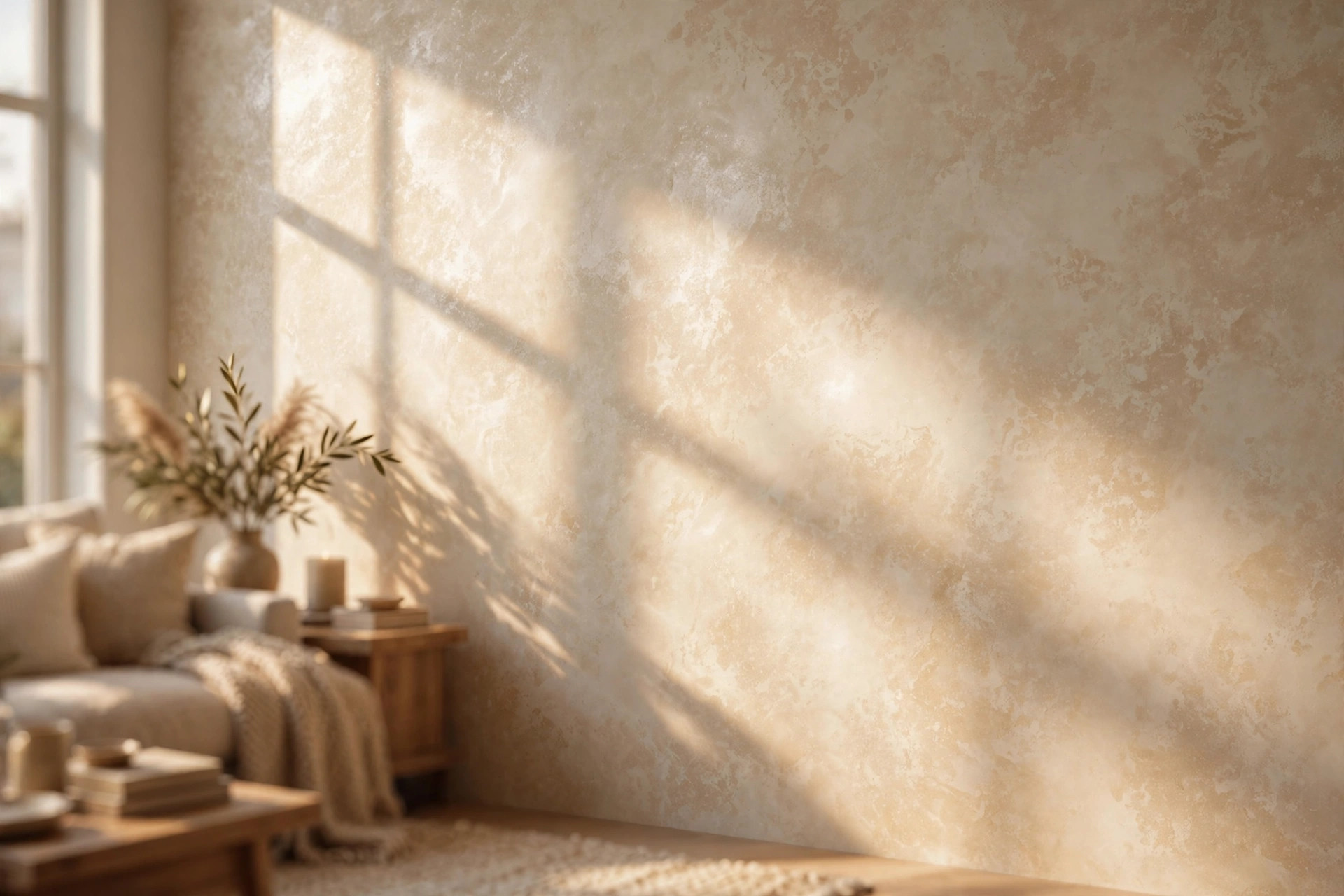
A wall finish is not paint. Paint sits on the surface as a thin colored film. Venetian plaster becomes part of the wall. It has depth. Light moves across it and the wall seems to glow from inside. Small shifts in tone, called mottling, give it a hand made look that paint cannot copy.
That depth changes how a room feels. A plain white room with venetian plaster reads warmer and richer than the same room in flat paint. Many owners use it on one accent wall or in one small space, like a powder room or an entry, where the finish can be seen up close. It also works on a full room when the goal is a calm, old world mood.
Cost matters here because venetian plaster is labor heavy. The material cost is modest. The labor cost is high. A job that takes a painter one day may take a plasterer four days, because each coat must dry and be worked in stages. If you do not know the cost before you start, you can be shocked by the quote. If you know the range, you can plan the size of the project to fit your budget.
Venetian plaster also affects home value in a quiet way. Buyers rarely pay extra for a named finish, but a beautiful wall makes a home stand out in photographs. In a competitive market, that can matter. The finish is also durable. True lime plaster resists mold and can last decades without repainting, which saves money over time. Guides to decorative finishes, like those on the Thespruce home pages, note that plaster walls keep their looks far longer than ordinary painted walls when cared for well.
What to Look For When Hiring a Plasterer
Not every painter can do venetian plaster. Look for a craftsperson who shows you finished samples in person, not only photographs. Ask to see a sample board with the exact color and sheen you want. Run your hand across it. A good venetian plaster wall feels cool and smooth, like stone. If the sample feels gritty or soft, the mix or the trowel work may be wrong.
Ask how many coats the price covers. Most good jobs use two to four coats, plus a final wax or sealer coat. A quote that covers only one coat is not a venetian plaster job. Ask what product line the plasterer uses. Some use true lime based plaster from European makers. Others use acrylic based faux finishes sold at big stores. Both can look fine, but acrylic products are closer to thick paint, and they cost less. You should know which one you are buying.
Check references for jobs at least one year old. Venetian plaster should not crack, flake, or yellow in a year. Ask the past client how the wall has held up in real life, especially in a busy hall or a bath with steam. Written reviews help, and sites that cover home projects, such as Bob Vila, advise checking both photos of fresh work and photos of aged work before you hire.
Get three quotes in writing. Each quote should list the room size, the number of coats, the product name, the color, the prep work, and the sealer. If one quote is half the price of the others, ask why. It may leave out prep, or it may use a cheap faux product. Also ask about timing. A two coat job on one wall can be done in two days. A three coat job in a whole room can take a week or more, because each coat needs to cure before the next goes on.
Types of Venetian Plaster Finishes
The term covers several different looks. Knowing them helps you ask for the right one and helps you read quotes.
Marmorino. This is the classic finish. It uses lime and marble powder, and it has a matte to satin look with soft cloud like movement. It is the most common choice for full rooms. It is also the most forgiving to repair, because touch ups blend into the mottled pattern.
Stucco Veneziano or polished plaster. This is the high sheen finish. The plasterer burnishes the final coat with the trowel edge until it shines like marble. It works best on smooth walls and in rooms with good light, where the shine can be seen. It shows wall flaws more than marmorino, so prep must be excellent.
Grassello. This is a fine, dense plaster with a glass smooth surface and a soft shine. It is often used in bathrooms because the burnished surface sheds water well once sealed.
Scagliola and tinted plaster. These are niche options. Scagliola copies the look of marble with veining painted into the plaster. Tinted plaster is lime plaster mixed with pigment to a full color, often deep reds, golds, or slate tones.
Acrylic faux venetian plaster. This is not true plaster. It is a thick acrylic paint product that copies the look. It is sold at stores like Home Depot and Lowes. It costs far less and goes on faster, but it does not have the depth or the mold resistance of lime plaster. If a quote seems too low, ask if the product is acrylic. There is nothing wrong with choosing it on purpose, as long as the choice is honest.
If you like old world wall textures but want a simpler route, limewash paint is a close cousin. Our guide on where to buy limewash paint in the usa covers stores and price points.
Venetian Plaster Wall Finish Near Me Cost: The Real Numbers
Here is the honest part. A professional venetian plaster job in the United States usually runs from 8 to 15 dollars per square foot of wall for a standard two to three coat finish in one color. High polish finishes, deep colors, and complex rooms can push the price to 18 to 25 dollars per square foot. A single accent wall of 100 square feet might cost 800 to 1,500 dollars. A full 12 by 14 foot room with 400 square feet of wall might cost 3,200 to 6,000 dollars.
Several factors move the price up or down:
Wall condition. Venetian plaster needs a smooth, sound base. If the wall has old texture, cracks, or peeling paint, the plasterer must skim coat and sand it first. Prep can add 2 to 5 dollars per square foot. Many homeowners are surprised that prep costs more than the plaster itself.
Number of coats. Two coats is the minimum for an even look. Three coats gives more depth and is the standard for quality work. Each extra coat adds labor and a day of drying time.
Sheen and color. Polished, high shine finishes take more trowel time than matte ones. Deep or custom colors cost more because the pigment and the extra coats needed for full cover add up.
Room size and access. Small jobs cost more per square foot because setup and travel are fixed costs. A plasterer may charge a minimum fee of 500 to 1,000 dollars for any job. High ceilings, stairs, and tight baths add labor time.
Region. Prices in large coastal cities run higher than prices in small towns. Labor rates are the main reason. When you search for the venetian plaster wall finish near me cost, expect quotes to reflect your local labor market.
Do it yourself cost. A do it yourself venetian plaster kit with trowels costs about 100 to 300 dollars and covers 100 to 200 square feet. That is roughly 1 to 3 dollars per square foot in materials. The savings are real, but the learning curve is steep. Your first wall will not look like a pro job. Many owners practice in a closet or a garage before they touch the living room. Product pages at Behr and Benjamin Moore list acrylic plaster style products with clear coverage numbers, which helps you budget a DIY attempt.
What is included. A full service quote should include surface prep, primer if needed, the plaster coats, the burnish, the wax or sealer coat, and cleanup. If the sealer is extra, ask what it costs. Unsealed lime plaster stains more easily, so most pros seal kitchens and baths as a matter of course.
A quick cost table
| Project | Size | Typical pro cost | |—|—|—| | One accent wall | 100 sq ft | 800 to 1,500 dollars | | Powder room | 150 sq ft | 1,200 to 2,250 dollars | | Full bedroom | 400 sq ft | 3,200 to 6,000 dollars | | High polish finish | per sq ft | add 3 to 8 dollars |
These are 2026 ballpark numbers for the United States. Always get local quotes, because labor rates vary by city and state.
How to Choose the Right Finish for Your Room
Start with the room’s light. North facing rooms get cool, flat light, and warm toned plaster can keep them from feeling cold. South facing rooms get strong warm light, which makes high sheen finishes glow. If the room is dark, a light marmorino in an off white or pale gold can lift it.
Think about how the room is used. A busy hallway or a child’s room takes more knocks. A matte marmorino with a wax coat hides scuffs better than a mirror polish. Bathrooms and kitchens need moisture resistance, so ask for a finish rated for wet areas and a proper sealer. The bathroom paint and moisture guides at Sherwin Williams make the same point for paints: wet rooms need the right coating, and plaster is no exception.
Match the finish to the house style. A Spanish or Mediterranean home takes to venetian plaster with ease. A modern farmhouse can carry one warm accent wall. A very modern glass and steel interior may fight with old world plaster, though some owners like the contrast. When in doubt, do one wall first and live with it for a month before you commit to a whole room.
Order matters if you are doing other work. Plaster goes on after drywall repair and before final trim paint in most schedules. Floors should be covered well, because plaster splatter is hard to remove from wood once it sets. Old house renovation guides, such as those on This Old House, stress this order of work for any wall finish project.
Care and Upkeep
Venetian plaster is easy to live with once it is sealed. Dust the walls with a soft dry cloth or a soft brush. For marks, use a damp cloth with a drop of mild soap, then wipe with clean water. Do not scrub hard and do not use harsh cleaners, bleach, or abrasive pads. They can dull the wax coat or scratch the sheen.
Rewax every few years in busy areas. A thin coat of paste wax, buffed by hand, brings back the glow. In a quiet bedroom, the finish may need no attention for a decade. Lime plaster resists mold by nature, because lime is alkaline, but it is not waterproof. Fix any roof or pipe leak fast. Water that sits behind the plaster can loosen it from the wall.
Repairs are possible but tricky. A small chip can be filled with matching plaster and re burnished, but the patch may show as a slightly different tone. This is why pros advise keeping a small jar of the mixed plaster and the color formula from your job. If a large area is damaged, the honest fix is often to redo the whole wall so the tone stays even.
Safety Notes
Lime plaster is a natural material, but the work is not free of risk. Wet lime is alkaline and can burn skin and eyes. Pros wear gloves, long sleeves, and eye protection while mixing and troweling. If you do it yourself, do the same. Keep a bucket of clean water near the work area to rinse splashes from skin at once.
Dust is the other concern. Sanding old paint or old plaster can release fine dust. If the house was built before 1978, the old paint may contain lead. Do not sand or scrape it without a lead test and proper safety steps. A dust mask rated for fine particles is wise for any sanding work. Ventilate the room while you work and while the plaster cures. Lime plaster gives off no harsh fumes like some paints, which is one of its quiet benefits, but fresh plaster still needs air flow to cure right.
Sealers and waxes have their own safety sheets. Read the label. Some solvent based sealers need strong ventilation and no open flame nearby. Water based sealers are simpler for home use. If you hire out, ask the plasterer what sealer will be used and read its label before the work starts.
Frequently Asked Questions
How long does venetian plaster last? True lime venetian plaster can last 20 years or more indoors with basic care. It does not peel like paint. It may need a fresh wax coat every few years in busy spots, but the plaster itself stays sound. Acrylic faux finishes last more like 7 to 12 years before they look tired.
Can I apply venetian plaster over painted walls? Yes, if the paint is sound and well stuck. The wall must be cleaned, lightly sanded, and primed with a plaster primer. Loose or glossy paint must be dealt with first. Bare drywall needs a skim coat and primer. Ask your plasterer what prep your walls need before you agree on a price.
Is venetian plaster good for bathrooms? It can be, with the right product and sealer. Polished lime plaster with a water resistant sealer handles steam well and resists mold. It should not be used inside a shower stall or where water hits it direct day after day. For shower walls, tile is still the safer choice.
Can I do venetian plaster myself to save money? Yes, and many owners do one accent wall as a DIY project. Buy a kit, watch the maker’s videos, and practice on a spare board first. Expect your first try to look handmade rather than perfect. For a whole room or a high polish finish, a pro is worth the money.
How do I find a good venetian plaster contractor near me? Search for decorative plaster or polished plaster contractors, not just painters. Look at sample boards in person, check year old references, and get three written quotes. Design and remodeling sites like HGTV keep directories and project photos that can help you see what good work looks like before you call.
Does venetian plaster add value to a home? It can help a home show better, which matters to buyers. It rarely adds a set dollar amount to an appraisal. Think of it as a beauty upgrade rather than an investment with a fixed return. Its real payoff is that you enjoy the walls every day.
A Short Final Word
Venetian plaster is one of the oldest wall finishes in the world, and it still earns its place. It costs more than paint because it asks more of the worker: more coats, more days, more skill with the trowel. In return you get walls with depth, warmth, and a life span measured in decades. If the quotes fit your budget, start small with one wall or one small room. Live with it. If you love it, as most owners do, you can plan the next room with clear eyes and real numbers in hand. For more textured wall ideas, see our notes on textured wall finish contractors near me, and if you are weighing a painted brick look instead, our whitewash brick fireplace cost near me guide covers that option.
References
Behr. (n.d.). Paints, primers, and stains. https://www.behr.com Benjamin Moore. (n.d.). Paints and stains. https://www.benjaminmoore.com Bob Vila. (n.d.). Home improvement advice. https://www.bobvila.com HGTV. (n.d.). Home and garden ideas. https://www.hgtv.com Lowe’s. (n.d.). Home improvement products. https://www.lowes.com Sherwin-Williams. (n.d.). Paints and coatings. https://www.sherwin-williams.com The Home Depot. (n.d.). Home improvement products. https://www.homedepot.com The Spruce. (n.d.). Home and garden advice. https://www.thespruce.com This Old House. (n.d.). Home renovation guidance. https://www.thisoldhouse.com
Was this guide helpful?

About Michael Thompson
The My Garden US editorial team writes practical, in-depth home and garden guides for American homeowners — tested advice, no fluff.
You May Also Like

Winter Interior Painting Tips for USA Homes
February 25, 2026 0 views
Painting Kitchen Cabinets White Cost USA: A Complete Price Guide
February 9, 2026 0 views
Sherwin Williams Exterior Paint Colors 2026: A Guide for American Homes
September 17, 2026 0 views