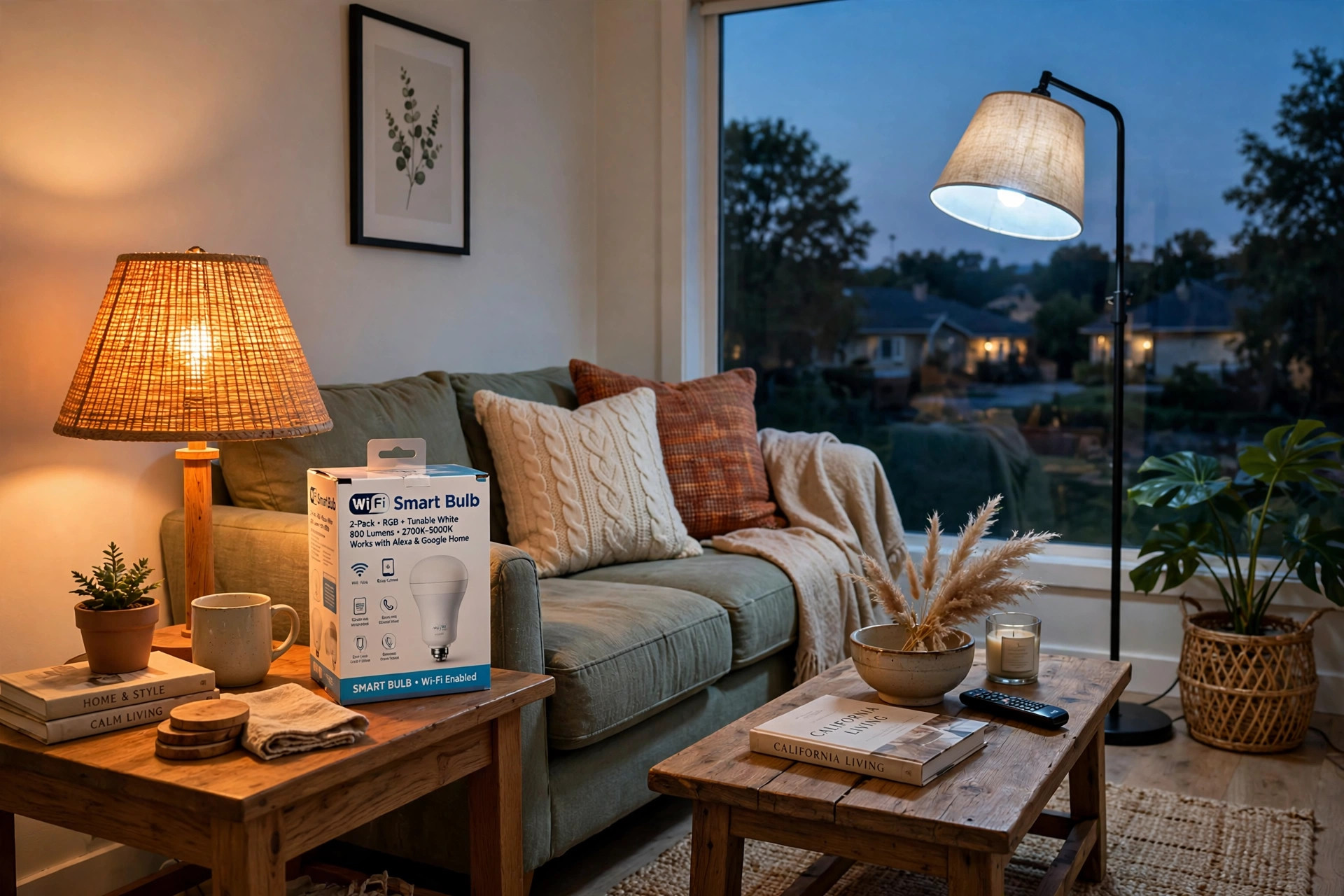

Why WiFi Smart Bulbs Matter
Many shoppers search for wifi smart bulbs deals near me when they decide to upgrade the lighting in their homes. A WiFi smart bulb screws into a normal lamp socket, but it connects to your home wireless network. You can turn it on or off with a phone app or a voice command. Many models let you dim the light or change its color from warm white to cool daylight. Some models offer full color, so a bedroom lamp can glow blue in the evening and bright white in the morning. The appeal is simple. You get more control over each room without changing any wiring. Before you pay full price, it helps to know where the best deals are found and what to look for in a bulb. This guide walks through both.
Where to Look for Deals Close to Home: Wifi Smart Bulbs Deals near Me
The phrase wifi smart bulbs deals near me points to a local search. Many people want to see the bulb in person before they buy. They also want to take it home the same day. Your local options are stronger than many shoppers expect.
Big home improvement stores often keep a full wall of smart lighting. The Home Depot, for example, carries many brands and runs regular sales on multi-packs. Lowe’s does the same, and both stores list their in-store stock on their websites, so you can check which branch near you has the bulbs on the shelf. Specialty lighting shops such as Lamps Plus and Lumens carry a wider range of fixtures and bulb styles, and their staff often know the products well.
When you shop local, ask the store about open-box items. A returned four-pack may be sold at a deep discount even though the bulbs are fine. Ask about floor models too. Some stores also price match their own websites, so a deal you see online may be honored at the counter.
Seasonal sales bring the deepest cuts. Black Friday, spring cleaning season, and back-to-school sales all bring lighting discounts. Store flyers and Sunday circulars often list bulbs at ten to twenty dollars below the regular price. Multi-packs of four or eight bulbs nearly always cost less per bulb than single packs.
Online sellers remain useful for price checks. Philips, the maker of many popular smart bulbs, posts its full product line with current prices. The Spruce publishes lighting guides that compare brands and features. Review sites like Wirecutter test popular models side by side. Use these pages to set a fair price in your mind, then walk into a local store with that number ready.
What to Check Before You Buy
A low price means little if the bulb does not fit your needs. Work through these points before you hand over your money.
Brightness
Bulb brightness is measured in lumens. An old 60-watt bulb gives about 800 lumens. Look for the lumen number on the box. A 1,100-lumen bulb suits a reading lamp. A 1,600-lumen bulb suits a main ceiling light. Do not trust vague words like bright or extra bright. The lumen number is the fact that matters.
Color and Warmth
Light color is measured in kelvins. A 2,700-kelvin bulb gives the warm yellow light of an old incandescent. A 5,000-kelvin bulb gives cool white light like a cloudy day. Tunable white bulbs let you move between warm and cool. Full-color bulbs add millions of colors. For a bedroom, warm light helps people relax. For a home office, cool white helps people focus. If you plan to pair smart bulbs with LED recessed lights, check that the color settings can match across the fixtures.
Hub or No Hub
Some smart bulbs need a separate hub or bridge plugged into your router. Others connect straight to your WiFi. Hub-free bulbs are simpler for a first purchase. Note that many WiFi bulbs use the 2.4 GHz band of your router. Most routers offer both 2.4 and 5 GHz bands. You may need to connect the bulb to the 2.4 GHz band during setup. The app will guide you.
Fit and Size
Check the socket type. Most American lamps use the standard E26 medium base. Small candelabra lamps use the E12 base. Check the bulb shape too. An A19 bulb fits most lamps. A BR30 bulb fits recessed cans. A G25 globe fits vanity bars.
Energy Use
The U.S. Department of Energy notes that LED bulbs use far less power than old incandescent bulbs. ENERGY STAR certified bulbs meet strict tests for efficiency and quality. An ENERGY STAR mark on the box tells you the bulb passed independent testing. Smart bulbs use a small amount of standby power to keep the WiFi radio alive. This standby draw is small, usually under one watt, but it is worth knowing.
Voice and App Support
Most WiFi bulbs work with Amazon Alexa, Google Assistant, or Apple HomeKit. A few work with only one system. Check the box for the logos of the systems you use. If you want a brand-by-brand breakdown, our WiFi smart bulbs buying guide walks through the differences.
Types and Options on the Shelf
Smart bulbs come in more shapes than shoppers expect. The common types are listed here.
A19 bulbs. This is the classic pear shape. It fits table lamps, floor lamps, and ceiling fixtures. Most deals you find will be on A19 bulbs because stores buy them in large volume.
BR30 bulbs. These are wide flood bulbs for recessed ceiling cans. They throw light down in a cone. They cost a bit more than A19 bulbs, so multi-pack deals help here.
Candelabra bulbs. Small bulbs for chandeliers and decorative fixtures. Smart versions exist but are less common. Deals on these are rare, so watch for holiday sales.
Filament bulbs. These look like old Edison bulbs with visible glowing threads. They suit kitchens and dining rooms where the bulb itself is on display.
Light strips. Flexible strips that stick under cabinets or behind a television. They pair well with under-cabinet lighting; see our guide to under cabinet strips for placement ideas. Strips often go on sale as starter kits with a power supply included.
Each type has a different price curve. A19 deals appear year round. Niche shapes like filament and candelabra move less often, so patience pays.
Cost and Price Expectations
WiFi smart bulbs cost more than plain LED bulbs. That is the honest truth. A single plain white smart bulb usually sells for fifteen to twenty-five dollars. A tunable white bulb runs twenty to thirty dollars. A full-color bulb runs thirty to fifty dollars. These are regular prices at full retail.
Deals bring the numbers down. A four-pack of white smart bulbs often drops to forty dollars during sales, which is ten dollars per bulb. Full-color four-packs have been seen near eighty dollars, or twenty dollars per bulb. Starter kits with a hub sometimes cost less than buying the pieces alone.
Watch for hidden costs. A hub costs twenty to sixty dollars if the brand requires one. Some apps charge for premium features, though basic on-off and dimming are almost always free. If you replace twenty bulbs at full color prices, the total can pass five hundred dollars. Plan the rooms in order of need. Start with the living room and bedroom. Add the rest over time as sales appear.
Refurbished bulbs are worth a look. Some stores sell factory-renewed smart bulbs with a full warranty at a third less than new. Check the return policy before you buy. A thirty-day return window gives you time to test each bulb in your own lamps.
Care and Upkeep
Smart bulbs need little care, but a few habits extend their life.
Keep the wall switch on. A smart bulb must have power to answer commands. If you flip the wall switch off, the bulb drops off your network. Use the app, a voice command, or a smart switch cover instead.
Update the firmware. The bulb maker sends updates that fix bugs and improve security. Open the app every month or two and check for updates. Install them in the evening when the lights are not needed for work.
Clean the bulbs. Dust on a bulb blocks light and traps heat. Wipe bulbs with a dry cloth twice a year. Do not use wet cleaners on the base.
Watch the heat. LED bulbs run cooler than old bulbs, but they still make some heat. Do not trap a smart bulb inside a fully enclosed fixture unless the box says it is rated for enclosed use. Heat shortens the life of the electronics inside.
Reset before resale. If you sell or give away a bulb, run the factory reset in the app first. This removes your WiFi name and password from the bulb.
Safety
Lighting is tied to home electrical safety, and smart bulbs are no exception.
Buy from known brands. Cheap no-name bulbs may skip safety testing. Look for the UL or ETL mark on the box. This mark means an independent lab tested the bulb for fire and shock hazards.
Mind the wattage. A smart bulb usually draws nine to twelve watts. This is far below the sixty-watt rating of most lamp sockets. Never put a bulb in a socket rated below the bulb’s draw, though this is rarely an issue with LEDs.
Keep water away. Unless the bulb is rated for damp or wet locations, keep it dry. Bathroom and porch fixtures need damp-rated bulbs. Outdoor fixtures need wet-rated bulbs.
Secure your network. A smart bulb joins your home WiFi. Use a strong router password. Some routers let you put smart home devices on a separate guest network. This keeps your computers apart from your bulbs. It is a simple step that adds real protection.
Frequently Asked Questions
Do WiFi smart bulbs work without the internet?
The bulbs talk to your router, so basic control through the app works on your home network even if the internet drops. Voice commands that run through cloud services may pause until the connection returns. Schedules stored on the bulb itself usually keep working.
Do smart bulbs work in three-way lamps?
Some do and some do not. A three-way lamp changes brightness by switching between contacts in the socket. Most smart bulbs ignore this switching and may flicker. Check the box for three-way support. A simpler path is to leave the lamp on its brightest setting and dim through the app.
How long do smart bulbs last?
LED bulbs are rated for fifteen thousand to twenty-five thousand hours. At three hours of use per day, that is more than ten years. The WiFi radio may fail before the LED does, but most bulbs live a long, useful life.
Can I mix brands in one home?
Yes, with limits. Each brand needs its own app. You can link them all to Alexa or Google Home and control them as one group. Features that are unique to one brand, like music sync, stay inside that brand’s app.
Do smart bulbs save money on power bills?
LED bulbs use about eighty percent less power than old incandescent bulbs. The savings come from the LED, not the smart features. Dimming the bulbs and using schedules can save a bit more. The bulb pays for itself through power savings over a few years in a room that is used daily.
What does “deals near me” mean for an online shopper?
It means checking local store stock and local prices before you order. A store ten minutes away may match an online price, and you take the bulb home the same day with no shipping wait. Check the store websites of The Home Depot and Lowe’s for local inventory before you drive.
A Final Word
Searching for wifi smart bulbs deals near me is a smart first step. You learn the fair price, you see the bulb in hand, and you walk out with it the same day. Check the big home improvement stores, watch the seasonal sales, and buy multi-packs when the per-bulb price drops. Choose brightness in lumens, color in kelvins, and a brand that works with your voice assistant. With a little patience, you can light the whole house smartly without paying full price for a single bulb.
References
ENERGY STAR. (n.d.). Energy efficient products. https://www.energystar.gov Lamps Plus. (n.d.). Lighting and home decor. https://www.lampsplus.com Lowe’s. (n.d.). Home improvement products. https://www.lowes.com Lumens. (n.d.). Lighting and ceiling fans. https://www.lumens.com Philips. (n.d.). Lighting products. https://www.philips.com The Home Depot. (n.d.). Home improvement products. https://www.homedepot.com The Spruce. (n.d.). Home and garden advice. https://www.thespruce.com U.S. Department of Energy. (n.d.). Energy efficiency and renewable energy. https://www.energy.gov Wirecutter. (n.d.). Product reviews from The New York Times. https://www.nytimes.com/wirecutter
Was this guide helpful?

About Sarah Mitchell
The My Garden US editorial team writes practical, in-depth home and garden guides for American homeowners — tested advice, no fluff.
You May Also Like

Bedroom Table Lamps Buying Guide USA
August 31, 2026 0 views
Indoor Wall Sconces for Sale in the USA: A Practical Guide
August 1, 2026 0 views
Kitchen Island Pendants for Florida Homes: A Plain Buyer’s Guide
July 3, 2026 0 views