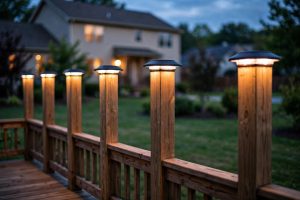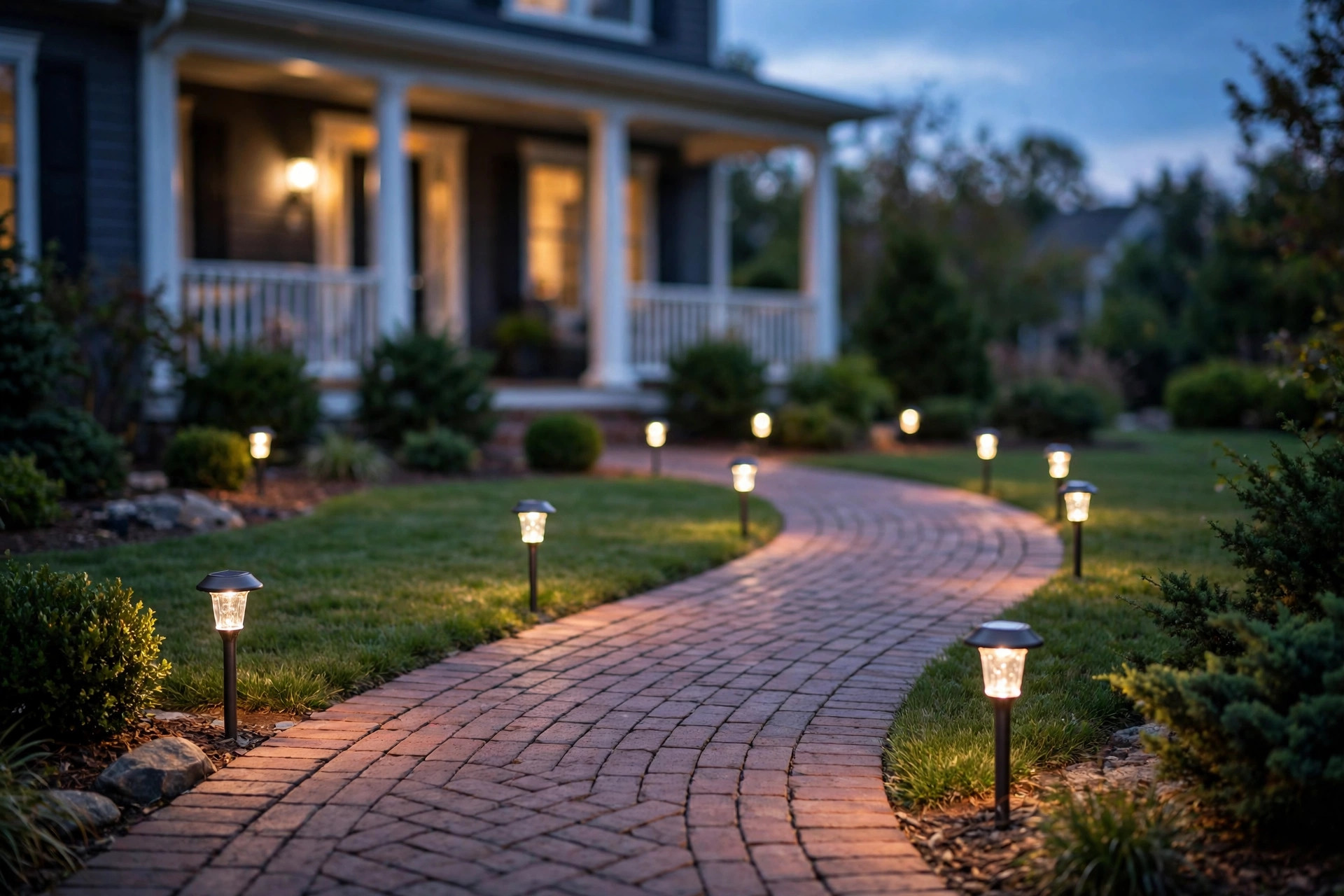

A dark walkway is a hazard. Guests trip. Delivery drivers stumble. You fumble for your keys on the front step. If you search for solar path lights deals near me, you want light that costs little and asks little of you. Solar path lights fit that wish. They charge by day. They glow by night. They need no wiring and no electrician. They add little to your power bill. This guide shows how to find good deals, what to look for, what types exist, what they cost, how to care for them, and how to keep them safe.
Why Path Lights Matter
A lit path does three jobs at once. First, it keeps people safe. A walkway with steps or roots is easier to cross when it is lit. Second, it makes a home look cared for. A row of small lights along a path gives a yard a finished look. Third, it discourages trouble. A lit yard is less inviting to trespassers than a dark one.
Wired lights can do this work, but they cost more to install. A trench must be dug. Cable must be buried. A transformer must be mounted. Solar path lights skip all of that. You push a stake into the ground. The sun does the rest. For a renter or a first-time buyer, that ease matters.
Light also shapes mood. A warm glow near the front door feels welcoming. A cool white row along a fence looks modern. Small choices in color and placement change the whole feel of a yard after dark. Home lighting guides often note this: outdoor light is as much about mood as it is about safety.
How to Find Solar Path Lights Deals Near Me
The phrase “near me” points to local shopping. Start with the big home improvement stores near your home. Both large chains keep solar lights in stock most of the year. Their websites let you check local shelf stock before you drive over. You can often order online and pick up at the store the same day.
Next, try local hardware stores. They carry fewer models, but the staff often know which brands hold up in your climate. A small store may also price-match a larger chain. Ask. It costs nothing.
Seasonal timing matters more than people think. Spring brings the widest choice. Late summer and early fall bring the best prices, when stores clear shelf space for holiday goods. Watch for sales around Memorial Day, the Fourth of July, and Labor Day. Black Friday and end-of-season clearance can cut prices by a third or more.
Online marketplaces show more choice, but they add shipping time. Compare the shelf price near you against the online price with shipping. Sometimes the local deal is better once you add it all up. Set price alerts if you are not in a hurry. A little patience often saves real money.
Consumer testing groups publish reviews of outdoor lighting each year. Reading one or two reviews before you buy can keep you from a bad set. A brand that looks fine in a photo may dim after one month. Reviews tell you what the box will not.
What to Look For When You Buy
A solar path light has four parts: the solar panel, the battery, the LED bulb, and the housing. The panel gathers sun. The battery stores power. The LED turns power into light. The housing holds it all and must survive rain and sun.
Brightness
Brightness is measured in lumens. Most path lights give between 5 and 20 lumens. That sounds low next to an indoor bulb, but a path needs only a soft pool of light. For a dark side yard, pick 15 to 20 lumens. For a short front walk, 8 to 12 lumens is enough. Do not chase high lumens alone. A cheap light with high lumens may still die by midnight.
Battery and Panel
The battery decides how long the light lasts each night. Look for a rechargeable AA or AAA lithium or Ni-MH battery with at least 600 mAh. Some sets let you replace the battery yourself. That is a plus. The panel should be large enough to see clearly. A tiny panel in shade will never charge well.
Materials and Build
Plastic is light and cheap. It also cracks in cold weather and fades in sun. Stainless steel or glass tops last longer and look better, but they cost more. If your yard gets harsh sun or hard freezes, spend more on the housing. Check that the stake is strong. Thin stakes bend in hard soil.
Light Color and Mode
Warm white, around 2700 to 3000 kelvin, feels soft and welcoming. Cool white, around 5000 kelvin, looks bright and modern. Some sets offer both or cycle through colors. Pick one color and keep it through the yard for a tidy look.
Weather Rating
Look for a water resistance rating such as IP44 or higher. This means the light can take rain and spray. In storm country, a higher rating is worth the extra cost.
Types of Solar Path Lights
Classic Stake Lights
These are the most common. A small lamp head sits on a stake. You push the stake into soil or mulch. They are cheap and easy to move. Most sets of six to ten cost less than a family dinner out.
Bollard Lights
Bollards are taller, like small posts. They give more light and suit wide driveways or large lawns. They cost more per light, but fewer are needed.
Decorative and Lantern Styles
Some solar lights look like old lanterns or glass globes. They add charm to gardens and patios. They often give less light than plain stake lights, so use them where mood matters more than safety.
Motion Sensor Path Lights
These stay dim until they sense movement, then brighten. They save battery and startle no one. They pair well with motion flood lights near doors and garages for a layered plan.
Wall-Mounted and Hanging Solar Lights
Not every solar light goes in the ground. Some mount on fences or walls. Others hang from hooks. These work where the ground is concrete or where stakes would hit pipes.
Cost and Price
Solar path lights are one of the cheapest ways to light a yard. A basic set of six stake lights often sells for 15 to 25 dollars. Mid-range sets of eight to twelve with steel parts run 30 to 60 dollars. Premium bollard or lantern sets can reach 80 to 150 dollars.
Do the math per light. A 40-dollar set of ten is 4 dollars a light. A 25-dollar set of four is more than 6 dollars a light. The bigger set is the better deal if you need the coverage.
Deals near you follow store cycles. Clearance racks in late summer are the best place to look. Open-box and returned sets can be fine if the store lets you test them. Check the return policy before you buy a deep-discount set. A deal is no deal if half the lights are dead.
Remember there is no wiring cost and no power bill. A wired system can cost hundreds to install. Solar pays for itself on day one.
Care and Upkeep
Solar lights need little care, but they need some. Dust and pollen coat the panel and cut charging. Wipe each panel with a damp cloth once a month. In dusty areas, wipe more often.
Batteries wear out. Most last one to two years. When a light that used to burn till dawn now dies at ten, the battery is likely done. Swap in a fresh rechargeable battery of the same type. Do not use throwaway alkaline batteries. They do not recharge and can leak.
Check placement twice a year. Trees grow. Bushes spread. A panel that sat in full sun in April may sit in shade by August. Move the stake a foot or two toward the sun.
In cold climates, bring lights inside for the worst of winter. Frozen batteries charge poorly and may not last the night. If you leave them out, clear snow off the panels so they can catch what sun there is.
Safety
Solar lights are low voltage and carry almost no shock risk. Still, place them with care. Keep stakes a few inches off the walking surface so no one kicks them. Do not line both edges of a narrow path so tightly that people must step around the lights. Space them six to eight feet apart for a natural look and a clear walk.
Do not place bright lights where they shine into a neighbor’s window or a driver’s eyes. Aim heads slightly down and toward the path. If a light has an adjustable head, tilt it so the beam lands on the ground, not on the street.
Keep leaves and mulch away from the light heads. Dry mulch against a warm housing is a small but real fire risk on hot days. A quick trim each month solves it.
Where a path meets steps, add an extra light. Steps are where most falls happen. A brighter pool of light there is worth more than a third light along a straight flat run.
Frequently Asked Questions
Do solar path lights work on cloudy days?
They work, but for fewer hours. A full day of heavy cloud may cut the night run time in half. Choose lights with larger panels and good batteries if your area has many gray days. Stored charge from a bright day does not carry over much to the next.
How long do solar path lights last?
The housing can last three to five years. The battery usually needs replacement after one to two years. LED bulbs rarely burn out. Replacing batteries is cheap and extends the life of a set by years.
Can I leave solar path lights out all winter?
You can, but cold shortens their run time and can wear the battery faster. In mild climates, leave them out and clear snow from panels. In places with hard freezes, bring them inside until spring. This simple step can add a year to their life.
How many lights do I need for a walkway?
Count the length of the path in feet and divide by seven. A 35-foot walk needs about five lights. Add one extra near steps or turns. It is better to start with fewer and add more than to crowd the path on day one.
Are solar path lights bright enough for security?
They mark paths and deter casual trespassers, but they are not security lights. For real security, add motion-triggered lighting near doors, as many motion flood lights provide. Solar path lights are for guidance and looks. Brighter tools handle security.
Where can I read trusted advice on outdoor lighting?
Start with the big retailers’ buying guides and with well-known home sites. Lighting retailers like Lumens and Lamps Plus publish guides on lumens and placement. The Spruce and HGTV cover style and layout. This Old House explains installation and upkeep in plain terms. For energy facts, ENERGY STAR and Philips are solid sources. For prices near you, check Home Depot and Lowe’s.
A Final Word
Good outdoor light does not need to cost much. A search for solar path lights deals near me often ends at a local store with a clearance rack and a smart shopper. Pick sturdy housings, fair lumens, and replaceable batteries. Space the lights well. Wipe the panels. Small care pays off in long, bright nights. And if your project grows, look at landscape spot lights for trees and beds, or kitchen track lighting when you turn your attention back inside. Light, placed with thought, makes a home feel safe and loved.
References
ENERGY STAR. (n.d.). Energy efficient products. https://www.energystar.gov HGTV. (n.d.). Home and garden ideas. https://www.hgtv.com Lamps Plus. (n.d.). Lighting and home decor. https://www.lampsplus.com Lowe’s. (n.d.). Home improvement products. https://www.lowes.com Lumens. (n.d.). Lighting and ceiling fans. https://www.lumens.com Philips. (n.d.). Lighting products. https://www.philips.com The Home Depot. (n.d.). Home improvement products. https://www.homedepot.com The Spruce. (n.d.). Home and garden advice. https://www.thespruce.com This Old House. (n.d.). Home renovation guidance. https://www.thisoldhouse.com
Was this guide helpful?

About Michael Thompson
The My Garden US editorial team writes practical, in-depth home and garden guides for American homeowners — tested advice, no fluff.
You May Also Like

Vanity Light Bars Texas Homes USA: A Complete Buying Guide
June 16, 2026 0 views
Bedroom Table Lamps American Homes Guide
September 21, 2026 0 views
Kitchen Island Pendants Deals Near Me: A Simple Buyer’s Guide
April 6, 2026 0 views