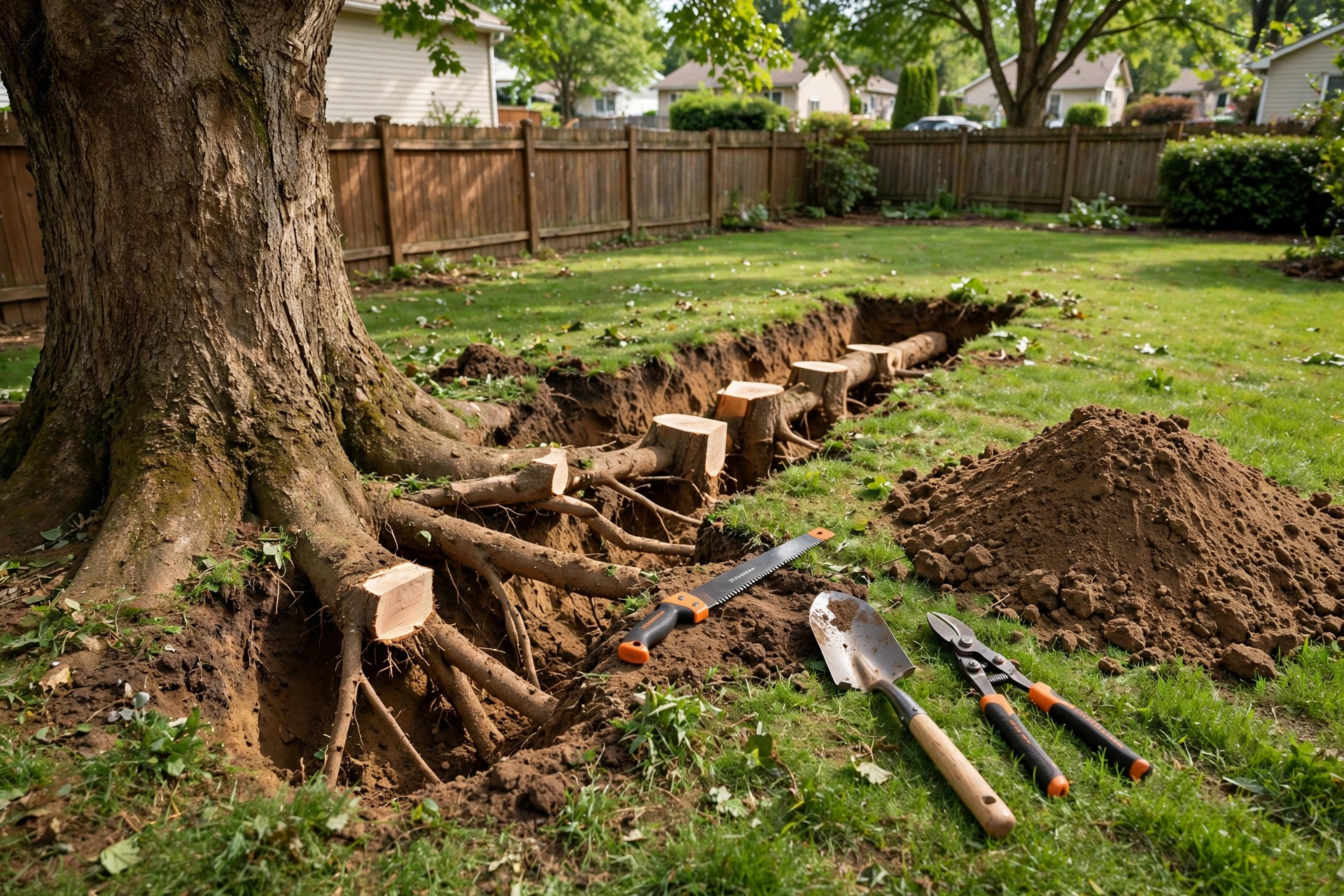

Tree roots that rise above the soil can turn a good lawn into a rough and uneven mess. They trip children, break mower blades, and steal water and food from the grass. Many homeowners ask how to remove tree roots from lawn areas without killing the tree. The answer is that small surface roots can be taken out with care. But the wrong cut can harm a tree badly or make it unsafe in high wind. This guide walks through the safe way to do the job. You will learn when root removal is safe, which tools work best, the exact steps to follow, what the work costs, and how to fix the lawn after.
Why Surface Roots Rise Up
Most tree roots grow in the top twelve inches of soil. They spread wide to find water and air. When soil is packed down hard, roots grow upward toward the surface. Frequent shallow watering has the same effect. The roots stay near the top because that is where the water is.
Some trees are known for this habit. Maples, willows, poplars, and elms send out many shallow roots. As the tree ages, these roots get thick. They lift the ground and push through the grass. Mowing over them becomes hard. The grass above them often turns thin and yellow because the roots drink the water first.
In many yards the problem starts small. One bump appears near the base of the tree. A year later there are three. Within a few seasons the whole area under the tree is a web of hard ridges. That is the right time to act. Small roots are far easier to handle than large ones.
When You Should Not Cut a Tree Root: How to Remove Tree Roots From Lawn
Before you dig, learn the limits. Trees depend on their roots for food, water, and support. Cutting too much can starve the tree or make it topple in a storm. The safe rule is simple. Never cut a root that is thicker than two inches if you can avoid it. Never cut more than one quarter of the roots on any one side of the tree.
Stay out of the critical root zone. A fair rule is to measure the trunk width in inches at chest height and multiply by one and a half. The result in feet is the distance to keep clear. A tree with a twelve inch trunk needs about eighteen feet of clear space around it. Cutting inside that zone puts the tree at real risk.
Do not cut roots that hold the tree upright. These are the large structural roots near the base. If the tree leans, or if the roots you see are as thick as your wrist, stop and call a tree care professional. An affordable tree pruning service near me can advise whether the roots are safe to remove. Some cities also have rules about cutting roots of street trees or protected trees. Check with your local office first.
Signs the Tree Is at Risk
Watch for warning signs before and after the work. A tree that drops leaves early in the season may already be stressed. Mushrooms growing on the trunk or roots can point to decay inside. Cracks in the bark near the base are another bad sign. If you see any of these, do not cut roots on your own. A weak tree with fewer roots is more likely to fail.
What You Will Need: Tools for the Job
The right tools make the work safer and cleaner. For small roots you need only hand tools. A sharp spade or trenching shovel clears the soil. A mattock or pick loosens packed earth. Lopping shears cut roots up to one inch thick. A pruning saw handles roots up to two inches. Keep the blades sharp. Clean cuts heal faster than ragged tears.
For larger areas you may want power equipment. A gas powered root saw cuts through thick roots fast. You can rent one from most tool rental yards. A small stump grinder removes roots down to several inches below the surface. This tool is heavy and needs care. If you plan to rent or buy outdoor power equipment, check the safety guides from makers like Toro and John Deere before you start. Engines from companies such as Briggs & Stratton power many rental machines, so learn their safe start and stop steps.
Safety gear matters too. Wear heavy gloves, eye protection, and steel toe boots. Roots can snap back when cut. Soil can hide rocks and old wire. Keep children and pets away from the work area until the ground is filled and level again.
How to Remove Tree Roots From Lawn, Step by Step
Work in late winter or early spring when the tree is dormant. The tree handles root loss better at that time. Mark the roots you plan to cut with spray paint. Stay well outside the critical root zone you measured earlier.
Step 1: Expose the Roots
Use the spade to cut a circle of sod around each root. Lift the sod and set it aside on a tarp. You can lay it back later. Dig down on both sides of the root with the trenching shovel. Clear soil away until you can see the full root. Do not pull or pry hard. Pulling can tear the root back into the tree and cause a large wound.
Step 2: Cut Clean
Start with the loppers for thin roots. Make one firm cut straight through. For roots up to two inches, use the pruning saw. Cut from the top down in slow strokes. Make the cut as far from the trunk as you can. A clean flat cut lets the tree seal the wound. Never leave a jagged stub. If a root is thicker than two inches and you are not sure it is safe, stop and get advice.
Step 3: Remove and Fill
Pull out the cut pieces and clear them from the yard. Fill the trench with good topsoil. Pack it down firm with your foot or a hand tamper. The new soil should sit level with the lawn around it. Leave it a little high, about half an inch, because it will settle.
Step 4: Repair the Lawn
Lay the saved sod back over the filled area if it is still fresh. Water it well. If the sod is torn or dried out, spread grass seed instead. Cover the seed with a thin layer of straw or peat moss. Water lightly every day until the seed sprouts. Keep foot traffic off the spot for three weeks.
Your Main Options Compared
Digging by hand is the cheapest method. It works well for a few small roots. It gives you full control over each cut. The work is slow and hard on the back, but it is the safest choice for the tree.
Machine grinding is faster for large jobs. A grinder chews roots into chips a few inches below the surface. It leaves the lawn rough, so you must bring in topsoil after. If the job is bigger than you want to handle, look for an affordable tree stump grinding service near me. Many of these firms grind surface roots as well as stumps, and they carry the right insurance.
Chemical root killers are a third option. Products made to rot stumps can soften small roots over time. Read stump killer for tree stumps reviews before you buy one. Chemicals work slowly and can harm nearby grass, so use them with care and keep them away from garden beds.
A fourth choice is to leave the roots and cover them. A two to three inch layer of topsoil over the area, followed by seed or sod, hides small roots. Do not pile soil high against the trunk. Deep soil against bark can rot the trunk and kill the tree. Mulch is another good cover under trees where grass will not grow anyway.
What Root Removal Costs
Doing the work yourself costs little. Hand tools you may already own run from twenty to sixty dollars if you need to buy them. A bag of topsoil costs a few dollars. Grass seed for a small patch is under fifteen dollars. A root saw rental often runs forty to eighty dollars for a day.
Hiring help costs more but saves time and risk. A tree service may charge one hundred fifty to four hundred dollars to cut and remove surface roots around one tree. Prices rise if the crew must bring a grinder or haul away soil and roots. Stump grinding firms often set a minimum fee near one hundred dollars. Always get two or three written quotes. Ask whether the price covers cleanup, topsoil, and seeding, or just the cutting.
Caring for the Lawn After Root Removal
The weeks after the work decide how well the lawn recovers. Water the repaired spots every day for the first two weeks. The soil should stay damp but not soggy. Once seed sprouts, water less often but more deeply. Deep watering trains new grass roots to grow down.
Wait six weeks before feeding the new grass. A starter fertilizer helps young roots grow strong. Follow the rate on the bag. Too much fertilizer can burn new growth. Mow the repaired area on a high setting. Never cut more than one third of the blade height at once. Short mowing stresses young grass.
Keep an eye on the tree too. If leaves wilt or drop in the first summer after the work, water the tree deeply once a week. A tree that loses roots needs extra water while it grows new ones. Mulch around the base, a few inches deep and kept away from the trunk, holds moisture in the soil.
Safety Rules to Follow
Call your local utility marking service before you dig. In most states you dial 811. Crews mark buried gas, electric, and water lines for free. Roots often tangle around these lines. A cut line is costly and can be deadly.
Wear eye protection at all times. Chips and soil fly when sawing roots. Gloves protect your hands from blisters and sharp edges. If you rent a power tool, read the full manual first. Let the tool do the work and never force it. Keep the cord or fuel away from the cutting path.
Work with a partner when you use heavy machines. One person can watch for hazards while the other runs the tool. Take breaks. Tired hands make mistakes. If the weather turns wet, stop. Wet soil is heavy, tools slip, and trenches can cave in.
Frequently Asked Questions
Can I cut a tree root without killing the tree?
Yes, in most cases. Small roots under two inches thick can be cut safely if you stay far from the trunk and cut no more than one quarter of the roots on one side. Large roots near the base are a different story. When in doubt, ask a tree care professional first.
How close to the trunk can I safely cut?
Use the one and a half rule. Measure the trunk width in inches at chest height. Multiply by one and a half to get a safe distance in feet. A ten inch trunk means fifteen feet of clear space. Never cut structural roots inside this zone.
Will the roots grow back after I remove them?
They may. Trees often send out new roots to replace lost ones. Good watering and feeding help the tree recover without pushing roots back to the surface. Deep, less frequent watering trains roots to grow downward instead of upward.
Can I just cover the roots with soil instead of cutting them?
Yes, for small roots. Spread two to three inches of topsoil over the area and seed it. This is the gentlest option for the tree. Do not pile more than three inches of soil, and keep all soil away from the trunk bark.
Should I hire a professional or do it myself?
Do it yourself when the roots are thin and far from the trunk. Hire help when roots are thick, close to the base, or near buried lines. A pro brings the right tools and knows how much a tree can take.
When is the best time of year to remove tree roots?
Late winter or early spring is best. The tree is dormant and loses less energy from root cuts. Avoid hot summer months when the tree is already stressed by heat.
A Final Word
Learning how to remove tree roots from lawn trouble spots is a skill any homeowner can master. Measure first, cut only what is safe, make clean cuts, and repair the ground well. Respect the tree and it will keep giving shade for years. When the job looks too big, there is no shame in calling a professional. A healthy tree and a smooth lawn can live side by side with a little care.
References
Toro. (n.d.). Lawn and garden equipment. https://www.toro.com Deere. (n.d.). Agriculture and turf care equipment. https://www.deere.com Briggs & Stratton. (n.d.). Outdoor power equipment engines. https://www.briggsandstratton.com
Was this guide helpful?

About Emily Rodriguez
The My Garden US editorial team writes practical, in-depth home and garden guides for American homeowners — tested advice, no fluff.
You May Also Like
How to Kill Nutsedge in Lawns: A Plain Guide for Homeowners
January 20, 2026 0 views
Lawn Fertilizer With Iron for Greening: A Plain Guide to a Deep Green Yard
April 27, 2026 0 views
Lawn Irrigation Winterization Service Near Me: What to Know Before the First Freeze
September 23, 2026 0 views