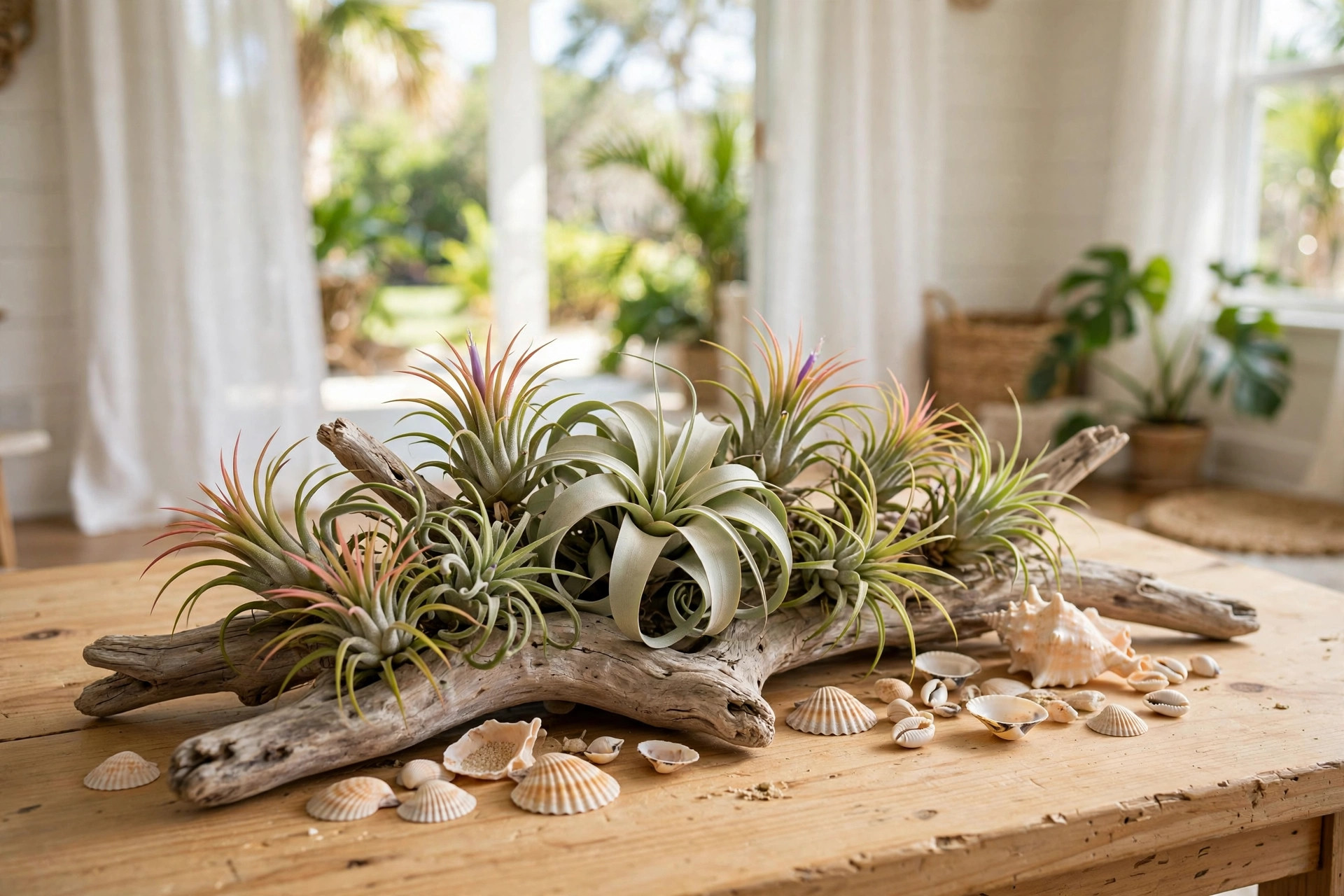

Air plants have found a second home in Florida. The warm air, the bright light, and the long growing season all suit these small, soil-free plants. For that reason, many Florida home owners now look for air plants bulk florida homes usa offers. Buying in bulk means lower cost per plant and enough plants to decorate a whole room, a porch, or a wedding table.
Air plants are not like ordinary houseplants. They do not grow in soil. They take water and food from the air through small scales on their leaves. The correct name for the group is tillandsia. There are hundreds of kinds. Some are green and soft. Some are silver and stiff. Some grow into round balls. Some grow long strands that hang down like beards.
Why It Matters
Florida has the right climate for air plants. In most of the state, these plants can live outside all year. They can hang from tree branches, sit on a porch rail, or fill a hanging basket. They need no pots and no soil. That makes them simple to place anywhere.
Bulk buying matters for three reasons. First, price. A single air plant at a shop may cost five dollars. The same plant bought in a pack of fifty may cost one dollar each. Second, matching plants. When you buy bulk packs, the plants often look alike. That helps when you decorate a room or an event. Third, gifts. Air plants make simple, living gifts. A bulk pack gives you enough to share with friends and family.
Florida also has a rule worth knowing. Some tillandsia grow wild in Florida trees. It is against the law to take wild plants from public land. Always buy from growers or shops. That protects the wild plants and gives you healthy stock.
How to Choose Bulk Air Plants: Air Plants Bulk Florida Homes Usa
Buy From a Florida Grower When You Can
Plants grown in Florida are already used to Florida air. They have lived through Florida heat and Florida rain. When they move to your home, they adjust fast. Growers in other states can also sell good plants, but shipping in summer heat can stress them.
Look for Firm, Healthy Plants
A healthy air plant feels firm when you hold it. The leaves hold their shape. The base, where the leaves meet, should be dry and tight. Soft, dark bases are a bad sign. That means rot. Skip any plant that falls apart in your hand.
Check the Size Stated in the Listing
Sellers list sizes in inches. A two-inch plant is small. A five-inch plant is large. Bulk packs often mix sizes. Read the full listing before you pay. If you need plants for a wedding centerpiece, small plants may look lost. If you fill a terrarium, small plants fit best.
Ask About the Species Mix
Some bulk packs contain one species. Others mix ten or more kinds. A mix gives you variety. A single-species pack gives you a clean, even look. Neither is better. It depends on what you want. Many buyers of air plants bulk florida homes usa packs choose mixed lots for home use and single-species lots for events.
Types and Options
Tillandsia Ionantha
This is the most common air plant in bulk packs. It is small, usually two to three inches across. The leaves are green and turn red at the tips when the plant is about to flower. Ionantha is tough and easy to care for. It suits beginners well.
Tillandsia Xerographica
This plant looks like a silver sculpture. Its wide, curling leaves can reach six inches or more across. It grows slowly and costs more than other kinds. Bulk packs of xerographica are less common, but mixed bulk lots sometimes include one or two.
Tillandsia Caput-Medusae
The name means snake head. Its thick leaves twist upward like snakes. It is a strong grower and handles Florida heat well. The plant blooms with a red spike and blue flowers.
Tillandsia Stricta and Tillandsia Aeranthos
These are soft, green plants that form round clumps. They bloom with pink and blue flowers. They do well in bright rooms and on shaded porches. Many bulk packs for Florida homes include these kinds.
Tillandsia Usneoides, or Spanish Moss
Spanish moss hangs in long gray strands. It grows wild in Florida and across the South. You can buy it in bulk by the pound. It works well for filling hanging baskets or covering soil in large pots. It needs good air flow and regular misting.
Mounted and Display-Ready Packs
Some sellers offer bulk packs already glued to wood, shells, or wire. These cost more but save you work. If you are decorating for an event, display-ready packs are worth a look.
Other Florida plant buyers also look at dahlia bulbs for Texas homes and succulent variety packs when they plan large plantings. For indoor trees, see our notes on fiddle leaf figs.
Cost and Price
Bulk air plants are cheap compared with most houseplants. Here is what buyers in Florida usually see in 2026.
– Small plants (1 to 2 inches), packs of 25 to 100: about 50 cents to 1.50 dollars per plant. – Medium plants (2 to 4 inches), packs of 10 to 50: about 1.50 to 4 dollars per plant. – Large plants (4 to 6 inches), packs of 5 to 25: about 4 to 10 dollars per plant. – Xerographica, sold singly or in small lots: about 12 to 30 dollars per plant. – Spanish moss, sold by the pound: about 8 to 20 dollars per pound.
Shipping adds to the cost. Local pickup at a Florida nursery saves money and keeps plants fresh. Online sellers often give free shipping on large orders. Compare the total cost, not just the price per plant.
Quality bulk packs cost a little more than the cheapest packs. In most cases, the extra cost is worth it. Cheap, weak plants die fast. Healthy plants live for years and grow offsets, or pups, that become new plants.
Care and Upkeep
Light
Air plants need bright light. Near a window is best. East and south windows work well in Florida homes. Outside, bright shade under a tree is perfect. Full noon sun can burn the leaves. If the leaves turn brown at the tips, the light may be too strong or the air too dry.
Water
There are two ways to water air plants. The soak method and the mist method.
For the soak method, place the plants in room-temperature water for 20 to 30 minutes. Do this once a week in most homes. In dry, air-conditioned rooms, soak twice a week. After soaking, shake off extra water. Place the plants upside down on a towel to dry. Wet bases cause rot. This is the most common cause of dead air plants.
For the mist method, spray the plants with a mist bottle two to three times a week. Misting suits plants glued to displays that you cannot soak. In Florida, where the air is humid, misting often works well enough for plants kept outside.
Use rainwater or tap water that has sat out overnight when you can. Very hard water can leave white crust on the leaves. Air plants take in what they need through leaf scales, so water quality matters more than for potted plants.
Air Flow
Air plants need moving air. That is part of their name. Do not seal them in closed jars with lids. Open terrariums and wire holders work well. A porch with a light breeze is ideal. After watering, good air flow helps them dry within four hours.
Food
Air plants grow slowly, but they still like food. Use a fertilizer made for bromeliads or orchids. Mix it at one-quarter strength. Spray it on the plants once a month in spring and summer. Skip feeding in winter when growth slows. Do not use standard houseplant fertilizer at full strength. It can burn the leaves.
Temperature
Most air plants like temperatures between 50 and 90 degrees. Florida rarely drops below that range in the south. In north Florida, a cold night can reach the 30s. Bring outdoor plants inside when frost is forecast. A single hard freeze can kill them.
For general houseplant feeding and care basics, many growers consult plant care guides from established garden publishers. Large nursery catalogs and seed suppliers also publish seasonal care calendars that cover indoor plants. Mail-order garden catalogs often list tillandsia alongside other easy houseplants.
Where to Place Them in a Florida Home
Air plants suit many spots. Hang them in a bathroom window, where shower steam gives them moisture. Line them along a kitchen shelf near a bright window. Fill a large glass bowl on a coffee table. Hang Spanish moss from porch beams. Mount xerographica on a piece of driftwood by the front door.
Keep them away from heating vents and air conditioner vents. Fast, dry air stresses the plants. Also keep them out of reach of cats that like to chew leaves. The plants are not listed as toxic, but chewed plants look bad and grow poorly.
Safety
Air plants are safe around people and pets. They are not known to be toxic. Still, wash your hands after handling fertilizer. Keep small plants away from toddlers who might put them in their mouths. If you hang plants with wire, make sure the wire is secure and cannot fall.
For plant safety and general home garden standards, the federal plant research service and university extension offices publish free guides. These are good sources when you want plain facts without sales talk.
Common Problems
Brown Leaf Tips
Brown tips usually mean too little water or too much dry air. Increase soaking time or mist more often. Trim the brown tips with clean scissors. The plant will grow new leaves.
Rotting Base
A dark, soft base means too much water sat at the center. Remove dead leaves. Let the plant dry fully. Water less often and always dry plants upside down after soaking.
Pests
Mealybugs and scale insects sometimes attack air plants. Look for white cottony spots or small brown bumps. Dab pests with a cotton swab dipped in rubbing alcohol. For bad cases, use insecticidal soap made for houseplants. Check new bulk plants for pests before you place them near your other plants.
No Flowers
Air plants bloom once in their life, then make pups and slowly die back. Young plants may take two to five years to bloom. Bright light and monthly feeding in summer help. Be patient. The pups are the real reward. One plant can become a clump of ten over a few years.
Gardening reference sites with large how-to libraries and plant encyclopedias describe these problems in more detail, with photos that help you tell rot from normal aging.
Frequently Asked Questions
How many air plants should I buy for a living room?
For one shelf or table, 10 to 15 small plants look full. For a whole room with several displays, 30 to 50 plants work well. Bulk packs of 25 or 50 fit most Florida living rooms. Start with a smaller pack if this is your first time.
Can air plants live outside year-round in Florida?
In south and central Florida, yes. In north Florida, bring them inside during freezes. Even in the south, move them under cover during rare cold snaps below 40 degrees.
How long do air plants live?
A single plant lives two to five years. Before it dies, it makes one to three pups. The pups grow into full plants. A bulk pack can turn into a lasting collection if you separate and care for the pups.
Do air plants clean the air?
Air plants take in water and some nutrients from the air. They do not clean indoor air in any large way. Buy them because they look good and are easy to keep, not as air purifiers.
What is the best bulk size for a wedding?
Wedding planners often buy 50 to 200 small ionantha plants for table favors or centerpieces. Order at least three weeks early. Unpack the plants on arrival and soak them. Let them dry before you mount them for the event.
Where can I learn more about plant varieties?
Seasonal planting calendars list bloom times for many plants. Proven plant growers publish variety guides. Park seed catalogs and Gurney’s nursery listings show what is sold by mail each season.
A Final Word
Buying air plants bulk florida homes usa style is a simple way to fill a home with living green. Choose a Florida grower, pick firm healthy plants, and match the species to your space. Water them well, dry them fast, and give them bright light and moving air. They ask for little and give a lot. A single bulk order can decorate your home for years as the plants grow pups and multiply.
References
Burpee. (n.d.). Seeds, plants, and gardening supplies. https://www.burpee.com Gardening Know How. (n.d.). Gardening guides and plant care. https://www.gardeningknowhow.com Gurney’s Seed & Nursery Co. (n.d.). Seeds, plants, and garden supplies. https://www.gurneys.com Monrovia. (n.d.). Plants for home gardens. https://www.monrovia.com National Institute of Food and Agriculture. (n.d.). Agricultural research and extension. https://www.nifa.usda.gov Park Seed. (n.d.). Seeds, plants, and gardening supplies. https://www.parkseed.com Proven Winners. (n.d.). Plants and gardening inspiration. https://www.provenwinners.com The Old Farmer’s Almanac. (n.d.). Gardening calendars and advice. https://www.almanac.com The Spruce. (n.d.). Home and garden advice. https://www.thespruce.com White Flower Farm. (n.d.). Plants, bulbs, and garden supplies. https://www.whiteflowerfarm.com
Was this guide helpful?

About David Wilson
The My Garden US editorial team writes practical, in-depth home and garden guides for American homeowners — tested advice, no fluff.
You May Also Like
Organic Herb Seeds Texas Homes USA: A Plain Guide for Texas Growers
June 17, 2026 0 views
Daffodil Bulb Packs: A Guide for American Homes
April 7, 2026 0 views
How to Grow Cosmos: Carefree Garden Flowers
October 7, 2026 2 views