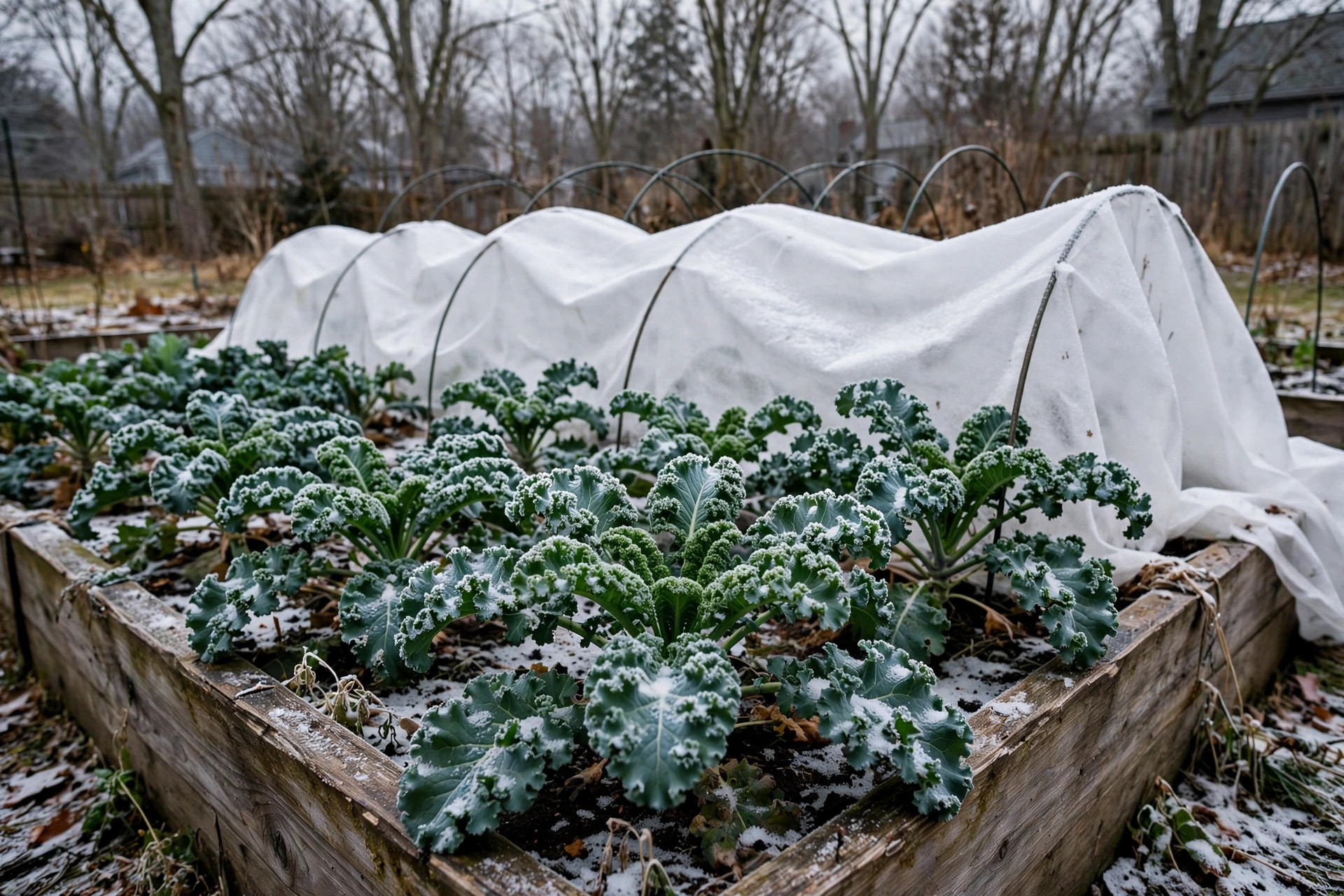

Few vegetables reward the cold-weather gardener like kale. Learning how to grow kale in winter is simpler than most people think. This leafy green is built for frost. In many regions it survives the whole season with little more than a simple cover. It often tastes sweeter after a freeze. This guide walks through every step in plain language: which varieties to pick, when to plant, how to protect them, what it costs, and how to keep them safe through the cold months.
Why Winter Kale Is Worth the Effort
Most garden beds sit empty from November to March. Kale changes that. It is one of the hardiest vegetables a home gardener can plant. Many varieties live through temperatures well below freezing. Some hold up in the teens.
Cold weather does more than test the plant. It improves it. When frost touches the leaves, the plant stores sugars to protect its cells. The result is a sweeter, milder leaf. Gardeners who have eaten kale in both summer and winter often prefer the winter crop.
There is also the matter of pests. Cabbage worms and flea beetles are summer problems. They are mostly gone by late fall. Winter kale grows with far less damage and needs little or no spraying. Gardeners new to the cold season can learn the basics from winter vegetable gardening guides that cover frost dates and timing for every region.
Finally, growing kale in winter saves money. A bunch of organic kale at the store can cost three or four dollars. A packet of seed costs less than that and can fill a whole bed. For a family that eats greens often, the savings add up fast.
Choosing the Right Kale for Cold Weather: How to Grow Kale in Winter
Success starts with the seed packet. Not every kale handles deep cold. Some bolt, some rot, some simply stop. Look for types bred for northern winters.
Best Cold-Hardy Varieties
Winterbor and Redbor are two of the most trusted cold-hardy types. Winterbor is a curly leaf kale that stands up to heavy frost. Redbor adds purple-red color and holds well in cold beds. Dwarf Blue Curled Scotch is short and sturdy, a good pick for raised beds with limited depth.
Lacinato, also called dinosaur kale or Tuscan kale, handles cold well and has a flat, savoyed leaf. Russian types like Red Russian and White Russian are fast growers with flat leaves. They survive cold snaps and come back quickly in late winter.
Read the packet for two facts: days to maturity and cold tolerance. Choose varieties listed for overwintering or cold hardiness. When in doubt, ask a local nursery what survives in your county.
The Tools You Need
Winter gardening calls for a few basic tools. A good hand trowel and a sharp hoe make planting and weeding easy. A soil thermometer, which costs little, tells you when the ground is ready. Floating row cover is the single most useful item for growing kale in cold weather. It is a light fabric that lets in rain and sun while holding in warmth.
A pair of clean pruning shears helps you harvest outer leaves without tearing the plant. Keep professional-grade pruning shears sharp and oiled so they make clean cuts even on woody stems. If you are buying new gear, independent garden tool reviews and ratings can help you pick shears and hoes that last many seasons. Some gardeners also keep a cold frame or build one from scrap lumber and an old window. For simple free cold frame construction plans, many garden sites offer helpful guides.
When and Where to Plant
Timing matters more in fall than in spring. Kale needs six to eight weeks of mild weather to build strong roots before hard frost arrives. In most of the country, that means planting in late summer or early fall. Count back eight weeks from your average first hard freeze and start seed or set out transplants then.
Kale likes full sun, but winter sun is weak. Pick the brightest spot in the garden. A south-facing bed near a wall or fence gains a few extra degrees of warmth. Good drainage matters as well. Wet, frozen soil rots roots. Raised beds or mounded rows drain better than flat ground.
Space plants 12 to 18 inches apart in rows 18 to 24 inches wide. Crowded plants trap damp air and invite disease. Give each plant room to breathe. Work compost into the soil before planting. Kale is a heavy feeder and grows best in rich, loose soil with a near-neutral pH. Bagged compost and soil mixes from a home improvement garden center work fine for small beds. If your soil drains poorly, a raised bed kit solves the problem in one afternoon and gives roots the loose soil they need.
Ways to Protect Kale Through the Cold
In zones 7 and warmer, established kale often needs no cover at all. It may droop in a freeze and stand back up by noon. In colder zones, simple protection makes the difference between survival and loss.
Row Covers
Floating row cover is the easiest option. Drape it over the plants and hold the edges down with soil, stones, or landscape pins. Lightweight covers give two to four degrees of protection. Heavyweight covers give more. For deep cold, double the layers. Remove the cover on mild days so the plants get air and light.
Row covers also keep out rabbits and deer, which turn to kale when other food is scarce. A supported hoop holds the fabric off the leaves. Wire hoops from the garden center work well, and DIY garden hoop house plans show how to bend and set your own in about an hour. For more ideas, general winter garden protection tips cover everything from mulch depth to wind breaks.
Cold Frames
A cold frame is a low box with a clear lid. It traps heat from the sun and can keep the inside ten to twenty degrees warmer than the air outside. Kale in a cold frame grows slowly all winter and is ready to cut long before spring.
Building one is a simple weekend project. Many gardeners compare options before they build, weighing a cold frame against a greenhouse to see which fits their space and budget. A frame of scrap wood, a salvaged window, and a few hinges is enough to start.
Vent the lid on sunny days. A closed cold frame can overheat even in winter. Prop it open a few inches when the inside climbs above 60 degrees.
Unheated Greenhouses and High Tunnels
A small unheated greenhouse or hoop tunnel extends the season even further. These structures pay for themselves over a few winters if you grow greens every year. They also shelter tools and seed trays. For a single bed of kale, though, a row cover or cold frame is usually enough.
What It Costs
Growing kale in winter is one of the cheapest garden projects. A packet of seed costs two to four dollars and plants a large bed. Transplants cost more, about three to five dollars for a six-pack, but give you a head start.
Floating row cover runs about fifteen to thirty dollars for a roll that covers several beds. A specialty shop such as a dedicated garden supply store carries row cover, hoops, and season extenders all in one place. Wire hoops add ten to twenty dollars. A bag of compost costs five to ten dollars. If you build a cold frame from scrap lumber and a used window, the cost can be near zero. A new kit costs fifty to one hundred fifty dollars.
Add it up and a winter bed of kale often costs less than twenty dollars from seed to harvest. Compare that with buying a bunch of greens every week at the store. The bed pays for itself in a month.
Care and Upkeep in Winter
Winter kale asks little of you. Water deeply before the ground freezes. After that, water only during mild spells when the soil is dry. Overwatering in cold soil causes root rot.
Mulch around the plants with two to three inches of straw or shredded leaves. Mulch keeps the soil temperature steady and stops the freeze-thaw cycle that heaves roots out of the ground. Keep the mulch a few inches from the stems to prevent rot.
Harvest from the outside in. Pick the outer leaves first and leave the center bud to keep growing. The plant can give leaves for months if you never take more than a third at once. Rinse leaves well before eating. Winter rain splashes soil onto low leaves.
Watch for problems after long wet spells. Slugs can feed in mild winters. Handpick them at dusk or set a simple trap. Remove any yellow or slimy leaves so disease does not spread.
Some gardeners start their spring seeds indoors while the winter kale is still in the ground. If you like to stretch every dollar, you can even try starting seeds in egg cartons as a nearly free way to get the next crop going.
Safety in the Winter Garden
Winter gardening is safe, but the season brings its own risks. Dress in layers and wear waterproof gloves. Cold, wet hands lose grip on tools. Wear boots with good tread. Frosty paths and muddy beds are slippery.
Use tools with care when the ground is hard. A trowel can slip on frozen soil. Keep blades sharp so they cut instead of skidding. Store tools in a dry place after use. Clean them with an oiled rag to stop rust, a habit that keeps quality garden hand tools and other gear working for years.
Row covers and cold frame lids can blow loose in winter storms. Check them after high winds. Secure edges well so fabric does not flap into a neighbor’s yard or a walkway. If you use an electric heater or heat mat in a greenhouse, keep cords off the ground and away from water. Unplug equipment when it is not in use.
Wash all greens before eating. City gardens can collect dust and runoff. A good rinse in cold water, then a spin or pat dry, is enough.
Frequently Asked Questions
How cold can kale survive? Most hardy varieties survive down to 10 or 15 degrees Fahrenheit with no cover. With row cover or a cold frame, many live through single digits. Leaves may droop in deep cold and recover as the day warms.
Can I plant kale in winter, or is it too late? Planting seed in deep winter rarely works. The goal is to plant in late summer or early fall so roots are strong before the cold. If you missed the window, try transplants from a nursery and cover them well.
Does snow hurt kale? Snow is actually helpful. It insulates the plants like a blanket. Kale under a foot of snow often looks better than kale in bare, windy cold. Leave the snow where it falls unless it is crushing the plants.
Why do my kale leaves taste bitter? Bitter leaves usually come from heat stress, old age, or poor soil. Winter cold sweetens kale, so bitter winter leaves often mean the plant needs water or compost. Pick younger outer leaves, which are milder than old ones.
How long will one planting last? A fall planting can produce from October into April in many zones. Plants slow down in the darkest weeks and speed up again in late winter. Replace them in spring when they start to bolt, which means sending up a flower stalk.
Do I need fertilizer in winter? Little or none. Plants grow slowly in cold soil and cannot use much feed. The compost you worked in at planting time is usually enough. Save fertilizer for the spring push.
A Final Word
Learning how to grow kale in winter opens a quiet season in the garden. The work is light, the cost is low, and the reward is fresh food when little else grows. Start with a hardy variety, plant it on time, and give it a simple cover. The frost will do the rest, and your winter table will be the better for it.
References
Bob Vila. (n.d.). Home improvement advice. https://www.bobvila.com Consumer Reports. (n.d.). Product reviews and ratings. https://www.consumerreports.org Corona Tools. (n.d.). Garden and landscape tools. https://www.corona-tools.com Family Handyman. (n.d.). DIY home repair and maintenance. https://www.familyhandyman.com Fiskars. (n.d.). Garden and cutting tools. https://www.fiskars.com Gardener’s Supply Company. (n.d.). Gardening tools and supplies. https://www.gardeners.com Lowe’s. (n.d.). Home improvement products. https://www.lowes.com The Home Depot. (n.d.). Home improvement products. https://www.homedepot.com The Spruce. (n.d.). Home and garden advice. https://www.thespruce.com
Was this guide helpful?

About Emily Rodriguez
The My Garden US editorial team writes practical, in-depth home and garden guides for American homeowners — tested advice, no fluff.
You May Also Like
Compost Tea Brewer for Garden Reviews: An Honest Buyer Guide
May 19, 2026 0 views
Best Garden Caddy for Carrying Tools: A Practical Guide
July 3, 2026 0 views
Drip Irrigation for Raised Beds DIY: A Practical Guide for Home Gardeners
February 28, 2026 0 views