---
Table of Contents
Table of Contents
- Dumb Doorbell Work with Chime: How the System Works: Three Parts, One Loop
- Why Doorbells Stop Working
- Step 1: Check the breaker
- Step 2: Test the button
- Step 3: Test the transformer
- Step 4: Inspect the chime
- Matching the Transformer to the Chime
- Wiring a New Chime Box
- Upgrading an Old Chime for a Video Doorbell
- Wireless Chimes as a Backup
- Maintenance That Keeps It Ringing
- When to Call an Electrician
- The Bottom Line
- References
A "dumb" doorbell is the classic wired kind: a button by the door, a transformer tucked near the breaker panel, and a chime box on the hallway wall that goes ding-dong. No app, no Wi-Fi, no subscription. When it stops working, the fix is usually simple, because the whole system has only three parts. This guide explains how a dumb doorbell works with its chime and how to get it ringing again. This article explains dumb doorbell work with chime in simple terms.
Dumb Doorbell Work with Chime: How the System Works: Three Parts, One Loop
When it comes to dumb doorbell work with chime, getting the details right makes all the difference.

Many homeowners find that dumb doorbell work with chime is easier than they expected once they know the basics.
A traditional doorbell is a simple electrical loop with three parts.
The transformer. This small box steps your home's 120-volt power down to low voltage, usually 16 volts. It hides near the electrical panel, in a closet, or on a basement joist. The high-voltage side connects to house power. The low-voltage side feeds the doorbell loop. Only the high-voltage side is dangerous, and you should kill the breaker before touching it.
The button. The button by your front door is just a momentary switch. Press it and the circuit closes. Release it and the circuit opens. That is all it does.
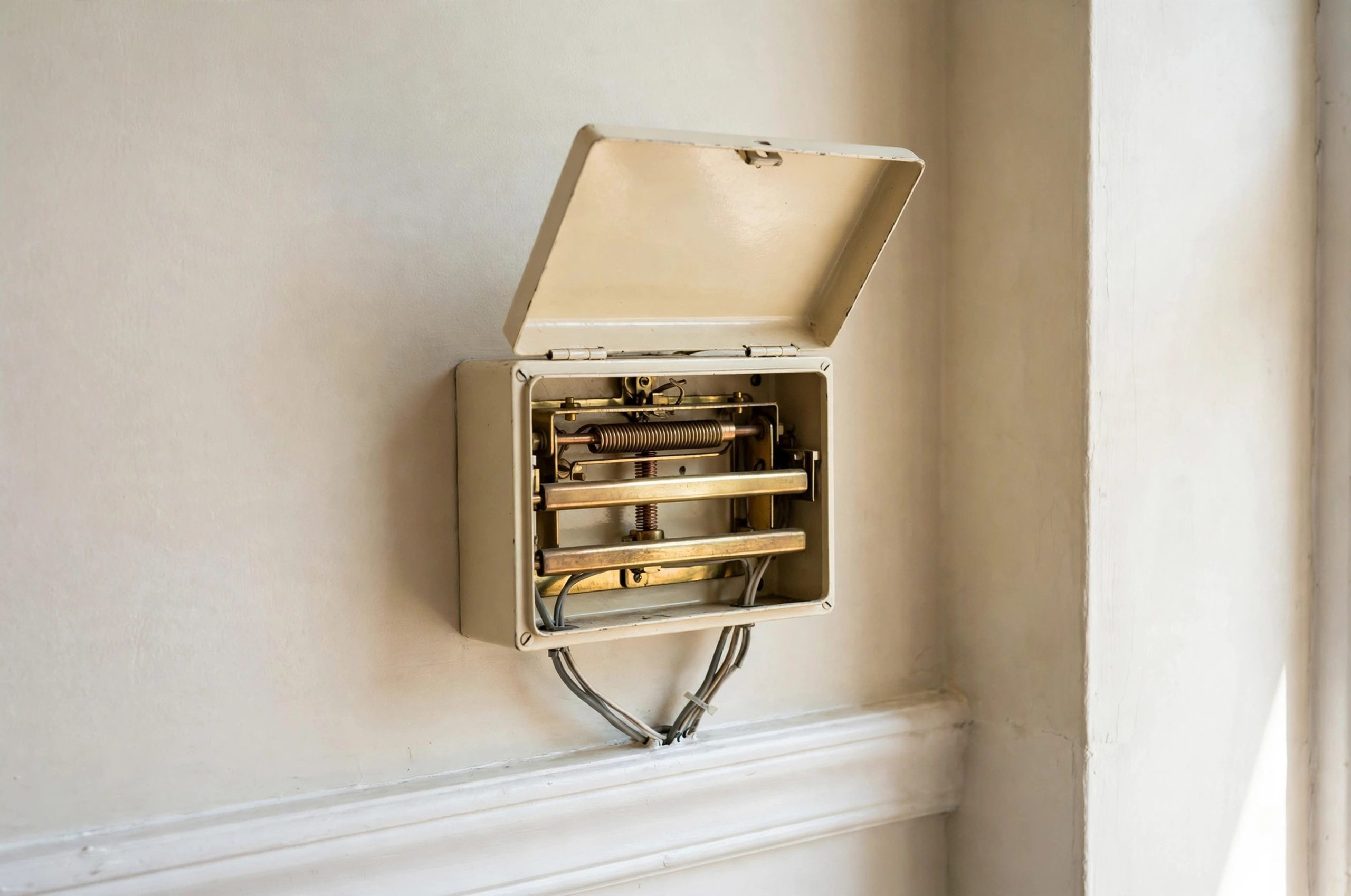
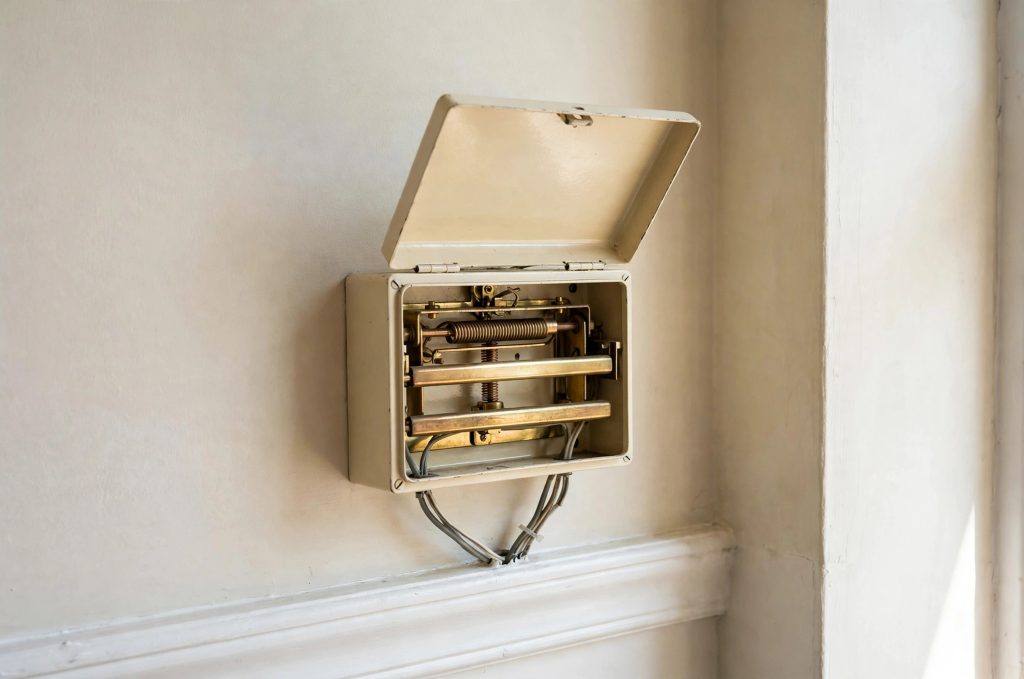
The chime. The chime box holds the magic. Inside, a solenoid (an electromagnet coil) surrounds a plunger with a small hammer. When you press the button, current flows through the solenoid. The magnetic field yanks the plunger up, and the hammer strikes the lower tone bar: ding. When you release the button, the current stops, the plunger falls, and the hammer strikes the upper tone bar: dong. That two-note sound is pure mechanics.
The wiring runs in a loop: transformer to chime, chime to button, button back to transformer. Press the button, the loop closes, the chime sounds. An engineering walkthrough traces this exact path and explains each terminal (how a doorbell is wired from transformer to chime).
Most chime boxes have three screw terminals labeled TRANS, FRONT, and REAR. TRANS connects to the transformer. FRONT connects to the front door button. REAR connects to a back door button if you have one. A beginner-friendly wiring guide with diagrams explains these terminals and how the parts connect (doorbell wiring for beginners).
Why Doorbells Stop Working
Many homeowners find that dumb doorbell work with chime is easier than they expected once they know the basics.
The key to dumb doorbell work with chime is choosing the right approach for your space and budget.
A silent doorbell is almost always one of four things: a dead button, a dead transformer, loose wiring, or a dead chime. Work through them in order and you will find the fault.
Step 1: Check the breaker
Some homes have a dedicated breaker for the doorbell transformer. Open the panel and look for a tripped breaker. Flip it fully off, then back on. If the chime was installed decades ago, the transformer may share a circuit with lights or outlets, so a tripped breaker elsewhere can silence the bell too.
Step 2: Test the button
The button lives outside in rain, sun, and cold. It fails more than any other part. Unscrew it from the doorframe and look at the contacts. Green corrosion, dirt, or a cracked plastic body all spell trouble.
The quick test: touch the two button wires together briefly. If the chime rings, the button is bad. Replace it. Buttons cost a few dollars and swap in minutes. A repair-site Q&A explains this bypass test and why the button is the usual suspect (iFixit on doorbell power and wiring).
Step 3: Test the transformer
Find the transformer near the panel or in the basement. With the power on, touch a multimeter's probes to the two low-voltage terminals. You should read close to the rated voltage, usually 16 volts. If you read zero or a very low number, the transformer is dead.
Replacing a transformer means working near the breaker panel, where the high-voltage side lives. Turn off the breaker, confirm with a non-contact voltage tester, then swap the wires one at a time. If you are not comfortable in the panel, call an electrician. A systematic troubleshooting guide covers testing each part with a multimeter (AEANET on fixing a doorbell that doesn't ring).
Step 4: Inspect the chime
Open the chime box. Tighten every screw terminal. Loose terminals are the single most common cause of a silent chime. Look for burnt wires, broken springs, or a plunger stuck with dust and grime. Clean the plunger and tone bars with rubbing alcohol on a cotton swab.
If the chime hums constantly instead of ringing, the button is probably stuck closed or the wires are shorted somewhere. Disconnect the button wires at the chime. If the humming stops, the button or its wiring is the problem.
A chime-box repair guide lists five quick fixes that solve most cases without special tools: tightening terminals, cleaning the plunger, replacing the button, checking the breaker, and bypassing the button to isolate the fault (how to fix a doorbell chime box).
Matching the Transformer to the Chime
The key to dumb doorbell work with chime is choosing the right approach for your space and budget.
With a little planning, dumb doorbell work with chime can fit even a busy schedule.
Here is where many people go wrong. The transformer voltage must match what the chime expects.
Most older chimes are built for 16 volts. Many newer chimes and smart doorbells want 16 to 24 volts. If the transformer puts out too little voltage, the plunger cannot pull in fully. You get a weak buzz, one dull note instead of two, or silence. If the voltage is too high for the chime, the chime rings louder but wears out faster.
The fix is a transformer with the right rating. Multi-tap transformers offer 8, 16, and 24 volts on different terminal pairs, so one unit covers almost any chime. A 16-volt, 30 VA transformer handles most classic chimes plus a video doorbell. For transformer selection and chime compatibility, see (doorbell transformer reviews).
A manufacturer page for a 24-volt chime spells out the rule plainly: use the voltage the chime is rated for, because the wrong voltage wears the mechanism out (Newhouse Hardware 24V chime). The matching user manual walks through testing the transformer and the chime with a meter (chime user manual).
Wiring a New Chime Box
With a little planning, dumb doorbell work with chime can fit even a busy schedule.
Before you start, it helps to understand how dumb doorbell work with chime works in real homes.
If the old chime is beyond saving, a new one wires up the same way. Kill the breaker first. Label each wire with masking tape before you disconnect anything: TRANS, FRONT, REAR. Mount the new chime, move the wires to the matching terminals, and restore power.
Press the front button. You should hear the full two-note ding-dong. Press the rear button if you have one. It should give a single ding. If the rear button gives the full two notes, you mixed up the FRONT and REAR wires. Swap them.
A step-by-step troubleshooting article covers testing the wiring with a multimeter and what to do when wires are damaged inside the wall (how to fix a doorbell that doesn't ring).
Take your time with dumb doorbell work with chime and the result will last.
Upgrading an Old Chime for a Video Doorbell
Before you start, it helps to understand how dumb doorbell work with chime works in real homes.
A good plan for dumb doorbell work with chime saves time, money, and frustration.
Many people want to keep the classic chime but add a video doorbell at the front door. This usually works, with two conditions.
First, the transformer must supply enough power for both. A video doorbell draws more current than a dumb button. If your transformer is an old 16-volt, 10 VA unit, upgrade to 16 volts, 30 VA or higher.
Second, check the video doorbell's chime compatibility. Most support mechanical chimes, but some need a small chime adapter wired at the chime box. The adapter is a tiny module that sits across the chime terminals and smooths out the power. Without it, the chime may buzz or the doorbell may reboot when the button is pressed.
Wire the adapter exactly as the doorbell maker shows. Then test: press the button and listen for the full ding-dong from the old chime while the video doorbell records. For installation costs if you would rather hire it out, see (smart doorbell installation cost).
Wireless Chimes as a Backup
A good plan for dumb doorbell work with chime saves time, money, and frustration.
For most people, dumb doorbell work with chime comes down to a few smart choices.
If the wiring inside your walls is damaged and you cannot fish new wire, a wireless chime is a clean workaround. The button at the door is battery-powered and talks to a plug-in chime by radio. No wires, no transformer, no wall damage.
Wireless chimes will never sound quite as rich as a brass-bar mechanical chime, but they work in rentals and old houses where rewiring is out of the question. Some models let you pair several chimes to one button, so you hear the bell upstairs and down. For wireless options, see (wireless doorbell camera reviews).
Maintenance That Keeps It Ringing
For most people, dumb doorbell work with chime comes down to a few smart choices.
A dumb doorbell needs almost no care, but a little attention every year or two prevents most failures.
- Wipe the button clean and check for cracks each spring.
- Open the chime box and dust the mechanism. Tighten the terminals.
- Listen for changes. A chime that gets quieter or buzzes is telling you the transformer is weakening or a connection is loosening.
- After any electrical work in the house, press the doorbell to confirm the circuit still works.
When to Call an Electrician
If you are new to dumb doorbell work with chime, start with the simplest option and build from there.
Call a pro if the transformer is inside the breaker panel and you are not comfortable working there, if wires are damaged inside the wall, if the breaker trips every time the doorbell rings, or if you smell burning near the chime or transformer. Low voltage does not mean no risk. The transformer's high-voltage side is full house current.
The Bottom Line
When it comes to dumb doorbell work with chime, getting the details right makes all the difference.
A dumb doorbell is a loop: transformer, button, chime. When it goes silent, check the breaker, test the button by touching its wires together, meter the transformer, and tighten the chime terminals. Match the transformer voltage to the chime, and the old brass bars will keep singing their two-note song for decades. That is all it takes to handle dumb doorbell work with chime with confidence.
References
Many homeowners find that dumb doorbell work with chime is easier than they expected once they know the basics.
Engineer Fix. (n.d.). How a doorbell is wired: From transformer to chime. https://engineerfix.com/how-a-doorbell-is-wired-from-transformer-to-chime/
Wayfair. (n.d.). How to: Doorbell wiring for beginners. https://www.wayfair.com/sca/ideas-and-advice/renovation/how-to-doorbell-wiring-for-beginners-T5561
iFixit. (n.d.). Understanding the power to my door bell. https://www.ifixit.com/Answers/View/358167/Understanding+the+power+to+my+door+bell
AEANET. (n.d.). How do you fix a doorbell that doesn't ring? https://www.aeanet.org/how-do-you-fix-a-doorbell-that-doesnt-ring/
Secure One. (n.d.). A detailed guide to fixing a doorbell chime box the easy way. https://secureone.info/how-to-fix-doorbell-chime-box/
Aosulife. (n.d.). Doorbell not working or not ringing? How to fix it. https://www.aosulife.com/blogs/help-and-troubleshooting/how-to-fix-a-doorbell-that-doesnt-ring-simple-steps-to-follow
Newhouse Hardware. (n.d.). CHM24V white 24-volt wired doorbell chime. https://newhousehardware.com/products/chm24v-white-24-volt-wired-doorbell-chime
Manuals.plus. (n.d.). Newhouse hardware CHM24V 24V wired doorbell chime user guide. https://manuals.plus/newhouse-hardware/chm24v-24v-wired-doorbell-chime-manual
The key to dumb doorbell work with chime is choosing the right approach for your space and budget.
Was this guide helpful?

About My Garden US
The My Garden US editorial team writes practical, in-depth home and garden guides for American homeowners — tested advice, no fluff.
You May Also Like

10 Year Battery Smoke Detector Reviews USA: A Plain Guide to Buying the Right Alarm
January 2, 2026 18 views
Freeze Alarm for Vacation Home Reviews USA: What to Know Before You Buy
January 25, 2026 21 views
Best Smart Light Switch No Neutral USA: A Buyer's Guide
July 20, 2026 18 views