---
Table of Contents
Table of Contents
A dark red brick fireplace can weigh down a whole room. It was the fashion once, and in some homes it still looks right. But if your taste runs to light, airy cottage style, that brick is the first thing you want to change. Tearing it out costs a fortune. Painting it solid white can look flat and cold. If you are new to whitewashing a brick fireplace, start with the basics below.
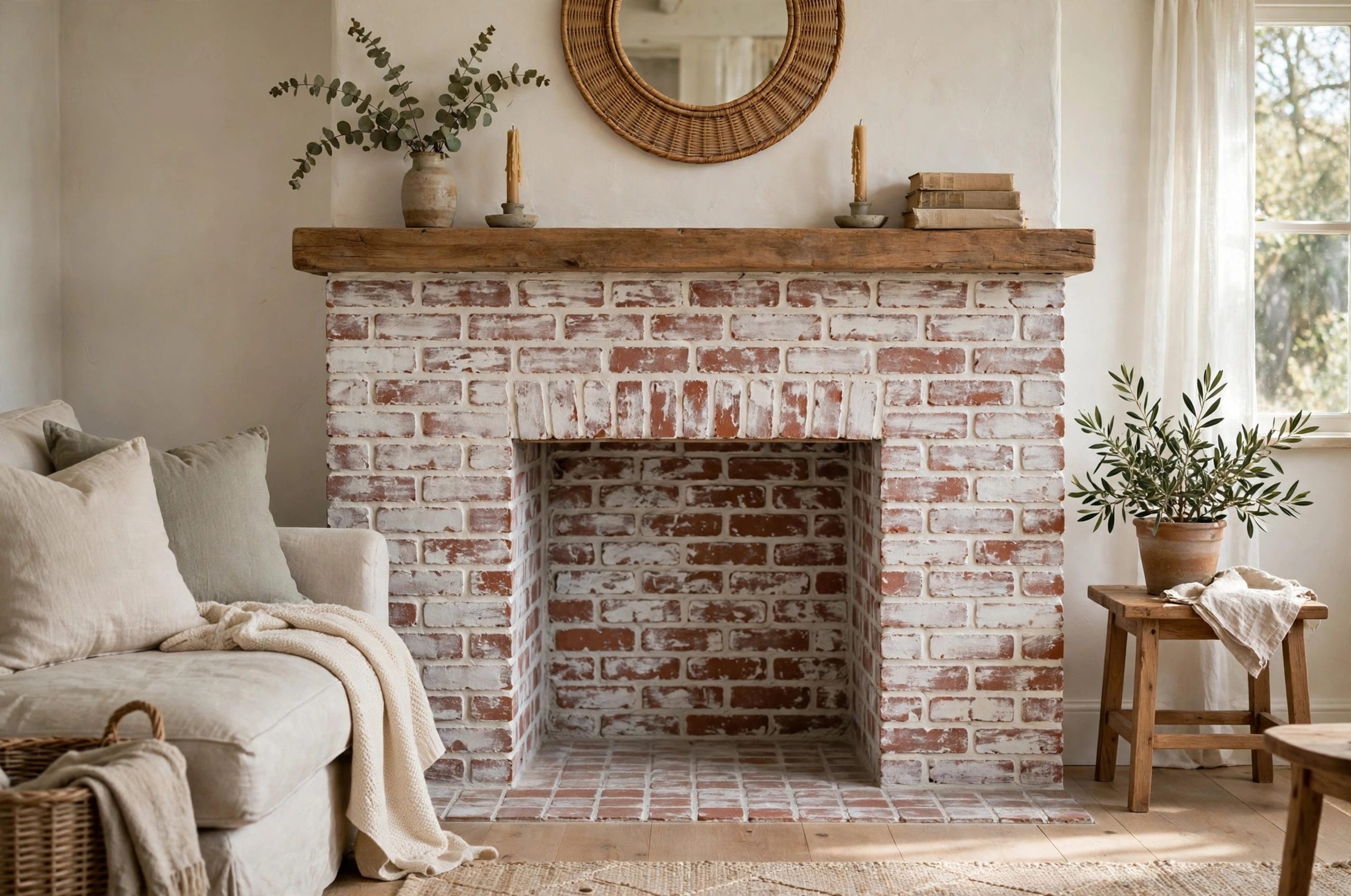
Whitewash is the middle path. It softens the brick, lets the texture and a hint of the original color show through, and gives the fireplace the chalky, timeworn look that defines cottage style. The whole job takes a weekend, costs little, and needs no special skill. This guide walks you through whitewashing a brick fireplace step by step, from cleaning the brick to mixing the wash to the final wipe-back that creates the finish.
Whitewashing a Brick Fireplace: What Whitewash Actually Is
When it comes to whitewashing a brick fireplace, getting the details right makes all the difference.
Many homeowners find that whitewashing a brick fireplace is easier than they expected once they know the basics.
Whitewash is thinned paint. You mix white latex paint with water, brush it onto the brick, and wipe back the excess before it dries. The brick drinks in the wash unevenly, which is the whole point. High spots take more color, low spots and mortar joints take less, and the result is a soft, varied finish that looks like age rather than paint.
This is different from limewash, which is made from crushed limestone and sinks into the brick chemically. Limewash and whitewash give a similar look but differ in application, durability, and cost, so it pays to know which one fits your brick. Whitewash with latex paint is the simpler DIY choice, and it works on brick that has already been painted, which limewash does not. If you want to compare the two before you commit, read our comparison of whitewash versus limewash for brick.
What You Will Need
Many homeowners find that whitewashing a brick fireplace is easier than they expected once they know the basics.
The key to whitewashing a brick fireplace is choosing the right approach for your space and budget.
- White interior latex paint in a flat or matte finish. Flat paint mixes with water cleanly and dries to the chalky look you want. Avoid gloss or semi-gloss.
- A large mixing bucket and a stir stick.
- A wide, inexpensive paintbrush. Brick is rough and will chew up a good brush, so do not use your best one.
- Clean cotton rags or old towels for wiping back.
- A spray bottle filled with water.
- Painter's tape, drop cloths, and masking paper.
- A stiff-bristle brush and a vacuum for cleaning.
- TSP substitute or a mild degreasing cleaner for soot.
If you would rather not mix your own, limewash brick fireplace kits are sold ready to dilute, and Romabio's step-by-step limewash guide shows the same dilute, apply, and wipe-back rhythm used for whitewash.
Step 1: Clean the Brick
The key to whitewashing a brick fireplace is choosing the right approach for your space and budget.
With a little planning, whitewashing a brick fireplace can fit even a busy schedule.
Paint sticks to clean brick and peels off dirty brick. Vacuum the whole fireplace with a brush attachment to pull dust and cobwebs out of the mortar joints. Then scrub with a stiff-bristle brush and a TSP substitute solution to cut soot and grime. Fireplaces collect years of residue, even ones that have not been used in a while.
Rinse with clean water and let the brick dry completely. Brick holds water deep in its pores, so give it a full day if you can. A thorough cleaning with TSP before any paint touches the brick keeps contaminants from breaking the bond. Whitewashing damp brick gives a blotchy result because the wet brick cannot absorb the wash evenly.
While it dries, tape off the mantel, the walls, the hearth, and the floor. Lay drop cloths wide. Whitewash is thin and it splatters. The few minutes of masking save an hour of cleanup.
Step 2: Mix the Wash
With a little planning, whitewashing a brick fireplace can fit even a busy schedule.
Before you start, it helps to understand how whitewashing a brick fireplace works in real homes.
The ratio of paint to water controls how much brick shows through. Start with a one-to-one mix: one part white latex paint to one part water. Stir until it looks like thin milk, with no lumps and no standing water.
This ratio gives medium coverage. The brick color will ghost through softly. For a lighter, more translucent finish, thin it further, up to one part paint to three parts water. Testing the mix on a hidden spot first is the step every good tutorial stresses, because wet wash looks nothing like the dried result. For a whiter, more solid look, go heavier on the paint, up to two parts paint to one part water.
Always test first. Brush the mix onto a spare brick, or onto a hidden spot like the inside of the firebox opening. Let it dry fully before you judge it. Wet whitewash looks much whiter than it dries, and the brick keeps absorbing as it sets. Adjust the ratio until the test spot looks the way you want, then mix a full batch. Mix more than you think you need. Matching a second batch mid-job is hard.
Step 3: Brush It On in Sections
Before you start, it helps to understand how whitewashing a brick fireplace works in real homes.
A good plan for whitewashing a brick fireplace saves time, money, and frustration.
Work in small sections, about two to three square feet at a time. Brush the wash onto the brick and into the mortar joints with a loaded brush, then follow right behind with a rag to dab off the excess before it sets. Do not try to make it neat.
Follow right behind with a rag and wipe the surface. Press the rag into the brick to push the wash into the pores, then wipe off the excess. This is where the cottage look is born. Wipe more where you want brick showing through, wipe less where you want heavier coverage. Vary it on purpose. Perfectly even whitewash looks like paint, which defeats the purpose.
Keep a spray bottle handy. If the wash starts to set before you have wiped a section, mist it lightly to reopen it. A simple 50/50 water-to-paint mix, stirred smooth, is the classic starting recipe you can adjust as you work. Work from the top of the fireplace down so drips land on unfinished brick instead of finished work.
How Much to Wipe Back
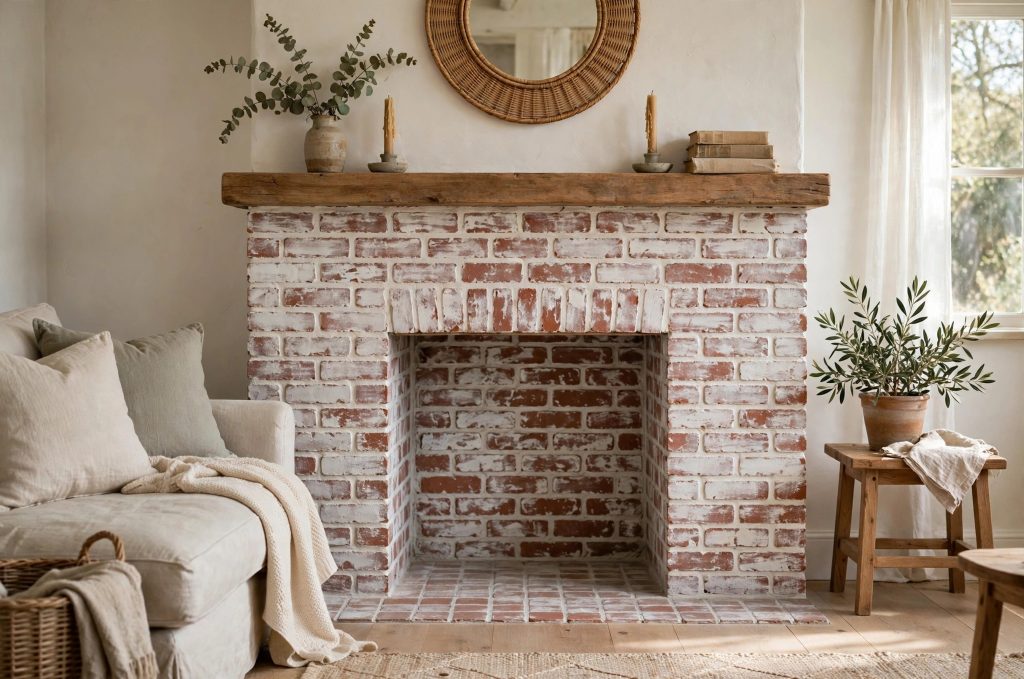
This is a matter of taste, and there is no wrong answer. A light wipe leaves a soft white veil with the brick clearly visible underneath. A heavy wipe-back exposes more brick and reads as rustic. For the classic cottage look, aim for the middle: white-dusted brick where the red shows through in the low spots and the mortar joints read slightly darker than the faces.
Step back often and look at the whole fireplace in normal room light. It is easy to overwork one section while the rest waits. The finish should look relaxed and a little irregular, like a farmhouse wall that has been whitewashed many times over the years.
Step 4: Let It Dry and Decide on a Second Coat
A good plan for whitewashing a brick fireplace saves time, money, and frustration.
For most people, whitewashing a brick fireplace comes down to a few smart choices.
Let the first coat dry completely, overnight if you can. Then look at it in daylight. If you want more coverage, apply a second coat the same way, but go lighter on the wipe-back. Two thin coats look better than one heavy one.
Resist the urge to keep adding coats until the brick disappears. At that point you have painted the fireplace white, not whitewashed it. Side-by-side comparisons of limewash and whitewash show how each one keeps the brick texture visible in its own way. If you want full coverage, you would have been better off with solid paint from the start. The charm of whitewash is the brick showing through.
Sealing: Do You Need It?
For most people, whitewashing a brick fireplace comes down to a few smart choices.
Sealer is optional. Whitewash on a working fireplace takes heat and the occasional bump, and a clear matte sealer adds protection. But sealer also deepens the color slightly and adds a faint sheen, which moves away from the chalky cottage look. Most people skip it on decorative fireplaces.
If your fireplace is used often, consider a heat-resistant clear matte topcoat on the areas near the firebox. Whitewash sits on top of the brick rather than soaking in like limewash, which is why a protective coat helps in high-heat spots. Keep any sealer off the inside of the firebox itself. Paint of any kind inside the firebox is a bad idea. For long-term care of treated brick, see our painted brick maintenance tips.
Mistakes to Avoid
If you are new to whitewashing a brick fireplace, start with the simplest option and build from there.
Skipping the cleaning. Soot bleeds through whitewash as yellow-brown stains. Clean thoroughly or the stains will haunt the finish.
Mixing oil-based paint with water. Oil and water do not mix. The wash will separate and go on blotchy. Use water-based latex only.
Working too large an area at once. The wash sets fast on porous brick. If you brush a whole wall of brick before wiping, the first part will be dry and unwipable. Small sections keep you in control.
Judging the color while wet. Wet whitewash always looks brighter and more opaque. Let every test dry before you decide.
Forgetting the hearth. The hearth brick takes foot traffic and soot. Whitewash it the same as the face, and expect it to need touch-ups sooner. A washable matte sealer on the hearth alone is a reasonable compromise.
Styling the Finished Fireplace
When it comes to whitewashing a brick fireplace, getting the details right makes all the difference.
A whitewashed fireplace asks for simple cottage styling. A wood mantel, whether stained or painted, warms up the white brick. Lean a large mirror or a piece of art above it. Keep the hearth clear or dress it with a basket of firewood and a simple screen.
The whitewash brightens the whole wall, which changes how the room feels. Wall colors that looked fine against dark brick can look dull against white. Warm whites, soft sage, and pale blue-gray walls all pair well with a whitewashed fireplace. If you are rethinking the room, our notes on whitewash brick fireplace costs cover what to budget if you would rather hire the job out, and our fireplace mantel shelf guide helps with the styling above it. A little care goes a long way with whitewashing a brick fireplace.
References
Many homeowners find that whitewashing a brick fireplace is easier than they expected once they know the basics.
- Engineer Fix. (n.d.). How to whitewash a brick fireplace. https://engineerfix.com/how-to-whitewash-a-brick-fireplace-2/
- Romabio. (n.d.). Whitewash your brick fireplace with limewash paint. https://romabio.com/whitewash-brick-fireplace-limewash-paint/
- Jenna Kate at Home. (n.d.). How to whitewash a brick fireplace: An easy step by step tutorial. https://jennakateathome.com/how-to-whitewash-brick-fireplace/
- Infarrantly Creative. (n.d.). How to paint a brick fireplace in less than 24h. https://www.infarrantlycreative.net/how-to-paint-a-brick-fireplace/
- Strikingly. (n.d.). How to make whitewash with paint. https://uploads.strikinglycdn.com/files/915083f9-a581-45cd-b2f5-a8a140c35ba4/how_to_make_whitewash_with_paint.pdf
- Fireplace Painting. (n.d.). The differences between whitewash and limewash paint. https://fireplacepainting.com/differences-between-whitewash-limewash-paint/
- Fireplace Wiki. (n.d.). Limewash vs. whitewash brick fireplace: Which is better? https://fireplacewiki.com/limewash-vs-whitewash-brick-fireplace/
- CertaPro Painters. (n.d.). Limewash vs whitewash brick. https://certapro.com/blog/exterior-house-painting/limewash-vs-whitewash/
Was this guide helpful?

About My Garden US
The My Garden US editorial team writes practical, in-depth home and garden guides for American homeowners — tested advice, no fluff.