---
Table of Contents
Table of Contents
- Natural Weed Killer Safe for Gravel: Why Gravel Grows So Many Weeds
- What "Natural" Really Means
- Method 1: Boiling Water
- Method 2: Household Vinegar Spray
- Method 3: Salt, Used Sparingly
- Method 4: Smothering and Solarizing
- Method 5: The Old-Fashioned Pull
- Keeping Weeds Out Long Term
- Timing Your Treatments
- What About Pets and Kids
- A Simple Seasonal Routine
- References
Gravel pathways look clean and natural. Then the weeds arrive. Dandelions push up through the stones. Crabgrass spreads along the edges. Clover fills every gap. Before long, the path looks like a meadow. Here is what to know about natural weed killer safe for gravel before you start.
Many homeowners want a natural weed killer safe for gravel because the path runs near flower beds, vegetable gardens, pets, and kids. The good news is that several non-chemical methods work well on gravel. The trick is matching the method to the weed and staying on top of it. This guide covers the natural options that really work, how to mix and apply them safely, and how to keep weeds from coming back.
Natural Weed Killer Safe for Gravel: Why Gravel Grows So Many Weeds
When it comes to natural weed killer safe for gravel, getting the details right makes all the difference.
Many homeowners find that natural weed killer safe for gravel is easier than they expected once they know the basics.
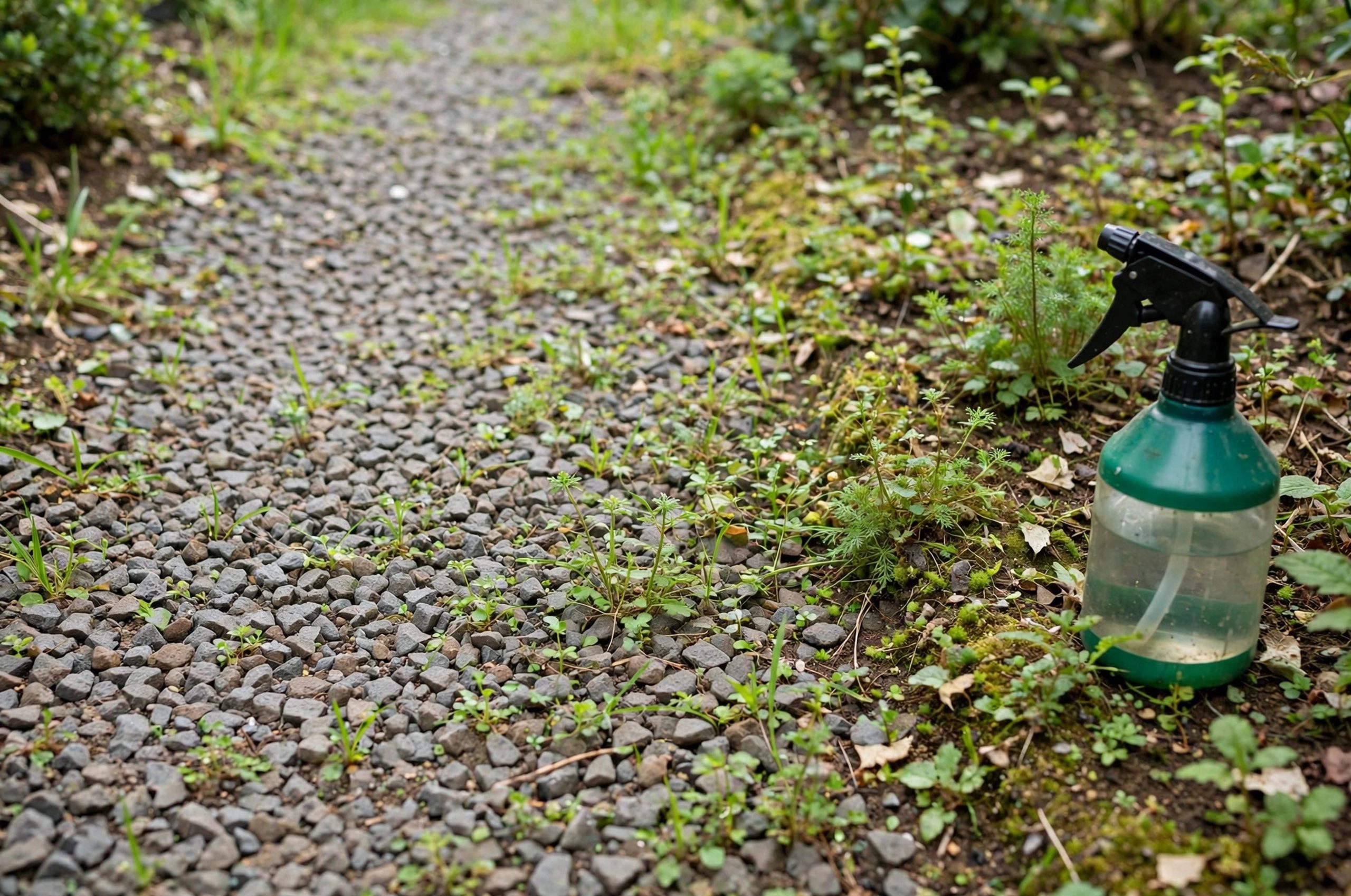
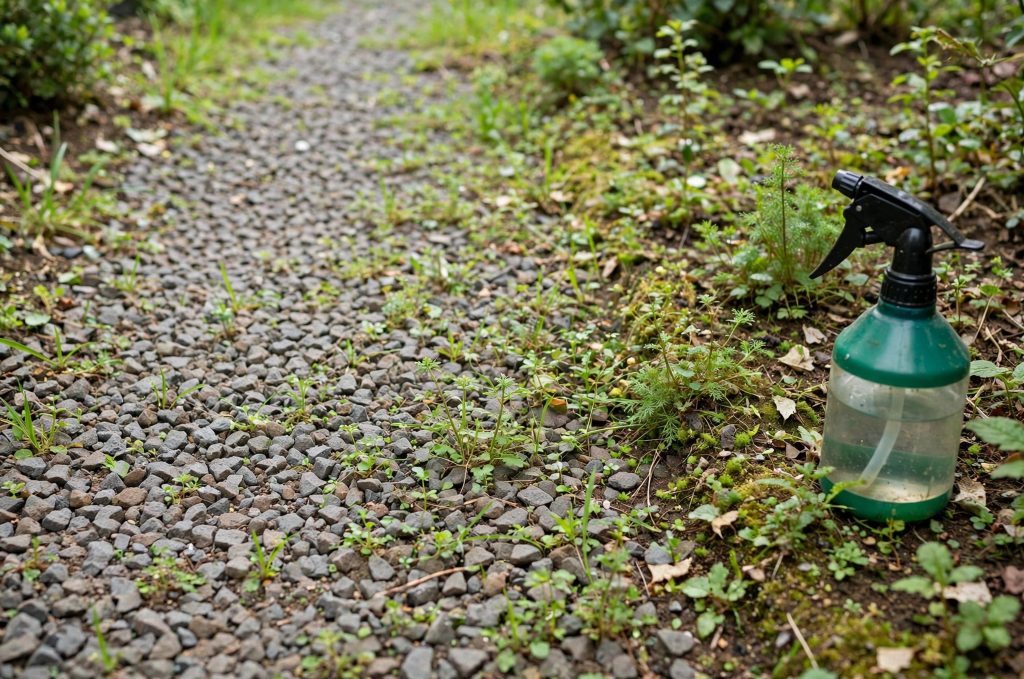
Gravel is not a weed barrier by itself. Dust, leaves, and bits of soil settle between the stones and form a thin layer of growing medium. Weed seeds blow in and land in that layer. Rain and sun do the rest.
Paths near lawns get the worst of it. Grass creeps in from the edges. Paths under trees collect leaf litter that feeds weeds. And foot traffic packs the surface, which some tough weeds actually like.
The first line of defense is the path itself. A good gravel path has landscape fabric or geotextile under the stone to block weeds from below, plus edging to keep grass out from the sides. Used in the right place, landscape fabric under a gravel path keeps the stone from sinking into the soil and slows weeds for years. If your path lacks these, see our guide to gravel driveway installation cost for what a proper build looks like. But even a well-built path needs upkeep. That is where natural weed killers come in.
What "Natural" Really Means
Many homeowners find that natural weed killer safe for gravel is easier than they expected once they know the basics.
The key to natural weed killer safe for gravel is choosing the right approach for your space and budget.
Natural does not mean harmless. Vinegar is natural, and strong vinegar can burn skin and eyes. Salt is natural, and salt can sterilize soil so nothing grows for a long time. The EPA treats weed control as part of integrated pest management, which means using the least harmful method that still solves the problem.
Think of it this way. Hand pulling is the gentlest method. Boiling water is next. Household vinegar is stronger. Salt is the heavy hammer, best saved for spots where you never want anything to grow. Match the strength to the situation, and keep every spray off the plants you want to keep.
Method 1: Boiling Water
The key to natural weed killer safe for gravel is choosing the right approach for your space and budget.
With a little planning, natural weed killer safe for gravel can fit even a busy schedule.
Plain boiling water kills weeds on contact. It cooks the leaves and stems. It works best on young weeds and on weeds growing in cracks and along path edges.
Bring a kettle to a full boil. Carry it carefully to the path. Pour slowly right at the base of each weed, soaking the crown. The weeds wilt within hours and die within a day or two.
Boiling water is free, fast, and leaves no residue. Its limits are simple. It only kills what it touches, so deep-rooted weeds like dandelions may regrow from the taproot. It cools fast, so it works best on small weeds. And it is dangerous to carry, so wear closed shoes and keep kids and pets away while you work.
Method 2: Household Vinegar Spray
With a little planning, natural weed killer safe for gravel can fit even a busy schedule.
Before you start, it helps to understand how natural weed killer safe for gravel works in real homes.
White vinegar from the grocery store is about five percent acetic acid. It burns the leaves of young weeds on contact. It works best on a hot, sunny day when the sun helps dry the leaves out.
A common mix is one gallon of white vinegar, one cup of salt, and one tablespoon of dish soap. The soap helps the spray stick to waxy leaves. Spray directly on the weeds until the leaves are wet. Avoid spraying on a windy day, and shield nearby plants with cardboard.
Be honest about the limits. Vinegar is a contact killer. It burns top growth but usually does not kill deep roots. Perennial weeds come back and need repeat sprays. Salt builds up in the soil, so use the salt version only on the gravel path itself, never where runoff could reach garden beds or the lawn. The EPA notes that even reduced-risk treatments should be used with care around people, pets, and water. See the EPA's smart pest control guidance for the general principles.
Strong horticultural vinegar, sold at twenty or thirty percent acetic acid, is a different animal. It can cause serious eye and skin burns. If you ever use it, wear goggles, gloves, and long sleeves, and follow the label exactly. For most homeowners, the grocery-store version is strong enough for path weeds.
Method 3: Salt, Used Sparingly
Before you start, it helps to understand how natural weed killer safe for gravel works in real homes.
A good plan for natural weed killer safe for gravel saves time, money, and frustration.
Salt dehydrates plant cells. A strong salt solution will kill just about any weed it touches, and heavy use can keep the ground bare for a long time. That is both its power and its danger.
Use salt only in the middle of the gravel path, away from edges where rain could wash it into beds or lawn. Dissolve one cup of salt in a gallon of hot water and pour it on the weeds. Or sprinkle dry salt on damp weeds and let rain work it in.
Do not use salt near plants you love, near vegetable gardens, or anywhere runoff flows toward a storm drain or pond. Salt harms soil life and can pollute water. Think of it as a last resort for stubborn patches, not a routine spray.
Method 4: Smothering and Solarizing
A good plan for natural weed killer safe for gravel saves time, money, and frustration.
For most people, natural weed killer safe for gravel comes down to a few smart choices.
For a badly overgrown path, smothering beats spraying. Lay thick cardboard or several layers of newspaper over the weedy section. Wet it down. Cover it with a tarp or a fresh layer of gravel. Leave it for several weeks. Without light, the weeds die, roots and all.
In hot climates, clear plastic works even faster. Lay it over the path on a sunny stretch and let the heat cook the weeds underneath. This is called solarizing. It kills weed seeds near the surface too, which sprays cannot do.
Method 5: The Old-Fashioned Pull
For most people, natural weed killer safe for gravel comes down to a few smart choices.
Hand pulling still works, and on gravel it is easier than in soil. Weeds in loose stone pull out with most of the root. Pull after a rain when the ground is soft. Get the whole root of dandelions and thistles or they will return.
A stand-up weed puller saves your back on long paths. For path edges, a sharp half-moon edger cuts the creeping grass cleanly. If you want a full walkthrough of manual tools, our review of the best garden rake for gravel covers the tools that make gravel upkeep easier.
Keeping Weeds Out Long Term
If you are new to natural weed killer safe for gravel, start with the simplest option and build from there.
Killing weeds is only half the job. Keeping them out is the other half. A few habits make a big difference.
Top up the gravel. A deep layer of stone, three to four inches, blocks light from reaching weed seeds. Thin spots are where weeds start. Add fresh gravel to low areas each season.
Sweep the path. Leaves and dust become soil between the stones. A quick sweep every week or two removes the growing medium before weeds can use it. A leaf blower works even faster.
Fix the edges. Most path weeds creep in from the sides. Install steel, stone, or timber edging to hold the gravel in and the grass out. Re-cut the edge each spring. Better Homes and Gardens has a clear guide to edging sidewalks, driveways, and paths with a flat spade, and Lowe's lawn edging guide covers both manual and power edger options.
Spot treat early. Young weeds die easy. Mature weeds with deep roots do not. A five minute walk with a spray bottle every week beats a full Saturday of pulling once a season.
Consider joint stabilization. On paths with larger stones, sweeping polymeric sand or fine crushed stone into the gaps leaves less room for weed seeds to settle.
For driveways, which face the same weed pressure on a bigger scale, see our guide to the best weed killer for gravel driveways. And if you spray anything, a good sprayer matters. Our backpack sprayer guide covers what to look for.
Timing Your Treatments
When it comes to natural weed killer safe for gravel, getting the details right makes all the difference.
Spray on a calm, dry, sunny morning. The leaves should be dry so the spray sticks, and sun speeds the burn-down. Do not spray before rain, or the rain will wash your work away. Do not spray on windy days, or drift will hit plants you want to keep.
For pre-emergent control, which stops weed seeds from sprouting in the first place, corn gluten meal is a natural option some gardeners use on gravel paths in early spring. It is less reliable than synthetic pre-emergents, but it adds nitrogen as it breaks down. Learn more about timing in our pre-emergent weed killer application timing guide.
What About Pets and Kids
Many homeowners find that natural weed killer safe for gravel is easier than they expected once they know the basics.
Natural methods are popular with families for a reason. Boiling water and hand pulling leave nothing behind. Vinegar breaks down fast. But take basic care anyway. Keep pets and kids off the path until sprays dry. Store salt and strong vinegar out of reach. Rinse the path with the hose after a heavy salt treatment if pets walk there.
The EPA's lawn and garden pest page is a solid reference for weighing any pest control choice around your home and yard.
A Simple Seasonal Routine
The key to natural weed killer safe for gravel is choosing the right approach for your space and budget.
Walk the path weekly in the growing season and pull or spray young weeds on sight. Sweep or blow the path every couple of weeks. Top up thin gravel spots once a season. Smother any section that gets away from you. That is the whole program. It takes minutes a week and keeps the path looking sharp without harsh chemicals. Once you try it, natural weed killer safe for gravel gets easier each time.
References
- Better Homes and Gardens. (n.d.). How to edge your lawn for a professionally manicured look. https://www.bhg.com/how-to-edge-lawn-11986047
- Cornell Cooperative Extension. (n.d.). Weed management resources for home gardeners. https://www.cornell.edu
- Eagle Crest Nursery. (n.d.). Beware of weed fabric. https://eaglecrestnursery.com/learn/beware-of-weed-fabric/
- Lowe's. (n.d.). How to edge a lawn: DIY guide for a cleaner appearance. https://www.lowes.com/n/how-to/how-to-edge-lawn
- Outdoor Aggregates. (n.d.). How to get rid of weeds in gravel. https://www.outdooraggregates.com/diy/foundations/how-to-get-rid-of-the-weeds/
- U.S. Environmental Protection Agency. (n.d.). Integrated pest management (IPM) principles. http://www.epa.gov/safepestcontrol/integrated-pest-management-ipm-principles
- U.S. Environmental Protection Agency. (n.d.). Lawn and garden pest control. https://www.epa.gov/safepestcontrol/lawn-and-garden
- U.S. Environmental Protection Agency. (n.d.). Smart pest control to protect your health. https://www.epa.gov/pesticides/smart-pest-control-protect-your-health
Was this guide helpful?

About My Garden US
The My Garden US editorial team writes practical, in-depth home and garden guides for American homeowners — tested advice, no fluff.
You May Also Like
A Lawn Striping Kit for Riding Mowers: How to Get Pro Ballpark Stripes
January 4, 2026 13 views
Cedar Mulch Bulk Price Near Me: What to Expect and How to Compare
August 12, 2026 11 views
Pre Emergent Weed Killer Application Timing Guide
May 8, 2026 27 views