---
Table of Contents
Table of Contents
- Clean Dust from Baseboard Heater Fins: Electric vs Hydronic: Know Your Heater
- What You Will Need
- Step 1: Shut Off the Power and Let It Cool
- Step 2: Remove the Front Cover
- Step 3: Vacuum the Loose Dust
- Step 4: Brush Between the Fins
- Step 5: Wipe Down the Covers and Dampers
- Step 6: Dry, Reassemble, and Test
- Mistakes to Avoid
- How Often to Clean
- When Cleaning Is Not Enough
- Frequently Asked Questions
- References
Baseboard heaters work by convection. Cool room air sinks into the bottom of the unit, passes over hot metal fins, rises, and drifts out the top. It is a simple, quiet system with no blower and no ducts. But those thin aluminum fins are dust magnets, and a thick coat of dust insulates them from the air they are supposed to heat. The result is weaker heat, longer run times, higher bills, and sometimes a dusty burning smell each time the unit kicks on. The steps below show how to clean dust from baseboard heater fins in plain language.
Cleaning the fins is one of the easiest heating maintenance jobs in the house. No special tools, no disassembly beyond a cover, and about twenty minutes per heater. This guide covers the safe step-by-step for both electric and hydronic baseboard heaters, the mistakes that damage fins, and how often to do it. If you heat with baseboards, our guide to electric baseboard heat cost per month will help you understand what clean fins save you.
Clean Dust from Baseboard Heater Fins: Electric vs Hydronic: Know Your Heater
When it comes to clean dust from baseboard heater fins, getting the details right makes all the difference.

Many homeowners find that clean dust from baseboard heater fins is easier than they expected once they know the basics.
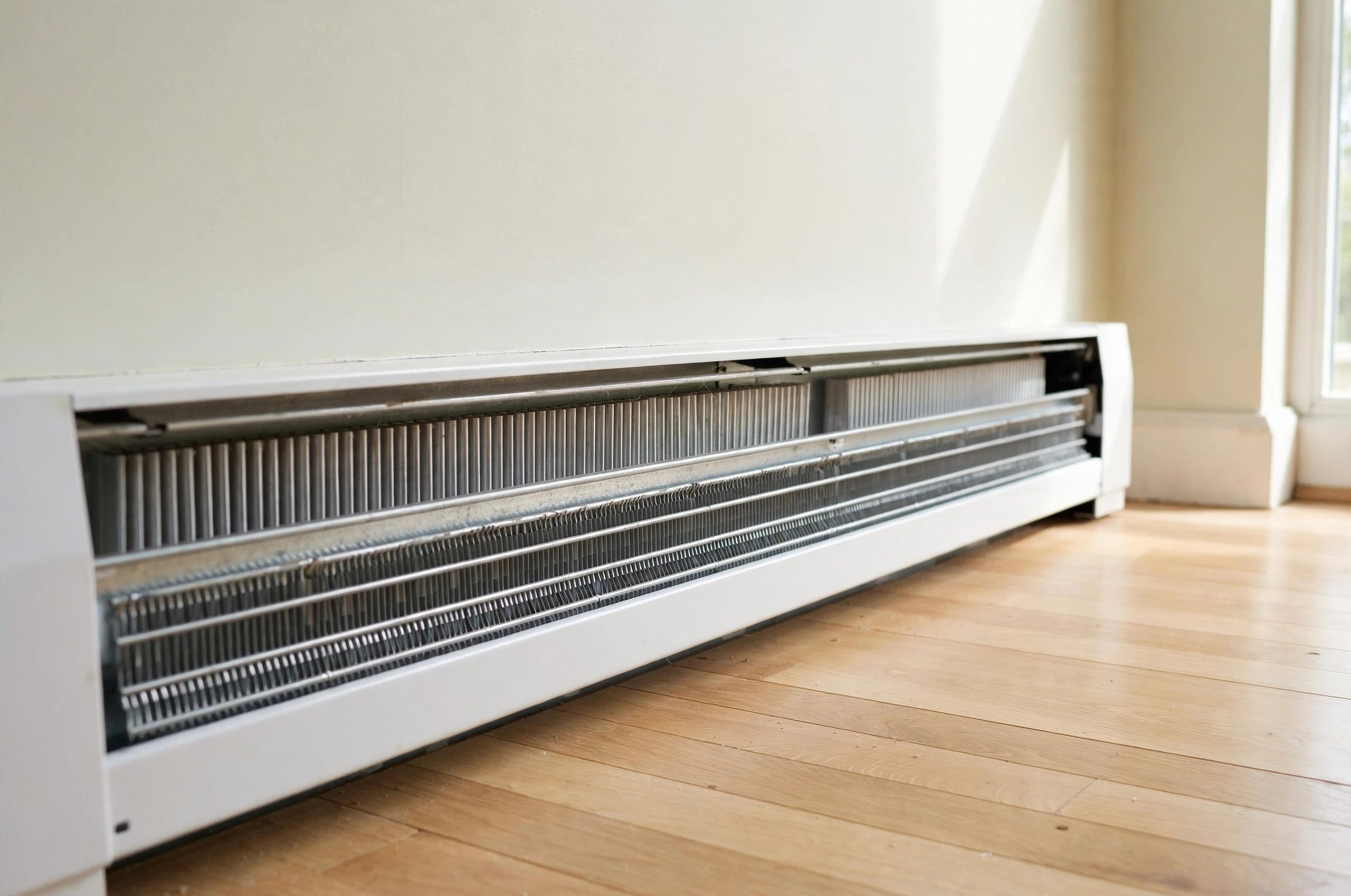
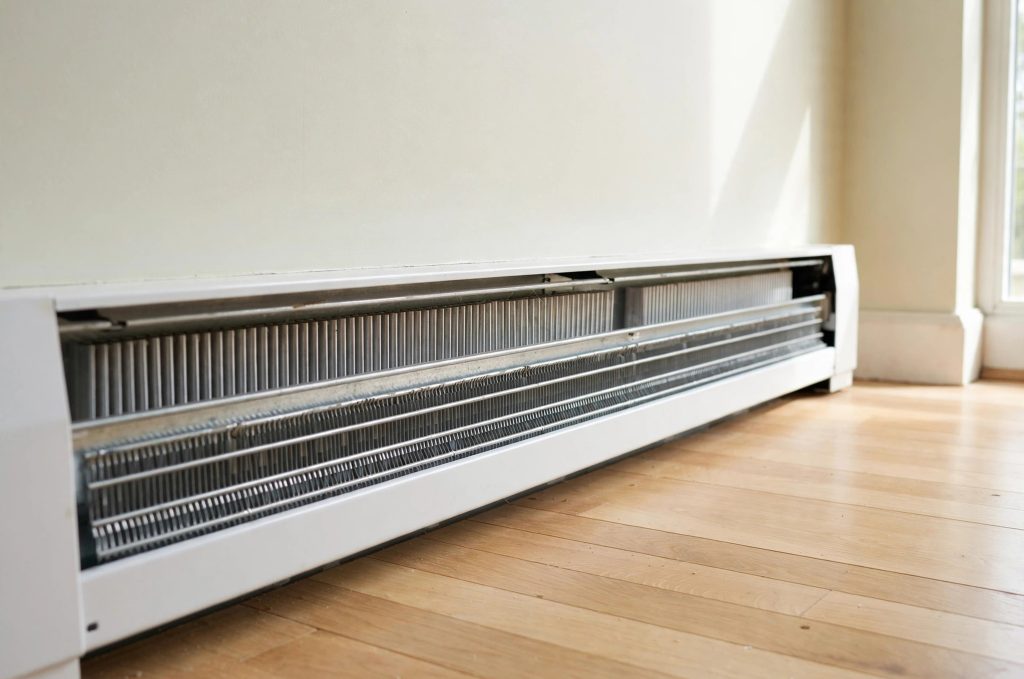
Electric baseboard heaters use metal heating elements inside the fins. Power runs through the elements, they get hot, and the fins spread that heat into the air. Hydronic baseboard heaters circulate hot water from a boiler through a copper pipe, and the aluminum fins pull heat off that pipe. This overview of hydronic baseboard heaters explains the fan-free, silent operation that makes both types popular in bedrooms. The cleaning process is nearly identical for both, with one key difference: electric units demand that you kill the power at the breaker first, because you will be working inches from live heating elements.
Both types hide the fins behind a front cover. Most covers lift off, slide off the end, or come off with a few screws. Check for end caps and hidden fasteners before you force anything. Bent covers rattle forever after.
What You Will Need
Many homeowners find that clean dust from baseboard heater fins is easier than they expected once they know the basics.
The key to clean dust from baseboard heater fins is choosing the right approach for your space and budget.
- Vacuum cleaner with a brush attachment and a crevice tool
- Soft-bristled brush: a paintbrush, bottle brush, or radiator brush
- Microfiber cloths
- Mild dish soap and warm water in a spray bottle
- Screwdriver, if your covers are screwed on
- Dust mask, especially if you have allergies
Do not use harsh chemicals, abrasive pads, or a pressure washer. The fins are thin aluminum and bend easily, and the goal is dust removal, not a showroom shine.
Step 1: Shut Off the Power and Let It Cool
The key to clean dust from baseboard heater fins is choosing the right approach for your space and budget.
With a little planning, clean dust from baseboard heater fins can fit even a busy schedule.
For electric heaters, turn the thermostat down and switch the heater's breaker off at the panel. For hydronic heaters, turn the thermostat down so the zone stops calling for heat. Then wait. A heater that was running can stay hot enough to burn you for half an hour or more. Touch-test carefully before you start. AEANET's cleaning guide lists this as the non-negotiable first step, and it is right.
Step 2: Remove the Front Cover
With a little planning, clean dust from baseboard heater fins can fit even a busy schedule.
Before you start, it helps to understand how clean dust from baseboard heater fins works in real homes.
Look at how your cover attaches. Many lift straight up and pull forward. Some slide off from one end after you remove an end cap. Others have small screws along the top or bottom edge. Work slowly and set screws in a cup so they do not roll away. If a cover resists, look again for a hidden fastener rather than forcing it. Old covers can be brittle, and a bent cover never sits quite right again.
Step 3: Vacuum the Loose Dust
Before you start, it helps to understand how clean dust from baseboard heater fins works in real homes.
A good plan for clean dust from baseboard heater fins saves time, money, and frustration.
This is the main event. Fit the brush attachment and vacuum the fins from top to bottom, letting the suction do the work. Do not jam the nozzle into the fins. Then switch to the crevice tool and run it along the bottom trough, behind the fin tube, near the end caps, and in the gap between the heater and the wall. That bottom channel collects an astonishing amount of dust, pet hair, and debris.
Today's Homeowner demonstrates the same technique for hot-water baseboards: pop the front panel, vacuum between the fins and above and below the copper pipe, and do it gently because the fins bend easily. Their advice to do it at both the start and the end of the heating season is sound.
Step 4: Brush Between the Fins
A good plan for clean dust from baseboard heater fins saves time, money, and frustration.
For most people, clean dust from baseboard heater fins comes down to a few smart choices.
Vacuuming removes loose dust, but fine dust clings. Take your soft brush and work between the fins in the direction of the fins, not across them. Short, light strokes beat aggressive scrubbing. A long bottle brush reaches deep into the fin pack where the vacuum cannot. Vacuum again after brushing to pick up what you loosened.
If you see bent fins, you can straighten them gently with the brush handle or a fin comb, but be conservative. A few bent fins are cosmetic. A crushed section blocks airflow, and forcing it back can make things worse.
Work through each step to clean dust from baseboard heater fins with care.
Step 5: Wipe Down the Covers and Dampers
For most people, clean dust from baseboard heater fins comes down to a few smart choices.
While the cover is off, wipe it inside and out with a damp microfiber cloth. A little mild soap in the water handles grime. Wipe the damper, the hinged flap along the top that controls airflow, and the end caps. Family Handyman's hydronic baseboard guide specifically calls out the end caps and dampers as the forgotten parts of the yearly cleaning, and a quick wipe keeps them moving freely for even heat.
Keep all moisture away from electrical components in electric units. Damp cloth on the cover is fine. Wet cleaning inside the heater is not.
Step 6: Dry, Reassemble, and Test
If you are new to clean dust from baseboard heater fins, start with the simplest option and build from there.
Let everything air dry completely before you put the cover back on. Trapped moisture invites rust on steel parts and corrosion on aluminum. Reattach the cover, restore power at the breaker, and turn the thermostat up. Watch the heater for a few minutes. Listen for rattles from a poorly seated cover. A faint dusty smell on the first heat-up after cleaning is normal and fades fast. Anything stronger, or any electrical smell, means power off and a professional look.
Mistakes to Avoid
When it comes to clean dust from baseboard heater fins, getting the details right makes all the difference.
- Skipping the breaker. On electric units, the thermostat being off is not enough. Kill the breaker.
- Bending the fins. Vacuum gently, brush with the fins, and never force tools between them.
- Using harsh chemicals. Bleach, solvents, and abrasive cleaners damage the fin coating and can leave fumes that bake off when the heater runs.
- Soaking electrical parts. Water and electric heating elements do not mix. Damp cloth on covers only.
- Forgetting the bottom trough. The channel under the fins holds the most dust and the most pet hair. Clean it every time.
- Blocking the heater with furniture. Curtains, sofas, and beds pushed against a baseboard heater strangle convection and can be a fire hazard. Keep the manufacturer's clearances.
AEANET's companion guide adds one more warning worth repeating: dust buildup is not just an efficiency problem. In rare cases, heavy accumulation near hot elements is a fire risk, which is one more reason the yearly cleaning matters.
How Often to Clean
Many homeowners find that clean dust from baseboard heater fins is easier than they expected once they know the basics.
For most homes, a deep cleaning once or twice a year is enough: once before the heating season starts and once midway through or at the end. Homes with pets, heavy dust, or allergy sufferers should vacuum the accessible fins every few weeks during the heating season. It takes five minutes per heater once you know the routine.
Pair the cleaning with your other heating-season prep. Our furnace maintenance checklist for fall covers the rest of the system, and space heater safety tips are worth a read if you supplement with portable heaters. If your baseboard system is controlled by old wall thermostats, the best line-voltage thermostats can cut the waste of overheating rooms.
When Cleaning Is Not Enough
If a heater still underperforms after a thorough cleaning, look deeper. A hydronic zone that stays cold may have air trapped in the line; bleeding the radiators restores flow. An electric heater that trips its breaker or smells of hot plastic has an electrical fault, not a dust problem. Cold spots along a hydronic run can mean sludge in the pipe. And if the whole system is decades old and inefficient, compare the cost of electric baseboard heat per month against modern alternatives before sinking money into repairs.
Call a professional for anything involving wiring, leaks from a hydronic unit, heavy corrosion, or a heater that sparks, smokes, or trips breakers. Cleaning is homeowner territory. Electrical and plumbing repairs are not.
Frequently Asked Questions
Can I use a hair dryer to blow dust out of the fins? A vacuum is better. A hair dryer just moves the dust into the room air. If you must blow, do it with the vacuum running nearby to catch the dust.
Why does my heater smell dusty after I cleaned it? Fine dust you loosened is burning off the hot surfaces. It should fade within an hour. Persistent or strong smells need investigation.
Do I need to clean inside the wall behind the heater? No. Clean the heater, the cover, and the wall surface behind it if accessible. Do not open walls.
Can dusty fins really raise my heating bill? Yes. Insulated fins transfer less heat, so the heater runs longer to warm the room. Clean fins restore the designed heat output. Keep this guide handy the next time you clean dust from baseboard heater fins.
References
- AEANET. (n.d.). How do I clean the fins on a baseboard heater? https://www.aeanet.org/how-do-i-clean-the-fins-on-a-baseboard-heater/
- AEANET. (n.d.). How do I clean baseboard heater fins? https://www.aeanet.org/how-do-i-clean-baseboard-heater-fins/
- Family Handyman. (n.d.). Hydronic baseboard heater guide: Everything you should know. https://www.familyhandyman.com/article/hydronic-baseboard-heater-buying-guide/
- Today's Homeowner. (n.d.). Baseboard heater: How to improve the heat flow. https://todayshomeowner.com/hvac/radio/clean-baseboard-heaters-for-improved-heat-flow/
- Worldly Voice. (n.d.). How to clean baseboard heaters: Step-by-step guide for better efficiency. https://worldlyvoice.com/how-to-clean-baseboard-heaters/
- ThreeTwoHome. (n.d.). What is a hydronic baseboard heater. https://threetwohome.com/what-is-a-hydronic-baseboard-heater/
- U.S. Department of Energy. (n.d.). Home energy checklist. https://www.energy.gov/cmei/femp/home-energy-checklist
- U.S. Environmental Protection Agency. (n.d.). Carbon monoxide poisoning: Protect your family and yourself factsheet. https://www.epa.gov/indoor-air-quality-iaq/carbon-monoxide-poisoning-protect-your-family-and-yourself-factsheet
Was this guide helpful?

About My Garden US
The My Garden US editorial team writes practical, in-depth home and garden guides for American homeowners — tested advice, no fluff.
You May Also Like
Window Fan for Whole House Cooling Reviews
June 24, 2026 24 views
Best DIY Mini Split Systems Reviews USA: What Homeowners Should Know
September 17, 2026 22 views
Best Through the Wall AC Reviews USA: A Plain Buyer's Guide
September 21, 2026 20 views