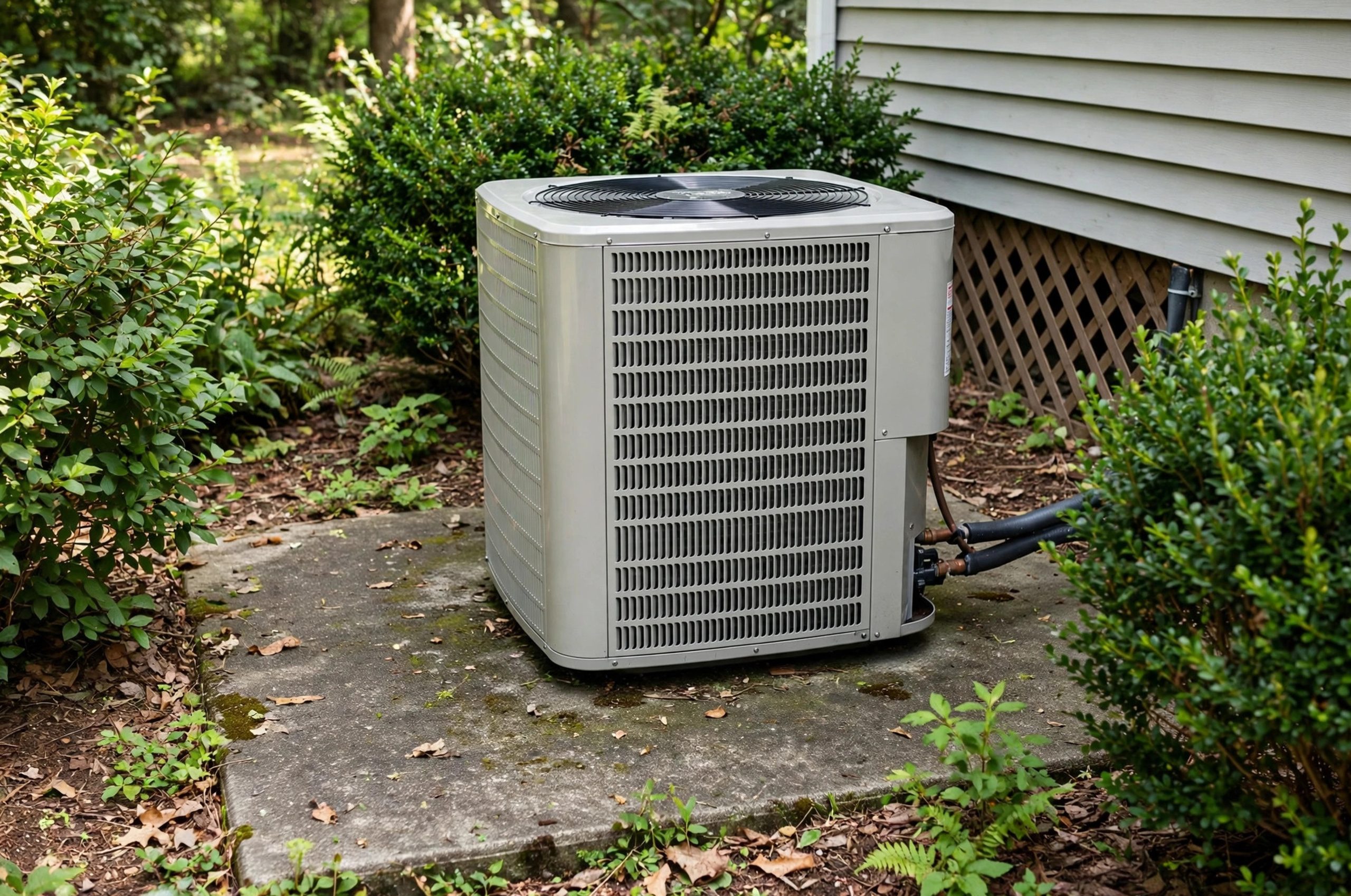
That low drone from the backyard never used to bother you. Now it rattles the kitchen window, hums through the bedroom wall, and has the neighbors glancing over the fence. Outdoor condenser units make noise by nature: a compressor pumps refrigerant, a fan moves air, and metal panels vibrate. But when the noise grows louder than it used to be, something changed, and most of the fixes are simple. The rest of this guide covers quieting a noisy outdoor ac unit in plain language.
Table of Contents
Table of Contents
- Quieting a Noisy Outdoor Ac Unit: Tip 1: Level the Unit
- Tip 2: Install Anti-Vibration Pads
- Tip 3: Tighten Everything That Can Rattle
- Tip 4: Clean the Coil and Clear the Area
- Tip 5: Add a Compressor Sound Blanket
- Tip 6: Build a Ventilated Sound Barrier
- Tip 7: Plant a Living Sound Buffer
- Tip 8: Fix the Fan
- Tip 9: Consider What the Noise Is Telling You
- Sounds That Mean Stop and Call a Pro
- What Not To Do
- Frequently Asked Questions
- References
Quieting a noisy outdoor AC unit starts with figuring out what kind of noise you hear. A steady hum asks for different treatment than a rattle, a buzz, or a screech. This guide covers nine practical tips in order of effort and cost, plus the warning sounds that mean you should stop and call a technician. If the noise is new and sudden, start with this troubleshooting walkthrough for noisy air conditioners before you spend a dollar on soundproofing.
Quieting a Noisy Outdoor Ac Unit: Tip 1: Level the Unit
When it comes to quieting a noisy outdoor AC unit, getting the details right makes all the difference.

Many homeowners find that quieting a noisy outdoor AC unit is easier than they expected once they know the basics.
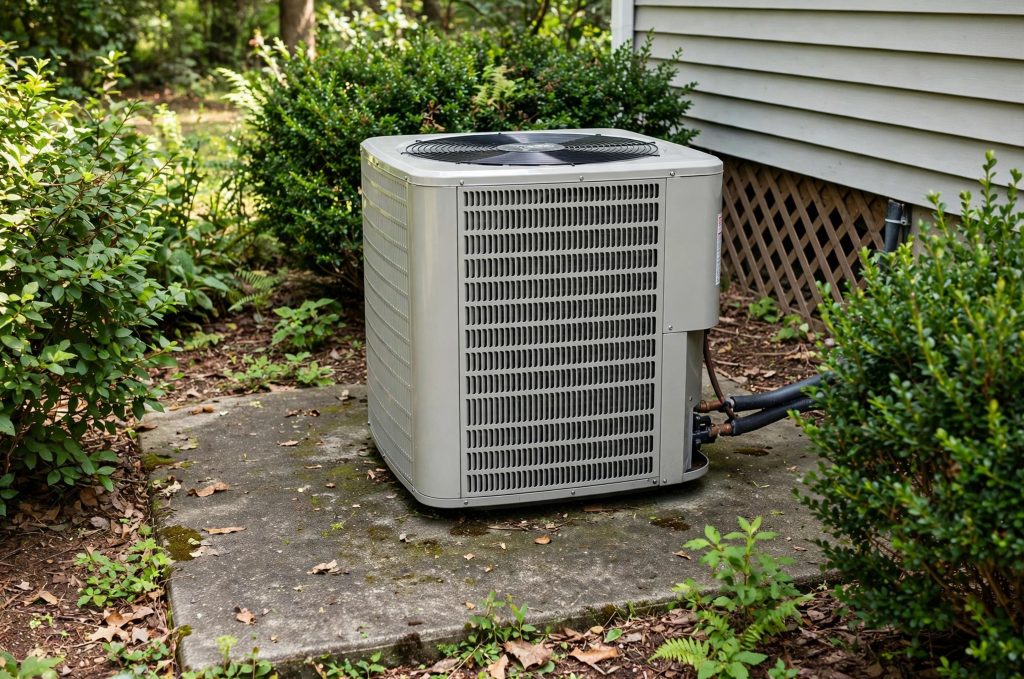
An outdoor unit sitting crooked vibrates more than one sitting flat. Over time, the ground under the pad settles, one corner sinks, and the whole cabinet rocks with each compressor cycle. That vibration travels into the pad, the soil, and sometimes the foundation of the house.
Set a bubble level on top of the unit. If it reads off, the fix may be as simple as shimming the pad or re-leveling the ground beneath it. These practical tips for eliminating AC noise put leveling first for exactly this reason: a stable, level base removes the rocking that turns a normal hum into a house-shaking rattle.
Tip 2: Install Anti-Vibration Pads
Many homeowners find that quieting a noisy outdoor AC unit is easier than they expected once they know the basics.
The key to quieting a noisy outdoor AC unit is choosing the right approach for your space and budget.
Rubber isolation pads under the unit's feet absorb vibration before it reaches the pad and the ground. They are cheap, they install in minutes, and they cut the low-frequency hum that travels through walls and floors.
While you are at it, check where the refrigerant lines enter the house. If copper lines touch a wall bracket or framing without cushioning, they sing like a tuning fork. Slip foam pipe insulation or rubber-lined clamps around any contact points. Metal-on-metal contact is one of the most overlooked sources of outdoor unit noise.
Tip 3: Tighten Everything That Can Rattle
The key to quieting a noisy outdoor AC unit is choosing the right approach for your space and budget.
With a little planning, quieting a noisy outdoor AC unit can fit even a busy schedule.
Years of vibration loosen screws, and loose screws rattle. With the power off at the breaker, walk around the unit and tighten the access panel screws, the fan grille screws, and any loose brackets. Add thin neoprene washers under panels that buzz against the frame.
Check inside the cabinet too, if you are comfortable removing a panel safely. Fallen leaves, twigs, pebbles, and even dead insects can wedge against the fan blade and make a racket. Clear out any debris you find. Just keep your hands away from wiring and capacitors, which hold a charge even with the power off.
Tip 4: Clean the Coil and Clear the Area
With a little planning, quieting a noisy outdoor AC unit can fit even a busy schedule.
Before you start, it helps to understand how quieting a noisy outdoor AC unit works in real homes.
A dirty condenser coil forces the system to work harder, and a harder-working compressor is a louder compressor. Restricted airflow from a neglected indoor filter piles on the same strain from the inside. Gently rinse the outdoor coil with a garden hose from the inside out, taking care not to bend the thin aluminum fins. Trim plants and grass back to leave at least two feet of clear space on all sides.
Keeping the area clean also helps the unit run efficiently, which pays you back on the power bill. A well-maintained condenser runs quieter simply because it is not straining. The DOE's home energy checklist treats these small routine checks as the foundation of an efficient system. If your system is due for a full service, our guide on how often to change your HVAC filter covers the indoor side of the same maintenance habit.
Tip 5: Add a Compressor Sound Blanket
Before you start, it helps to understand how quieting a noisy outdoor AC unit works in real homes.
A good plan for quieting a noisy outdoor AC unit saves time, money, and frustration.
If the compressor itself is the loudest part of your unit, a compressor sound blanket can help. These are insulated wraps made for specific compressor models. The field of acoustic insulation for HVAC equipment covers these wraps and other sound-damping materials in more depth. They dampen the compressor's hum without trapping enough heat to cause damage, as long as you use one made or approved for your equipment.
Use only a blanket vetted by the manufacturer or your HVAC contractor. A blanket that blocks service valves or airflow can overheat the compressor and void the warranty. When in doubt, ask a pro to pick and fit it. It is a small job for them and a real noise cut for you.
Tip 6: Build a Ventilated Sound Barrier
A good plan for quieting a noisy outdoor AC unit saves time, money, and frustration.
For most people, quieting a noisy outdoor AC unit comes down to a few smart choices.
A fence or purpose-built screen between the unit and your patio or the neighbor's yard blocks the direct path of sound. The trick is blocking noise without blocking air. The condenser needs generous clearances: typically two feet on the sides and several feet above, but check your unit's manual.
Good barrier materials include dense wood, composite fencing, or fiber-cement panels. A staggered-slat design lets air pass while breaking up sound waves. Never box the unit in a tight enclosure. A sealed box traps heat, tanks efficiency, and can kill the compressor. A barrier should be a screen, not a coffin.
Tip 7: Plant a Living Sound Buffer
For most people, quieting a noisy outdoor AC unit comes down to a few smart choices.
Dense shrubs or tall ornamental grasses around the unit add a second layer of sound blocking and look better than a bare pad. Evergreen shrubs work year-round. Keep plantings at least two to three feet from the unit so leaves and branches never touch the cabinet or block airflow.
Plants scatter and absorb mid- and high-frequency sound. They will not silence a compressor hum on their own, but combined with vibration pads and a clean unit, they take the edge off. Just remember the clearance rule matters more than the landscaping: airflow first, looks second.
Tip 8: Fix the Fan
If you are new to quieting a noisy outdoor AC unit, start with the simplest option and build from there.
A bent or imbalanced fan blade wobbles as it spins, and a wobbling fan is loud. If the outdoor fan noise started after a storm or after debris got into the unit, a damaged blade is a strong suspect. A technician can replace a fan blade inexpensively, and the difference is immediate.
Fan motors wear out too. A grinding or squealing fan usually means bearings are failing. That sound will not fix itself, and a seized fan motor can overheat the compressor. If the fan sounds rough, schedule a repair before the small problem becomes a big one.
Tip 9: Consider What the Noise Is Telling You
When it comes to quieting a noisy outdoor AC unit, getting the details right makes all the difference.
Sometimes the best noise fix is a repair. A loud buzzing that syncs with compressor starts can mean a weak capacitor or a failing contactor. A hiss suggests refrigerant trouble. A screech on startup can mean high internal pressure. Air Techs' troubleshooting guide lists these warning sounds and is blunt about when DIY ends: units over ten years old getting louder, sudden loud noises that will not quit, and any hiss or electrical buzz all call for a professional.
If the unit is simply old and loud by design, modern equipment is dramatically quieter. A variable-speed AC running at low speed can be barely audible from the patio, and comparing two-stage vs single-stage systems shows how much of the old racket was just a single-speed compressor slamming on at full blast every cycle. When replacement day comes, also check the cost difference between 16 and 18 SEER units so you buy efficiency along with quiet.
Sounds That Mean Stop and Call a Pro
- Hissing: possible refrigerant leak. Turn the system off. PICKHVAC's guide to heat pump refrigerant leaks explains the signs, the safety rules, and what a repair involves, and Bayonet's overview covers the same warning signs from a contractor's point of view.
- Loud buzzing from the electrical box: capacitor, contactor, or wiring trouble. Do not open the panel.
- Grinding or screeching: failing motor bearings or high pressure. Shut it down.
- Loud banging on startup: could be a serious mechanical fault.
- Any burning smell with the noise: power off at the breaker and call for service.
What Not To Do
Do not wrap the unit in blankets, tarps, or foam boards of your own design. Do not build a tight wooden box around it. Do not spray expanding foam into the cabinet to "dampen" vibration. All of these trap heat, restrict airflow, and risk destroying the compressor or voiding the warranty. Every sound fix must respect the unit's need to breathe. When a barrier or blanket is involved, manufacturer approval is the rule.
Frequently Asked Questions
How loud should an outdoor AC unit be? Most residential units run in the range of a normal conversation to a loud dishwasher. If yours is suddenly much louder, something changed.
Will a sound blanket void my warranty? Only if it is not approved for your model. Use a manufacturer-vetted blanket and have it fitted properly.
Can I put a fence right against the condenser? No. Leave the clearances your manual requires, usually about two feet on the sides and several feet above.
Do plants really reduce AC noise? Somewhat. Dense plantings scatter higher-frequency sound. They work best as a supplement to vibration pads and a well-maintained unit, not as the only fix. Keep this guide handy the next time quieting a noisy outdoor ac unit comes up.
References
- Air Techs Heating and Cooling. (n.d.). How to troubleshoot a noisy air conditioner. https://airtechsheatingcooling.com/blog/how-to-troubleshoot-a-noisy-air-conditioner/
- The Chill Brothers. (n.d.). How to quiet a noisy air conditioner: 7 practical tips. http://thechillbrothers.com/7-tips-for-eliminating-air-conditioner-noise-in-your-home-or-office/
- Envigaurd. (n.d.). Acoustic insulation in HVAC: Enhance comfort and performance. https://envigaurd.com/topics/acoustic-insulation-in-hvac/
- Carrier Corporation. (n.d.). What is AC short cycling? Causes and troubleshooting. https://carrier.com/us/en/residential/hvac-resources/air-conditioners/ac-short-cycling/
- U.S. Department of Energy. (n.d.). Home energy checklist. https://www.energy.gov/cmei/femp/home-energy-checklist
Was this guide helpful?

About My Garden US
The My Garden US editorial team writes practical, in-depth home and garden guides for American homeowners — tested advice, no fluff.
You May Also Like
How Much Does an Outdoor Wood Boiler Cost Installed in the USA?
October 5, 2026 20 views
Smart Thermostat Installation Cost Near Me: A 2026 Price Guide
June 16, 2026 19 views
Best Ceiling Fan for High Ceilings Reviews: A Practical Guide
April 11, 2026 17 views